
Overview
Qaelum offers advanced radiation dose management solutions trusted by almost 600 hospitals and radiology practices worldwide. The company provides vendor-neutral software for managing contrast media usage in CT, identifying unnecessarily repeated scans, and optimizing clinical imaging practices.
Key people

In the news
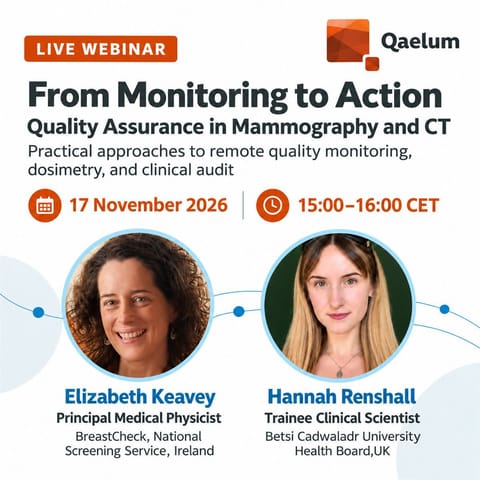
- How can imaging data guide quality assurance and practical improvement? Join Qaelum for From Monitoring to Action: Quality Assurance in Mammography and CT, with two speakers sharing examples from their work: • Elizabeth Keavey, Principal Medical Physicist at BreastCheck, National Screening Service, Ireland, will explore remote quality monitoring and dosimetry in breast screening. • Hannah Renshall, Trainee Clinical Scientist at Betsi Cadwaladr University Health Board, UK, will discuss CT clinical audits using Qaelum DOSE and
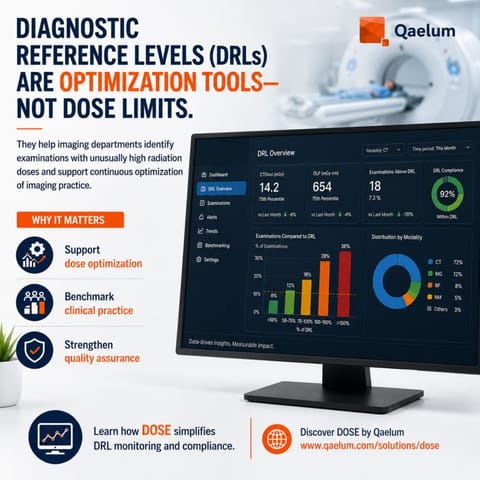
- Diagnostic Reference Levels (DRLs): A Tool for Optimization, Not a Dose Limit Diagnostic Reference Levels (DRLs) play an important role in supporting safe and effective medical imaging—but they're often misunderstood. DRLs are optimization tools, not regulatory dose limits. They help imaging departments identify examinations with unusually high radiation doses and highlight opportunities to improve protocols and clinical practice. Why it matters: ✔ Support dose optimization ✔ Benchmark clinical practice ✔ Strengthen quality
- How do you review radiation exposure when your imaging service spans different scanners and sites? DOSE by Qaelum automatically monitors, evaluates, and reports radiation dose information across multi-facility, multi-modality, and multi-vendor imaging environments. A shared view gives teams a place to begin investigating patterns and discussing optimization, with image quality and clinical context in mind. Explore DOSE by Qaelum: https://lnkd.in/gtBcwYZ #Radiology #DoseManagement #MedicalPhysics
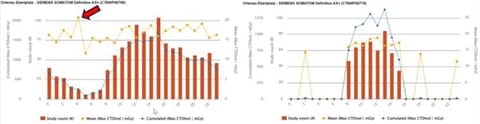
- An outlier is a reason to investigate—not a complete explanation. Qaelum’s article, “Defining CT Dose Optimization Targets in Clinical Practice,” describes a clinical project at Ortenau-Klinikum Offenburg-Kehl. The review highlighted patient positioning, scan settings, and data completeness as areas to examine. It also considered image quality when reviewing low-dose outliers. The practical lesson: look beyond the value to understand the examination. Read the article: https://lnkd.in/eSVwZ-9d #CT #MedicalPhysics #DoseOptimization
- A diagnostic reference level is a benchmark for reviewing practice—not a dose limit for an individual patient. Diagnostic reference levels, or DRLs, help teams compare typical exposure levels for similar examinations and patient groups. They can prompt investigation, but interpreting them requires context. Being below a DRL does not, by itself, demonstrate that a protocol is optimized. Image quality and the clinical purpose still matter. How does your department bring DRL comparisons into its quality discussions? #MedicalPhysics
- Behind every breast image is a person waiting for answers. On Breast Cancer Awareness Day, we recognise everyone affected by breast cancer and the healthcare teams supporting them. Early detection, timely diagnosis and access to quality care deserve attention beyond a single awareness day. For radiologists, radiographers and medical physicists, that commitment includes careful attention to imaging quality, patient safety and clear communication. At Qaelum, our focus on patient safety and imaging quality reflects the responsibility

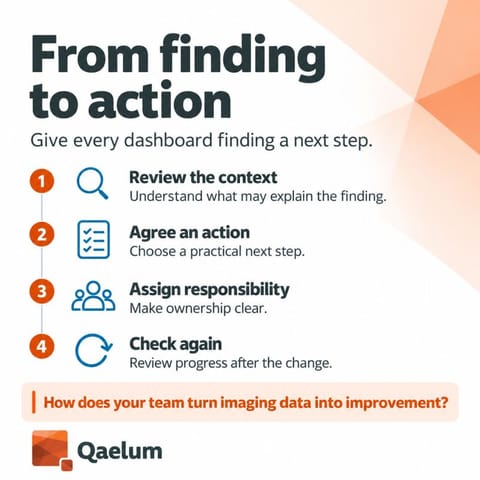
- Your dashboard has highlighted a pattern. What happens next? A useful quality discussion connects the finding to a practical decision: what needs reviewing, who should be involved, and how will the team assess progress? One approach is to review the context, agree an action, assign responsibility, and revisit the finding after the change. The dashboard starts the conversation. Follow-through gives it purpose. How does your department turn imaging data into an improvement action? #Radiology #QualityImprovement #MedicalImaging
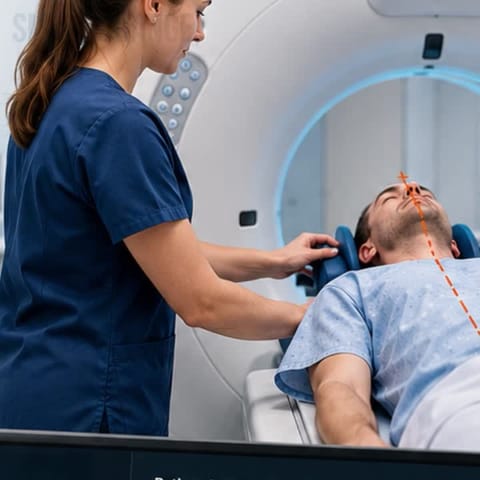
- Small Change, Big Impact Quality improvement doesn't always start with new technology—it can start with better positioning. Correct patient positioning is one of the simplest ways to improve CT imaging, yet it has a meaningful impact on both image quality and radiation safety. Small improvements can lead to: ✔ Better image quality ✔ Fewer repeat scans ✔ Lower radiation dose ✔ Greater consistency across examinations When combined with continuous monitoring and actionable insights, imaging departments can identify trends, support best

Related profiles
Something wrong or missing? Send an update. Fixed within 24 hours.