
Overview
RIC biologics offers all-round analytical services for pharma and biotech companies working on biological products and chemical entities. The company supports customers across lead selection, formulation, identification, characterization, quantification, stability, and comparability testing. They work with monoclonal antibodies, antibody fragments, antibody-drug-conjugates, bi-specifics, fusion proteins, enzymes, peptides, oligonucleotides, DNA, RNA, and small molecules.
Key people
In the news
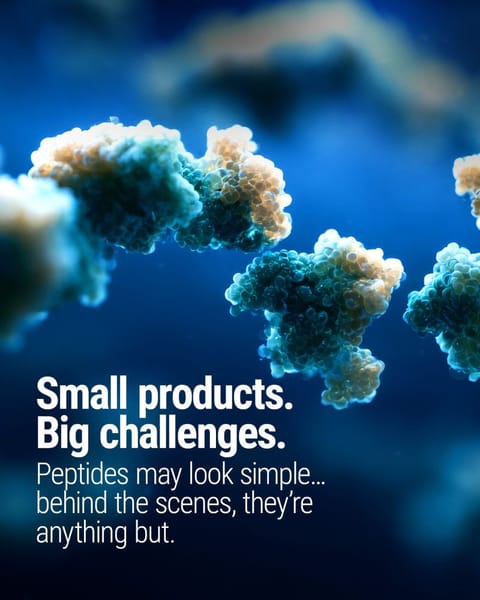
- Peptide. Impurities. Excipients. One HILIC run ✔ Earlier this year we said never to underestimate the small ones. This week in Amsterdam, we’ll show you why. In our previous peptide therapeutics recap, we showed how lipidation, Aib substitutions and optimized spacers turn a hormone that survives only minutes in the body into once-a-week medicines like semaglutide. However, every design choice adds critical quality attributes (CQAs) to your list. The GLP-1 drug product is more than its peptide. Across Ozempic, Byetta and Xultophy,
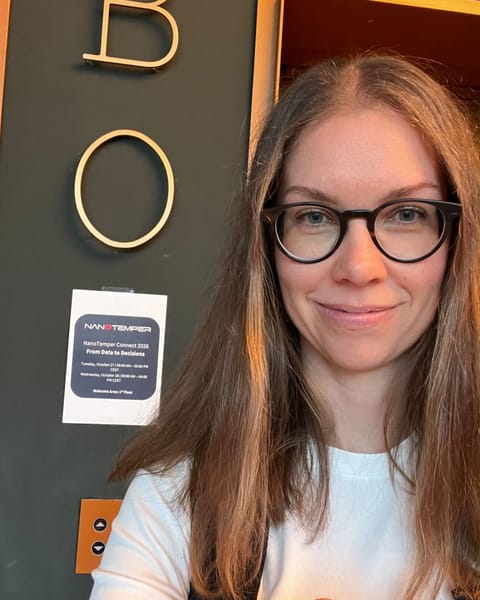
- Live from Munich: our colleague Carolin Berner was just on stage at NanoTemper Connect 2026 today, presenting some of our latest formulation development work. In her case study, Carolin screened a bispecific mAb in various buffer/excipient conditions using NanoTemper Technologies' Prometheus Panta. What her data showed: 1️⃣ Raising pH improved both conformational stability and colloidal stability. 2️⃣ Excipients lowered the unfolding and aggregation onset temperatures compared with buffer alone. Excipients aren’t
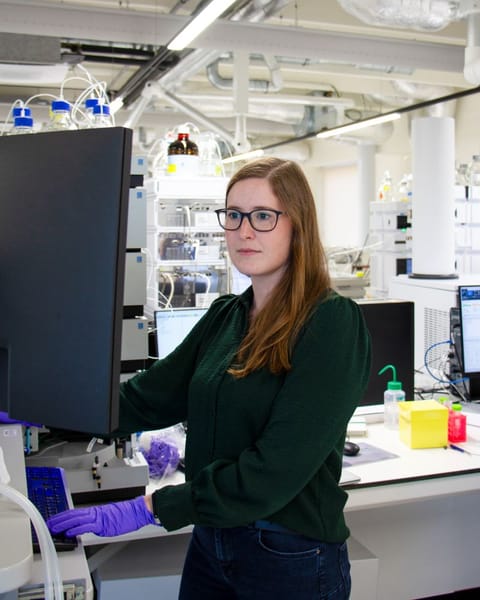
- Tomorrow morning, our colleague Jasmin Schairer takes the stage at the Collaborative Symposium on Capillary Electrophoresis in Liège with her talk “Characterizing antibody heterogeneity through cIEF-MS fraction collection.” Every therapeutic protein has its charge variants. They’re small differences that can affect how the molecule behaves, how well it works and how stable it stays. Capillary isoelectric focusing (cIEF) is the go-to method for seeing them. But working out the identity of each peak has been slow and labor-intensive,
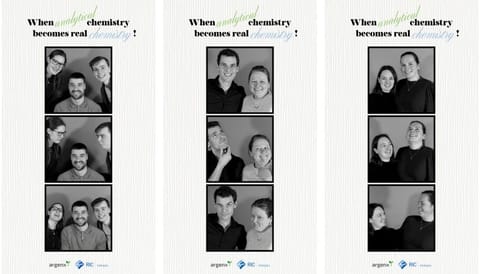
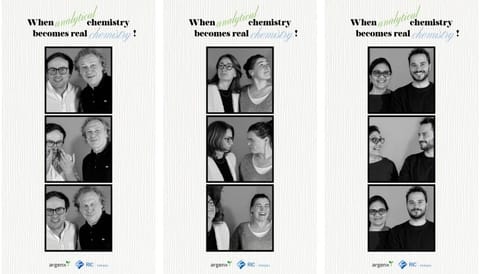
- The secret behind 10+ years of breakthrough science? People who refuse to settle for anything less than extraordinary. When our argenx and RIC biologics teams come together, sharp minds collide with relentless energy, not just in the lab… but also in the escape room, the VR arena and the boxing ring! Here’s to a partnership that keeps getting stronger. Here's to the ones who are anything but mediocre 💪 #innovation #science #biotech #argenx #RICbiologics
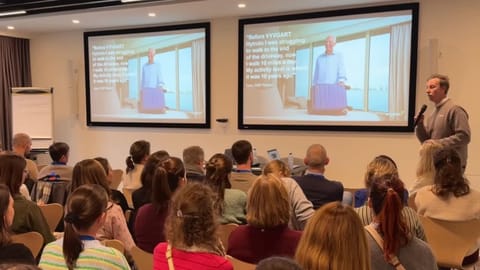
- argenx x RIC biologics = already more than a decade of successful collaboration and it wouldn’t have been possible without both our teams. Now that our next annual get-together is coming up, we're having a throwback at the last one where we thanked everyone who makes it happen, day in, day out 🙏 #innovation #science #biotech #argenx #RICbiologics
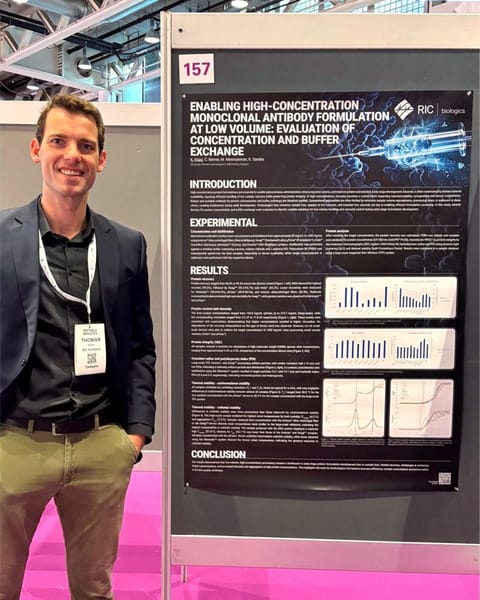
- Every scientific study starts with a basic question. Katharina Kopp’s also included a hunt. Her very first project at RIC biologics tackled a challenge every formulation scientist knows: how do you reach high antibody concentrations when you only have a tiny amount of your precious early-stage material? “In high-concentration formulation, the sky is the limit,” Katharina says. “Concentrations around 300 mg/mL are no exception.” Behind that ambition is the patient. A higher concentration means a smaller volume. This makes subcutaneous
- A crossword puzzle, that’s how I’ve been thinking about our mRNA project the moment it stranded (pun intended 🤓 ) in our innovation department. The challenge: cover as much of a therapeutic mRNA sequence as possible using mass spectrometry, so we can find modifications that next-generation sequencing cannot see. Our ultimate solution, it turns out, involves two sets of clues: RNase 4 for the long ‘across’ fragments and RNase A for the short ‘down’ sub-fragments. Helena, Jelle, Evert, Pat, Koen, and I went to work. We built a
- What if you could read your mRNA sequence by solving it crossword style? That’s the idea behind our latest publication in the Journal of Chromatography A. We developed a complementary LC-MS platform for mRNA mapping that combines two ribonucleases (RNase 4 for pre-column digestion and RNase A in a custom post-column cartridge) to generate nested, overlapping sequence information at the full-MS level. Why does this matter? ▪️ Sequence confirmation is a regulatory requirement for therapeutic mRNA ▪️ Next-generation sequencing is not

Something wrong or missing? Send an update. Fixed within 24 hours.