
Overview
Scone is a renovation intelligence platform delivered as a white-label tool to banks, insurers, and property networks. The platform helps homeowners with renovation planning while enabling its clients to generate data, engagement, and customer loyalty.
Key people
In the news
- Making energy-efficient renovations more accessible, one home at a time. We're happy to see our collaboration with vdk bank featured in the latest edition of B.magazine! The article explores a question many Belgian homeowners face: How much does it actually cost to make a home more energy-efficient? Renovating can feel overwhelming. Where should you start? Which improvements will have the biggest impact? And what budget should you plan for? Together with vdk bank, we're helping homeowners answer these questions before they start

- What if every customer conversation started with a renovation plan? 🏡 For banks, insurers, and energy providers, home renovation creates an opportunity to engage with customers beyond a single transaction. But homeowners often face the same questions: → Where should I start? → What improvements make sense for my home? → How much could they cost? → What impact could they have? With Scone, businesses can turn property data into personalised renovation guidance, helping customers explore improvements, understand potential costs, and

- What if you could prepare a renovation quote before visiting the property? Getting customers into a showroom or arranging a site visit takes time. ⏳ And every extra step can slow down the sales process. With Scone Vision AI, customers can scan their own homes using just a smartphone. The measurements are then available to your team, who can review and adjust them, export the collected data, and start preparing an offer in minutes. That means: ✅ Less time spent on initial measurements ✅ Less back and forth between customers and

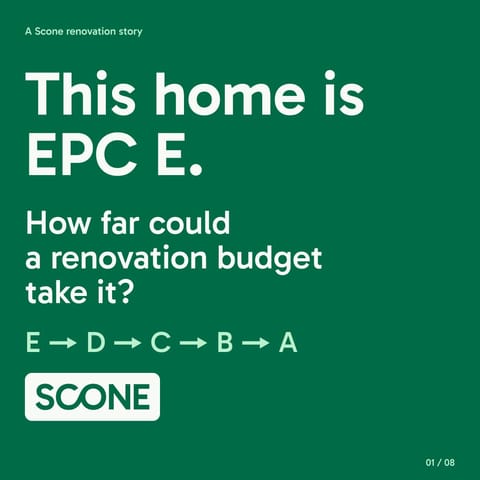
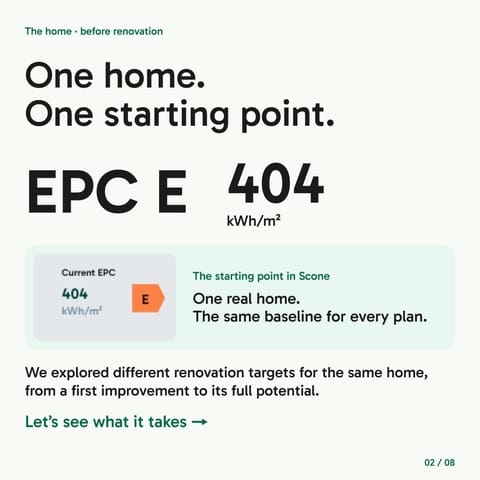
- From EPC E to EPC A. What does it actually take? 🏡 We used the same home in Scone and explored different renovation plans, from one targeted improvement to a more comprehensive renovation. As the budget changes, so do the measures, potential energy savings and EPC improvement. Swipe through to see how far each renovation plan could take this home. 👉 This is one example property. Estimated costs and outcomes vary by home.
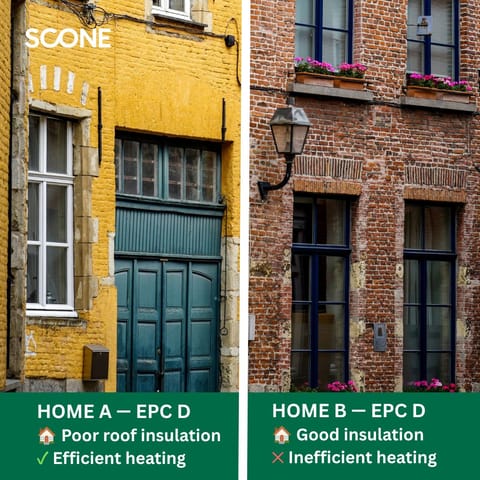
- Two homes. Same EPC. Completely different renovation plans. An EPC rating is a useful snapshot of a home's energy performance. But the same rating doesn't mean the same problems or the same path to improving it. One home might be losing heat through an uninsulated roof. Another might already be well insulated but rely on an inefficient heating system. Both could have the same EPC rating. What makes sense to renovate first could be completely different. That's why useful renovation guidance needs to go beyond the score. It needs to
- A new home: check. ✓ Space for the bikes: check. ✓ But what about the energy performance? Great to see vdk bank featuring the Scone energy scan in its latest newsletter. Through the scan, vdk bank customers can explore what it would take to improve a home's EPC: from potential renovation measures and their impact to available subsidies. It’s a good example of how banks can go beyond financing a home and help customers understand what comes next: what should I renovate, what difference could it make, and what support is available?


- When a home needs to be more efficient, it's tempting to reach for the big, visible upgrade: a new boiler or new windows. They cost the most, so they look like the real fix. But when it comes to improving an EPC rating, they often aren't. The biggest gains come from fixing whatever's worst in a particular home first. The physics is simple. The first layer of insulation saves far more heat than the tenth, so adding it where there's none beats topping up where there's already some — or replacing something that was working fine. A

- From 𝟭 𝗢𝗰𝘁𝗼𝗯𝗲𝗿 𝟮𝟬𝟯𝟬, a private rented home in England and Wales rated below 𝗘𝗣𝗖 𝗖 can no longer be let, unless the landlord holds a valid exemption. The current floor is E. The new one is C. On the government's own figures, around 𝗵𝗮𝗹𝗳 𝗼𝗳 𝗽𝗿𝗶𝘃𝗮𝘁𝗲𝗹𝘆 𝗿𝗲𝗻𝘁𝗲𝗱 𝗵𝗼𝗺𝗲𝘀 𝗶𝗻 𝗘𝗻𝗴𝗹𝗮𝗻𝗱 𝘀𝗶𝘁 𝗯𝗲𝗹𝗼𝘄 𝗖. Every one of them needs work before the deadline, and there's a £𝟭𝟬,𝟬𝟬𝟬 𝗰𝗮𝗽 on what a landlord has to spend per property. Here's the problem that number hides. A landlord with a


Something wrong or missing? Send an update. Fixed within 24 hours.