
Overview
Smart Packaging Europe is an EUMEPS initiative and alliance of companies in the EPS industry. EPS is a lightweight foam packaging material that is 100% recyclable and composed of 98% air, with an excellent sustainability profile. The organization's mission is to contribute to a more circular, sustainable economy in Europe.
In the news
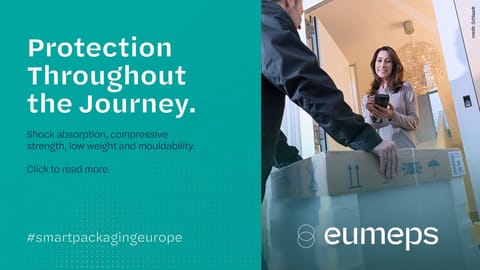
- Protecting white goods requires packaging designed for the realities of transport. Over the past weeks, we have looked at several properties that explain why EPS is used for washing machines, refrigerators and other household appliances: 🔹shock absorption to cushion impacts; 🔹compressive strength to withstand loads; 🔹low weight for easier handling; 🔹mouldability to protect specific parts of the product. These functions work together throughout storage, transport and final delivery. For white goods, the purpose of
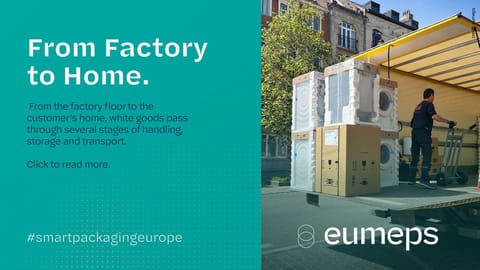
- From the factory floor to the customer’s home, white goods pass through several stages of handling, storage and transport. At each step, packaging has a clear role: keeping the appliance stable, cushioning impacts and protecting vulnerable areas such as corners and edges. EPS is used for these applications because it combines low weight, shock absorption and compressive strength. It can also be moulded around the shape of the appliance, allowing packaging components to protect specific areas during transport. For products such as
- The PPWR is setting a new framework for how plastic packaging recyclability will be assessed in Europe. As this framework develops, clear and consistent criteria for recycling technologies will be important for manufacturers, recyclers and the wider packaging value chain. EUMEPS’ position is that sustainability criteria should be science-based, transparent and applicable across different recycling technologies. The assessment of a recycling process should take into account its actual performance, including the quality of the
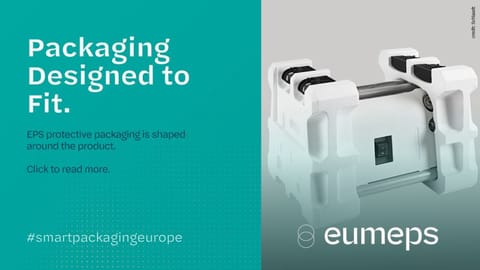
- Protective packaging works best when it is designed around the product. For white goods such as washing machines, refrigerators and ovens, this means protecting corners, edges and other vulnerable areas throughout handling and transport. EPS can be moulded into specific shapes, allowing packaging components to fit closely around the appliance and provide protection where it is most needed. This combination of mouldability, cushioning and compressive strength makes EPS suitable for large household appliances, where packaging
- A competitive European plastics value chain also matters for packaging. EUMEPS has joined European and national organisations in supporting six strategic recommendations addressing the conditions needed for plastics manufacturing, converting and recycling in Europe. The joint statement highlights several challenges currently affecting the sector, including high energy costs, international competition, regulatory fragmentation and uncertainty around investment. It sets out six areas for action: • fair competition and
- Protective packaging for white goods needs to combine strength with efficient handling. Washing machines, refrigerators and other large appliances are heavy products that can be exposed to shocks, pressure and repeated handling throughout transport. EPS packaging combines low weight with cushioning and compressive strength. This allows packaging components to help protect vulnerable areas of the appliance without adding unnecessary weight to the overall load. Its mouldability also means that individual components can be designed
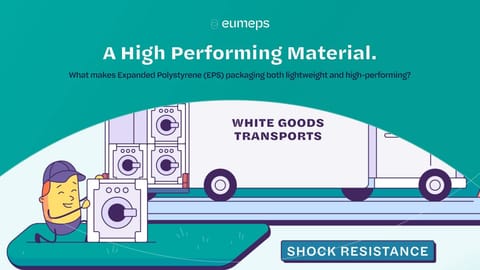
- Protective packaging has one essential task: helping products arrive without damage. For large appliances, this means managing impacts and loads during handling and transport. EPS has a cellular structure that allows it to absorb shocks and cushion products during transit. Its compressive strength also helps it withstand loads while protecting sensitive areas of the appliance. Because EPS can be moulded into specific shapes, packaging components can be designed around the product rather than relying on a single standard format.
- Who is responsible for what under the PPWR? Packaging compliance involves several actors, and their responsibilities are not interchangeable. This overview from Lea Salihovic, EU Policy Manager at EUMEPS, explains how evidence and responsibilities move through the packaging value chain: from technical documentation supplied upstream to conformity assessment, EPR obligations and checks further downstream. For packaging businesses preparing for the PPWR, understanding this chain of responsibility is an important part of

Something wrong or missing? Send an update. Fixed within 24 hours.