
Overview
Soda provides software that lets data teams define checks on their data, run automated tests, and alert on quality issues across warehouses, lakes, and pipelines. Its open-source CLI tool and SaaS platform serve data engineers and analysts who need visibility into whether their data is trustworthy.
The company raised EUR 11.5M in 2021, a further EUR 11.5M in 2022, and EUR 14M in 2024. It has publicly stated reaching financial self-sufficiency, a notable milestone in a period when many SaaS companies remained dependent on ongoing venture support.
Soda operates in the data observability space alongside companies like Monte Carlo and Great Expectations, and is relevant to any Belgian enterprise data stack conversation.
Funding & milestones
2 events found for Soda · 2021–2024
Series AVenture / equity1 sourceEUR 11.5M
Reported amount EUR 11,500,000
Company release announces €11.5m Series A; €14m is total funding including the earlier seed, not this round.
Series a extensionVenture / equity2 sourcesUSD 14M
Reported amount USD 14,000,000
Contemporaneous reporting describes $14m as an extension of Soda’s Series A financing.
InvestorsSingularPoint Nine Capital
Recorded history so far. Original currencies are preserved; amounts in different currencies are not added together. Debt, grants, acquisitions and listings are separate event types. Undated events appear last.
Profile narrative
- EUR 11.5M2021
- EUR 11.5M2022
- EUR 14M2024
Key people

In the news
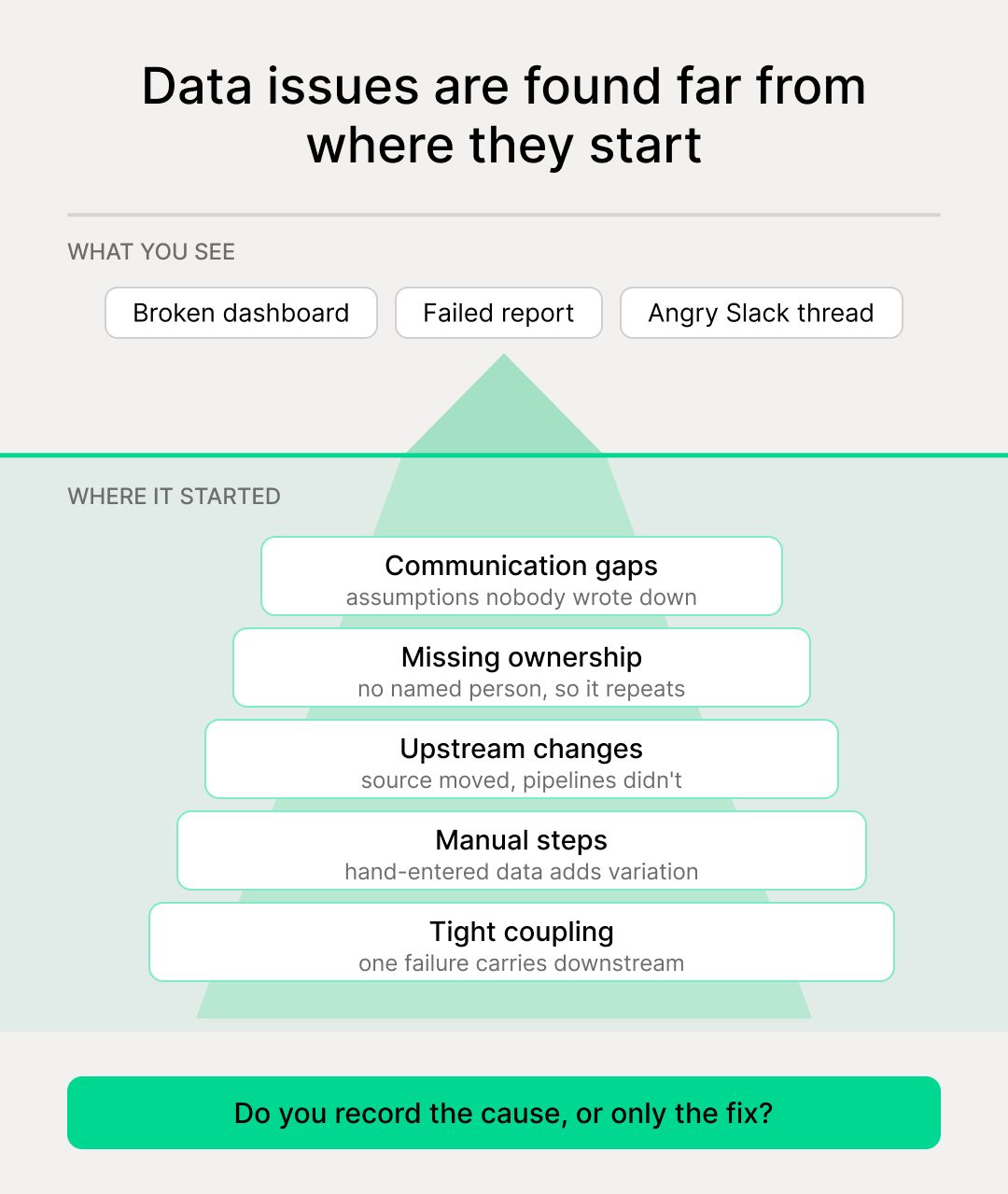
- Data quality issues are found far from where they start. The error shows up in a dashboard or a report. The cause sits several steps earlier in the pipeline. The team corrects the number people can see, but the root cause is not always obvious. So here are 5 root causes every data team should care about: 𝗖𝗼𝗺𝗺𝘂𝗻𝗶𝗰𝗮𝘁𝗶𝗼𝗻 𝗴𝗮𝗽𝘀. Teams hold different assumptions about definitions, timing, or intended use, and nobody writes them down. 𝗠𝗶𝘀𝘀𝗶𝗻𝗴 𝗼𝘄𝗻𝗲𝗿𝘀𝗵𝗶𝗽. No one is accountable for the dataset, so the
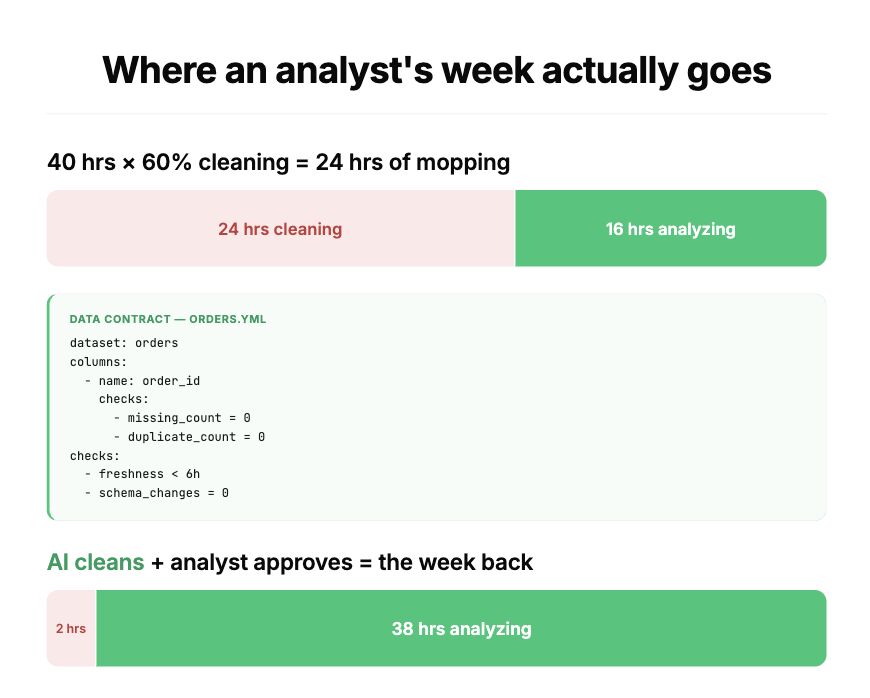
- Stop expecting your data analysts to clean data by hand. Ask an analyst what fills their week. The answers repeat across companies. - Fixing date formats. - Filling missing values. - Correcting the same address error that came back for the fourth time this month. Data cleaning is necessary work. It is also manual, repetitive, and it grows as data volume grows. The cost is specific. Companies hire analysts to find patterns, test assumptions, and support decisions with evidence. So every hour spent correcting records is an hour
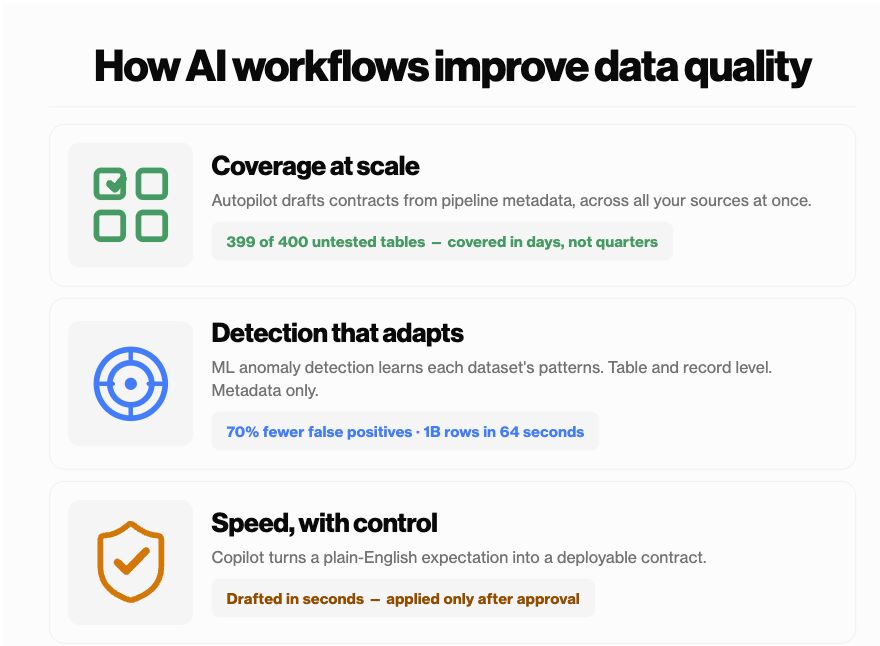
- You can do governance work in an afternoon that used to take months. Here are 3 things AI does for data quality that manual processes can't match: 𝟭. 𝗖𝗼𝘃𝗲𝗿𝗮𝗴𝗲 𝗮𝘁 𝘀𝗰𝗮𝗹𝗲 Most pipelines have near-zero test coverage. AI generates contracts in bulk across all your sources at once, so a lean team goes from nothing to a real baseline in hours. 𝟮. 𝗔𝗻𝗼𝗺𝗮𝗹𝘆 𝗱𝗲𝘁𝗲𝗰𝘁𝗶𝗼𝗻 𝘁𝗵𝗮𝘁 𝗮𝗱𝗮𝗽𝘁𝘀 Manual threshold alerts are brittle. AI learns historical patterns, builds a baseline of what "normal" looks like, and flags
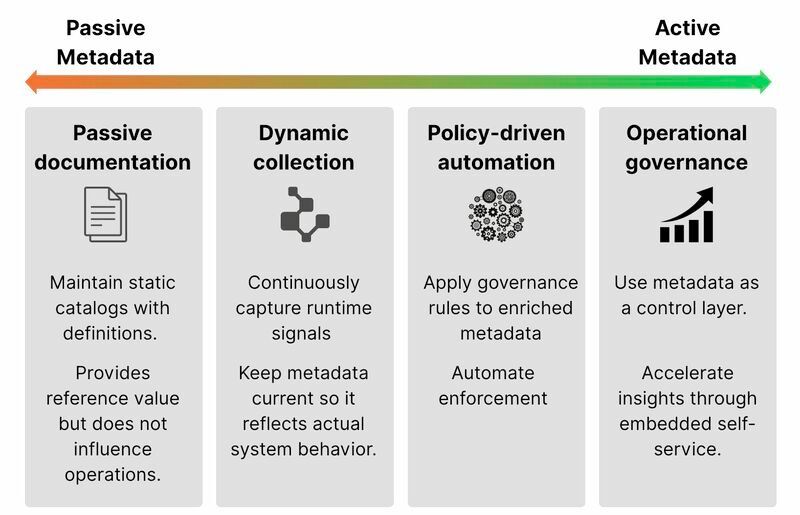
- Metadata is now growing beyond passive documentation. It has the potential to become "active". Active metadata is metadata that is continuously collected, updated, and used to automate operations in the data environment. Some practical applications for data governance: 👉 Access control: if a dataset is labelled “Confidential,” access restrictions are enforced automatically across platforms. 👉 Data quality management: lineage and usage records can generate alerts when a pipeline fails. 👉 Resource optimisation: performance

Related profiles
Something wrong or missing? Send an update. Fixed within 24 hours.