
Overview
Sollitics provides SAP VIM improvement, implementation, and analysis services to help finance teams reduce manual invoice processing work and improve visibility into accounts payable operations. The company addresses challenges including high time spent per invoice, lack of process visibility, and underperforming SAP VIM implementations.
Key people

In the news
- For the past few weeks we've been promoting our VIM Quick Check. So, what happens when you actually request it? Simple: we analyze a targeted set of data from your SAP VIM environment to build a fact-based view of how your invoice process is currently performing. The goal isn't to produce a list of everything that could *theoretically* be changed. It's to help distinguish between what is working as expected, and where the data points to meaningful opportunities for improvement. That might mean identifying recurring exceptions,
- One invoice exception doesn't necessarily tell you much, but a recurring pattern does. When the same mismatch, workflow issue or manual intervention keeps appearing across hundreds of invoices, it stops being an isolated operational problem. It becomes data that can point to something structural in your SAP VIM setup or invoice process. The challenge is that these patterns aren't always obvious when you're handling invoices one by one.That's where looking at VIM data becomes valuable. Instead of relying on individual frustrations

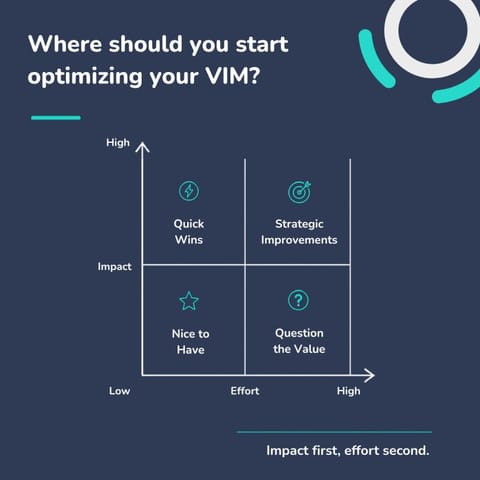
- You’ve identified several opportunities to improve your VIM environment. Now, which ones should take priority? The most visible issue isn't necessarily the most valuable place to start. Effective prioritisation requires looking beyond the issue itself and considering two factors: 1️⃣ potential impact 2️⃣ implementation effort High-impact improvements that require relatively limited effort represent clear quick wins. High-impact changes that require greater effort may warrant a place on the optimisation roadmap. Lower-impact
- Identifying opportunities to improve your VIM environment does not mean every opportunity requires immediate action. Over time, manual interventions, recurring exceptions, and processing delays can gradually become embedded in day-to-day AP operations. As a result, it is not always evident where the current VIM setup may be underperforming, or whether optimization is required at all. Gaining that visibility, however, should not automatically require committing to a large-scale optimization project. That is the purpose of our
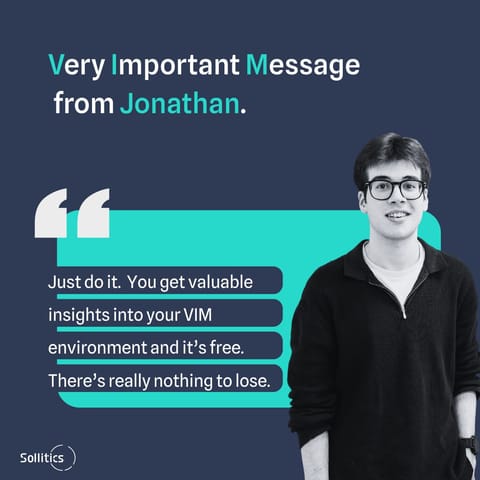
- When you work with the same setup every day, manual work, recurring exceptions and workarounds can gradually become part of the process. You know things could run better, but it isn't always clear where the biggest opportunities are. That's exactly what our VIM Quick Check is designed to uncover. What is your SAP VIM environment actually telling you? A lot, actually, if you know how and where to look. We analyze a targeted set of VIM data to give you a fact-based view of how your current setup is performing, where invoices are
- An operational VIM environment is not necessarily an optimised one. Over time, invoice processing environments evolve. Business requirements change, exception patterns emerge and manual interventions can gradually become embedded in day-to-day AP operations. Your system continues to function, often without any obvious indication that intervention is required. Yet, this does not necessarily mean that the current configuration and processes are delivering their full potential. The more relevant question is therefore not
- Another new face at Sollitics 👋 Meet Joren Verleyen, our new VIM Consultant. With a background spanning IT consulting, data and SAP, Joren brings both a strong analytical foundation and curious mind to the team. A combination that fits rather well at Sollitics, where asking the right questions is often the first step towards making complex SAP processes work better. Joren will be diving deeper into SAP VIM, building his expertise and working alongside the team to help customers improve their invoice processes. We can't wait to get

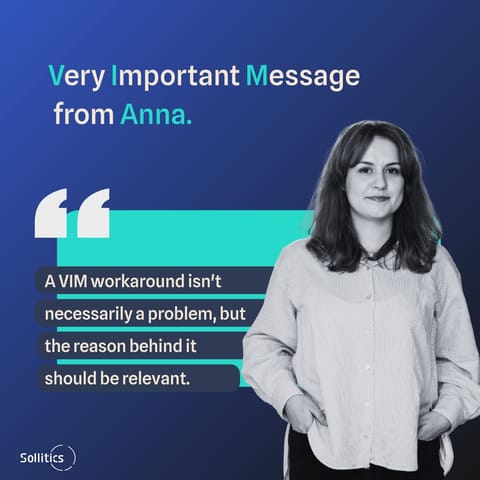
- Every VIM environment develops workarounds over time. 👉 An invoice gets exported to Excel. 👉 Someone follows up approvals by email. 👉 Supporting documents are stored outside the workflow. For this month’s VIM: Very Important Message, we asked Anna Bigajska to put one of those everyday VIM observations in the spotlight: workarounds. On the surface, these seem like small operational habits. However, they’re often signs that people have adapted to a process instead of the process supporting them. That’s why we don’t necessarily


Something wrong or missing? Send an update. Fixed within 24 hours.