
Overview
SOLTECH believes the future can be smarter and more beautiful by combining functions like energy generation, lighting, and aesthetics in building materials. The company integrates solar cells and LEDs into facades, glass, and infrastructure through products like ISSOL® (solar cells in building materials), Glassiled® (LED-integrated glass), and OEM+ (licensing technology for custom products).
In the news
- What if a canopy could do more than provide shelter? At ULB Solbosch in Brussels, a new 2,417 m² canopy turns an architectural roof surface into an active energy-generating element. The BIPV glass is not added on top of the structure. It is the roof. The photovoltaic modules become part of the building envelope, combining architectural design, weather protection and renewable energy generation in one surface. With 904 BIPV modules and 266 kWp of installed capacity, the canopy becomes an active part of the campus infrastructure. The

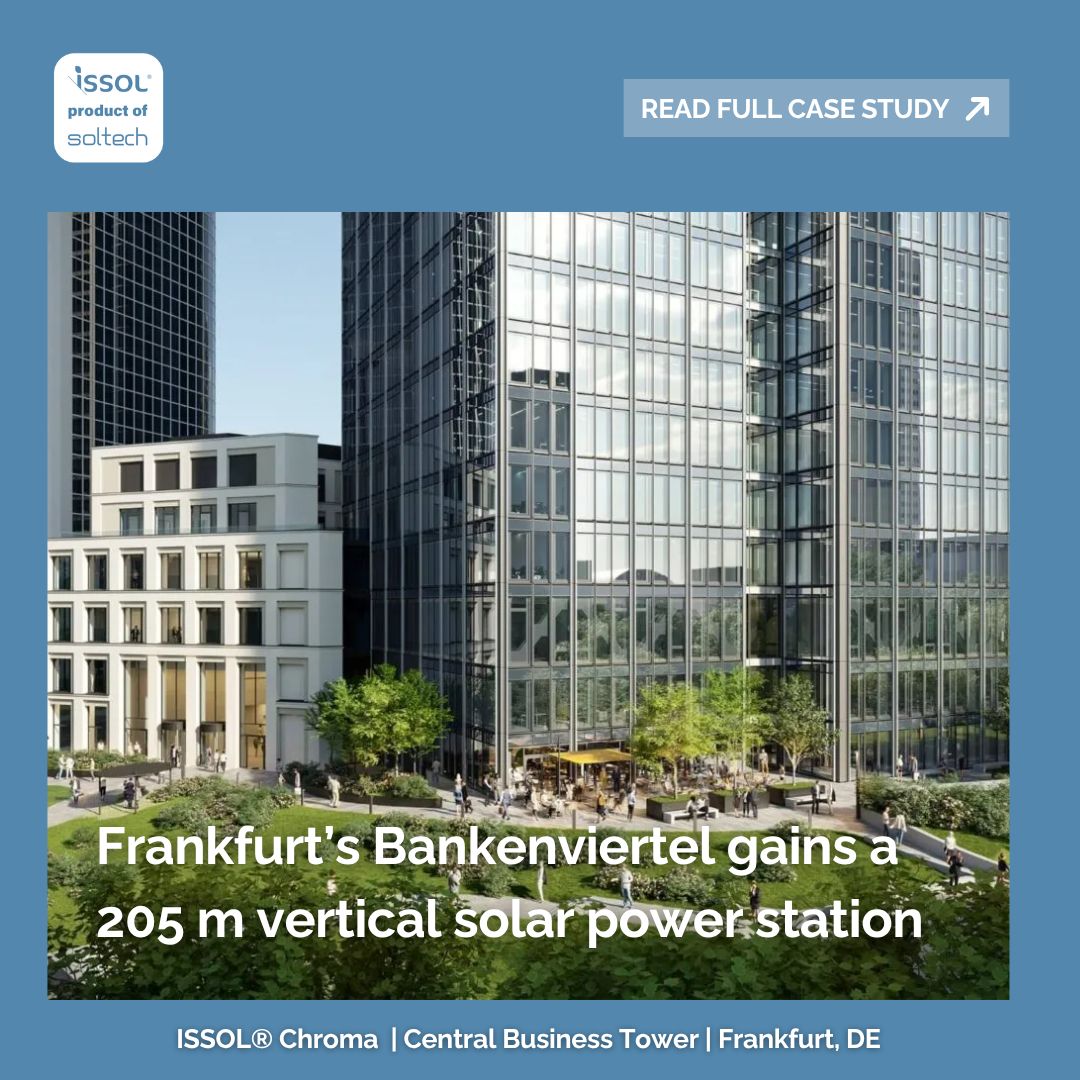
- The cells see what you can't. 👀 That's not a metaphor. The ISSOL® Chroma coating reflects the wavelengths your eye reads as anthracite glass. The near-infrared - where silicon cells do their work - passes straight through. You see a uniform spandrel. That spandrel generates 320 kWp. KSP ENGEL ran full-scale visual mock-ups before sign-off. Direct sun, overcast sky, raking afternoon light. The question wasn't how much power. It was: can you see the cells? The answer had to be no before anything else could move forward. At 205
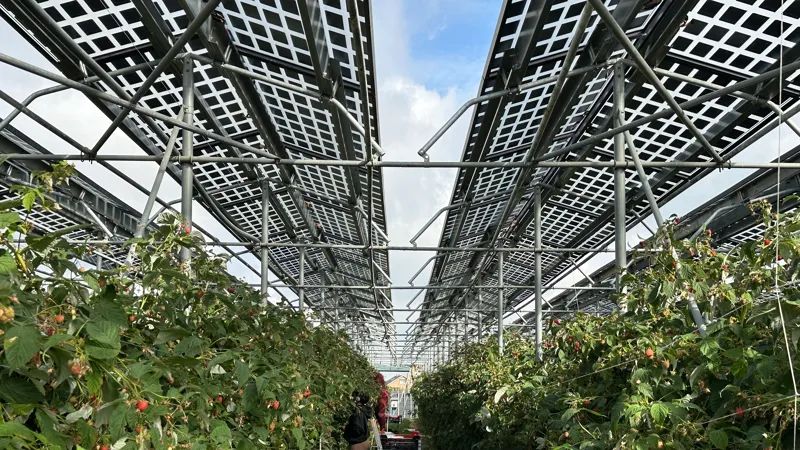
- What if solar technology could become part of the way we grow food? At PC Fruit in Sint-Truiden, Belgium, photovoltaic technology is being integrated directly into the cultivation of raspberries and blackberries. As part of a new agrivoltaics pilot project, existing rain covers above the fruit crops are partially replaced by glass-glass photovoltaic panels. The installation consists of 120 PV modules, divided into two different configurations: • 60 panels with 40% transparency and diffused glass • 60 panels with 50% transparency and
- On the Passeig de Gràcia, every façade gets scrutinised. By architects. By critics. By the city itself. Hines understood that when they acquired the former Banco Popular headquarters at number 17. The brief to G4 Group Architecture, Engineering and Design was clear: #LEED certification, serious energy performance, and a façade that belongs on one of Europe's most watched commercial boulevards. Not a building with solar panels. A building whose skin happens to be solar. Our ISSOL® Square modules went in as the outer layer of a

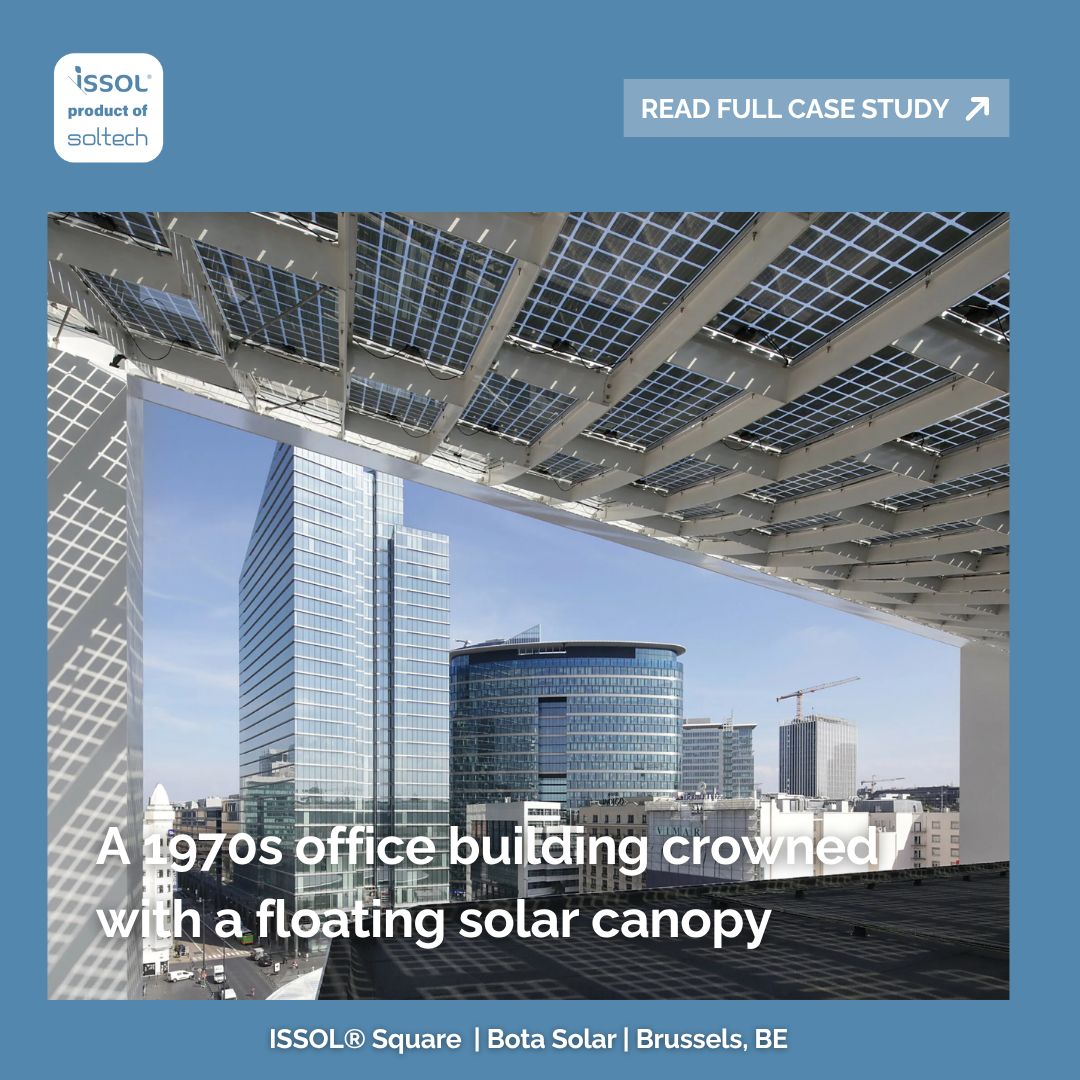
- Most solar projects find a place for the panels once the building is designed. This one worked the other way around. Jean-Didier Steenackers started with the solar resource - where the light falls on the corner of the Kruidtuinlaan and Rogierplein, how the surrounding towers cast their shadows through the day - and let the architecture follow. Laurent Ney's steel portals are where they are because the cable geometry demands it. The cables are pre-tensioned to a three-dimensional curve that handles wind, drains water and
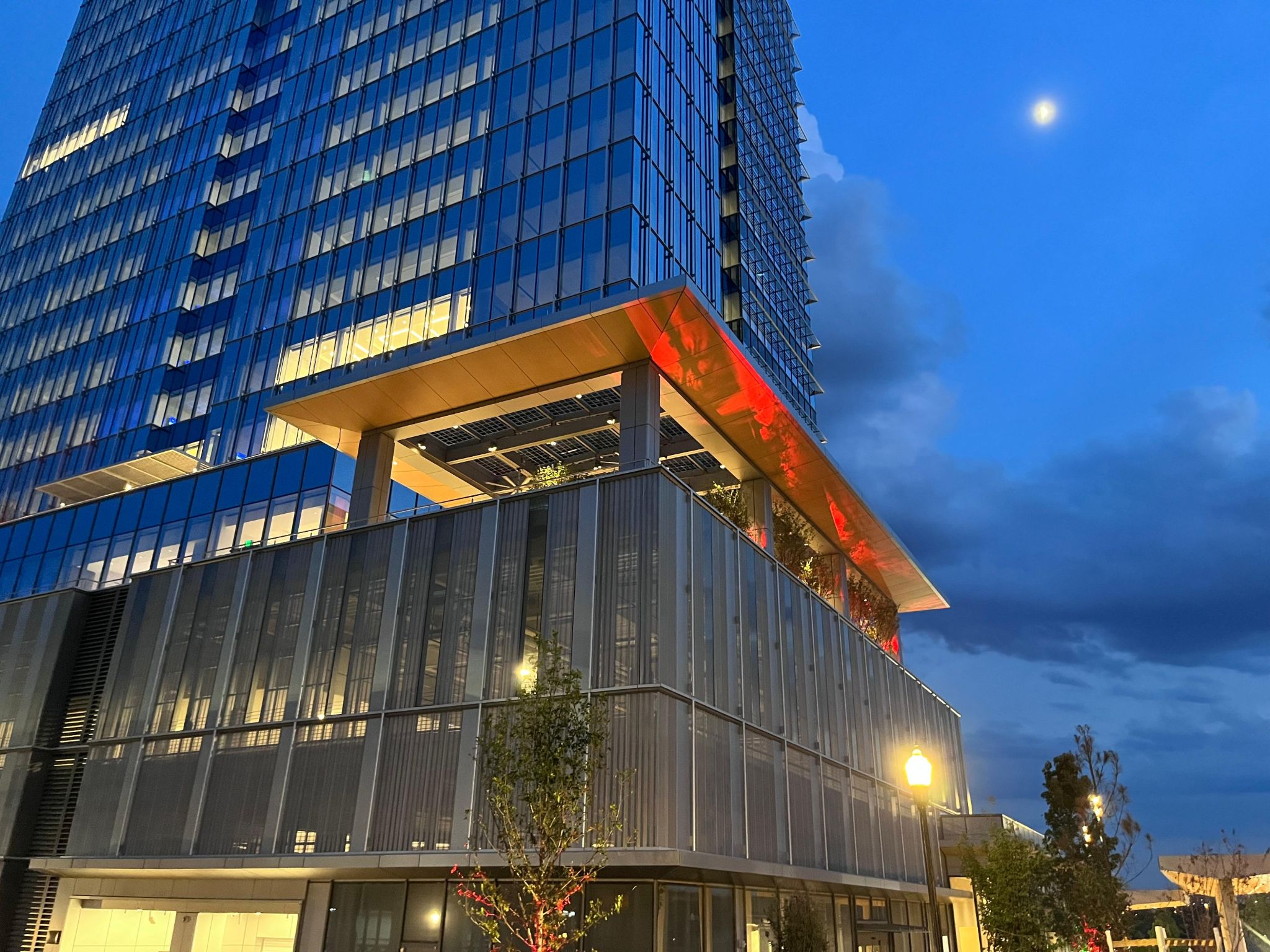
- What if 4,000 m² of façade could generate more than just an impression? At CoStar Group’s new campus in Richmond, ISSOL® Chroma turns the building envelope into an active energy-generating surface. Around 4,000 m² of photovoltaic glass is integrated into the façade, combining the architectural appearance of the building with renewable energy generation. And the numbers make the scale clear. The solar installation on the tower represents 521.55 kWp of installed capacity, with an estimated annual AC output of 460,286 kWh. That is a
- A canopy can do more than provide shelter. ☀️ At CoStar Group’s new campus in Richmond, around 400 m² of ISSOL® Square photovoltaic glass is integrated into an architectural canopy. The result is a structure that combines function, design and energy generation in one surface. Instead of adding conventional solar panels to an existing structure, the photovoltaic technology becomes part of the architecture itself. And it does more than generate energy. The BIPV system takes over the functions of the building material itself,
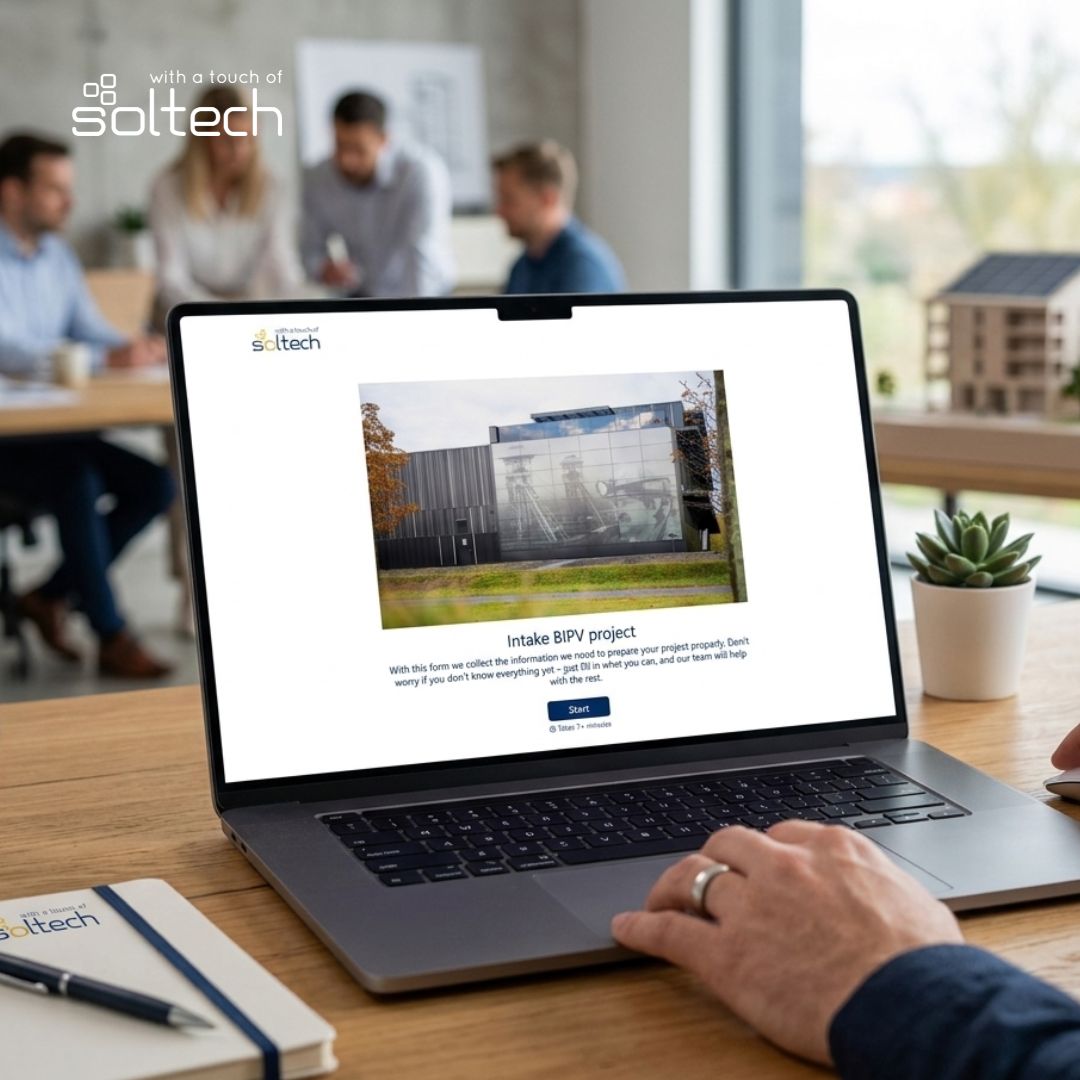
- At some point in a project, the question comes up. ❓ Can the façade generate energy? Can the roof do more than keep the rain out? Can the glass be the solar strategy instead of an add-on to it? Most teams sit on that question for too long. We built something to answer it faster. Our SOLTECH® BIPV Project Intake isn't a contact form. You share what you know — the building, the brief, the constraints — and our sales and R&D team look at it together. Glass design, energy yield, electrical integration, aesthetics. One conversation,

Something wrong or missing? Send an update. Fixed within 24 hours.