Overview
Tenbeo operates in the enterprise AI security sector, focusing on protecting organizations' AI systems and infrastructure. The company serves technology and internet-based enterprises.
In the news
- For years, clinicians have had to walk to stationary workstations, when they could be spending time with patients. The reason: secure data access. It is time to bring the workflow to the clinician, not the other way around. By bringing the workstation to the wrist, Tenbeo is helping healthcare organizations give time back to patients. Through our work with Samsung Electronics, our integration with Microsoft and EHR platforms, clinicians can safely interact with AI-assisted workflows on the move. Here is what an end-to-end,
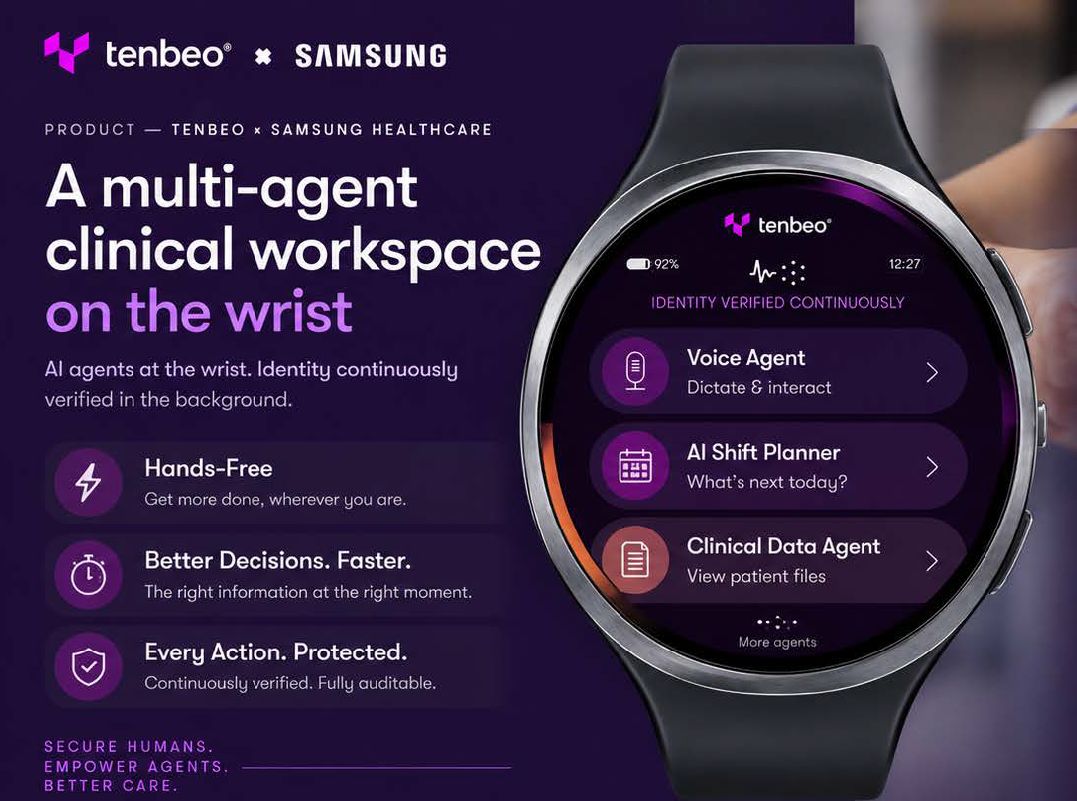
- Have you ever wondered why so much of our work still requires us to sit down and type? A nurse spend around an hour per shift on a shared device, while many of us spend 5+ hours a day behind a screen. ⏱️ What if we could gain more autonomy while working on the move, turning tasks that take 20-60+ minutes behind a computer into a simple 10-second voice command? 👀 The future of work is human–agent collaboration on the move — and Tenbeo is enabling it today. 🫵 Whether you’re a self-employed professional sending a contract, a
- BREACH ALERT.... 284 million patient-related records. That's a lot of people's private health data.... The way in wasn't even technically complex or clever. Shinyhunter attackers phoned Mckesson employees, and tricked them into handing over their Okta single sign-on logins. Those logins opened Salesforce and Snowflake. About 1TB pulled over FOUR DAYS before anyone noticed, because a static login credential can be reused by anyone who possesses it. Tenbeo removes the static secret those logins depend on and instead derives a
- At CHAI's AI Cybersecurity Work Group kickoff last week, Anthropic's Robert Bair told health system security teams the time from an attacker's first access to encryption is about 4 to 5 days, and AI agents are cutting that down to hours. His point: periodic access review can't move at that speed. Neither can a login system that checks identity once per shift. Tenbeo authenticates continuously via heartbeat derived tokens producing a running stream of biometrically real verified identity events for the length of a session -
- A stolen EHR login still works at 3am, from anywhere, long after the clinician who owned it has gone home. That is the appeal of attempting credential theft in a hospital. Identity gets checked once at login, then the session runs unattended for hours. Verizon's 2026 DBIR confirmed 360 large-scale healthcare data breaches in 12 months from Nov 2024 to Oct 2025 attributed to phishing and stolen credentials. These are just the ones we know about. Tenbeo verifies identity from the clinician's own ECG signal, every second to eliminate
- A vishing call was enough. In June, attackers posing as IT support talked employees at Abbott and its Exact Sciences unit into handing over Microsoft Entra SSO credentials. The group behind the attack claims it took 30 million records, including 22 million doctor-patient notes. The credentials worked because nothing after login checked whether a real person was still holding them. Tenbeo runs alongside Entra ID and reauthenticates continuously after that first login, generating a new ECG-derived token every second. A phished password
- Most healthcare security leaders say they aren't confident they could stop an AI-driven identity breach, according to a recent HIPAA Journal survey. Hospitals are wiring AI agents into EHR workflows: an agent pulls a chart, flags a result, hands off to a nurse, triggers another agent to schedule a follow-up. Each handoff is a new place a stolen credential or hijacked agent can act with someone else's authority. Tenbeo authenticates every step in that chain to a real person. Each action gets a fresh token derived from a unique
- Only 25% of healthcare IT professionals believe they could fully recover if an AI agent disclosed admin credentials to an attacker, according to a Semperis survey reported by the HIPAA Journal. That number matters because AI agents in clinical settings do not act alone. A clinician's assistant queries a lab system, escalates a result to a nurse, and triggers a scheduling agent, all in one chain. Each handoff is a chance for a stolen credential to keep moving. Tenbeo ties every step in that chain to a real person's heartbeat.
Related profiles
Something wrong or missing? Send an update. Fixed within 24 hours.