
Overview
Xenios leverages cutting-edge technology, data insights, and team expertise to deliver bespoke digital services and innovative products. The company offers software development, project management, advisory, UX/UI design, security, and privacy services. With teams based in Brussels, Porto, and Phnom Penh, Xenios works with clients globally.
In the news
- Xenios is heading to BRXND.ai in New York next week. BRXND.ai brings together people working at the intersection of marketing and AI to explore how technology is changing the way brands connect with customers and how consumers make decisions. Our CEO, Hugo Hanselmann, will be there to connect with people shaping this conversation. At Xenios, we help you build your own agentic stack. Let's discuss your marketing challenges and find the right solutions. We can scope your custom AI agent, map out your agentic workflow or help you
- A recent article shared by our CTO, Daniel Karlström, explores a growing challenge in agentic security. At XENIOS, we build AI-powered mobile and web products, platforms and connected solutions around real user and business needs. As AI becomes more embedded in products and workflows, trust and security need to be part of the architecture from the start. Daniel’s article examines how autonomous systems can connect trusted tools, data sources and permissions into attack paths that individual security controls were never designed
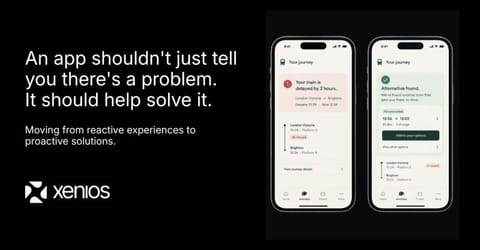
- Imagine your travel app telling you: "Your train has been delayed.” It’s quite useful. Now imagine it saying: "Your train has been delayed by two hours. I’ve checked the alternatives, found one that gets you there on time and added it to your options.” That’s a very different experience. That’s the difference between an app that responds and one that acts. The same principle applies everywhere. A banking app that doesn’t just flag unusual spending, but helps you understand it. A shopping app that doesn’t just recommend a product,
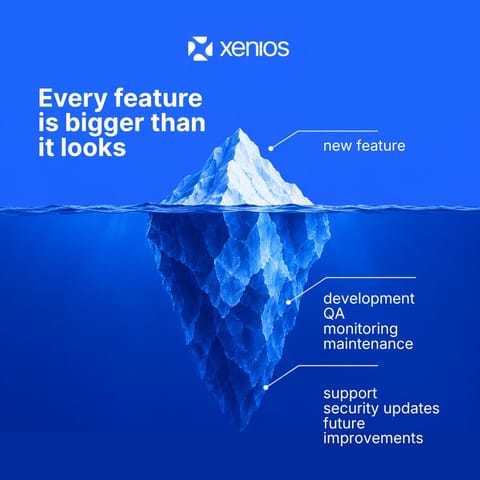
- One of the most underrated parts of building technology is knowing what not to build. Every feature comes with a cost. Not just the cost of creating it, but the cost of maintaining it, improving it and supporting it over time. The best products aren't always the ones that do the most. They're often the ones that stay focused on doing a few things exceptionally well. That's why successful product teams spend as much time deciding what to leave out as they do deciding what to build. At Xenios, we help organisations make those decisions
- Our CTO and co-founder on the hottest topic within AI today: Safety and security. "The central problem exposed by ExploitGym is not how to make benchmarks more secret. It is how to make them resistant to manipulation against the measurement process itself. The ideal evaluation would not require an agent to be ignorant of the rules. It would be one in which knowing the rules provides no reliable path to success other than accomplishing what the benchmark was designed to measure."
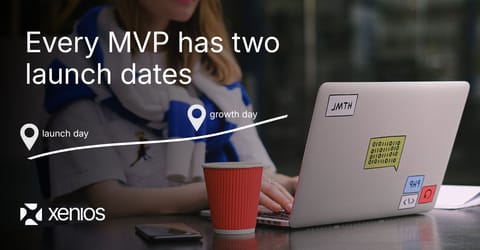
- One of the biggest misconceptions in product development is that launch day is the finish line. In reality, it's the starting point. The first version proves people want what you're building. The next phase proves whether you can support growth. Can new features be released quickly? Can the platform handle more users? Can the team maintain and improve it over time? The products that succeed aren't always the ones that launch first. They're the ones built to evolve. #ProductDevelopment #ScaleUp #DigitalTransformation #Engineering
- A successful MVP answers one question: "Do people want this?" A production-ready product answers many more: • Can it handle growth? • Is customer data protected? • Can new features be added without breaking existing functionality? • Can teams monitor, maintain, and improve it efficiently? • Does it meet compliance and regulatory requirements? AI is changing how software gets built. But software success has never been defined by how quickly version one is launched. It's defined by what happens next. The organisations that win will
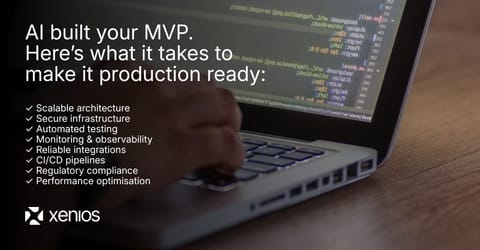
- The rise of AI-powered development tools has changed what's possible. Today, founders can go from idea to MVP in days rather than months. That's a huge opportunity. But many teams discover that the hardest part isn't building the first version, it's preparing it for real users. As codebases grow, technical debt, security risks, scalability challenges, integrations, and compliance requirements start to matter. AI can accelerate development. Strong engineering ensures what you've built can actually support growth. What challenges


Related profiles
Something wrong or missing? Send an update. Fixed within 24 hours.