Career history

In the news
- 91% of recruiters have caught a candidate lying. 65% of hiring managers have caught applicants using AI deceptively (Greenhouse survey, November 2025). A claim is not evidence until something checks it. VECTOR7 labels every piece of evidence as claimed, administratively verified, corroborated or observed. One thing to use this week: pick the single strongest claim on a CV and ask for a record that confirms it: an employer record, a certificate, a register. A claim that only exists on the page is unproven. That is the idea behind
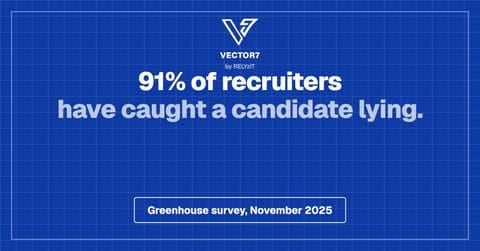
- 91% of recruiters say they have caught a candidate lying (Greenhouse, November 2025). Every hiring step has a weak point. Which part of your hiring process do you trust least today? Follow RELYzIT for more on Evidence Based Hiring.
- One candidate, argued both ways. Most hiring processes show one side of a candidate. An Evidence Brief shows the case supporting the hire, the case cautioning against it, and where the signals disagree. Six slides on how to read one. The role is a sample and every name is removed. The decision stays with the hiring team.
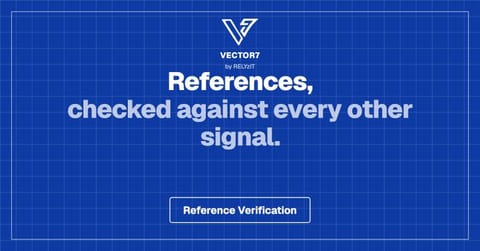
- Reference Verification in VECTOR7 is structured, and every answer is checked against every other signal. Glowing references next to a gap the screening found: the contradiction goes on the page, so it is seen before the offer, not after. Not a call that goes wherever the conversation goes: every referee answers the same competency questions. People do the judging. The platform does the checking. Follow RELYzIT for more on evidence based hiring.
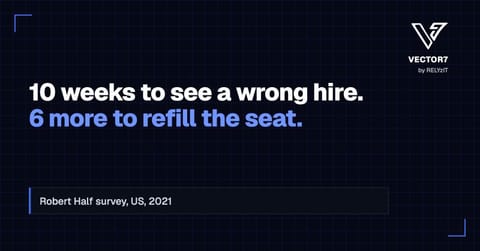
- 10 weeks to realise a hire was wrong, then 6 more to refill the role. That is 16 weeks from the wrong hire to a filled seat (Robert Half survey of more than 2,800 US senior managers, fielded November to December 2020, published March 2021). The earlier the evidence arrives, the less of that time is spent. VECTOR7 puts the Evidence Brief on page before interviews are booked. One thing to use this week: before the next hire, write down the date the doubts started. Count the weeks from that date to the day the role was open again.
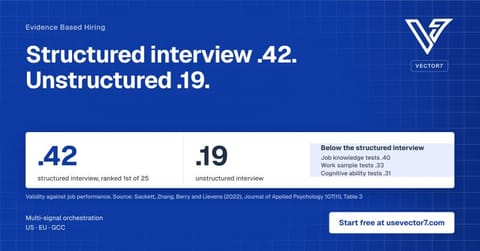
- The most recent re-analysis of the selection research ranks 25 hiring methods by how well they predict job performance. First: the structured interview, at .42. The unstructured interview, the one most teams run, comes in at .19. Same conversation, less than half the predictive value, and below job knowledge tests (.40), work samples (.33) and cognitive ability tests (.31). The difference is whether the questions and the rating criteria were fixed before the candidate walked in. And the spread around that .19 reaches down to
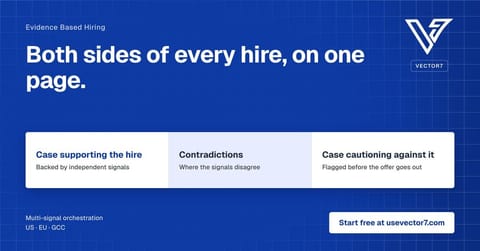
- Every hire has a case supporting it and a case cautioning against it. Most processes only show the first. VECTOR7 runs each candidate through independent evaluation signals, shows where they contradict each other, then builds a case supporting the hire and a case cautioning against it. One picture, both sides argued. The decision stays yours, and now you can show why. For over a year it has run as a service, driven by people, for teams across Europe and the GCC, in banks, public sector and multinationals spanning multiple
This page shows public professional information only, each fact cited. Is this you? send a correction, or ask for removal within 24 hours, no questions asked.