
Overview
Andrea Balducci is a RevOps and AI consultant for B2B companies. Half Finnish and half Italian, he was raised in Brussels and has spent more than 12 years in B2B revenue roles. He joined the founding team of Sortlist in October 2014 working on go-to-market, served as Head of Business Development and Growth from January 2017 to March 2020, and led Revenue Operations from March 2020 to December 2023 in Brussels. During his tenure Sortlist was named fastest software company in Belgium in the November 2019 Deloitte Fast 50, with 2,289 percent growth over a four-year period, and a rework of pricing and packaging produced a 37 percent higher average deal size. Since February 2024 he has worked as a self-employed consultant in RevOps, AI and automation, serving more than 10 clients including Epsor, Simplycure, Merchery, Autotuner, Dietplus, Edergen and Visioglobe. It offers a free 25-minute audit of a company's go-to-market setup, followed by sprint-based work that fixes systems, builds automations and removes bottlenecks. Reported outcomes include an AI knowledge base that auto-resolves around 40 percent of tier-1 support tickets and forecast accuracy within plus or minus 15 percent.
He joined Sortlist's founding team in October 2014 on go-to-market, moved up to Head of Business Development and Growth in January 2017, and became Head of Revenue Operations in March 2020, a Brussels-based role he held until December 2023. Sortlist's Deloitte Fast 50 win in November 2019, as fastest software company in Belgium with 2,289 percent growth over four years, fell within that tenure. In February 2024 he went self-employed as a freelance consultant in RevOps, AI and automation, and has since worked with more than 10 B2B clients across fintech, healthcare SaaS, e-commerce, automotive, energy and indoor mapping software.
As founder of OpsAIAgent, Andrea develops AI agents and automation workflows for revenue operations, helping B2B companies streamline their sales and operations processes.
Insights & ideas
The through-line
Across every post, Andrea Balducci returns to one claim: the bottleneck in AI-for-revenue work is never the model, it's the foundation underneath it. Broken CRM data, undefined lead stages, and processes nobody agreed on get scaled and exposed by AI rather than fixed by it [5][13]. This has been consistent from his podcast description of RevOps as giving people "superpowers" through data, process and automation [16] through to his 2026 posts on agents, closed-lost pipelines, and the "first wave of AI SDRs" cracking under their own promises [2]. Over time the emphasis has sharpened from general enablement talk toward a sharper, almost contrarian skepticism of AI vendors and hype cycles, paired with hard adoption math: most of what he builds dies within weeks unless it slots into work people already do [6].
On foundations before automation
Balducci's clearest recurring position is that AI projects are really data and process projects wearing an AI label. "Every engagement starts the same way... 'We want AI in our revenue process.' Three weeks later we are mapping how deals actually move, deciding who owns which object in the CRM, and killing the four lifecycle fields nobody could explain. That is the AI project. It just does not look like one yet." [5] He states the cost of skipping this bluntly: "You ship an agent that drafts follow-ups from CRM data. The CRM says three different things about the same account. The agent picks one. Confidently. At scale." [5] Elsewhere he distills the whole thesis into one line: "𝗔𝗜 𝘄𝗼𝗻'𝘁 𝗳𝗶𝘅 𝗯𝗿𝗼𝗸𝗲𝗻 𝗥𝗲𝘃𝗢𝗽𝘀. 𝗜𝘁 𝘄𝗶𝗹𝗹 𝗲𝘅𝗽𝗼𝘀𝗲 𝗶𝘁 𝗳𝗮𝘀𝘁𝗲𝗿." [13] A concrete failure backs this up: an auto-enrichment agent that kept "happily enriching accounts that had already churned" because "the agent was flawless. My source data was trash." [13]
On adoption over technology
He treats adoption, not build quality, as the real filter for whether an automation survives. Of his own portfolio: "9 of my 12 AI automations died... Only 3 survived the real-world adoption check... The ones that died had one thing in common. I built them because I could, not because the team was ready to change how they worked." [6] The survivor is instructive precisely because it required nothing from users: a meeting prep agent delivering "25 minutes saved per rep, per day. Zero behavior change required. The value lands inside a workflow that already exists." [6] He applies the same logic to measurement, admitting ROI is often unmeasurable cleanly and defaulting to internal NPS and qualitative feedback instead of chasing "the perfect number" [14].
On the AI SDR hype cycle
Balducci is openly skeptical of vendors selling full replacement of sales roles. He points to data showing "reply rates down 40 to 60 percent from their own benchmarks" and vendor churn "they can no longer explain away," citing Artisan's "Stop Hiring Humans" billboards followed by the same company "hiring a human BDR" and shipping "a dialer so reps handle the human work while the AI does the rest." [2] He contrasts these struggling players with "the quiet winners" who sell infrastructure rather than replacement, and flags the buyer advice that for Series A teams "the report recommends building your own assistant on Claude plus n8n over buying a packaged AI SDR." [2] The same wariness about surface-level fixes shows up in his reaction to "Just hook Claude up to your CRM" advice, which he says "works" but "skips the hard part" [13].
On working the pipeline you already have
He also treats overlooked, unglamorous inventory as more valuable than new pipeline generation. "𝗧𝗵𝗲 𝗰𝗵𝗲𝗮𝗽𝗲𝘀𝘁 𝗽𝗶𝗽𝗲𝗹𝗶𝗻𝗲 𝗶𝗻 𝘆𝗼𝘂𝗿 𝗖𝗥𝗠 𝗶𝘀 𝘀𝗶𝘁𝘁𝗶𝗻𝗴 𝗶𝗻 𝗖𝗹𝗼𝘀𝗲𝗱 𝗟𝗼𝘀𝘁. Everyone knows it. Almost nobody works it properly." [1][3] His first attempt failed by automating the wrong thing: a recycler that "pushed dormant deals straight into the reps' Slack" got "zero uptake" because "those leads were never hot enough to justify interrupting a rep's day," which taught him he had "automated a handoff nobody wanted." [1][3] The fix was segmenting by loss reason rather than by date, into four sequences that wait for the actual trigger, whether pricing change, competitor renewal window, or timing [1][3].
Takeaways
- Before building an AI agent, map how deals move and resolve conflicting CRM data and undefined lifecycle fields first, since AI will scale whatever mess already exists [5][13].
- Segment closed-lost pipeline by loss reason, not by date, and match the outreach trigger to the reason: pricing change, competitor renewal window, or timing [1][3].
- Judge automations by six-week adoption, not build quality; prioritize ones requiring zero behavior change, like a meeting-prep agent that saves reps time inside an existing workflow [6].
- Be skeptical of "replace your team" AI vendor pitches; watch for reply-rate collapse and vendors quietly rehiring humans as warning signs [2].
- For ROI, use internal NPS and qualitative feedback instead of chasing precise productivity numbers that are nearly impossible to measure [14].
- Cap HubSpot marketing contacts proactively via Account & Billing rather than letting tier upgrades become the new cost baseline [4].
Media & appearances
- We Are SalesYouTubeEp32 Andrea Balducci | The importance of RevOps in a scale-up sales organizationAndrea Balducci discusses his career progression from sales to VP of Salesforce to Revenue Operations at Shortlist, a B2B marketplace for service providers. He explains his philosophy of enabling business people in marketing, sales, and customer success through technology, data, processes, and automation, using the analogy of giving people "superpowers" to do their jobs better. He also describes how he approaches tool implementation by first identifying what tools his team already uses before building processes and implementing additional solutions if needed.
In the news
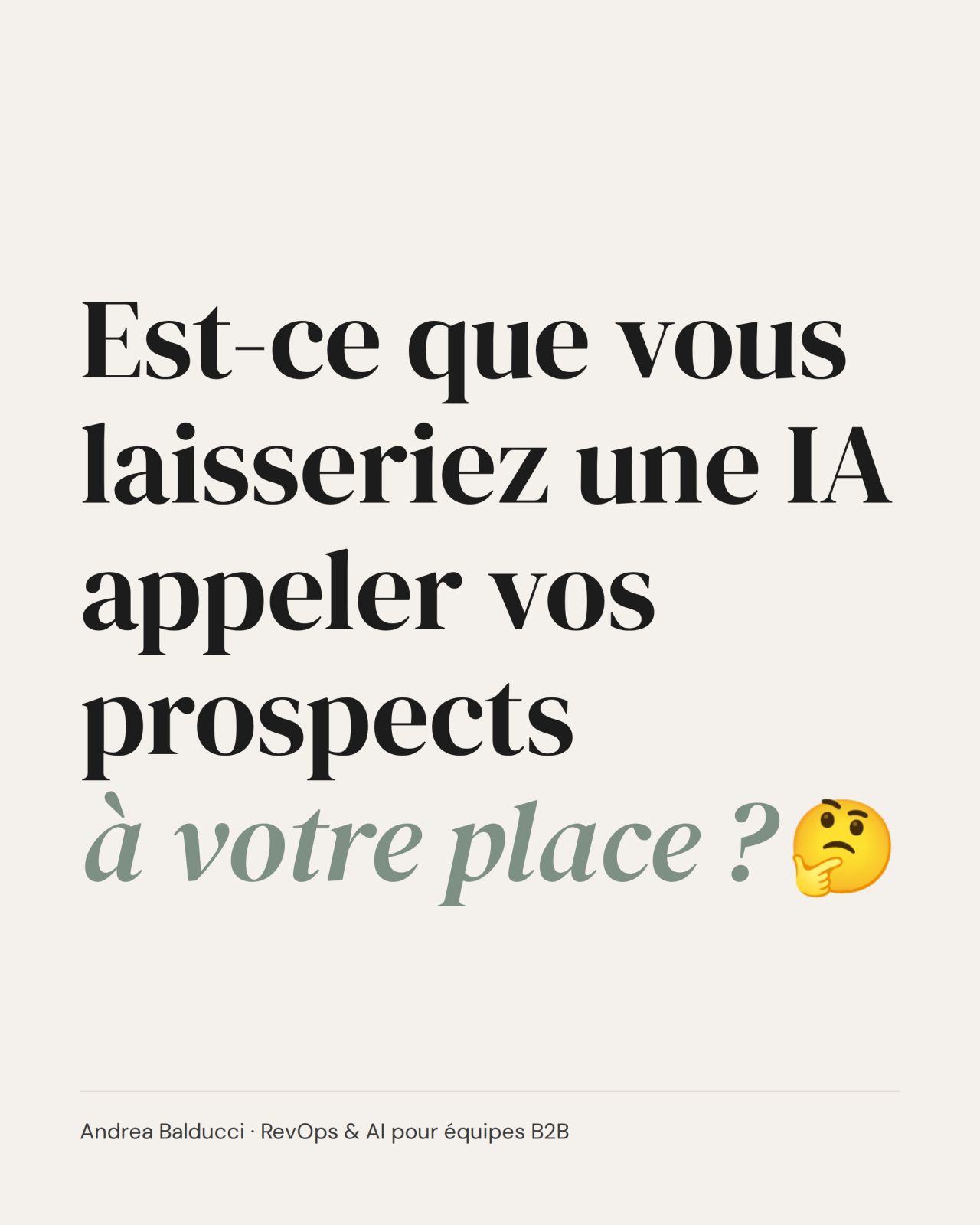
- Un client veut laisser une IA appeler ses prospects à la place de ses commerciaux. J'aimerais me forger un avis, mais là, je suis très dubitatif… 🤔 Le contexte: une équipe commerciale B2B qui compose ses numéros à la main, et une cible qui décroche peu. Pourquoi pas tester un agent vocal en prospection ? Je suis de nature curieuse, et j'adore tester de nouveaux trucs/tools/etc. J'ai pour le moment un offre de Revox - On paie au contact 'connected', même si la personne raccroche au bout de quelques secondes. – Quelques 3-4% de
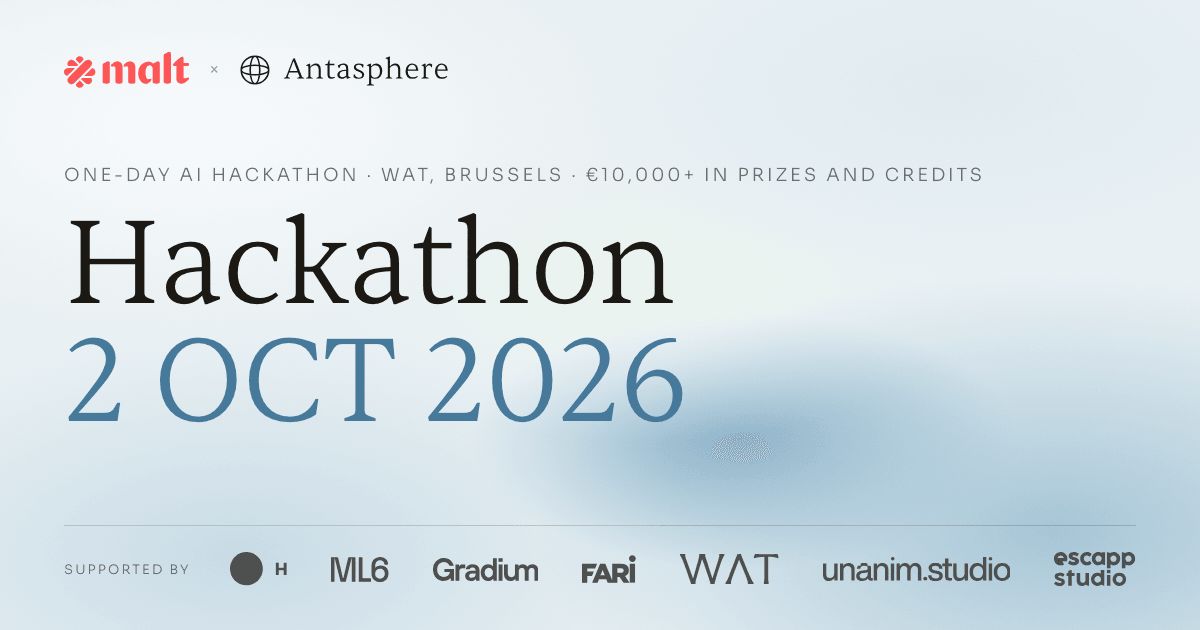
- Last week a client's ops lead walked me through her actual workflow: a supplier portal with no API, and 40 minutes a day of copy-paste into HubSpot. The vendor's answer was a monthly CSV export. Every agent I build eventually hits that wall. The model is fine. The plan is fine. 𝗜𝘁 𝗷𝘂𝘀𝘁 𝗵𝗮𝘀 𝗻𝗼 𝗵𝗮𝗻𝗱𝘀. That's the question behind the hackathon Antasphere is running with Malt on 2 October at WAT in Brussels: what does an agent need in its hands to be useful on real work? 𝗢𝗻𝗲 𝗱𝗮𝘆, 𝗼𝗻𝗲 𝘁𝗼𝗼𝗹 𝗳𝗼𝗿 𝗮𝗻
- If you want AI in your revenue team, don't start by buying an AI tool. Buy the outcome. I build this inside HubSpot and Pipedrive for B2B teams in Benelux, and over the last year almost every conversation has moved the same way. Clients stopped asking me for the tool. They ask for the result. The name for it is 𝗦𝗲𝗿𝘃𝗶𝗰𝗲 𝗮𝘀 𝗦𝗼𝗳𝘁𝘄𝗮𝗿𝗲. Old world: you buy the CRM, then you pay people to make it usable. Cleaning, routing, reporting, chasing reps to update their deals. New world: you buy routed leads and a pipeline you
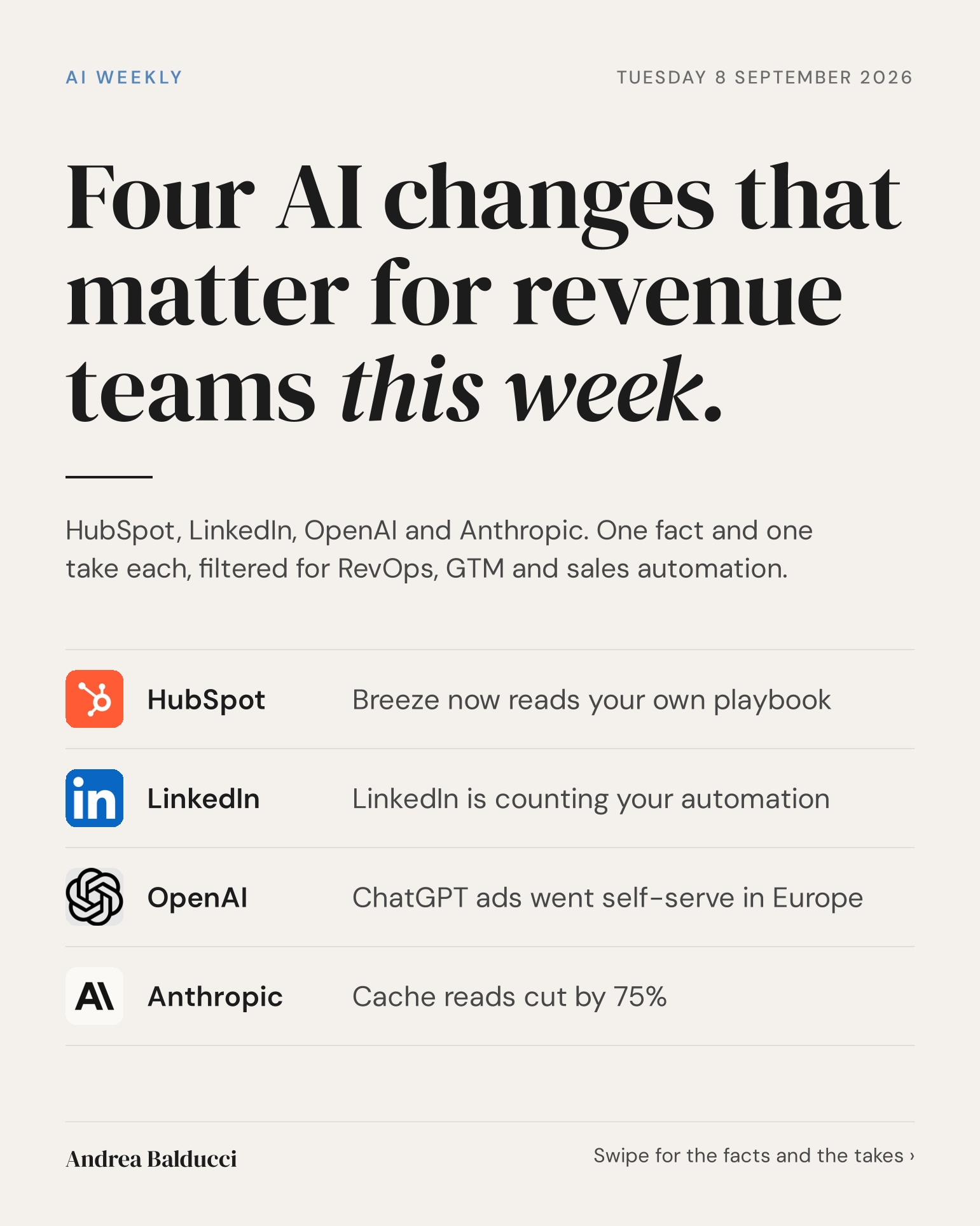
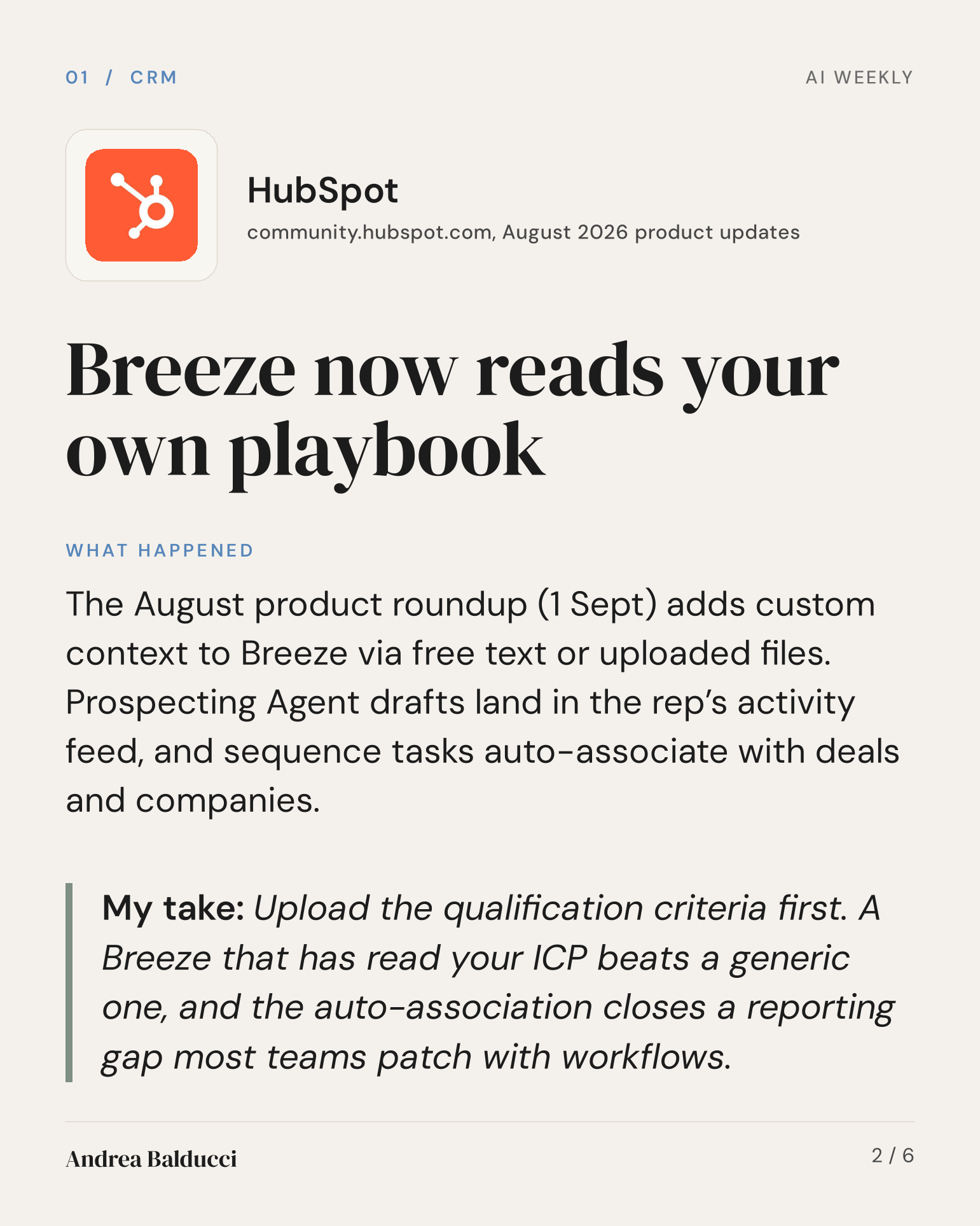
- Monday morning, coffee, 40 tabs of AI news. Four that got my attention: does this change anything for a B2B revenue team? 𝗛𝘂𝗯𝗦𝗽𝗼𝘁 𝗕𝗿𝗲𝗲𝘇𝗲 𝗻𝗼𝘄 𝗿𝗲𝗮𝗱𝘀 𝘆𝗼𝘂𝗿 𝗼𝘄𝗻 𝗽𝗹𝗮𝘆𝗯𝗼𝗼𝗸 Fact: the August roundup (1 Sept) adds custom context to Breeze via text or uploaded files. Prospecting Agent drafts land in the rep's feed, sequence tasks auto-associate with deals. My take: upload the qualification criteria first. A Breeze that has read your ICP beats a generic one, and the auto-association closes a gap I've been
- Salesforce just admitted the CRM interface was never the point. 𝗘𝘃𝗲𝗿𝘆 𝗥𝗲𝘃𝗢𝗽𝘀 𝗮𝗱𝗺𝗶𝗻 𝗾𝘂𝗶𝗲𝘁𝗹𝘆 𝗮𝗴𝗿𝗲𝗲𝗱 𝘆𝗲𝗮𝗿𝘀 𝗮𝗴𝗼. What launched with Claudeforce: 1. Pull pipeline, check deal health, update records from Claude, without opening the CRM 2. One admin connects the org once, everyone gets access scoped to their own permissions The pushback going around: "you can't run a 200-person revenue org on chat, how do you standardise workflows?" That confuses the screen with the process. 𝗧𝗵𝗲 𝗽𝗿𝗼𝗰𝗲𝘀𝘀

- Our reps don't use the CRM." 𝗠𝘆 𝗳𝗶𝗿𝘀𝘁 𝗾𝘂𝗲𝘀𝘁𝗶𝗼𝗻: 𝗵𝗼𝘄 𝗺𝗮𝗻𝘆 𝗼𝗳 𝘁𝗵𝗲𝗺, 𝗮𝗻𝗱 𝗵𝗼𝘄 𝗼𝗳𝘁𝗲𝗻? The number almost never exists. Without it, the conversation runs the same way every time. Rebuild the fields, compare tools, book another two-hour demo across 45 features. Three weeks later everyone is back in their spreadsheet. I have heard that exact sentence at three clients. Three different root causes. 1. The data was the problem. Duplicate organisations, dead pipeline stages, accounts with no owner.
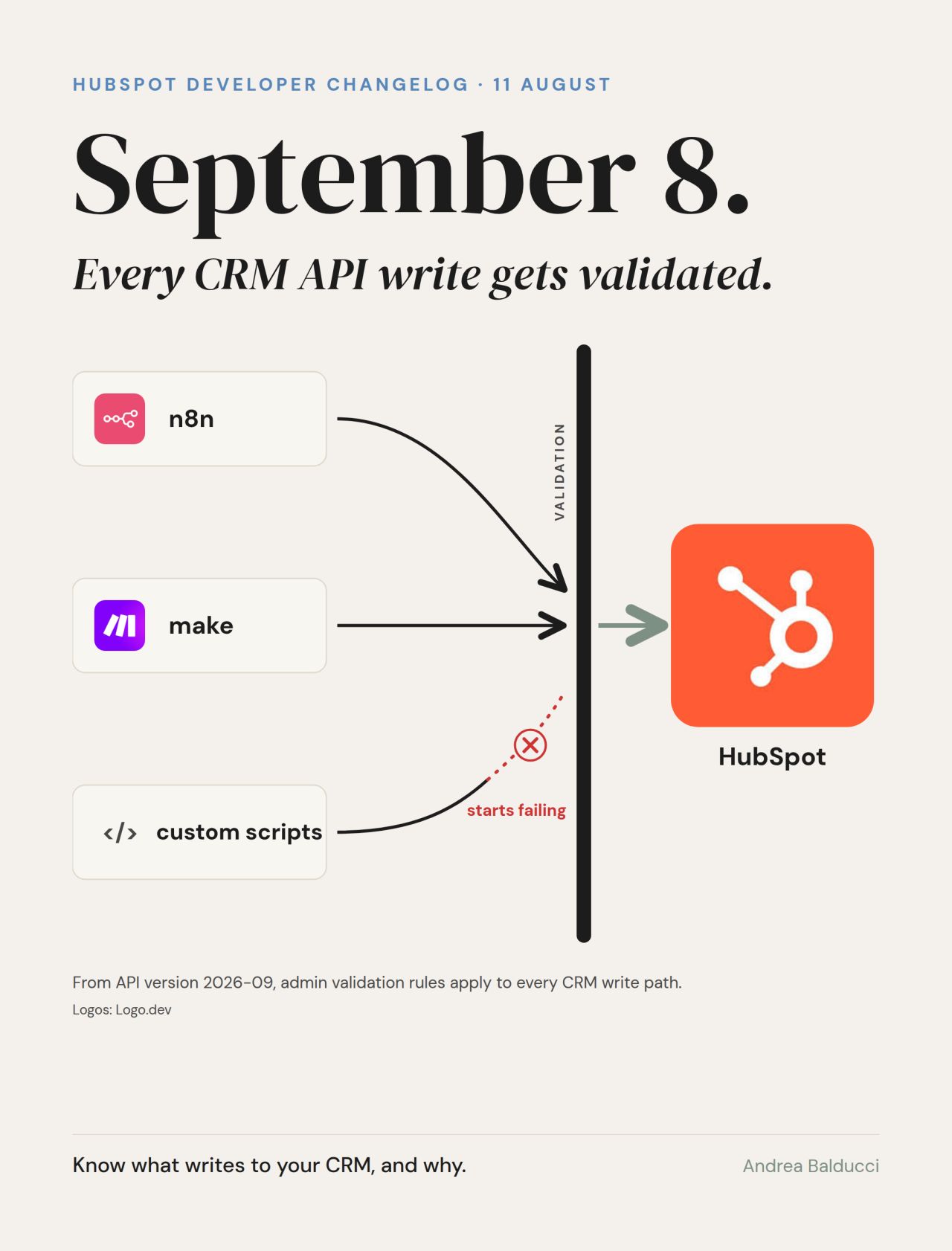
- 𝗢𝗻 𝗦𝗲𝗽𝘁𝗲𝗺𝗯𝗲𝗿 𝟴, 𝗛𝘂𝗯𝗦𝗽𝗼𝘁 𝘀𝘁𝗮𝗿𝘁𝘀 𝗲𝗻𝗳𝗼𝗿𝗰𝗶𝗻𝗴 𝘃𝗮𝗹𝗶𝗱𝗮𝘁𝗶𝗼𝗻 𝗿𝘂𝗹𝗲𝘀 𝗼𝗻 𝗲𝘃𝗲𝗿𝘆 𝗖𝗥𝗠 𝗔𝗣𝗜 𝘄𝗿𝗶𝘁𝗲. If you run n8n, Make, or a custom script that pushes data into HubSpot, some of it will start failing. The change landed in the developer changelog on 11 August. Two lines, no fanfare. From the 2026-09 API version, admin-configured property validation rules apply to all CRM API write paths. Today your integrations can bypass them. In three weeks they cannot. A related one: Pipelines
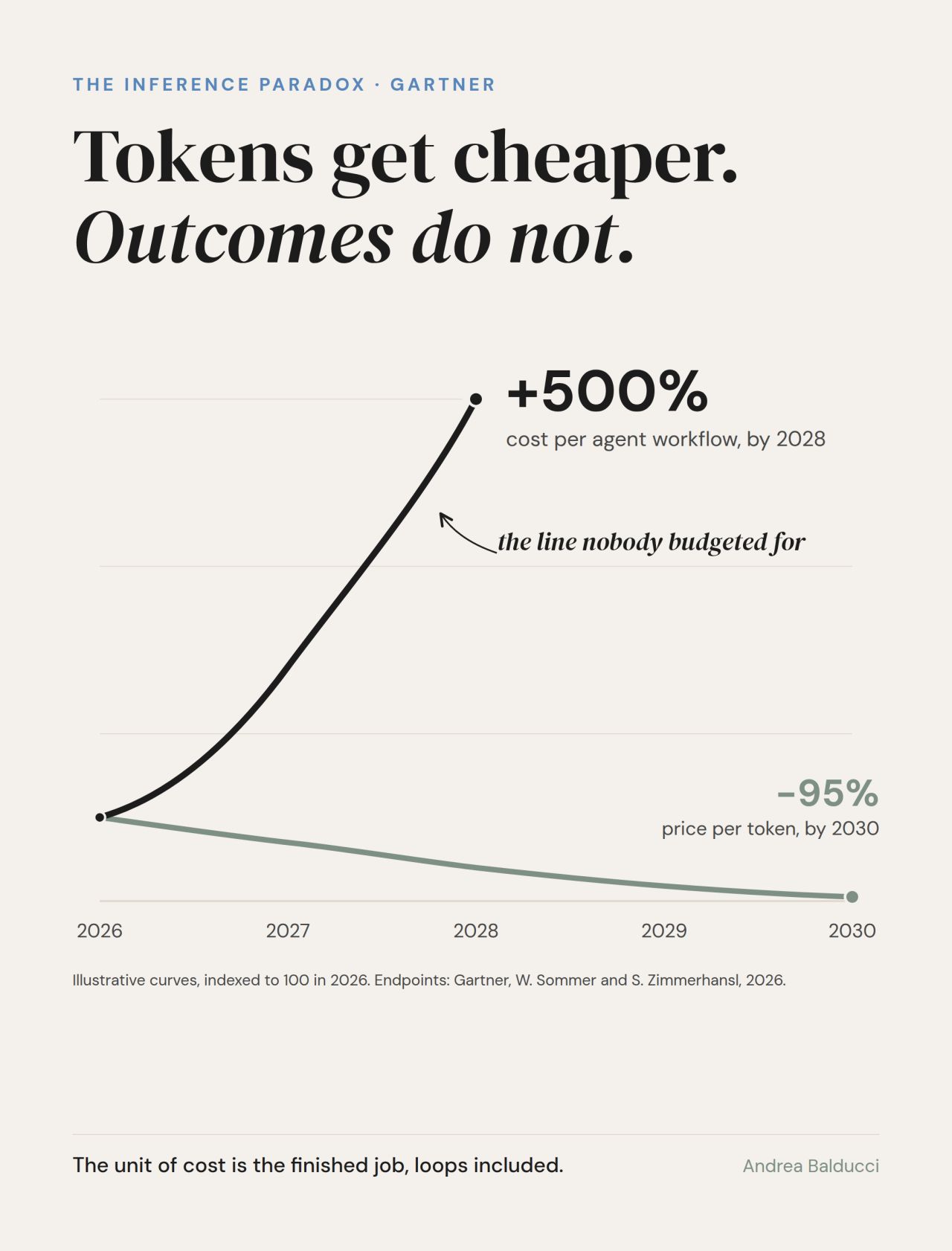
- Gartner, same analyst: token prices down 95% by 2030, cost per agent workflow up 500% by 2028. They call it the Inference Paradox. I call it the line nobody budgeted for. A chatbot reads one question and answers once. An agent reads, plans, calls a tool, checks its own work, finds a gap, and goes again. Gartner puts the floor at 5x the cost of a simple chat interaction, before the task gets hard. Picture an agent that loops 12 times to close one CRM task. Cut the token price in half. You still pay for 12 runs to get one result.
Related profiles
This page shows public professional information only, each fact cited. Is this you? send a correction, or ask for removal within 24 hours, no questions asked.