
Overview
Antoine Van Malleghem is founder and chief technology officer of Botronics, a robotics company that builds autonomous systems and embedded AI for everyday objects. Its first product, iXi, is an autonomous golf trolley that follows the golfer without a remote control, using dual-camera vision and GPS with preloaded course maps, with up to 10 hours of battery life and room for bags up to 20 kg. The company has also built a compact autonomous module that can be fitted into objects beyond golf equipment. The iXi project started in 2021. Botronics raised €800k with its first project and has received more than €2.6 million from investors in total. Botronics SRL is registered in Frasnes-lez-Gosselies and lists an office in Nivelles, with a headcount in the 2 to 10 range. The team around Van Malleghem includes Christophe Simon as COO and engineers in robotics, software and mechatronics. The company is building a European competence center around ROS2 and Nav2 and organises ROS Meetup Belgium. Coverage has appeared in Forbes, FOX Business, Golf Digest, L'Écho, La Libre, De Tijd and Nieuwsblad.
Career history

Insights & ideas
The through-line
Across these posts, Antoine Van Malleghem keeps returning to one idea: robotics success is decided by how disciplined you are about hardware choices, and how honest you are about the unglamorous work that follows. Early in the period covered here, his posts are dominated by hardware validation, PCB testing, and vendor risk [5][10][11][13]. As iXi's hardware stabilizes, his attention visibly shifts toward software and the "last 20%" of features, troubleshooting tools, and environmental edge cases like sun glare [15][4][3][2]. Throughout, he insists that the product has to be genuinely different, not merely AI-branded, and that the team's pace toward production is the real measure of progress [6][14][7].
On hardware mastery
Van Malleghem treats hardware decisions as irreversible bets: "When hardware is shipped, it's costly to recall - SO choose it wisely!" and "Master every hardware component of your robot. Don't let luck decide your future. Mastery is key in the hardware world." [5] This is not abstract advice; it comes from direct experience debugging a magnetometer fault caused by motor noise traveling through the trolley's own frame, a problem he summarizes as "Keep your I2C communication on your PCB. Or learn it the hard way." [11] He applies the same rigor to new PCB revisions, describing test cycles that cover "NVMe read and write speeds, USB device speeds, CAN testing, RTC, and much more," and framing the engineer's job at that stage as one "where you can trust nothing and just validate everything." [13]
On hardware agnosticism and vendor risk
He is wary of over-committing to any single vendor's ecosystem. Reacting to a Jetson price hike of "between 33% and 101%" with no explanation, he warns readers to "avoid being too tied to a given piece of hardware" and to "think twice... before using a proprietary SDK that only works with certain hardware," adding pointedly, "Why do you think hardware companies provide free software?" [10] The same instinct shows up when a new Jetson Orin Nano is announced: he is curious about the specs but flags that "Same form factor doesn't mean it fits electrically," refusing to assume compatibility without testing [1].
On the last 20%
Van Malleghem has a stated preference for the grinding, unglamorous phase of engineering. Citing "a common software corollary of the Pareto Principle... you need 20% of the effort to create 80% of a feature, and 80% of the effort to create the last 20%," he says of iXi's current phase, "that's definitely the phase I prefer," even while admitting "a lot of frustration" and "fewer 'wow' effects" [15]. His troubleshooting approach favors data over generative tools: "PlotJuggler > Claude Code at troubleshooting things. Because yes, troubleshooting robots by looking at data is easier" [4]. He describes the current sun-glare problem the same way, as a "pragmatic" engineering challenge rather than a crisis: "now what we need is to be pragmatic. The current challenge is to deal with the sun" [3].
On product uniqueness
He is skeptical of AI as a marketing label. "Having AI in the name of a product doesn't make it smarter," he writes, adding that when people claim "this kind of trolley already exists," his own market analysis shows "there is nothing even comparable" [6]. This conviction underlies his framing of Botronics' mission as building something that goes "way beyond the prototype stage" and that will "revolutionize the world of golf" [14].
From the stage
In the 22Astronauts podcast, Van Malleghem gives context the written posts do not: his path started in software and AI work at large companies before he moved into robotics four to five years ago [17]. He also draws a personal distinction between being independent and being an entrepreneur, tracing his own entrepreneurial mindset to watching his father work independently with wood, in contrast to his mother's role as a bank employee [17].
Takeaways
- Before adopting a piece of embedded hardware, verify electrical fit even when the form factor is advertised as unchanged [1].
- Keep noise-sensitive buses like I2C on-PCB; long cables and even the chassis frame itself can introduce motor noise faults [11].
- Treat proprietary SDKs and single-vendor SOMs as lock-in risk, especially after unexplained price hikes like NVIDIA's 33-101% Jetson increase [10].
- Use data-inspection tools like PlotJuggler as a primary troubleshooting method for robotics issues [4].
- Expect the "last 20%" of a feature, the unhappy-path and edge-case work, to take four times the effort of the initial version, and plan resourcing accordingly [15].
- Don't equate "AI" branding with product differentiation; validate uniqueness through continuous market analysis instead [6].
Media & appearances
- 22Astronauts with Ilir AliuYouTubeEp 56 | You Should Know Why You’re Doing It (w/ Antoine Van Malleghem)Antoine Van Malleghem discusses his background as the co-founder of Botronics, which develops robotic golf trolleys, and explains his career path starting with software and AI work at large companies before transitioning into robotics four to five years ago. He reflects on how his father's independent work with wood influenced his entrepreneurial mindset, contrasting this with his mother's role as a bank employee, and emphasizes the difference between being independent and being an entrepreneur.
- Aryan JagushteYouTubeRobots and Golf | Robotics Software Engineer | ai and robotics | belgium startup
In the news
- 24 hours to come back home from China 2 trains, 2 taxis, 2 planes, 1 bus 😁 And already at the office 🧐 Sometimes I wonder why I have a house 🤣 Now let's share what I learned with colleagues and move forward to deliver iXi as fast as possible 💪🏻 But first: let's grab a well deserved coffee ☕️ PS: I'm back... But not my luggage 🤧
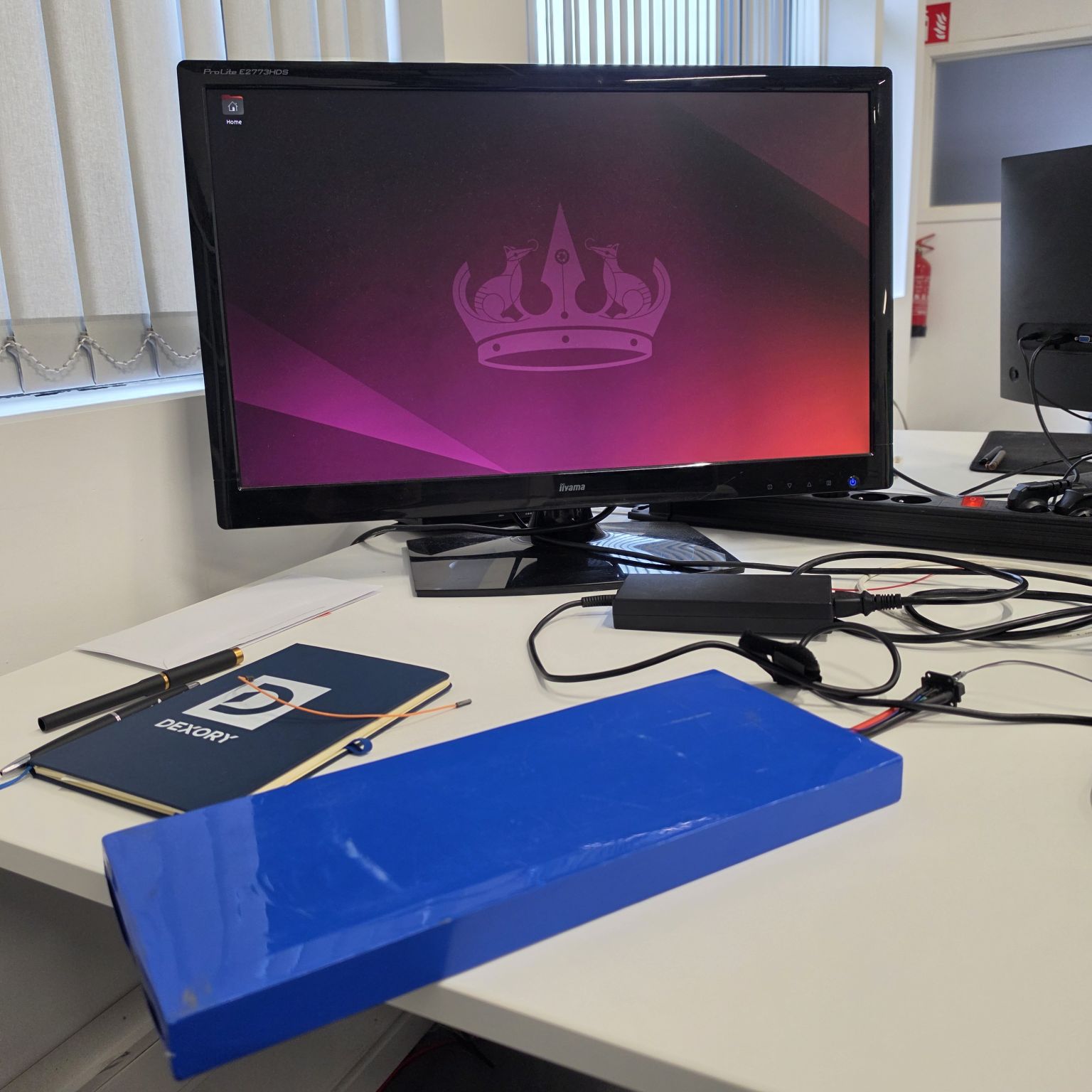
- Join us or share it ! 😉
- Time to leave 🇨🇳 The path to production is really interesting 😅 Hard... But interesting. I see this difficulty with a positive mindset: as a company, it creates an entry barrier 😁 In the AI era where there is less and less barrier in the software world (I mean, I hope you capture data), being in the robotics world is more and more attractive. Soon, we will show you what we cooked 😉 Now let me try the high speed train and then flight back to Belgium 🇧🇪 Tomorrow -> 🍟🍟

- On the road again 😊🇨🇳 Today, we are visiting one of our partner to validate the work they did. Small eyes, days are really dense. We try to work as much as possible when being in China so that we derisk everything. Hope to end up the day with good news 😊 If you went through the industrialization process, you know how these steps are important and difficult right? Team production 🙌

- NVIDIA put resources in Rust 🦀 They announced CUDA Rust for 2027 ! I'm now looking for TensorRT in Rust to be honest 😇 I know some libraries exist but an official support would be awesome (NVIDIA) CUDA without TensorRT is not possible in Robotics AND Rust is part of the robotics future. Picture : working while eating Moon Cakes in China 😇 A nice Sunday 🤗

- More work = more experience A picture at the hotel in China, found a small spot to work. Yes, it's Saturday. It's common to say in Europe that the number of hours you work doesn't reflect the quantity and quality of the work you deliver. That's true. Mainly because of the human factor, every human is different. BUT it's a question of probability. If 2 people were exactly the same, and one works x hours a day while the other works 2x hours a day, guess which one has more experience in the end ? Why do I say that ? I like experienced

- Waiting for our flight from Beijing to Shenzhen 😊 After 1 week in the USA (not the first time, even this year), 1 week in China (a first for me) This is also what startup life brings: less sleep, more discoveries ! When you work as a startup founder, you spend your time discovering new things. From understanding fundraising mechanisms to seeing how another country works. My obsession: getting to market as fast as possible ! Let's goooo 💪

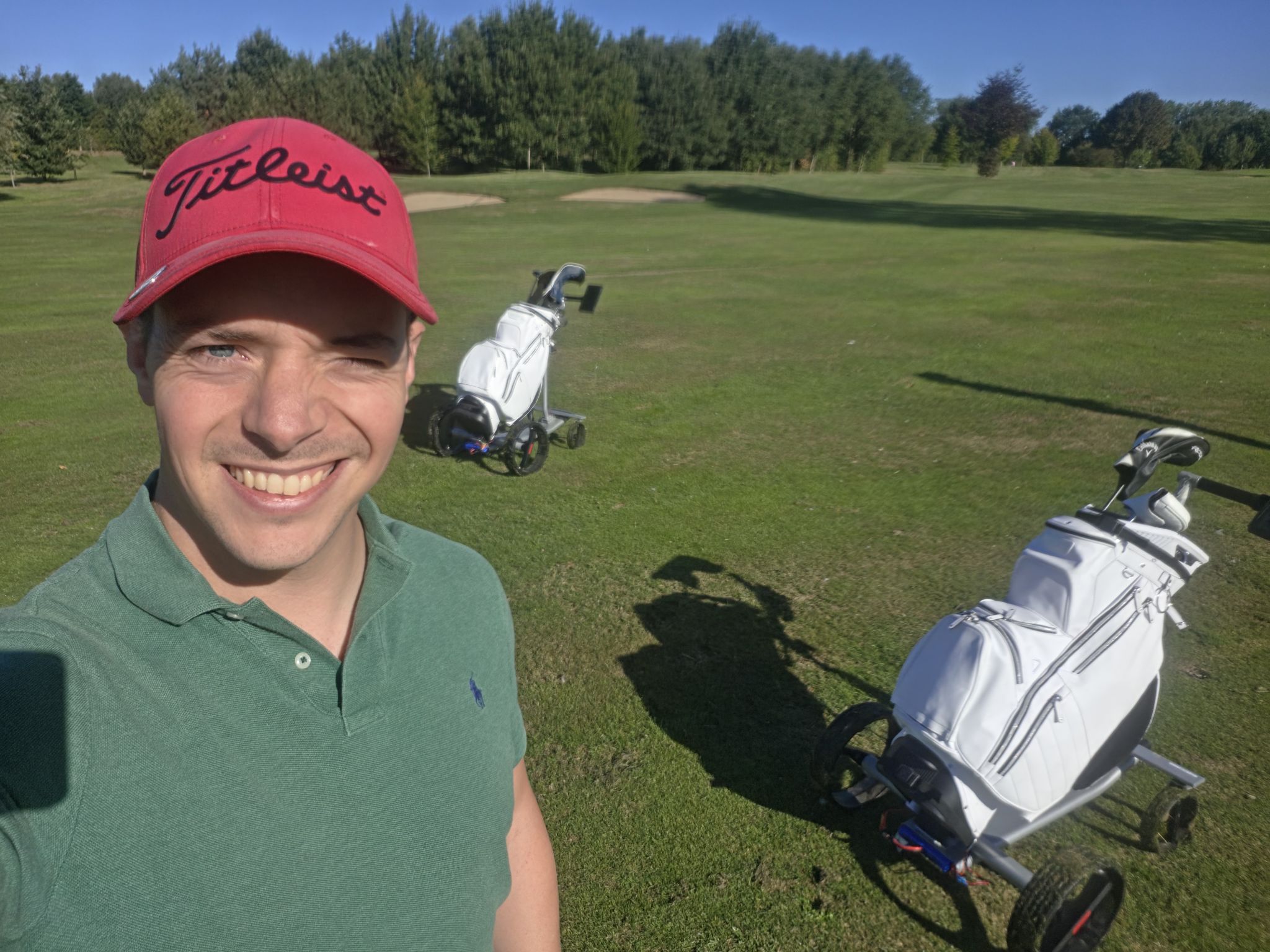
- IXi reproduction in progress 😉 Weather becomes uncertain in Belgium so it becomes more and more difficult to have sessions like this one. Maybe we should move to Texas for example 🤣
Related profiles
This page shows public professional information only, each fact cited. Is this you? send a correction, or ask for removal within 24 hours, no questions asked.