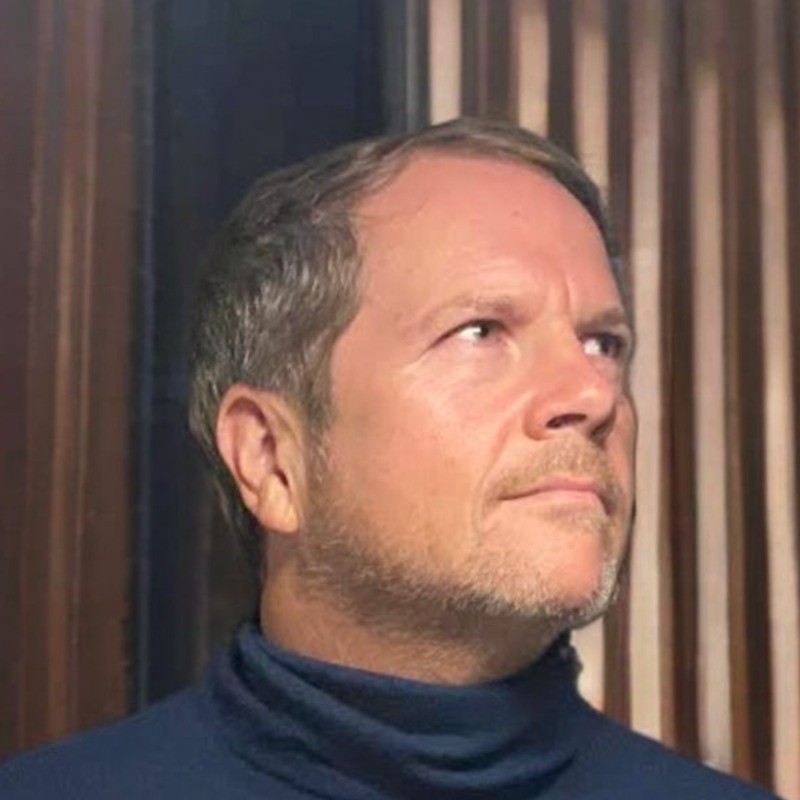
Overview
Becks was chief executive of Skynet, the Belgian internet and digital media company that is now part of Proximus. He went on to chair iMinds, the technology research and venturing organisation that is now part of imec. As Executive Chairman of EURACTIV he led its transformation into a pan-European policy media network operating in 13 countries, ahead of its acquisition by Mediahuis. His past and current mandates in media and information organisations include Science|Business, Lannoo & Meulenhoff Publishers, Regie Media Belge, and SBS Broadcasting Europe / ProSiebenSat.1. In 2009 he co-founded the record label SonicAngel with Maurice Engelen. The label produced albums with money raised in advance from fans.
Bart Becks is founder and chief executive of Genisys AI Venture Studio, which builds and scales companies in applied artificial intelligence. In January 2026 Genisys AI launched AI Polis, a platform that helps cities plan and scale sustainable growth, announced at the Frontiers Science House on the Davos Promenade alongside the World Economic Forum Annual Meeting. AI Polis came out of the Civic AI domain of the studio and works as a city-level coordination system that combines data, AI models and governance frameworks so cities can design, prioritise and scale projects. At the launch Becks said public-private partnerships are essential and that AI must be deployed at scale while keeping humans firmly at the centre. He sits on the Board of the European Innovation Council, which lists him as founder and CEO of Genisys and co-founder of BeCentral Tech Campus. The European Commission appointed the 20 members of the renewed board on 18 December 2025, selected from 951 applicants, for two-year terms that can be renewed twice, and the board first met on 29 January 2026. It is his third term. He co-founded BeCentral, a tech and digital-skills campus in Brussels, and remains a director there, and he invests as an angel, including through Syndicate One. He was on the longlist of forty candidates for Computable Belgium's IT Person of the Year 2026.
Insights & ideas
The through-line
Almost everything Bart Becks says returns to one question: Europe is very good at inventing things and very bad at owning what it invents. "For decades, we have excelled at science, research and innovation. We have produced world-class universities, breakthrough technologies and exceptional entrepreneurs. Yet too often, the companies built on that foundation create their greatest impact elsewhere. That must change." [6] He frames the problem historically. Europe once dominated mobile technology, with Nokia and Ericsson holding roughly 90% market share, Skype, the GSM standard, and then reacted too slowly to the internet era; "je zou bijna kunnen zeggen dat er voorbij 25 jaar dat we geen enkel groot technologiebedrijf nog gebouwd hebben in Europa, juist dat we een stukje te traag geweest zijn" [9]. The risk he keeps naming is that AI becomes a repeat performance. "The challenge is no longer whether Europe can innovate. The challenge is whether Europe can translate innovation into leadership." [6]
What has shifted is his prescription. His old advice to policymakers was minimalist: "Mijn antwoord was toen: just get out of the way. [...] Ondertussen denk ik niet dat dat nog kan." [9] With big tech companies rather than venture capitalists now acting as the first investors in the AI wave, and owning the data and the distribution alongside it, he no longer believes any single European company can counter that alone [9]. The posture that replaces laissez-faire is strategic and unsentimental about ownership, and it comes with a diagnosis of the moment itself: "We zitten niet in een tijdelijke storm. We zitten in een veranderend klimaat en je moet uw manier van daarmee omgaan een stukje aanpassen." [9]
On why Europe's research doesn't become companies
The bottleneck he identifies is not invention. It is that 95% of European research ends in patents and publications rather than economic value, which he attributes to entrepreneurial culture, market fragmentation across 27 jurisdictions, and a plain lack of belief in commercialisation [9]. That is why he keeps pushing the Corporate × Research × Startup model as something that has to be made to actually work rather than discussed, and why he values gatherings where "the conversations weren't about funding rounds or slide decks. They were about solving real problems." [1] The instruments matter to him too: the EIC and the Scale-up Europe Fund are the kind of strategic investment he thinks Europe now has to make deliberately [8][9].
He is watching one ecosystem as proof the pattern can be broken. Ghent has climbed from around 18th to 10th globally in entrepreneurial density, and what distinguishes it from Brussels is self-sustaining momentum, the point at which you no longer have to pull the cart yourself [9]. That connects to the question he says a VivaTech panel kept circling back to: "Why do some ecosystems produce wave after wave of successful companies, while others celebrate a single success and struggle to repeat it?" Underneath the debates about AI, sovereignty, excellence and competitiveness sat a simpler one, "How do you create the conditions for success to happen more than once?" [5] The phrase he uses for it, borrowed from Sarah Lacy's book on the entrepreneurs who rebuilt Silicon Valley after the dotcom crash, is "Once you are lucky. Twice you are good." [5]
On sovereignty, and being willing to own things
Sovereignty, in his reading, has moved "from a policy debate into one of the defining strategic questions of our time" [6], and it matters because AI "will not only shape future industries and economic growth. It will influence education, healthcare, defence" [6]. The technical version of the same argument surfaces in the debates he finds worth having: proprietary and closed versus open-source versus open-weight models, and what technological sovereignty means in practice rather than in slogans [2].
His most concrete proposal is about extraction. TikTok Shop takes roughly 9% commission and pulls value out of local media and production ecosystems without reinvesting it, so he would follow the American precedent and demand co-ownership of local operations: "Ik zou zeggen, oké, heel goed, laten we dat supporteren, maar laten we vanuit Europa ook de helft van TikTok overnemen" [9]. He is far more cautious about the softer instrument of mandating European alternatives. France choosing Visio over Teams and Zoom, or Mistral for government AI, only works if the solutions are genuinely competitive; otherwise institutions get locked into permanently worse tools [9]. Between the American private-driven model and the Chinese state-driven one, he wants Europe to occupy the middle ground, which requires policymakers who are not misinformed about technology and technologists who have internalised societal impact [9].
On models becoming systems
His read of where AI engineering has gone is that the hype and the "which LLM is best?" argument have both burned off, replaced by inference, reasoning, world models, industrial and physical AI, compute, security and deployment [2]. Two shifts stand out to him. First, "the conversation has moved from models to systems": foundation models are becoming one component of a much larger stack, and memory, agents, orchestration, evaluation, security and data infrastructure increasingly matter just as much as the model itself [2]. Second, "inference is becoming the next competitive battleground", training frontier models stays essential, but running them efficiently, reliably and at dramatically lower cost may be what decides the outcome [2].
On what's left for startups
The compression of the build cycle is his most striking observation about entrepreneurship. Company-building has gone from something taking three or four generations, to one generation in the internet era, to about five years now, which democratises entrepreneurship but weakens the transfer of values and of protection [9]. He describes the individual effect from experience: "Vroeger op een half uur later had ik nog geen briefing voor designer of developer geschreven" [9], and concludes that "als je nu als individu creatief bent, is er eigenlijk geen enkele reden meer om niet zelf iets te bouwen" [9].
The flip side is brutal for anyone building a thin layer on top of a frontier model. "Elke nieuwe versie dat Cloud lanceert, sterven er 1000 start-ups. Want elk bedrijf wordt een feature." [9] Each Claude release absorbs a swathe of the market, and the defence he sees remaining is research-driven IP, which is exactly where Europe's underused strength lies [9]. The kind of company he wants to see is visible in what he judges worth backing: green ammonia, membrane-free hydrogen, robotics and circular technologies, bold visions rather than incremental ones [1].
On AI and art
He argues the anxiety about AI and creativity is aimed at the wrong target. "AI isn't replacing artists. It's changing who gets to become one." [3][4] He builds the case from two projects that look nothing alike: Dataland in Los Angeles, the world's first museum dedicated to AI art, initiated by Refik Anadol, and Dreams of Violets, the first AI-generated feature film selected for the Tribeca Film Festival, made by exiled Iranian filmmaker Ash Koosha for around $2,000 because traditional filmmaking had become impossible [4]. One asks whether AI can create new forms of artistic expression, the other whether AI can enable stories that otherwise could never have been told [4]. The paradox he draws from them is that "AI may devalue execution, but it dramatically increases expression": for centuries technical skill was the barrier between imagination and reality, and lowering it changes who is allowed through [4].
The reception taught him something separate about how ideas actually travel. He expected the debate to play out in public and instead found it moving to WhatsApp, to a lunch conversation in Paris about Anadol and Dataland, to an invitation to speak at a conference on "Is AI-enabled art really art?", and to a stream of people asking whether the Dataland videos were real, which they are [3]. "Sometimes the most interesting conversations happen off LinkedIn." [3]
On governance and AI literacy
He treats the Harari-Amodei exchange as the cleanest statement of the governance dilemma: both sides agree on the impact analysis, but pausing to establish moral frameworks is not available when geopolitical regions have stopped coordinating [9]. His answer is less about restraint at the top and more about competence spread widely. Everyone needs something like a driving licence for these tools, and the bar is participation rather than mastery: "Moeten niet allemaal Max Verstappen worden, hè." [9]
On the system that keeps you going
The same preference for durable structure over bursts of intensity shows up in how he trains. After a hard ski fall cost him about six weeks off the bike and off his feet, he came back to 144 km of Liège–Bastogne–Liège and the Antwerp 10 Miles, and insists nothing dramatic happened in between: "No transformation. Just a simple system I actually stick to." [7] The principle is stated plainly: "Motivatie gets you started. Habit keeps you going" [7], alongside real food, attention to quality, and occasional no-alcohol stretches, helped by 0.0 beers finally becoming genuinely good [7]. Environment does part of the work, and he notices it: Grenoble is full of people cycling, running and skiing, and "it's contagious" [7]. His framing of why any of it matters is characteristically direct: "Use the years you have. Protect them." [7]
Takeaways
- Europe's failure is not inventive but commercial: 95% of European research ends in patents and publications rather than economic value, held back by entrepreneurial culture, fragmentation across 27 jurisdictions, and disbelief in commercialisation [9].
- "Just get out of the way" is no longer a viable tech policy, because big tech companies are now the first investors in AI and own the data and distribution as well; no single European company can counter that alone [9].
- Demand ownership, not just presence. TikTok Shop's roughly 9% commission drains local media and production ecosystems, so Europe should require co-ownership of local operations and reinvest the profits locally [9].
- Mandating domestic software only works if it is competitive; otherwise institutions are locked into permanently worse tools [9].
- The competitive frontier in AI has moved from models to systems, with memory, agents, orchestration, evaluation, security and data infrastructure mattering as much as the model, and inference cost and reliability becoming the decisive battleground [2].
- Any startup that is really a feature will be absorbed. "Elke nieuwe versie dat Cloud lanceert, sterven er 1000 start-ups" [9]; research-driven IP is the remaining defensible edge [9].
- AI lowers the cost of execution and raises the ceiling on expression, letting work like a $2,000 Tribeca-selected feature exist at all [4].
- Ecosystems are judged by repetition, not by a single success: the goal is momentum where "you no longer have to pull the cart yourself" [9][5].
- Habit beats motivation, in training and in everything built on top of it: a simple system you actually stick to outperforms transformation [7].
In the news
- Who will own the AI that shapes what we read, see and believe? Today we trust people. We trust newsrooms. We trust journalists. But who will we trust tomorrow—when information will be shared by intelligent machines? I have known Bart BECKS for almost 30 years. In the early days of the Internet, he was already helping to build its future as CEO of Belgacom Skynet SA. Since then, Bart* has worked at the crossroads of media, technology and Europe—from transforming Euractiv before its acquisition by Mediahuis nv to his current role
- Tomorrowland × The Impact Circle × Love Tomorrow. Three days. Three very different experiences. One common thread: Belgium and Europe at their innovative best. 🇧🇪🇪🇺 Day ONE – The Impact Circle A fascinating day where startups, corporates, researchers and investors came together to build real partnerships- not just exchange business cards. I had the pleasure of joining a panel on how Europe can turn deep tech into global impact by bringing together startups, corporates and researchers. 👍 The conversations weren’t about funding
- After Silicon Valley last week, two amazing days at the RAISE AI Summit in Paris. Very little hype. Almost no “which LLM is best?” discussions. Instead, the focus was on the engineering challenges of building AI at scale: inference, reasoning, world models, industrial and physical AI, compute, security and deployment. Proprietary/closed vs open-source vs open-weight models. And what AI and technological sovereignty mean in reality. 5 observations: 1️⃣ The conversation has moved from models to systems. Foundation models are
- 𝗧𝗵𝗶𝘀 𝗺𝗮𝘆 𝗯𝗲 𝗼𝗻𝗲 𝗼𝗳 𝘁𝗵𝗲 𝘄𝗲𝗶𝗿𝗱𝗲𝘀𝘁 𝗟𝗶𝗻𝗸𝗲𝗱𝗜𝗻 𝗽𝗼𝘀𝘁𝘀 𝗜'𝘃𝗲 𝗲𝘃𝗲𝗿 𝗽𝘂𝗯𝗹𝗶𝘀𝗵𝗲𝗱. 𝗧𝗵𝗲 𝗰𝗼𝗻𝘃𝗲𝗿𝘀𝗮𝘁𝗶𝗼𝗻 𝗸𝗲𝗽𝘁 𝗴𝗼𝗶𝗻𝗴. A few days ago, I shared some thoughts on AI and art. I expected most of the discussion to happen here on LinkedIn. Instead, it happened somewhere else. ➡️ Several people reached out via WhatsApp to continue the conversation. ➡️ I ended up discussing Refik Anadol and Dataland over lunch in Paris. ➡️ I was invited to speak at a conference on the
- AI ISN'T REPLACING ARTISTS.It's changing who gets to become one. Last week Charlie and I visited Dataland in Los Angeles, the world's first museum dedicated to AI art initiated by Refik Anadol. A few days later I read about Dreams of Violets, the first AI-generated feature film selected for the Tribeca Film Festival, made by an exiled Iranian filmmaker Ash Koosha for around $2,000 because traditional filmmaking had become impossible. At first glance they couldn't be more different. Yet they point to the same conclusion.
- Once you are lucky. Twice you are good. I first came across that phrase almost 20 years ago in Sarah Lacy’s book about the entrepreneurs who rebuilt Silicon Valley after the dotcom crash. Last week, it surfaced three times in three days. ⸻ ONE. VIVATECH. At VivaTech Paris, our panel kept returning to the same question: Why do some ecosystems produce wave after wave of successful companies, while others celebrate a single success and struggle to repeat it? We discussed AI, sovereignty, excellence and competitiveness. But underneath
- Europe stands at a crossroads. For decades, we have excelled at science, research and innovation. We have produced world-class universities, breakthrough technologies and exceptional entrepreneurs. Yet too often, the companies built on that foundation create their greatest impact elsewhere. That must change. Thursday at VivaTech Paris, I will join a discussion on “Leading the Deeptech Sovereignty Race”, a topic that has evolved from a policy debate into one of the defining strategic questions of our time. The challenge
- 𝗨𝘀𝗲 𝘁𝗵𝗲 𝘆𝗲𝗮𝗿𝘀 𝘆𝗼𝘂 𝗵𝗮𝘃𝗲. 𝗣𝗿𝗼𝘁𝗲𝗰𝘁 𝘁𝗵𝗲𝗺. Ten weeks ago I was still off the bike, off my feet. A pretty hard ski fall didn't allow me to train for about 6 weeks. Last week: time with my son Charlie. Vercors and Belledonne on the bike. Chamrousse and Les Deux Alpes on skis. Trail runs along the Isère. Grenoble is full of people moving. Cycling, running, skiing. It's contagious. This weekend: 144 km of Liège–Bastogne–Liège + the Antwerp 10 Miles (alongside a friend with a brand-new hip - who finished the
This page shows public professional information only, each fact cited. Is this you? send a correction, or ask for removal within 24 hours, no questions asked.