Overview
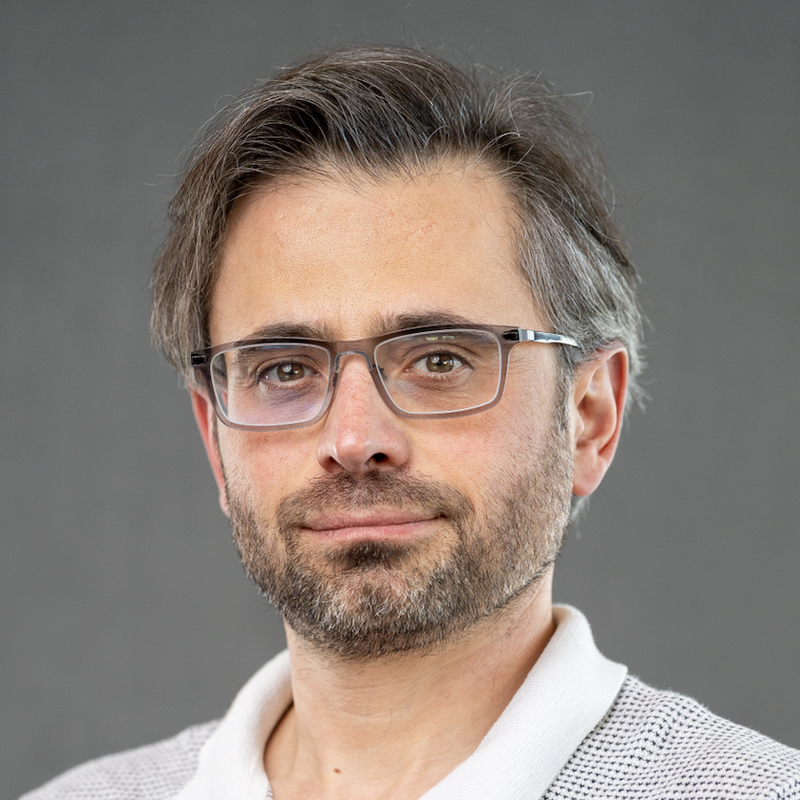
Benoit Illy is the co-founder and CEO of Fairbrics, a company he started in March 2019 and runs from Paris. In the same year he was a member of the EFPA2 cohort at Entrepreneur First, from April to December 2019.
Before founding Fairbrics, he worked at Safran Aero Boosters on thin film processing between December 2018 and April 2019, and spent three years at Reynard Corporation as a product and project engineer from July 2015 to September 2018. He joined Saint-Gobain in April 2012 as a thin film development engineer and became an R&D project leader in May 2014, remaining until November of that year. Earlier he was a postdoctoral researcher at the London Centre for Nanotechnology from 2008 to 2011, and an innovation project leader at SNCF in 2003 and 2004.
Illy holds a PhD in nanotechnology from Imperial College London, an advanced master's in innovation from Arts et Métiers, and a master of engineering in materials from Grenoble INP - UGA.
Career history
In the news
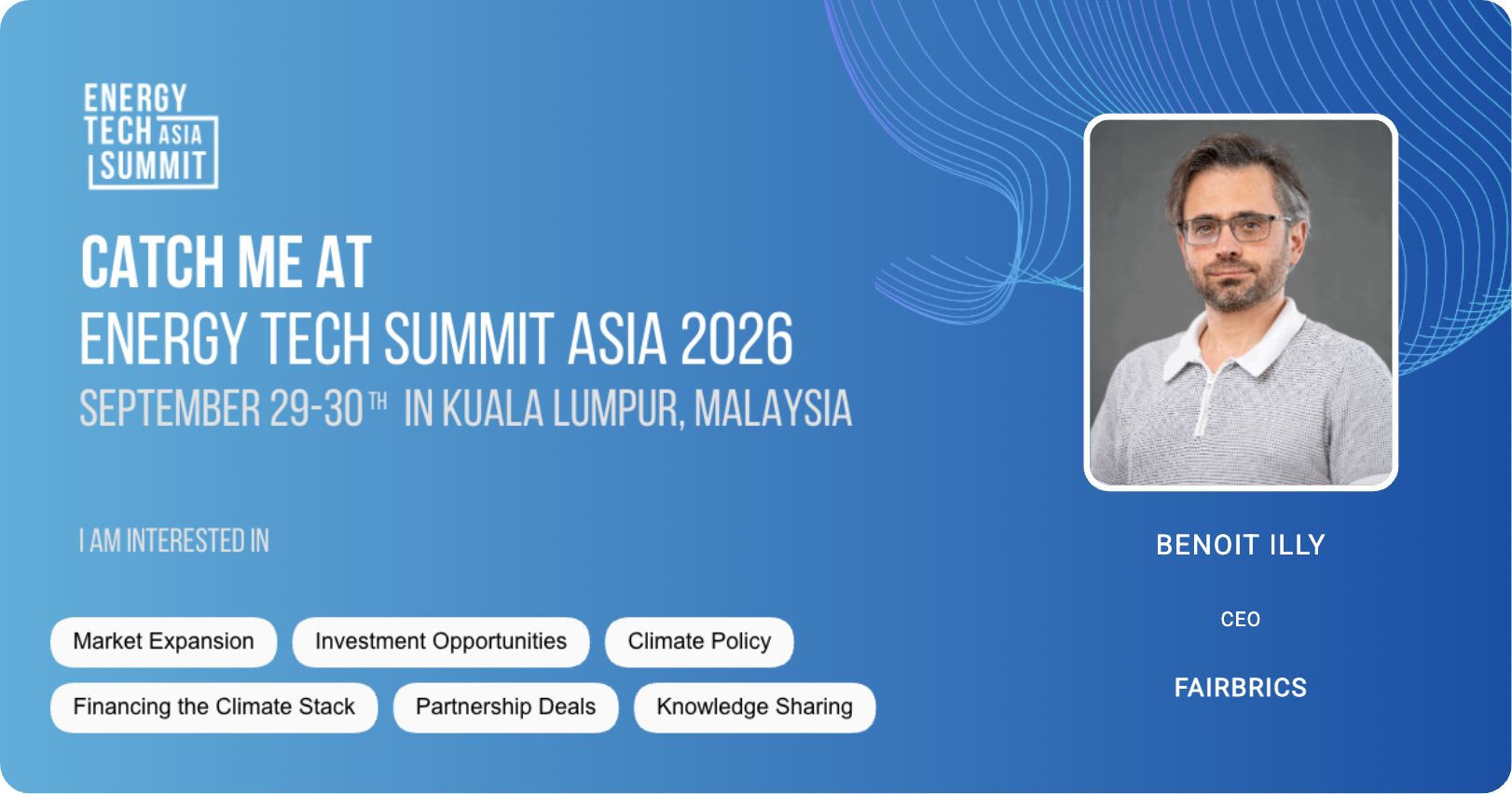
- I’m excited to attend the Energy Tech Summit Asia 2026 in Kuala Lumpur on September 29–30! At Fairbrics, we are building a technology platform that transforms captured CO₂ into essential materials for the fashion, packaging, automotive and energy-storage industries. I look forward to connecting with investors, industrial partners and fellow innovators to explore market expansion, investment opportunities and partnerships that can accelerate the transition towards a circular, fossil-free materials industry. If you are attending,
- The new KPMG and Fédération de la Mode Circulaire study sizes the European circular fashion market at roughly €104 billion by 2030. It organises the field into four pillars: reinvent through eco-design, reuse, repair, and recycle. It deep-dives three regulatory levers, EPR, the Digital Product Passport, and circular VAT. It is rigorous, well-sourced, and worth reading. It also describes a route to polyester that does not exist in its framework. Throughout the report, virgin polyester appears only as a price benchmark. The
- Chemical recycling of PET is advancing fast, and it is one of the more credible paths to a circular plastics economy. It is worth understanding how it actually works, because the differences between the methods matter. PET is built from two monomers: terephthalic acid (TPA) and monoethylene glycol (MEG). Recycling it chemically means breaking the bonds that hold them together. Four routes do this, each in its own way. Glycolysis breaks PET down using MEG as the reactant. It yields a monomer that goes straight back into new
- Most of the packaging decarbonization conversation today is about recycling. It matters. But recycling will only ever cover part of the demand. Even in a 2040 scenario with mechanical and chemical recycling combined, a recent analysis in ACS Sustainable Chemistry & Engineering finds it still cannot meet total PET demand: around 2.5 million tonnes of virgin PET a year would still be needed in Europe alone. That is part of why I am glad to be joining the Sacmi Packaging Innovation Summit on 23 and 24 June, in Imola. Thank you to
- Textile Exchange has just published a 300-page life cycle assessment of polyester, virgin and recycled. It is one of the most useful datasets the sector has produced in years. A lot of sharpe number on monoethylene glycol. The same compound that goes into engine coolant is also one of the two building blocks of every polyester fiber. Polyester is made from MEG and PTA. Across the study, those two inputs drive between 46 and 94 percent of the fiber's footprint, across nearly every impact category. So how you make MEG largely
- I'll be at VivaTech on Wednesday 17 of June. The official theme this year is AI. Most of the floor will be about software that gets smarter. I work on the other half of the problem: the physical industry that AI still runs on, and that no model decarbonises on its own. At Fairbrics we turn captured industrial CO₂ into polyester, the same fibre that today comes almost entirely from oil, and increasingly from coal. It is a slower kind of progress than a demo on a screen. A molecule has to actually leave a smokestack and end up
Related profiles

This page shows public professional information only, each fact cited. Is this you? send a correction, or ask for removal within 24 hours, no questions asked.