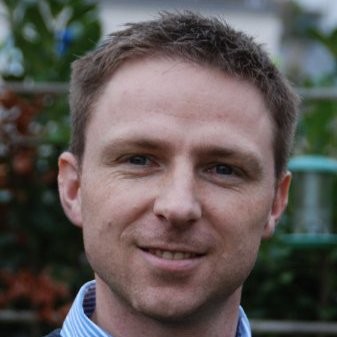
Overview
Recorded live at SuperNova 2025, this podcast episode features Bjorn Tremmerie, Head of Venture Capital and Impact Investing at the European Investment Fund. He explains the EIF's fund-of-funds model, its four funding pillars (EIB, European Commission, member states, and private institutionals), and its scale of roughly €20-25 billion invested across hundreds of VC funds. Tremmerie candidly admits he once doubted European venture could ever deliver returns, but says market data forced him to change his mind, and he now criticizes European pension funds and insurers for still failing to invest in European VC despite abundant proof points. He argues Europe captures 1 in 4 early-stage euros globally but only 10% of scale-up capital, and highlights initiatives like the €3.6B European Tech Champions Initiative to fund billion-euro European funds. He closes with calls for a stronger pan-European identity, more tolerance for failure, and an ambition that institutionals flock into European venture within 5-10 years.
Talks about
Insights & ideas
The through-line
Everything Tremmerie says circles one argument: Europe's technology ecosystem is no longer the problem, and the capital that should be backing it is. The talent was always there, the early-stage flow is real, and the proof points have accumulated for two decades, yet European institutional money still sits out. "We hebben altijd de brains gehad. Ja, we hadden misschien 25 jaar geleden niet genoeg de rolmodellen" [2] is the historical half of that claim; the present half is that role models now exist in every European country, and the constraint has moved to allocators and fund scale rather than founders. He is openly impatient with the self-deprecation that surrounds this: "Die mensen zijn het beu dat er continu Europe bashing gedaan wordt, want Europa kan geen 100 miljard bedrijven creëren. Spotify staat ondertussen op de beurs met 100 miljard market cap. Dus we kunnen het wel" [2].
The tone has sharpened with events. Geopolitics, and the arrival of the new Trump administration in particular, functions in his account as an accelerant rather than a threat: "Wij hebben een wakeup call gekregen afgelopen weken" [2], and "Whatever is happening geopolitically is a big wakeup call and I think people are not asleep anymore" [1]. From that he draws a forward bet rather than a defensive posture: "If I had to take a bet on which ecosystem would grow faster, and I'm talking about the growth rate, not talking about the size absolute in comparison with the US, I think the growth rate in Europe of the ecosystem will be faster than the US" [1].
On what European institutions are getting wrong
His most pointed criticism is aimed at pension funds, insurers and asset allocators, and it is a criticism of omission. They have done nothing wrong precisely because they have done nothing at all, and after years of data and proof points that neglect has become a dereliction: "I think they're not doing their duty... why are they still neglecting at scale the opportunity of investing in European venture as well" [1]. He is sympathetic to the causes without accepting them as excuses. Allocators run on backward-looking statistics, they were burned in the dot-com era, when "taking baby steps we were falling smack on our face", and recent exit distributions have been thin [1]. But the logic of waiting for a risk-free entry point is self-defeating, because the returns arrive before the certainty does.
He rejects the idea that the capacity does not exist to absorb institutional money. The pool of proven European managers is there, forty to fifty of them, and the vehicles can be built around it: "We can build products, 500 to billion programs, that you can invest in a pool of European managers where you're going to get 15% net IR as an institutional" [1]. What is required from allocators is engagement, directly or through gatekeepers. His ambition is that the flow eventually reverses: "It's not a dream, it's an ambition that in five or 10 years time they will say here we are, where can we invest?" [1].
On the scale-up gap and fund size
Tremmerie separates two very different diagnoses that usually get merged. At the early stage Europe is genuinely competitive: "One euro out of four invested globally in the early stages is landing in Europe" [1]. At the scale-up stage it collapses, with only around 10% of global Series C and D money above €100M going to European companies, and this is where he says Europe is really not good enough [1]. The structural cause is fund size. "The US has 100 plus funds with a size of more than 1 billion in Euro. In Europe we have less than 10" [1]. His conclusion is that Europe needs to fund billion-euro European funds, not only so that champions stop depending on non-European capital, but so that Europe retains board seats and the ability to steer the companies it created.
The same logic runs into founder decisions. He argues against reflexively flipping to a Delaware Inc., on the grounds that a company can expand into the US market without relocating its incorporation and headquarters, while conceding that it is understandable when that is the only route to funding [1]. The concession is itself an argument for building larger European funds.
On how the EIF actually works
The EIF does not invest directly in startups. It operates as a fund-of-funds into VC funds across Europe and has done so for 22 years, in effect building the European VC market from something close to non-existence [2]. Venture is only part of the machine: of roughly €140B, nearly €100B works through guarantees to banks, where the EIF absorbs part of the credit losses so financial institutions can take slightly more risk in their lending [2]. On the venture side it deploys €3-4B a year [1].
He makes an unusual defence of the fund-of-funds structure on governance grounds. The standard criticism of a public investor is bureaucratic slowness, and his answer is that the model neutralises it: fund investment decisions naturally take nine to eighteen months even for private LPs, so slower public governance does not cost competitiveness the way it would if the EIF were investing directly into startups [1]. The business model, in his words, saves them from the bureaucracy critique.
On the public mandate and sovereignty
As an EU institution the EIF must serve EU objectives of autonomy, sovereignty and strategically relevant sectors: AI, semiconductors, life sciences, quantum, space, cybersecurity and now defense [2]. He says the institution is being asked to invest more actively in these areas, and adds the hope that this is not happening too late [2]. That mandate is the frame through which he reads the geopolitical shift, and it explains why the wake-up call translated so quickly into new European initiatives to fund and support its own technology base [1][2].
On cross-border capital and the limits of national programs
Regional programs work when they are structured as leverage rather than as subsidy. The Baltic Innovation Fund is his example: government money matched with EIF money to unlock initiatives that a pan-European mandate could never focus on tightly enough [1]. The line he will not cross is subsidization, because programs that come too close to it damage the market they are meant to build [1].
He is equally firm about the strings attached to newly unlocked national capital. Tying that money strictly to domestic investment makes the resulting funds uninvestable, and Europe cannot be built if every country insists on "my country first" under a European label [1]. Capital has to be allowed to flow across borders for any of this to work, and the evidence that it pays off is geographic: Southern and Eastern Europe have shown the fastest growth in startup ecosystem value over the last 10 to 15 years, UiPath out of Romania is one of the EIF's strongest exits, and "Estonia is punching way above its weights in terms of unicorns per capita" [1].
On ambition, role models and the tolerance for failure
The change he considers most important is cultural. Twenty-five years ago, "Ondernemer worden in technologie was aanzien als een kamikaziemissie" [2]. What was missing was not intelligence but visible proof, and now every European country has successful technology founders demonstrating to engineers that the choice is not between a large corporate and a move to America [2]. That shift shows up on the fund side too: some European managers are now raising with an explicit goal of backing the first trillion-dollar company to come out of Europe. "Wij lanceren ons nieuwe fonds en de doelstelling is van dankzij ons fonds te investeren in the first trillion dollar company coming out of Europe" [2].
He wants the same recalibration applied to how Europe scores itself. On the habit of counting achievements country by country: "You always do the counts of the medals and then it was always US and China, but if you were to put the European flag on there, Europe would actually have the most medals" [1]. And underpinning the whole ambition is a stance on risk that he states plainly: "Failure is not bad if it's by trying to do something new" [1].
On impact investing
He treats impact as an investment question rather than a reporting one. In his view impact is 100% correlated to returns, and the practical consequence he draws is a test of seriousness: managers who genuinely believe that should not be afraid to tie their carried interest to achieving their impact metrics [1].
Takeaways
- European institutional allocators are failing by omission, not by bad decisions: "I think they're not doing their duty... why are they still neglecting at scale the opportunity of investing in European venture as well" [1].
- Diagnose Europe's gap at the right stage: one euro in four of global early-stage investment lands in Europe, but only about 10% of global Series C/D money above €100M does [1].
- Fund size is the structural bottleneck. The US has "100 plus funds with a size of more than 1 billion in Euro. In Europe we have less than 10", which costs Europe both capital independence and board seats [1].
- The capacity to absorb institutional money already exists: €500M-1B products built on 40-50 proven European managers, targeting 15% net IRR [1].
- National money tied strictly to domestic investment produces uninvestable funds; "my country first" under a European label defeats the purpose [1].
- Match government money with EIF money to unlock regional programs like the Baltic Innovation Fund, but refuse anything that shades into subsidization, because it harms the market [1].
- Founders can expand into the US market without flipping incorporation and headquarters to a Delaware Inc. [1].
- If impact is 100% correlated to returns, managers should be willing to tie carried interest to impact metrics [1].
This page shows public professional information only, each fact cited. Is this you? send a correction, or ask for removal within 24 hours, no questions asked.