
Overview
Clo Willaerts has maintained an active tech and digital marketing blog at bnox.be since 2004, making her one of the longest-running independent tech voices in Belgium. Her consistency over two decades has built her a loyal professional audience in the Belgian digital marketing community.
She lectures at Karel de Grote Hogeschool in Antwerp, connecting her practitioner knowledge to the next generation of marketing and communications professionals. She has authored multiple books including titles on content marketing, digital marketing, and video marketing under the "like a PRO" series.
Her position bridges academic, practitioner, and media roles in the Belgian digital landscape.
Insights & ideas
The through-line
Across these posts, Clo Willaerts keeps returning to one question: does this actually work for the person on the receiving end, or does it just look clever to the person who made it? She applies this lens to brand names that are unsearchable [1], to speakers who improvise their opening lines [2], to content that gets engagement but no clients [12], and to marketing tactics borrowed wholesale from other niches [15]. Over the course of these posts the focus sharpens from general pet peeves about branding and copywriting toward a more systematic account of how attention, algorithms and audiences actually behave on platforms like LinkedIn, culminating in frameworks like IFP versus ICP content [12] and a running weekly digest of marketing and tech signals worth watching [4][8][14].
On clarity in branding
Willaerts is sharply against branding choices that trade comprehension for cleverness. She singles out invented spellings and decorative diacritics: "A bar calling itself aper'eau instead of Apero is a perfect example. Nobody can spell it. Nobody can search for it." [1] The same critique extends to vowel-dropping names like "Kidz. Bikr. Drivn." and umlaut-heavy ones like "Wünder. Hōme. Bränd." [1], and to taglines so abstract they need "a full brand strategy deck and a Creative Director to understand" [1]. Her standard for good marketing, by contrast, is behavioral and simple: a Kraft Heinz ketchup cap redesign works because it "starts with behavior... A simple idea... No 47-slide strategy deck required" [9].
On personal branding as performance
She rejects the idea that authenticity online means showing up unfiltered at all times: "Of course it's a performance. That doesn't mean you're pretending to be someone you're not. It means you're choosing which version of yourself gets the microphone today." [6] She distinguishes this performed voice, "very much 'teacher and trainer'" [6], from the fuller person offstage. She also draws a conceptual line between two things people conflate: "Personal branding gaat over hoe je overkomt; thought leadership gaat over wat je inbrengt. Wie beide weet te combineren, bereikt de grootste impact." [13]
On what gets remembered
Willaerts treats memorability as a design constraint, not a happy accident. Borrowing from Garr Reynolds, she asks: "If people remember only one thing, what do I want it to be?" [7], and extends it beyond slides to LinkedIn profiles, introductions and keynotes [7]. The same discipline applies to openings: "If you script only one thing, script the intro," pointing to Marques Brownlee's deliberately refined catchphrase as proof that the first ten seconds must earn attention, framing and credibility before anything else can happen [2].
On content strategy and the algorithm
She separates content that performs from content that pays. IFP content ("Ideal Follower Profile") gets rewarded by the algorithm because it is "relatable, easy to engage with, low commitment," while ICP content quietly builds trust with people "deciding if you're the one they'll eventually hire" [12]. Testing an old Gary Vaynerchuk claim about LinkedIn, she concludes the platform "is still a strong platform for organic content" but that "organic now means more than 'not an ad'" given how crowded and formulaic feeds have become [11]. Her copywriting standard, borrowed and reframed from Alex Hormozi, is "value per second, not value per...", content should reward the reader "in the time it takes them to read it," regardless of how smart it sounds [15].
Takeaways
- Avoid brand names or spellings that are hard to search or say out loud, even if they read as clever internally [1].
- Script your opening line and story before every talk or post; improvisation should start only after the first sentence lands [2].
- Not every mention deserves a reply; sort interactions into questions, criticism, complaints, trolls, spam and crises, and respond accordingly [3].
- Decide deliberately which version of yourself gets the "microphone" in public content rather than treating authenticity as constant self-exposure [6].
- Separate content built for engagement (IFP) from content built to convert (ICP), and expect the algorithm to reward the former first [12].
- When copy is cheap to produce at scale, competitive advantage shifts to being "useful enough, distinctive enough and trustworthy enough" [14].
In the news
- I’m more worried about LGETM than AI taking our jobs. « Looks Good Enough To Me. » I’m talking about the moment we don’t question the output because it looks polished, plausible and professional enough. And it happens to anyone: Gen Z. Gen Alpha. The CEO. The consultant. Me 🫢 The answer isn't to teach people more prompting tricks. It’s about: ➛ Training discernment, taste and professional standards. ➛ Hiring people who can audit and challenge an output, not just generate one. ➛ Making verification a named task with a named
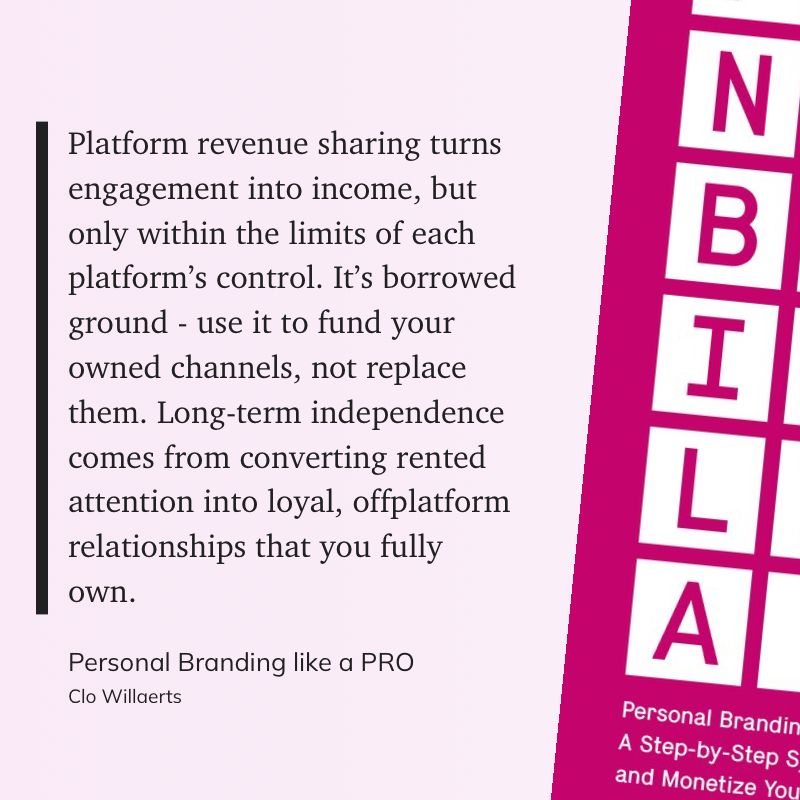
- Relying on platform algorithms to pay your rent is a dangerous game. The biggest trap new creators, influencers, and personal brands fall into is building their entire business model around platform revenue sharing. Whether it is YouTube ad revenue, TikTok creator funds, or X impressions, these programs all share the exact same flaw: they turn engagement into income, but only within the limits of each platform’s control. When you rely solely on revenue sharing, you are building on borrowed ground (something Joe Pulizzi taught me).
- Your 2027 plan has three blind spots, and all three showed up this week: ➛ The AI vendors are arguing about the brakes. Anthropic's Dario Amodei called on the labs to "pace the frontier", Altman and Musk agreed, and chip stocks dropped. Meanwhile, the tools on your desk keep getting better. Your move: don't build your workflow on a single vendor. ➛ ChatGPT ads are now on sale to European advertisers. OpenAI says they've hit a $1 billion annual run rate. Platforms keep taking the steering wheel in the name of performance. Your move:

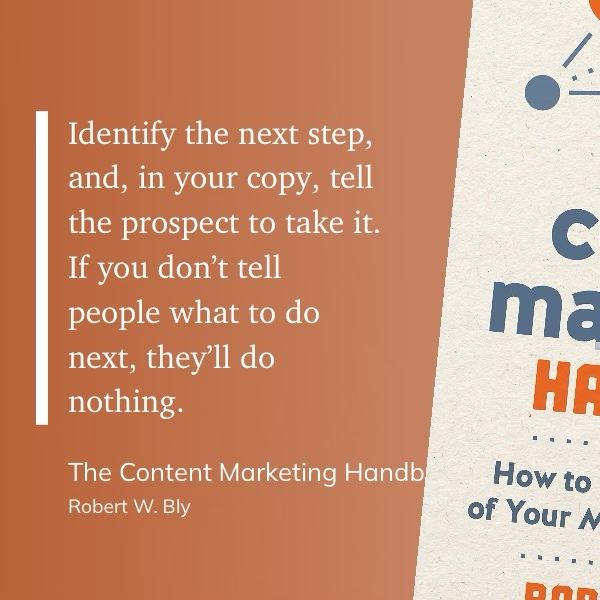
- I read this in Bob Bly’s « The Content Marketing Handbook »: “Identify the next step, and, in your copy, tell the prospect to take it.” Simple. But easy to forget. We spend hours on hooks, visuals, captions, and edits - then end with nothing. No ask. No next step. Just vibes. And then wonder why attention doesn't turn into pipeline. So before I publish anything, I ask: What do I want someone to do after seeing this? Comment? Save? DM me? Click through? Book a call? If I don't know, the post isn't ready. Three questions before you
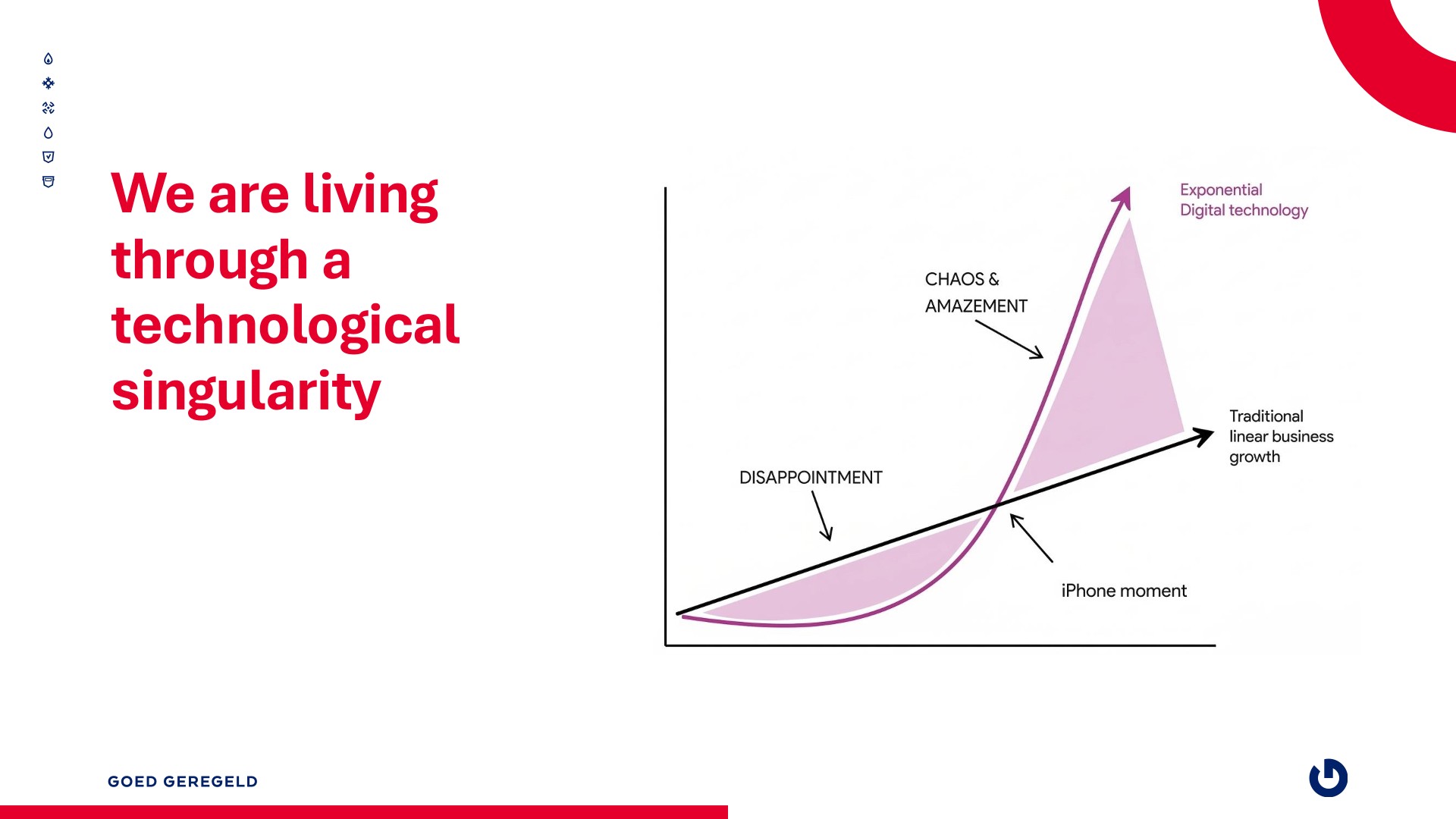
- The hardest part of AI right now is trying to find out what you could do with it. It is figuring out what actually deserves your attention - we’re still very much in the « chaos and amazement » phase of AI’s exponential growth. This week’s Chaos & Amazement helps you with that by looking at a few signals worth watching: ➛ Apple finally enters foldables, after years of Samsung Electronics proving the category exists. ➛ AI agents are already talking to each other and sharing information in the wild. ➛ Meta’s Muse can read email, book

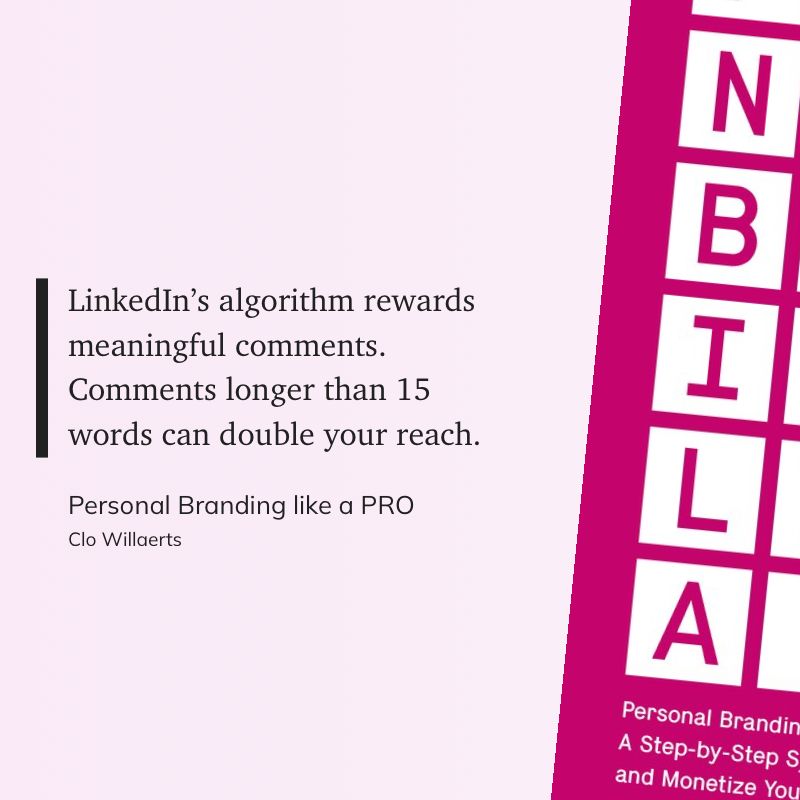
- Stop treating comments like an afterthought. We obsess over: ➛ The hook ➛ The format ➛ The hashtags Then leave “Great post!” in the comments. But comments are content too. Instead of drive-by commenting: • Share an opinion • Add a quick example • Ask a real question • Build on the original idea It takes seconds more. But it makes your comment worth reading.
- Veel likes: nice. Meer klanten: nog nicer. In deze preview van Personal Branding Like a PRO deel ik 3 praktische modellen om van zichtbaarheid meer resultaat te maken: ➛ Kies een scherpe positionering: vaardigheid + doelgroep + unieke invalshoek ➛ Maak onderscheid tussen mensen die je content helpen verspreiden en mensen die effectief klant kunnen worden ➛ Bouw vertrouwen op, van gratis content naar leads en klanten Geen jacht op vanity metrics. Wel een persoonlijk merk dat rendeert. Lees de preview hier bij
- AI is changing marketing faster than most marketing workflows can keep up. That’s why the interesting question isn’t “What new AI tool launched this week?” It’s: What actually changes in the way we search, create, communicate and work? In the latest edition of Chaos & Amazement, I look at a few developments through that lens: ➛ ChatGPT being treated as a search engine under the EU’s DSA ➛ Instagram requiring AI personas to identify themselves ➛ Google moving AI design directly into Workspace ➛ Runway experimenting with

Related profiles
This page shows public professional information only, each fact cited. Is this you? send a correction, or ask for removal within 24 hours, no questions asked.