Overview
Deo Mwano is CEO, founder and managing principal of deo, based in Boston. He has held the role of chief executive officer at Deo since July 2016, and in January 2025 he founded MirrorIM, where he serves as CEO.
Between May 2016 and July 2017 he was manager of program design and partnerships at the National Center for Competency-Based Learning. Earlier, at Southern New Hampshire University, he was a team lead learning coach from January 2013 to July 2016 and an adjunct professor from September 2013 to May 2015. From September 2019 to September 2022 he sat on the board of the Endowment for Health.
Mwano studied at New England College, completing a Bachelor of Arts in political science, international relations and modern European history in 2011, followed by a Master of Business Administration in strategic leadership in 2012.
Career history
- FounderDeo
Insights & ideas
The through-line
Across nearly every post, Deo Mwano returns to one idea: sustainable change, whether in an individual or an organization, depends on understanding what actually motivates people and then acting consistently on that understanding. In his leadership writing this shows up as insistence that "healthy workplace cultures don't happen by accident" and are "built when leaders consistently address behaviors that undermine trust, respect" [4]. In his product writing it shows up as the reasoning behind MirrorIM, built on the premise that "leaders often don't have consistent data to truly understand why employees are struggling" [5] and that "it is Important to know what motivates your employees" [11]. Over the period covered, the emphasis shifts from general leadership and communication commentary in July toward a tighter focus on MirrorIM's design and launch in August, but the underlying preoccupation with motivation, behavior, and consistency stays constant [1][2][3][5].
On workplace culture
Mwano treats culture as something actively maintained rather than assumed. He argues that "every time poor behavior goes unaddressed, it sends a message to the rest of the team about what is acceptable" [4], and that leaders often "justify negative behaviors because they don't want to disrupt productivity" [4]. He also pushes back on the assumption that toxicity flows only from formal leaders, noting that "influence isn't determined by a job title—it's determined by relationships" and that a single associate "who spreads negativity, fuels gossip, resists change, or undermines colleagues can have a ripple effect across an entire team" [12]. For him, culture change requires visibility as well as accountability: with one organization he "installed digital screens across 25 locations to share employee recognition, organizational updates, success stories, and messages that reinforce the mission and values," because "culture isn't built through a single meeting or email—it's built through repeated experiences that reinforce what matters most" [7].
On motivation and goal achievement
Mwano's coaching background feeds directly into how he talks about goals. He states plainly that "achieving a goal requires consistently demonstrating the right behaviors and skills along the way" [2][3], and describes building that principle into MirrorIM so that "every task connected to a goal can include behavior-based micro-learning competencies" [2][3]. The aim, in his words, is "helping people understand not just what they need to do, but how to do it effectively" [2][3]. He frames the broader mission behind the product as a response to leaders lacking real insight into employee struggles, since "performance data alone rarely tells the full story" [5], and reduces the whole philosophy to one line: "It is Important to know what motivates your employees" [11].
On audience connection
In his speaking-focused posts, Mwano treats connection as a skill to be engineered deliberately, not left to chance. He says the fastest way to build trust with a room is to "make people smile or laugh within the first 60 seconds," because "laughter breaks down barriers" and "creates comfort, builds trust" [9]. He also describes reading the room before he speaks, asking "who's in the audience? What organizations do they represent? Where are they from?" so people "feel seen and included rather than talked at" [9]. He is candid that self-doubt persists even after years on stage: "I still ask myself that question," referring to whether the audience is connecting, and notes that "what we feel on stage isn't always what the audience experiences," so he has "learned... to trust the preparation rather than my internal dialogue" [14]. He singles out high school students as his toughest audience because "they don't care about your résumé, your title, or your bio" and "there's no hiding behind credentials—only your ability to connect" [6].
From the stage
The podcast conversations surface material the written posts don't touch. Mwano traces the origin of a board-game business idea to his work with people with disabilities through Special Olympics and later home care work, describing how he came to see board games as a tool that could bring together people with and without disabilities "who typically don't associate with each other," which led him toward the board game cafe model [16]. In conversation with guest Martin Toe, he explores creative process, noting that melody comes first and inspires lyrics, and pushes the value of "trying new things and experimenting creatively, even if one is not perfect, as a means of discovery rather than focusing solely on what one is already good at" [17]. He also discusses gratitude and mindfulness directly, tying awareness of mortality and "the fragility of life" to staying present and grounded in the moment [18].
Takeaways
- Address behavior problems immediately rather than excusing them for the sake of productivity or sympathy, since unaddressed behavior signals what a team will tolerate [4].
- Recognize that culture-shaping influence can come from any level of an organization, not just formal leadership, and manage accordingly [12].
- Make organizational mission and values physically visible in daily environments (e.g., digital screens with recognition and updates) rather than relying on one-off communications [7].
- Build goal-tracking tools around behavior-based micro-learning competencies, not just task completion, to increase the odds of lasting change [2][3].
- Open any presentation by getting the audience to laugh within the first 60 seconds and by reading the room in real time to build trust quickly [9].
- Treat data about employee struggles as incomplete unless it captures motivation and barriers, not just performance metrics [5].
Media & appearances
- Deo MwanoYouTubeDeo Mwano-Persevere To Excel Podcast(Martin Toe Long Version)Deo Mwano discusses his creative process with guest Martin Toe, explaining how melody comes first and inspires the lyrics to follow, using the example of Martin's opening song which was created as a healing message for the world. He explores themes of gratitude and mindfulness, discussing how being present in the moment and recognizing that life can be taken away at any time helps keep him grounded. He also emphasizes the importance of trying new things and experimenting creatively, even if one is not perfect, as a means of discovery rather than focusing solely on what one is already good at.
- Deo MwanoYouTubeDeo Mwano- Persevere To Excel Podcast(Martin Toe)Deo Mwano discusses Martin Toe's creative process for the song featured at the beginning of the podcast, asking what inspired the track and how Martin developed both the beat and lyrics. Deo also explores themes of gratitude and being present in the moment, with Martin explaining that awareness of mortality and the fragility of life keeps him grounded and helps him cherish each moment.
- Deo MwanoYouTubePersevere To Excel Podcast-Keating Tufts(Episode 8)Deo Mwano discusses his journey from concept to business by explaining how his experience working with people with disabilities through Special Olympics and subsequent home care work led him to recognize board games as a tool for community connection. He describes realizing that board games could bring together people with and without disabilities who typically don't associate with each other, and seeing his own family and friends enjoy games together convinced him this was worth pursuing as a business idea, eventually leading him to explore the board game cafe model.
In the news
- A year ago, I debuted this powerful piece at RefugePoint’s 20th anniversary celebration at the Museum of Fine Arts in Boston. This performance tells the story of a family torn apart by war and atrocities after a militia group enters their town, separating a mother from her three children. The story follows their individual journeys of survival, loss, and hope. Tragically, one of the daughters is abducted by the militia. The other two children eventually reunite with their mother, but their journey is far from over as they
- One thing I’ve learned through my work is that improving public services starts with understanding the people delivering them and those relying on them. Our work with Maine DHHS reinforced just how connected workforce challenges, organizational effectiveness, and the experiences of residents truly are. I’m proud of the work our team at Deo Mwano Consultancy did to help develop a roadmap for meaningful, sustainable improvements. Read more about the project here: https://lnkd.in/gQ4YBcZm
- Strengthening the workforce and improving access to essential services go hand in hand. Deo Mwano Consultancy partnered with Maine Department of Health and Human Services (DHHS) to develop a comprehensive strategy focused on workforce challenges, organizational effectiveness, and the experiences of Maine residents accessing services. Our work provided a roadmap to strengthen employee support, improve collaboration, and create more responsive and effective public services. Read more about the project and our
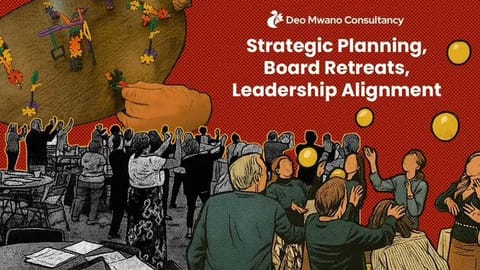
- The reality? Participants retain less than 10% of what’s shared during a workshop or keynote. That’s why we make our content tangible, interactive, and memorable. We prioritize active engagement over passive listening—because transformation happens when people move, create, reflect, and connect.
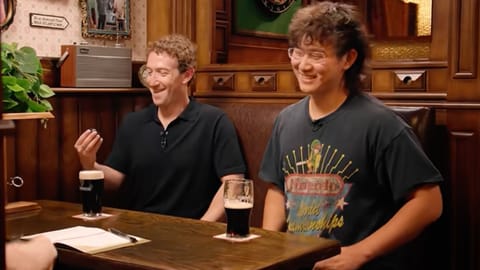
- I wrote about Mark Zuckerberg and Alexandr Wang’s podcast interview and what their dynamic made me reflect on: even leaders need a wingman. Leadership can feel lonely, and having someone you trust with different strengths and room to lead can make a meaningful difference.
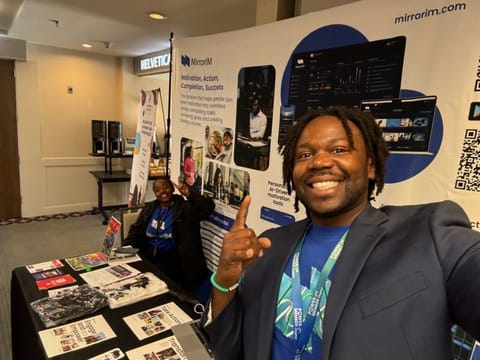
- Working the booth with Millicent Alhamis at the Future Ready Learning and Development New England Conference! We’re connecting with HR and L&D professionals to share how Deo Mwano Consultancy (DMC) helps organizations strengthen employee engagement, workplace culture, and leadership effectiveness. We’re also showcasing MirrorIM, the platform we’ve built to turn motivation into measurable action. Excited to connect, exchange ideas, and explore new opportunities for collaboration! #LearningAndDevelopment #EmployeeEngagement
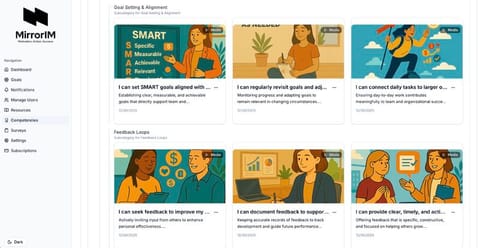
- When designing MirrorIM, we wanted to make it easier to connect core skills that are often overlooked to clear goals and actionable tasks. We’ve built hundreds of microlearning resources around these competencies, helping managers incorporate them into employee KPIs and performance improvement plans without creating complicated processes. The goal is simple: make skill development part of everyday work, with clear actions employees can take and progress managers can support.
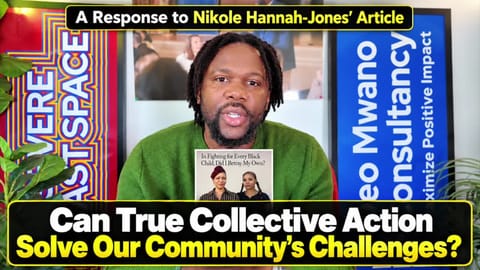
- I recently listened to Nikole Hannah Jones’s PBS interview, in which she addressed the response and backlash to her recent New York Times article about choosing to enroll her daughter in a low performing school in her district. Her reflections on collective action and collective impact resonated with me. I saw many connections to the community work I have done and the importance of including people who experience these challenges firsthand, along with those working directly to address them. In this video, I share my response and
This page shows public professional information only, each fact cited. Is this you? send a correction, or ask for removal within 24 hours, no questions asked.