
Overview
Erik Buntinx is the founding CEO and chief scientific officer of aneurotech, and is based in Limburg. He founded ANeuroTech in June 2017 and was its founding CEO and inventor until March 2025, when he took up the role of founding executive chairman and inventor.
He founded ANIMA Research in September 1992 and remains its founding CEO, working there as a psychiatrist, clinician and principal investigator, and in December 2024 he took on a further role at the organisation as founding chairman and CEO. That same month he founded EB Pharma Developments bv, where he is managing director and global clinical expert, and Anima Medical bv, where he is managing director and works as a psychiatrist. In July 2025 he founded ANIMA Clinical, where he is CEO. He has been a clinical research physician at Jessa ziekenhuis since July 2021, and held the same role at Maastricht UMC+ from October 1992 to July 1993.
Buntinx followed the psychiatry residency programme at KU Leuven from 1980 to 1991 and at Maastricht University School of Business and Economics from 1991 to 1992. He attended Sint-Martinusscholen Herk-de-Stad, studying Latin-Mathematics, from 1974 to 1980.
Career history

Insights & ideas
The through-line
Across nearly every post, Erik Buntinx returns to a single institutional identity: contributor and Principal Investigator through ANIMA Research, repeated post after post as the vehicle through which his clinical work happens [2][3][6][7][8][12]. Early in the run this is expressed simply as gratitude for being included in a study. By mid-2026 it sharpens into an explicit policy position, that patient choice and patient access should be the organizing principle of clinical research and of Belgium's competitiveness in it [4][5]. The disease areas he engages with, Alzheimer's, sleep disorders, obesity, are treated less as separate interests than as instances of the same underlying argument: that innovative solutions only matter if patients can actually reach them, and that Belgian investigators' reputation depends on making that access real [4][5][14][15].
On patient access and choice
Buntinx's clearest statement of principle is that competitiveness in research follows from patient autonomy: "Only with putting the free choice of patients as number 1 driver, the worldwide reputation of Belgian Principal Investigators will be able to win this worldwide competition" [4]. He escalates this into a call to action a few weeks later, urging a move "towards an EFFECTIVE PATIENT CENTRIC MODEL based on the right to have access to innovative solutions" [5]. The framing is consistent: access and choice are not soft values but the mechanism by which trial outcomes and investigator standing improve, a point he ties directly to ANIMA Research's own strategy to "improve the outcome for patients" [7].
On sleep as a clinical biomarker
Buntinx treats sleep disruption as a diagnostic window rather than a symptom, joining discussion of "Sleep as a Window into Early Stages of Alzheimer's Pathophysiology: Implications for Clinical Development" [1] and calling the underlying use case "a most interesting use case for any drug developer" [9]. This interest is backed by direct research output: he co-authored a poster with first author Prof. Dr. Yves Dauvilliers at "the top-level congress SLEEP 2026 in Baltimore" [11], and describes the event itself as "extremely succesful," naming the pharma counterparts he engaged there, Centessa Pharmaceuticals, Alkermes, Eisai US, Jazz Pharmaceuticals, Harmony Biosciences, and Takeda [10].
On obesity as chronic disease
He applies the same access-and-cost logic to metabolic disease, stating twice that "Recognising obesitas as a chronic and relapsing disease is key in controlling future healthcare costs" [14][15]. The repetition of the identical line across two posts suggests this is a settled position for him rather than a one-off observation, linking obesity policy to the same cost-and-access framework he uses for neurological disease.
From the stage
The Beyond Biotech podcast appearance is framed around ANeuroTech, ISA Pharmaceuticals, and Life Length [16], companies and topics that do not otherwise surface in his written posts, which are dominated by ANIMA Research, Alzheimer's, sleep, and obesity themes. This indicates a broader range of clinical and biotech relationships than the LinkedIn record alone reflects [16].
Takeaways
- He argues patient free choice, not institutional prestige, is what will let Belgian Principal Investigators win international research competitiveness [4].
- He calls explicitly for an "EFFECTIVE PATIENT CENTRIC MODEL" built on the right of access to innovative solutions, framing this as an action item, not an aspiration [5].
- He positions sleep disruption as an early-stage biomarker relevant to Alzheimer's clinical development, backed by a co-authored SLEEP 2026 poster with Prof. Dauvilliers [1][9][11].
- He treats obesity's classification as a chronic, relapsing disease as central to controlling future healthcare costs, repeating the claim verbatim across posts [14][15].
- He consistently credits ANIMA Research as the operational home for his contributions across disease areas, from Alzheimer's studies to sleep congresses [2][3][6][7][8][12].
- His podcast appearance surfaces relationships with ANeuroTech, ISA Pharmaceuticals, and Life Length that his written posts do not mention [16].
Media & appearances
- Labiotech.euYouTubeBeyond Biotech podcast 5: ANeuroTech, ISA Pharmaceuticals, Life Length
In the news
- Happy to contribute substantially on Lilly’s clinical research in AUD ANIMA Research
- Extremely proud to act as a key author on this major publication in the New England Journal of Medicine. ANIMA Research
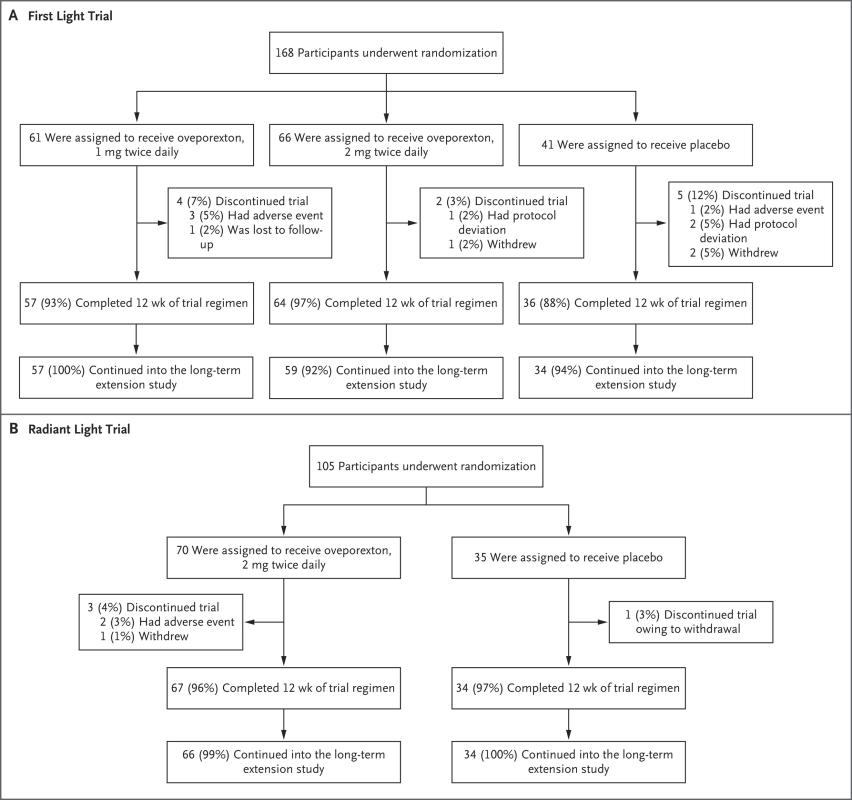
- Extremely proud to engage a former Principal Investigator of JnJ - A next step in the growth of the top tier capabilities of ANIMA Research!
- Very proud with the major contribution of ANIMA Research and as main Principal Investigator being a co-author on this toptier publication. https://lnkd.in/eajAwJ-b #ANIMARESEARCH
- Happy to join the discussion.

- Extremely happy to have contributed as Principal Investigator ANIMA Research
- Extremely happy to be a main contributor as Principal Investigator and Key Co-Author. ANIMA Research
- Only with putting the free choice of patients as number 1 driver, the worldwide reputation of Belgian Principal Investigators will be able to win this worldwide competition. ANIMA Research

This page shows public professional information only, each fact cited. Is this you? send a correction, or ask for removal within 24 hours, no questions asked.