
Overview
Gauthier Henroz is co-founder and CEO of Chift, which he started in 2022 with Henry Hertoghe and Matthieu Hertoghe. The Brussels company offers unified APIs and Syncs that let software vendors connect to accounting, invoicing, point-of-sale, ecommerce, payment and property management systems through a single integration. In June 2024 Chift raised a €2.3 million seed round from Entourage, Shapers, Seeder Fund and business angels. Wallonie Entreprendre is also listed among its backers. More than 120 software editors use the platform, connecting around 20,000 SMEs across Europe. Henroz said the company opened Spain because its customers asked for it. The company has 28 employees across Brussels, Paris and Madrid and plans around 20 additional hires by 2026. Chift ranked 43rd on the Sifted 250 list of fastest-growing European companies.
Career history

Insights & ideas
The through-line
Across the sources, Gauthier Henroz keeps returning to one idea: integration is no longer a feature bolted onto software, it is becoming the infrastructure that decides who wins distribution. Early posts read almost like a data diary, tracking France's e-invoicing rollout week by week through Connect-Compta.fr, but the running commentary gradually sharpens into a thesis: connectivity determines whether an accounting tool survives contact with accountants, with AI, and with a market where a third of SMEs already switch software in a year [7]. The tone shifts from observer ("chaque semaine, on compile les chiffres" [6]) to strategist (accountants will "require" connected tools [3], LLMs will win by default if tools stay closed [14]), while the company itself is described less as a vendor and more as embedded plumbing inside its partners' products [5].
On the e-invoicing rollout
Henroz treats the French Peppol rollout as a live experiment he narrates weekly. Eleven days before the deadline he warns that "1 entreprise sur 5 uniquement est raccordées à Peppol" and that "on est encore très loin du compte" [1][2]. He repeatedly benchmarks France against Belgium's own go-live, noting activations happened "APRES le go-live" there too [1][2], and predicts the same pattern will repeat: "tout le monde attend, puis tout le monde sprinte dans les dernières semaines" [13]. Even the best-performing département, Haute-Loire, sits at only "13% des entreprises enregistrées sur le réseau Peppol" [13]. He also tracks momentum shifts closely, flagging both the fastest pace measured, "30 233 entreprises par jour en moyenne, un record depuis le début de nos mesures" [4], and the first slowdown, "un premier signe d'essoufflement de l'été" with the daily rate dropping from "18 150" to "14 250" [6].
On integration as infrastructure
His core claim about Chift's own category is that connectivity has stopped being optional. "Integration isn't a feature in #accountingsoftware. It's the baseline." [7]. He describes Chift's relationship with its biggest clients accordingly: "our clients aren't clients. They're partners, because our product is embedded into theirs. When they ship, we ship. When they scale, we scale." [5]. The company is positioned not as a tool but as load-bearing plumbing: "Chift isn't just a tool our clients log into. It's the infrastructure powering one of their core features: integrations." [5].
On winning the accountant channel
Henroz frames the accountant relationship as the real distribution battle in French e-invoicing. His prediction is blunt: "Accountants won't just prefer connected solutions. They'll require them to their clients." [3]. That is the stated reason for building connect-compta.fr, "a directory so accountants can see which invoicing tools connect to their stack," because "winning the accountant channel starts with being in the right list" [3]. The same directory is pitched as serving two audiences at once: accountants who need to see "quelles solutions sont réellement #connectées entre elles" and anyone tracking the deployment via the "baromètre avec les #statistiques" [13].
On AI and the future of accounting software
He sets up a stark choice for the category: "their #accounting tool or Claude" [14]. His argument is that native data alone is not a moat: "If accounting tools limit themselves to the data they hold natively, they lose. The LLM sitting on top of everything wins by default." [14]. The counter-move he proposes is aggregation across banking, invoicing, payments, POS, ecommerce and PMS data so the accounting tool becomes "the place where all financial #data converges" and, if connected, "the single source of truth" [14].
From the stage
In interview appearances he goes further than the written posts on how Chift actually works and how the company was built. He explains that PMEs run multiple disconnected applications (e-commerce, accounting, POS, cash flow tools) and that Chift's fix is architectural: software editors connect once to Chift's universal system instead of building bespoke integrations for every client combination [16]. He frames the target customer explicitly as TPE/PME businesses that lack the resources larger companies have to run complex integration projects themselves [17]. On the company's origin and strategy, he describes signing clients before Chift was even officially incorporated, treating early constraints as opportunities rather than obstacles, and deliberately choosing to lock down the European market before considering the US [18]. He also describes his own operating rhythm as CEO, crossing Amsterdam, Madrid and Paris for events, and stresses the discipline of setting personal deadlines to keep momentum and accountability [18].
Takeaways
- Watch Connect-Compta.fr's weekly Peppol numbers as a live gauge of French e-invoicing readiness; as of August 17, 2026 only about 20% of French companies were properly connected, 11 days before the deadline [1][2].
- Expect a last-minute compliance sprint modeled on Belgium's own rollout, where many activations happened only after the official go-live [1][13].
- Treat accountant-facing directories as a distribution strategy, not just a resource: accountants will soon require, not just prefer, connected invoicing tools [3].
- Accounting software vendors need to integrate broadly across banking, invoicing, payments, POS and ecommerce data or risk losing relevance to LLMs that sit above the whole stack [14].
- Software stickiness is eroding fast: 32% of European SMEs surveyed switched accounting tools in the past year, and the more tools in a stack, the higher the switching risk [7].
- Chift's growth choice was to prioritize dominating the European market before looking at the US [18].
Media & appearances
- Dans la tête d'un CEOYouTubePourquoi l’Europe plutôt que les US ? - avec Gauthier Henroz (Chift)Gauthier Henroz discusses how Chift's early days involved signing clients before officially creating the company, facing constraints that he learned to view as opportunities, and deciding to focus on locking down the entire European market rather than pursuing the US market initially. He also describes his daily responsibilities as CEO, which include representing the company at events across multiple European countries like Amsterdam, Madrid, and Paris, and emphasizes the importance of setting personal deadlines to maintain momentum and accountability.
- Alexis SlamaYouTubeIA, facture électronique, API, MCP les indispensables des experts-comptables - Gauthier Henroz - ChiGauthier Henroz is the CEO and co-founder of Shift, a company focused on facilitating integrations between software tools for small and medium-sized enterprises that lack the resources of larger companies to manage complex integration projects. In this episode, he discusses how Shift helps connect different software solutions that are poorly integrated together, addressing the integration challenges faced by TPE PME businesses.
- Clic Droit - Edouard SeynaeveYouTubeUnifiez ENFIN vos données financières avec Chift ! Marché parlé 023 avec Gauthier HenrozGauthier Henroz discusses how Chift operates as a financial data integration platform that connects different software tools used by small and medium-sized businesses. He explains that PMEs typically use multiple software applications such as e-commerce platforms, accounting software, point-of-sale systems, and cash flow management tools, and Chift solves the interconnection problem by allowing software editors to connect once to Chift's universal system rather than building individual integrations for each client's different tool combinations.
In the news
- Update de cette semaine sur la facturation électronique en France. Il y a pas mal de données très intéressante dans cet article. A lire !
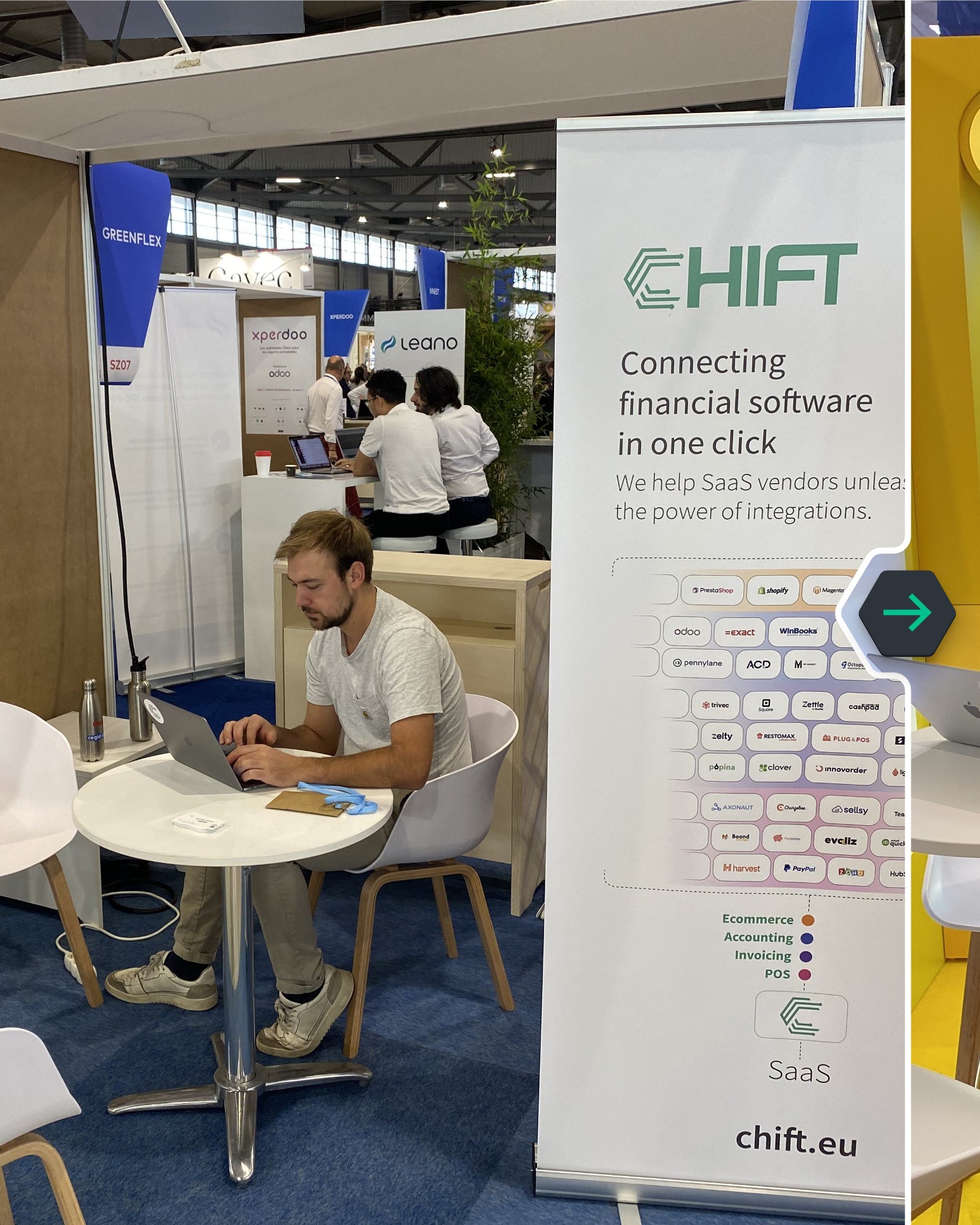
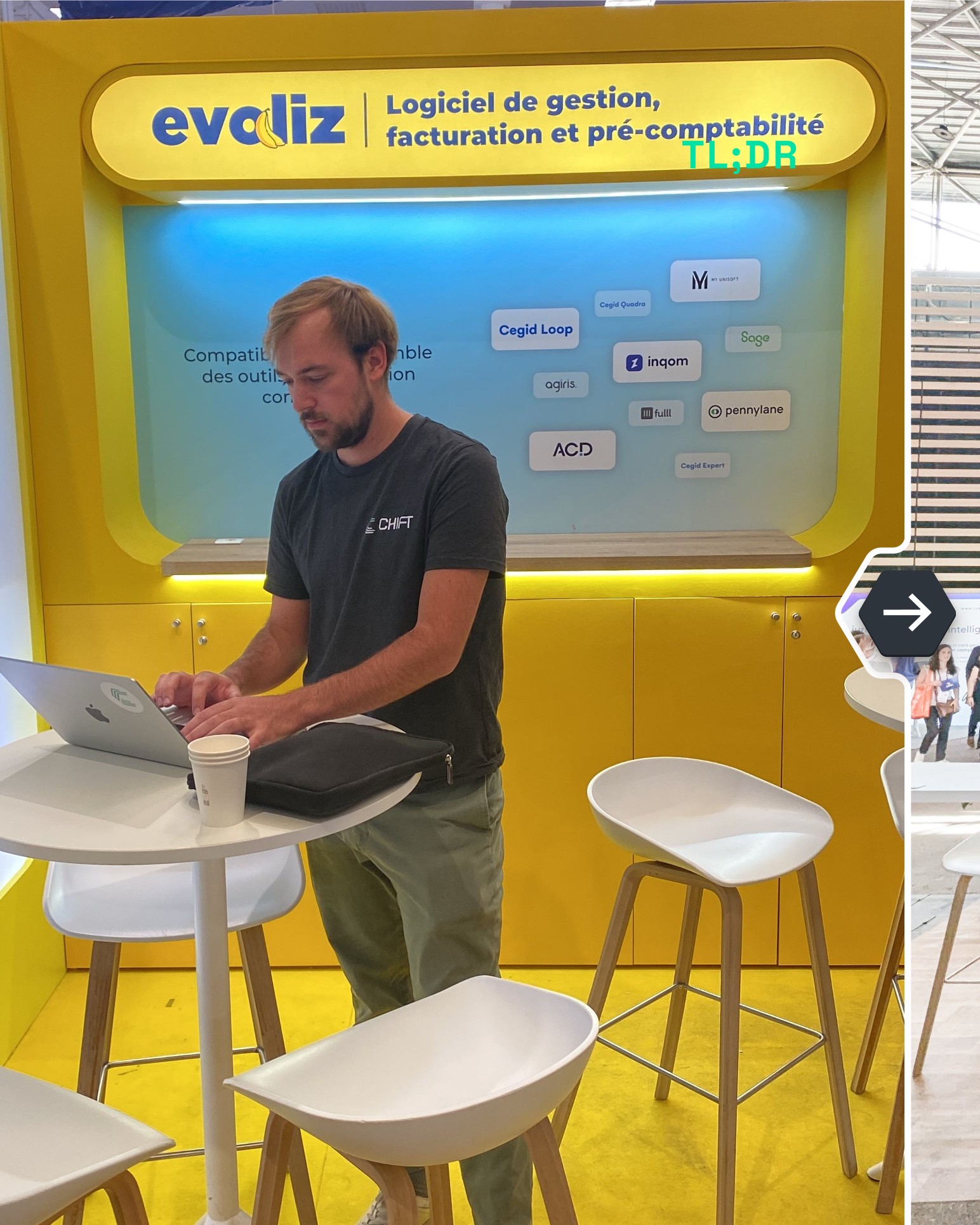
- Le Congrès de l’ordre des experts-comptables, c'est déjà demain à Paris ! Venez rencontrer les #superplombiers de la connectivité comptable au stand R198 #fintech #comptatech #connectivity #einvoicing #ereporting

- Happy to double down on this one with Entourage Ventures. Let's go Gauthier Henroz Matthieu Hertoghe and Henry Hertoghe 🚀
- Thrilled to see Chift API team raise its €10.5M Series A, led by BlackFin Capital Partners. 💥 At Entourage, we've watched this team build the connectivity layer behind 150+ software companies from scratch, now connecting 50,000+ SMEs across 10+ countries in Europe. AI and e-invoicing are redefining European SMB finance, and interoperability is becoming the industry's defining problem. Chift is building the infrastructure that connects it all and is powering teams at companies like Revolut, Pennylane and Mollie. 🚀 Huge
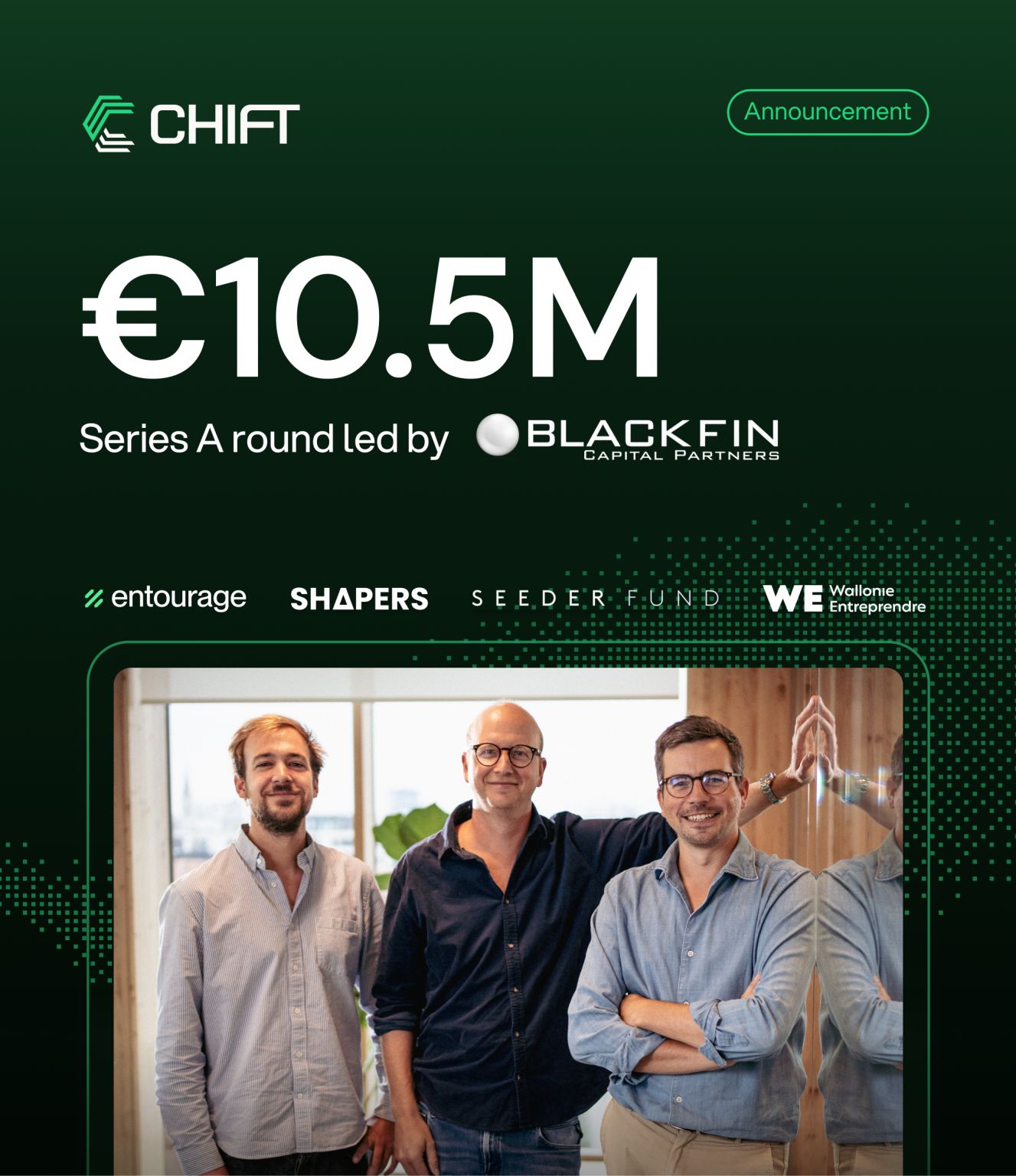
- 4 years ago, most people thought we were fools to start a company in the integration industry. Today, I'm proud to announce that Chift API has raised a €10.5M Series A, led by BlackFin Capital Partners, with Entourage Ventures, Shapers, Seeder Fund and Wallonie Entreprendre all doubling down 🚀 Most who tried before us had failed. Connecting financial software in Europe was too fragmented, too local, too hard. We didn't know it was complex. So we just did it. There was a moment, early on, when I wasn't sure we'd make it to the next
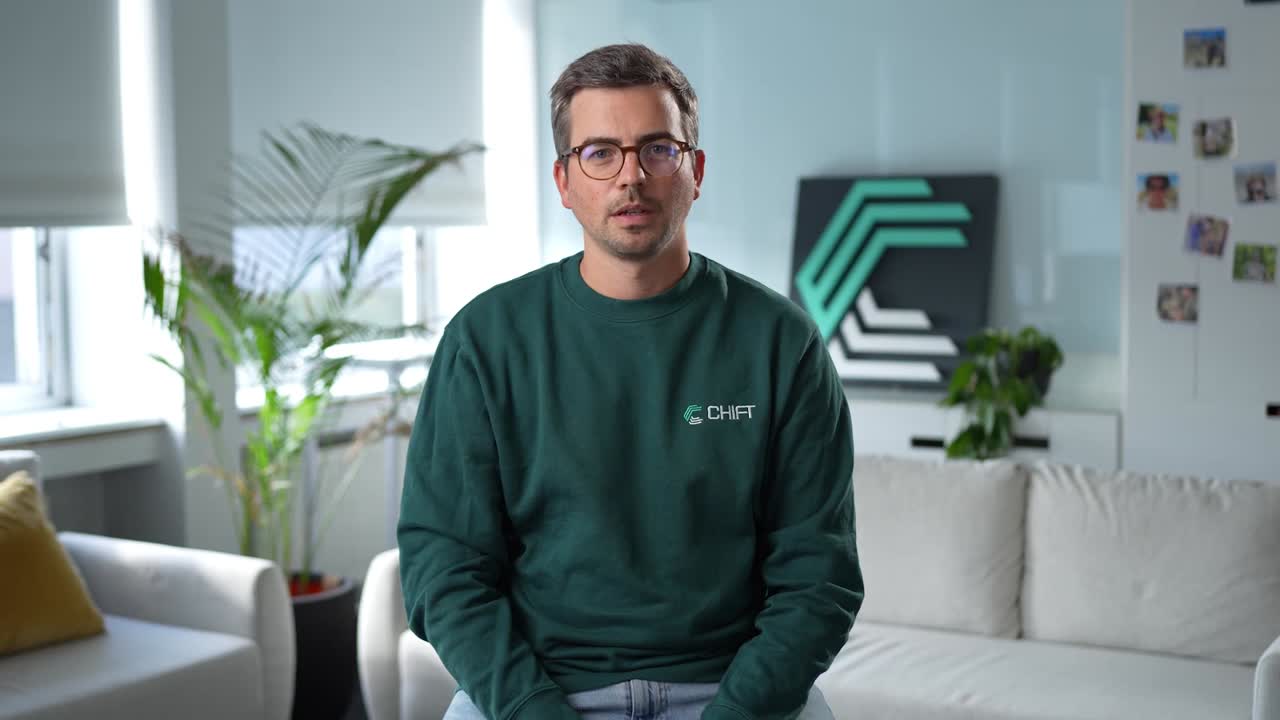
- J-5 avant la grand messe : le Congrès de l’ordre des experts-comptables Un rendez-vous assez incroyable avec la profession et les nombreux éditeurs #comptatech. 🐣 On l'a découvert en 2023 à 𝐌𝐨𝐧𝐭𝐩𝐞𝐥𝐥𝐢𝐞𝐫 (1ère photo avec Matthieu Hertoghe). On était dans un coin #startup très peu visible, mais on était peu sur notre stand. On a passé les 3 jours en discussions intenses, jusqu'à la dernière minute : l'équipe de démontage a dû nous mettre dehors. Il y a 3 ans, beaucoup d'éditeurs étaient encore "fermés", et l
- FactuElec en France : +450.000 entreprises connectées la 1ère semaine de septembre, donc après la date officielle. Au total, 4 233 112 entreprises peuvent recevoir une facture électronique (dernière synchro des chiffres ce mardi 08/09/2026) Deux mouvements opposés se produisent en même temps : 🏢 Les grandes entreprises : 2/3 sont désormais joignables. Ce sont des groupes qui raccordent leurs filiales par lots. 👨🌾 Les entrepreneurs individuels représentent 46,9% des nouveaux raccordés cette semaine, alors qu'ils ne pèsent que
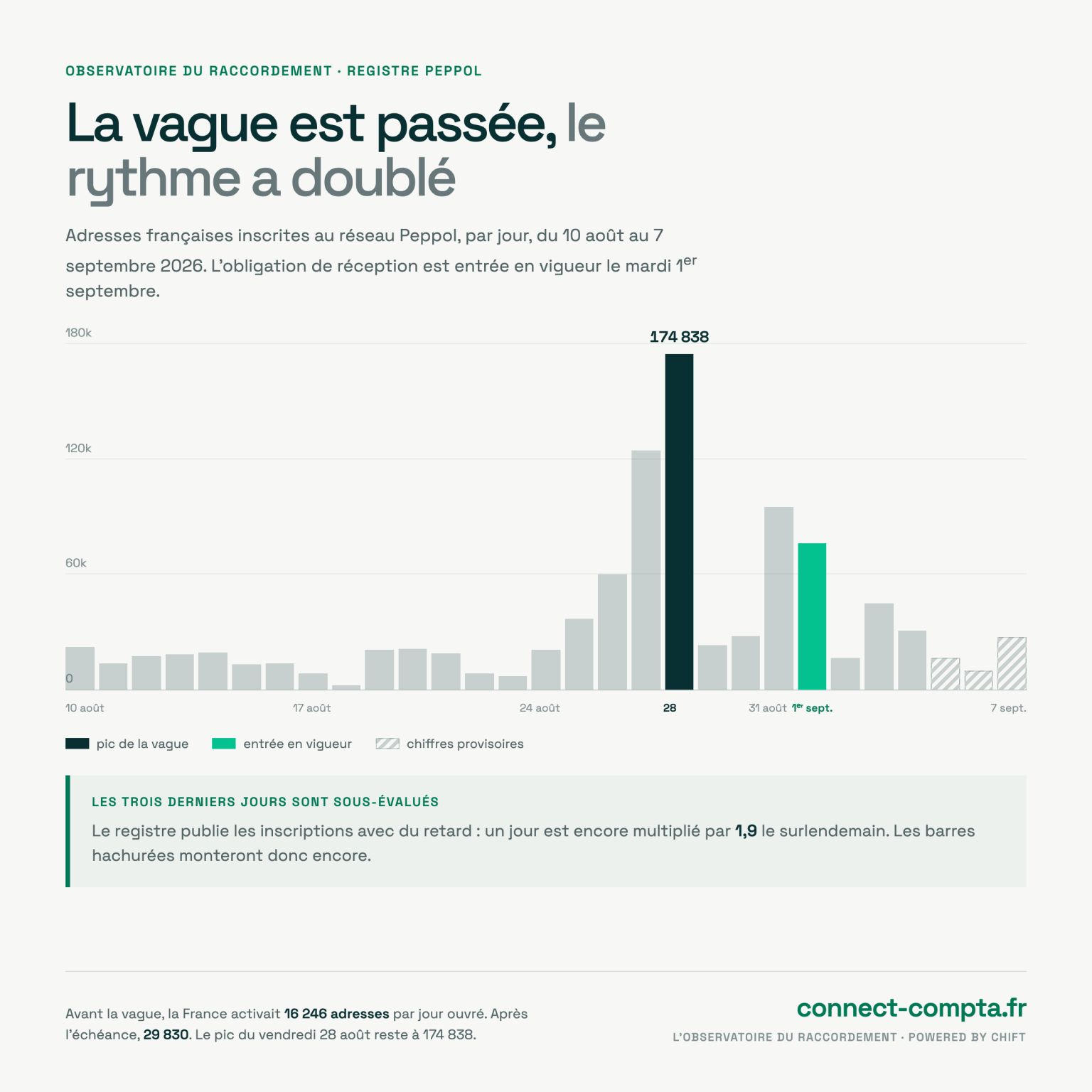
- Einvoicing in France, a rush to register just before the official launch date. Still 40% of companies need to connect to the Peppol network. Follow Tanguy for more updates
Related profiles

This page shows public professional information only, each fact cited. Is this you? send a correction, or ask for removal within 24 hours, no questions asked.