Overview
Harold Kinet is based in Namur, where he is chief executive of be-blockchain, which he co-founded in October 2019. Since May 2024 he has been chief executive officer of Paycifi - Programmable Trust, and since March 2021 he has been a co-founder of WalChain - Construire le Web3. He states expertise in blockchain, Web3, creativity and innovation, Ethereum and software development.
Between June 2021 and September 2023 he was a blockchain, crypto and Web3 columnist for LN24. He worked as a digital marketing consultant at Pixontri from 2020 to 2022 and as innovation manager at OpenFlow from 2019 to 2022, and he co-founded Ychain in September 2018. At Daneel.io he was marketing communications coordinator before becoming communications director and associate, and during 2018 he was an advisor to EIPlatform and YellowBetter. Earlier roles included marketing positions at WOW Company and WOW Technology, journalist editor and marketing manager at Army Recognition, and communication and event work at Private Booking, Vigo Universal and Leuzevents.
He studied at the Université de Namur and the Université catholique de Louvain, where he took a master's degree in public relations and corporate communication, and also studied at the University of Deusto and FOREM TechnocITé.
Career history


Insights & ideas
The through-line
Everything Harold Kinet says circles back to a single question: where does trust actually sit in a transaction, and can it be moved out of an institution and into code without losing legal force. He frames this as an unfinished job for the whole industry, arguing that "the payments industry has automated almost everything. Except the moment that matters most: conditional settlement between parties who don't fully trust each other" [12]. The answer he builds toward is escrow that no party controls, settlement in stablecoins, and arbitration handled by a named human with legal accountability rather than a platform.
The second thread is the passage of blockchain from fringe to institution, which he narrates from personal vantage. He has been in the ecosystem since 2017, when "la blockchain c'était encore un sujet de niche, souvent regardé avec naïveté et ensuite avec méfiance par la finance traditionnelle" [1]. Nine years later he opens a seminar on digital assets in front of actuaries, and reads that as the meaningful signal: traditional finance is reclaiming the technology, but on its own terms, "avec la rigueur qu'elle exige toujours : modélisation du risque, cadre réglementaire, standards actuariels" [1].
On the moment payments never automated
The gap he keeps returning to is conditional settlement. His evidence is loss data: the FBI recorded $2.77B in losses from business email compromise alone in 2024, most of it wire fraud on high-value transactions [12]. His framing of the problem is blunt, "Why do we still wire millions on trust?" [12]. The existing alternatives fail on availability rather than concept: bank escrow is "slow, expensive, often unavailable cross-border or below 5M", which leaves everything under that threshold running on pure trust [12].
The mechanism he proposes is deliberately simple to state. The buyer locks funds in a neutral smart contract escrow, the seller ships, and funds release when all parties, up to ten partners, validate delivery [2][8]. The constraint that makes it work is negative rather than positive: "No party can move the money unilaterally" [2][10], and "No intermediary ever holds the funds. No escrow license needed" [12]. Paycifi is positioned as "programmable trust infrastructure" [2], built by a Belgian company and a Circle Alliance partner [2][12].
On who moves first
The same architecture is applied to bilateral crypto trades, where he identifies the deadlock precisely: "The biggest risk is always the same: who moves first?" [13]. The buyer will not send USDC before receiving BTC, the seller will not send BTC first, and "that's where most OTC deals either stall or get exploited" [13]. The escrow resolves it by making the lock visible: the buyer locks USDC in a non-custodial smart contract, the seller sees the funds are secured and sends the BTC, both confirm, and the USDC releases automatically [13].
On arbitration by a human, not a platform
He is explicit that automation stops at the dispute. When something goes wrong, "a specialized lawyer steps in as arbitrator", and he draws the distinction himself: "No platform deciding who's right. A human with legal accountability" [13]. This is paired with ICC arbitration built into the product, described as fast and enforceable in 170+ countries [2][12], which is what makes the code-based settlement usable in real cross-border trade rather than only among counterparties who already trust each other.
On settlement rails and pricing
Settlement is offered in USDC/USDT or EURC, same day and cross-border [2][9], with fiat in and out available for companies not using stablecoins [2][6]. The pricing is stated openly and scales with how much traditional plumbing is involved: from 0.2% for stablecoin settlement to 1.5% where fiat and the on/off ramp are included [2][12], with OTC deals quoted at 0.5% to 1.5% [13]. Commercial focus is on African trade corridors, where deals are currently being structured [2][5], and the standing invitation is to test it against a real transaction rather than argue in the abstract [2][13].
On MiCA splitting the stablecoin market
His reading of European regulation is that it has produced two separate markets: "MiCA just split the stablecoin market in two. A regulated European bubble, and everything outside it" [11]. On the euro side, EURC broke every record it had in Europe, with 1,760 active addresses per day and 713 new wallets created daily according to Circle's data since the stablecoin provisions took effect [11]. On the dollar side the story reverses. USDT is not MiCA-compliant because Tether never applied for the e-money-token authorization, and its CEO was explicit that the requirement to hold 60% of reserves in European bank deposits is incompatible with Tether's reserve model [11]. The market data follows the rule: Kaiko found USDT volumes on EU-regulated venues fell over 70% between Q4 2024 and Q2 2025 while USDC volumes on the same venues nearly doubled, order-book depth for USDT/EUR pairs collapsed, and Coinbase, Kraken and Crypto.com all removed USDT for EEA users [11].
On security failures being human
His account of the Bybit hack refuses the easy conclusion that the technology broke. Some 400,000 Ethereum were stolen by the Lazarus Group, but the entry point was phishing emails that handed the attackers control of operator computers, and the transfer to a pirate account was authorized through human error [16]. He is direct that the platform's own security was not compromised, and that the failure was operator negligence [16]. On recovery he is realistic: roughly 40 million dollars have been recovered, but Lazarus's laundering operations mean most of the stolen funds will disappear into North Korea's military program [16].
On defining the technology precisely
He does definitional work rather than hype work. A metaverse, taken etymologically, is meta as "beyond" and verse as "universe", and what distinguishes it in practice is persistence: shared virtual worlds where modifications remain permanent, unlike video games where the environment resets [15]. He separates this from augmented reality, which overlays virtual elements onto the real world, and stresses that there is no single metaverse, with Facebook's version sitting alongside decentralized ones [15]. The same appetite for structure shows in how he describes BE Blockchain as a consulting and development firm in blockchain and Web3 with two strategic activities, consulting services and building its own products such as its sandbox [14].
Takeaways
- The unautomated part of payments is conditional settlement between parties who do not fully trust each other, and bank escrow does not fill it below roughly 5M or across borders [12].
- Non-custodial design is the whole point: no intermediary holds the funds, no party can move the money unilaterally, and no escrow license is required [2][12].
- Automation should stop at the dispute, where "a specialized lawyer steps in as arbitrator" with ICC arbitration enforceable in 170+ countries [13][12].
- In OTC trades the binding constraint is sequencing, not price: locking the buyer's USDC visibly is what unblocks the seller [13].
- MiCA has bifurcated the market, with USDT volumes on EU-regulated venues down over 70% from Q4 2024 to Q2 2025 while USDC volumes nearly doubled and EURC hit record European usage [11].
- The Bybit loss came from phishing and operator negligence rather than any breach of the platform's security, which is where defensive attention belongs [16].
- Blockchain's move from niche curiosity in 2017 to a seminar topic for actuaries reflects traditional finance absorbing it on its own terms: risk modelling, regulatory framework, actuarial standards [1].
Media & appearances
- BE BlockchainYouTubeBE Blockchain au GITEX GLOBAL 2024 à Dubaï avec l'AWEXHarold Kinet describes BE Blockchain as a consulting and development firm operating in blockchain and Web3 with two strategic activities: consulting services and developing their own products like their sandbox.
- BE BlockchainYouTubeLes métavers en 5 questions !Harold Kinet discusses the metaverse by providing an etymological definition (meta meaning "beyond" and verse meaning "universe"), explaining that metaverses are persistent shared virtual worlds where modifications remain permanent unlike video games where environments reset. He distinguishes metaverses from augmented reality, which overlays virtual elements onto the real world, and notes that multiple metaverses exist including those from Facebook and decentralized versions.
- BE BlockchainYouTubeCanal Z - Le Hack de BybitHarold Kinet discusses the Bybit cryptocurrency hack involving 400,000 Ethereum stolen by the Lazarus Group, explaining that the attack began with phishing emails that gave hackers control of operator computers, followed by human error that authorized the transfer to a pirate account. He notes that Bybit's platform security was not compromised, the issue was operator negligence, and that about 40 million dollars have already been recovered, though Lazarus's money laundering operations mean much of the stolen funds will likely disappear to support North Korea's military program.
In the news
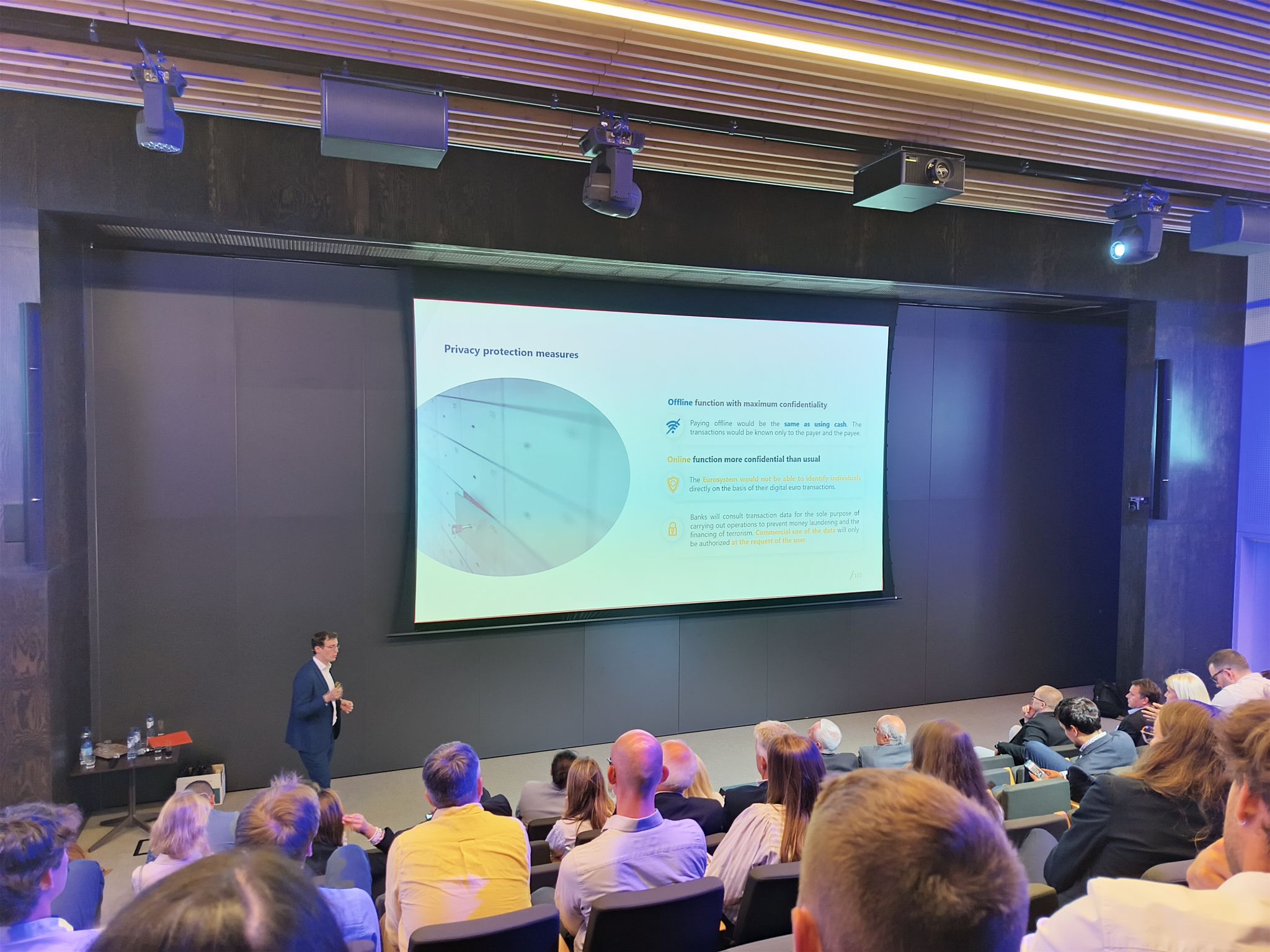
- Full house yesterday at AG Campus to talk blockchain in front of actuaries. The talk that made me want to dig deeper was Florian Christiaens' session on recent legislative developments around the Digital Euro. It got me back into a file I had somewhat set aside in recent months (or even a year !). Two points from the ECB report stuck with me since then. The first concerns the wave of skepticism around Digital Euro privacy. I'll admit it caught my attention too, given the lack of complete public detail on the technical
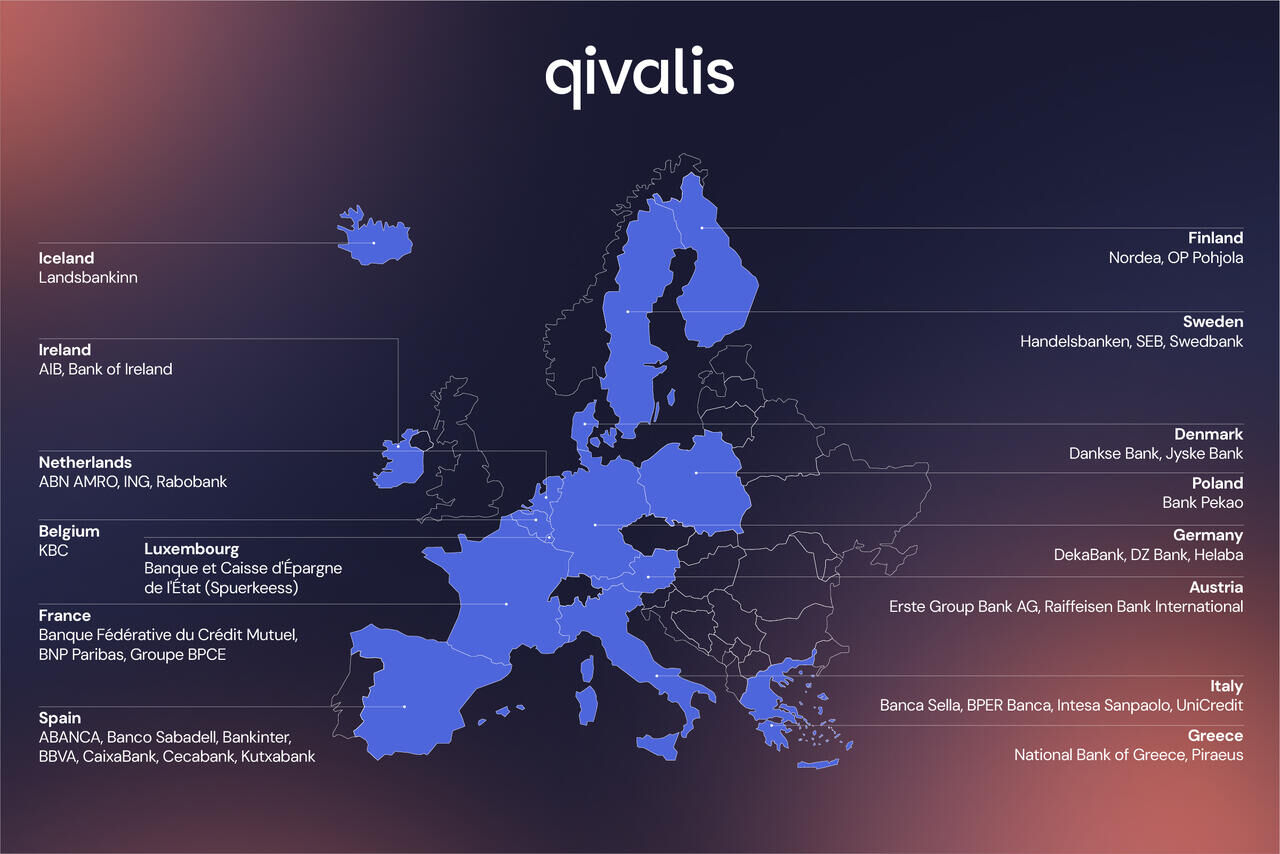
- Ethereum Institutional just announced that Qivalis will issue its euro stablecoin on Ethereum, rather than on a closed private network like other bank consortia have chosen. The consortium already counts 37 banks across 15 countries, targets a 1:1 euro backing, and is waiting on its EMI licence from the Dutch central bank (DNB) for a launch planned in the second half of 2026 (time is running out btw !). Choosing Ethereum is not a small decision. Going on a public network means going where the liquidity, the users and the DeFi markets
- Le 9 septembre, j'ouvre le bal d'un séminaire sur les actifs numériques devant un public d'actuaires. Ça fait depuis 2017 que je suis dans cet écosystème. À l'époque, la blockchain c'était encore un sujet de niche, souvent regardé avec naïveté et ensuite avec méfiance par la finance traditionnelle. Neuf ans plus tard, je me retrouve à ouvrir un séminaire devant des actuaires, à l'Université catholique de Louvain, pour parler du même sujet. Ce chemin-là dit beaucoup. La finance traditionnelle se réapproprie la technologie, mais avec
- We provide programmable and non-custodial escrow for cross-border trade, without a bank in the middle. How it works: The buyer locks funds in a neutral smart contract escrow. The seller ships. Funds are released when all parties (up to 10 partners) validate delivery. No party can move the money unilaterally. => Settlement in USDC/USDT or EURC, same day, cross-border. => Fees from 0.2% (stablecoin settlement) to 1.5% (fiat, on/off ramp included). => Fast dispute resolution through ICC arbitration, enforceable in 170+ countries. =>
- We provide programmable and non-custodial escrow for cross-border trade, without a bank in the middle. How it works: The buyer locks funds in a neutral smart contract escrow. The seller ships. Funds are released when all parties (up to 10 partners) validate delivery. No party can move the money unilaterally. => Settlement in USDC/USDT or EURC, same day, cross-border. => Fees from 0.2% (stablecoin settlement) to 1.5% (fiat, on/off ramp included). => Fast dispute resolution through ICC arbitration, enforceable in 170+ countries. =>
- We provide programmable and non-custodial escrow for cross-border trade, without a bank in the middle. How it works: The buyer locks funds in a neutral smart contract escrow. The seller ships. Funds are released when all parties (up to 10 partners) validate delivery. No party can move the money unilaterally. => Settlement in USDC/USDT or EURC, same day, cross-border. => Fees from 0.2% (stablecoin settlement) to 1.5% (fiat, on/off ramp included). => Fast dispute resolution through ICC arbitration, enforceable in 170+ countries. =>
- We provide programmable and non-custodial escrow for cross-border trade, without a bank in the middle. How it works: The buyer locks funds in a neutral smart contract escrow. The seller ships. Funds are released when all parties (up to 10 partners) validate delivery. No party can move the money unilaterally. => Settlement in USDC/USDT or EURC, same day, cross-border. => Fees from 0.2% (stablecoin settlement) to 1.5% (fiat, on/off ramp included). => Fast dispute resolution through ICC arbitration, enforceable in 170+ countries. =>
- We provide programmable and non-custodial escrow for cross-border trade, without a bank in the middle. How it works: The buyer locks funds in a neutral smart contract escrow. The seller ships. Funds are released when all parties (up to 10 partners) validate delivery. No party can move the money unilaterally. => Settlement in USDC/USDT or EURC, same day, cross-border. => Fees from 0.2% (stablecoin settlement) to 1.5% (fiat, on/off ramp included). => Fast dispute resolution through ICC arbitration, enforceable in 170+ countries. =>
This page shows public professional information only, each fact cited. Is this you? send a correction, or ask for removal within 24 hours, no questions asked.