Overview
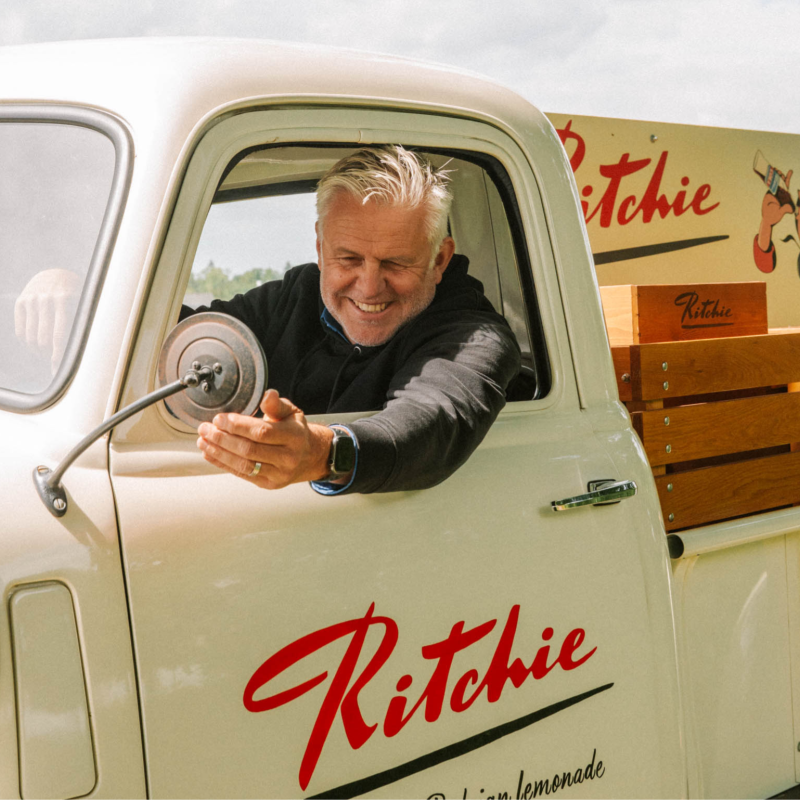
Jan Verlinden, fourth-generation heir of a family brewery in Lubbeek, declined to take over at 22 and instead built a 15-year international marketing career at large corporates like Lucky Strike and PepsiCo across multiple continents. At 47, tired of corporate life and its limited 'shelf life', he relaunched Ritchie, the family lemonade brand, roughly 8 years ago. He entered a huge but brutal market (125 litres of soft drinks per Belgian per year, 4.2 billion consumptions) dominated by deep-pocketed multinationals, and chose to bootstrap: production and logistics outsourced to avoid capex, his own salary set to zero, and a self-imposed 5-year deadline. He deliberately refuses external investors so nobody can veto contrarian moves like sponsoring The Masked Singer while still tiny, designing his own bottle, and refusing 1+1 promos even when retailers threatened not to list him. His strategy 'in horeca you try, in retail you buy' was tested hard by COVID, but early media investment kept the brand growing 36% in volume that year, and Ritchie has been profitable every year.
Talks about
- Bootstrapping
- Family business
- Branding
- Retail & hospitality
- Succession
- Entrepreneurship
- Storytelling & public speaking
Insights & ideas
The through-line
Everything Jan Verlinden says circles back to one decision and its consequences: leaving fifteen years of corporate marketing at PepsiCo and Lucky Strike at 47 to relaunch the lemonade brand his family had owned after the war and which had vanished by the late 1980s [16][19]. He frames that move as risk avoidance rather than risk taking. "Volgens mij was het het grootste risico om het niet te doen en ongelukkig te zijn, dan het risico te nemen om het wel te doen" [19], and the corporate golden cage is less safe than it looks, since there is a shelf life at big companies and you see very few people above 50 [19]. The test he applies is not ambition but appetite: "Ik wil op mijn 65e niet in de zetel zitten en zeggen van: had ik het maar gedaan" [19], because "Mensen hebben voornamelijk spijt van dingen die ze niet hebben gedaan, niet zozeer van wat ze wel hebben gedaan" [17].
The second half of the through-line is what he built once he jumped: a deliberately small, self-financed, one-man operation that spends its money on being seen rather than on being complicated [17][18][19]. He has no exit in mind and says so plainly: "Als vandaag iemand zou bellen, we willen Ritchie kopen, het antwoord is neen. Ik amuseer mij teveel. Wat moet ik dan gaan doen, thuis gaan zitten en mijn geld gaan tellen?" [17]. Nearly nine years in, the operating principles have not softened; they have hardened into a method [18].
On the golden cage and goesting
The word he uses for the deciding factor is untranslatable and he knows it: "Goesting is een schoon Vlaams woord. Als je goesting hebt, ja, dan moet je dat doen" [19]. He distinguishes it sharply from wanting something. Goesting is passion plus the willingness to keep going through setbacks, the difference between liking the idea of a marathon and training in the rain: "Ik heb zin om een marathon te lopen, maar ik heb geen goesting om een marathon te lopen, dus ik ga er nooit gaan lopen" [17]. He also warns against starting a company purely to cash out inside five years, since the odds of a successful exit are small and the goal itself is a recipe for unhappiness [17].
The jump was managed, not romantic. He gave himself a realistic horizon of five years and eliminated the biggest cost line, his own salary, which he set to zero, so the business could survive the ramp-up [19]. He also had an asset most first-time founders lack: a PepsiCo pedigree that gave him credibility with suppliers, which he calls the hardest part of starting, because almost nobody starts a lemonade company from scratch [19]. Part of what pushed him out was the ceiling on the work itself: Belgium is a small market for a multinational marketer, a country of ten million where you grab or lose a bit of share, while the real breakthroughs happen in Asia and other big markets [19].
On product before advertising
His most repeated correction to founders is about what marketing actually is. "Iedereen denkt dat marketing reclame is. Reclame is maar een stuk. De P van product van de marketingmix is stap nummer één" [17]. The product rule is short: "Lekkere limonade maak je met lekkere ingrediënten, punt" [17]. Packaging sits immediately behind it and is the piece startups most often underestimate, because it is a communication element rather than a container; in his phrasing, we eat and drink packaging [17]. He does the product development himself, along with logistics negotiation, accounting, campaigns and packaging, and delegates the work that does not energise him [18].
The bottle also produced the closest thing to a fatal moment. After two years of preparation his Chinese supplier admitted they could only guarantee one bar of pressure, which for a carbonated drink means bottles that can explode, and he nearly had to start over before switching to a Western supplier that required €50,000 in molds [19].
On cola without phosphoric acid
The clearest expression of product-first thinking is Ritchie cola, which he built around what it leaves out. Phosphoric acid is replaced with lemon juice and non-alcoholic fermented apple juice, and artificial caramel E150d with barley malt, which he says makes it the only cola kidney dialysis patients can drink [17]. He keeps returning to the health case with outside authority rather than his own claims: press coverage of the effect of phosphoric acid on the kidneys, osteoporosis expert Stefan Goemaere on its possible effect on bones [6], and nephrologist Elien Mahieu describing cola as "echt een fosforbom" with a pH of 2.5 to 3, so low you can descale a toilet or remove rust with it [13].
He turns that into a line he knows is provocative inside his own industry: Ritchie cola is "niet geschikt om een ketting te ontroesten, maar wél om zonder blikken of blozen van te genieten", an observation not everyone in the sector appreciates [6].
On reaching everyone
Media buyers always open with the same question, and he always gives the same answer. Asked who his target group is, he says "iedereen", and he defends it against the charge that it is unstrategic: everyone occasionally enjoys a good Belgian soft drink, and small brands grow above all by raising penetration, which means getting more people to buy the brand [14]. That is why the money goes into broad mass media, television, bus shelters, newspapers and radio [14], and why he deliberately avoids programmes and channels with limited reach, which deliver fewer people and usually at a higher cost per contact as well [14].
Radio is a live part of that mix, including a new variation of the Ritchie radio commercial produced through the VAR Puppy Prize, an initiative of VAR, YoungDogs Belgium and Creative Belgium in which young creatives compete to build a Ritchie radio campaign; the winning five-second spot "Rit-chhh-ie", built on the sound of a Ritchie bottle being opened, was selected from more than fifty entries and ran on Studio Brussel, Radio 2, Nostalgie and an online audio network package [10]. He also plays the frugality game visually, getting three posters for the price of one through a bit of mirroring, which he presents as media investment optimisation [5].
On squeezing the media budget
The budget is modest and he says so, which shapes every choice about how the money is split between production and reach [14]. Production is the enemy: an €80,000 twenty-second television spot drains money that could have bought audience, which is why product placement is more cost-efficient than a commercial and why he wants every euro to go to brand visibility [17]. The practical side of placement is unglamorous, down to managing television appearances so the drinks actually appear to be consumed during filming [16].
He is equally blunt about measurement. For a small brand, measuring brand attribution is not worth what it costs; the only thing that matters is that doing everything at once makes volumes go up [17]. The same logic runs through his partnerships, from the collaboration with Volkswagen Commercial Vehicles Belgium and TBWA\Belgium [7] to visiting the first beer wholesaler customer in the ID-Buzz [2], all of it visibility bought cheaply.
On horeca first, retail after
His channel doctrine is a sentence: "In horeca you try, in retail you buy" [19]. Premium horeca distribution generates awareness and trial, and retail captures the repeat purchase [19]. He is protective of that first channel beyond commercial self-interest, supporting the Kroegtijgers initiative for authentic cafés as meeting places, on the grounds that a village or a town without a café loses part of its soul, with a national café day on 12 September as its first big event, and noting that more and more horeca businesses are choosing the better Belgian soft drink [15].
The strategy nearly broke in March 2020. Horeca was both his trial engine and more than half his volume, and when lockdown closed it retail did not compensate [17][19]. He responded by accelerating the media and marketing investment far earlier than planned, still finished the year with 36% volume growth, and learned that the horeca and media strategies reinforce each other even at small scale [19].
Retail came with its own confrontation. Asked for the standard 1+1 promo as the price of being listed, he calculated that with margins under 50% it is loss-making, that once you start promotions you can never stop, and answered "En dan heb ik gezegd: dat is goed, dan kom ik er niet in" [19]. Years later Ritchie is in nearly all retailers, without promos [19].
On financing yourself
He has never taken external investors and gives three reasons: nobody would be able to say no to his contrarian moves, discussions with investors slow down bold decisions such as sponsoring The Masked Singer, and investors come in with the intention to exit, which conflicts with building a brand for the long term [19]. The alternative is simple arithmetic: "Uiteindelijk de beste manier om jezelf te financieren is winst te maken" [19]. He never signs a marketing cheque he cannot already pay, reinvests profit every year, and has stayed in the green since year one [19]. Behind all of it is the definition he treats as fundamental: "Dat is de enige manier dat er geld binnenkomt: is dat er iemand bereid is om voor uw product te betalen. Dat is de essentie van zaken doen" [19]. Against that stands his warning about business plans, "In Excel rijk worden is heel gemakkelijk" [17], and against the capex objection, the observation that in beverages you can start light by outsourcing production, which lowers risk and lets you scale from 100,000 bottles to millions as demand arrives [19]. He is under no illusion about the opponent: "Je vecht tegen de grootste merken ter wereld met de diepste pockets" [19].
On keeping the machine simple
Complexity is treated as a cost to be designed out. He only delivers full pallets and refuses small orders, precisely so the cost structure stays low and the maximum share of budget can go into marketing [17]. Nearly nine years in he runs the business with three independent representatives while outsourcing logistics, production and social media to partners [18]. The trade-off is explicit: the soft drink business needs high volume and heavy investment in brand awareness, and that investment eats most of his margin [18].
He is a hard critic of the opposite approach when he meets it as a customer. A request to raise his children's mobile limit at Telenet, where he had been a customer for almost twenty years, turned into what he calls a Kafkaesque administrative experience: an old subscription that had to be changed, a technician visit he had not expected, and an installation that was presented as free during the ordering process before turning out to cost €85, followed by an apology for the "niet eenduidige communicatie" [1].
On expectations, targets and the rollercoaster
He manages his own morale as deliberately as his cost base. "The secret of happiness is low expectations. Als je teveel verwacht ga je altijd teleurgesteld zijn" [17]. He applies this to budgeting: set targets below what you expect to achieve, because delivering 150 against a target of 100 creates motivation while missing 200 with the same 150 kills it, and the choice of target changes nothing about the work, only the psychology [17]. He does not pretend the ride is smooth: "De wins zijn heel leuk, de highs zijn high, maar de lows zijn heel low. Het is echt een rollercoaster in het begin" [17]. His standing instruction to himself is "Wat er ook van komt, zet: komt altijd goed. En als het nog niet goed is, dan zijn we nog niet klaar" [19].
Because of that volatility he is specific about who to keep close: fellow founders, for instance in an incubator, rather than family or ex-colleagues, because only peers going through the same rollercoaster understand what you are dealing with [19]. The same regard for people who show up runs through his tribute to Patrick De Greve, a fellow Vlerick student from the 1992 class who later became general director of the school and who gave the welcome speech at the launch event for his book in Vlerick's Brussels building, a speech he remembers as full of humour, warmth and style [4].
On the brand's company
Ritchie's presence is built partly through long associations rather than campaigns. It has been a proud partner of Retro Sur Mer for ten years, an event at the Rotonde in Wenduine that started as a cosy vintage gathering and grew into the largest retro and rockabilly festival in the Benelux, with its tenth-anniversary edition running from 7 to 9 August with a bigger programme and a bigger festival tent [8]. The café campaign works the same way, with a video for Kroegtijgers recorded with Ben Mouling [15]. It is of a piece with a brand whose own story begins with history, a family lemonade from the 1950s that disappeared and was relaunched in November 2016 [3][16][17].
Takeaways
- Treat staying put as the risky option: there is a shelf life at big companies and few people above 50, so "het grootste risico [was] om het niet te doen en ongelukkig te zijn" [19].
- Fix the product before the advertising: "Reclame is maar een stuk. De P van product van de marketingmix is stap nummer één", with packaging as a communication element rather than a container [17].
- For a small brand, "iedereen" is a legitimate target group, because small brands grow through penetration; buy broad mass media and skip low-reach channels that cost more per contact [14].
- Spend on reach, not on production: an €80,000 twenty-second spot is budget taken away from audience, which makes product placement the better buy [17].
- Refuse the 1+1 retail promo even at the price of not being listed; under 50% margin it loses money and once you start you can never stop [19].
- Finance growth from profit, never sign a marketing cheque you cannot already pay, and keep investors out because they enter intending to exit [19].
- Engineer out complexity, full pallets only and no small orders, so the cost structure leaves room for marketing [17].
- Set budgets below what you expect: 150 against a target of 100 motivates, 150 against 200 demoralises, and the target changes nothing about the work [17].
Media & appearances
- Studio RabonaYouTubeHoe Ritchie groeit via massamedia I Jan Verlinden (Ritchie)Jan Verlinden discusses reviving the Richie lemonade brand, which his family owned after World War II but had disappeared by the late 1980s. He explains his career transition from working at multinationals like Pepsi and Lucky Strike in marketing to relaunching Richie in November 2016, and he addresses practical challenges like managing product placement in television appearances to ensure drinks appear consumed during filming.
- Annelies Delmoitié Freelance Administratief WonderYouTubeAfl. 108 A-typisch ondernemen: Jan Verlinden - Ritchie limonadeJan Verlinden discusses how he relaunched Ritchie, a Belgian lemonade brand, nearly nine years ago and now manages the business with three independent representatives while outsourcing logistics, production, and social media to partners. He explains that the soft drink business requires high volume sales and significant brand awareness investment, which consumes most of his profit margin, and that he personally handles product development, logistics negotiation, accounting, marketing campaigns, and packaging while delegating tasks that don't energize him.
- Ben's MentorsYouTubeTop Tips Voor Marketing, Storytelling en Merken Bouwen | Jan Verlinden (Ritchie)Jan Verlinden discusses how Ritchie, a Belgian lemonade brand from his father's brewery that disappeared in the late 1970s, was revived after he found a childhood photo of himself at the brewery and decided to bring back his favorite drink from youth. He explains that Ritchie differentiates itself from competitors like Kwas through quality ingredients and craftsmanship, comparing good lemonade-making to making good pizza where the best components are essential. He also mentions his book "The Rich Story," whose proceeds support scholarships for students at a school.
In the news
- Op LinkedIn is iedereen altijd trots op zijn verwezenlijkingen. Deze keer doe ik gewoon even mee, met een supergrote smile... Ik adviseer – uiteraard niet volledig neutraal – dat elke zichzelf respecterende horecazaak best een drankenkaart aanbiedt met producten die je niet in elke fastfoodzaak vindt, maar die wél voor extra beleving bij je klanten zorgen. Voor frisdranken is Ritchie dan ook een zeer logische én lokale keuze. Een frisdrank die meteen dat ‘t-is-hier-speciaal-gevoel’ uitstraalt. Dit is mijn theorie. Maar ook in de
- Voor één keer geen Ritchie-post/artikel over marketing. 😉 Wel over hoe een klein Belgisch frisdrankenbedrijf met verrassend weinig manuele tussenkomst kan draaien op een 100% Belgische technologie-oplossing. (Odoo - Nunki.ai) Zie artikel in Trends deze week. Misschien moeten we wat meer aan “Belgian nudging” doen: elkaar een klein duwtje geven richting Belgische producten en bedrijven: kies (af en toe) bewust voor 100% Belgische ontbijtgranen, chips, ketchup, chocolade, frisdrank, schoonheidsproducten, wasproducten… in plaats van
- Hoe Jan Verlinden van Ritchie de grootste eenmanszaak wil makenWat gebeurt er met uw bedrijf als u plots uitvalt? Voor veel zelfstandigen en ondernemers is dat een ongemakkelijke vraag. Jan Verlinden, de oprichter van de Belgische limonadeproducent Ritchie, maakte van die kwetsbaarheid een strategisch project.
The post Hoe Jan Verlinden van Ritchie de grootste eenmanszaak wil maken appeared first on Trends.be.
DataNews · 15 Sept 2026
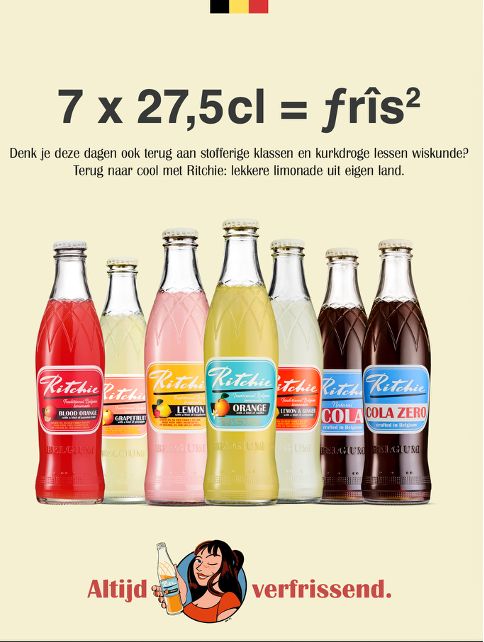
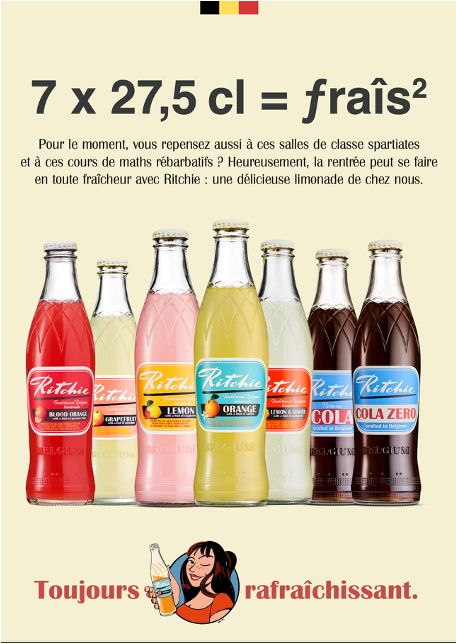
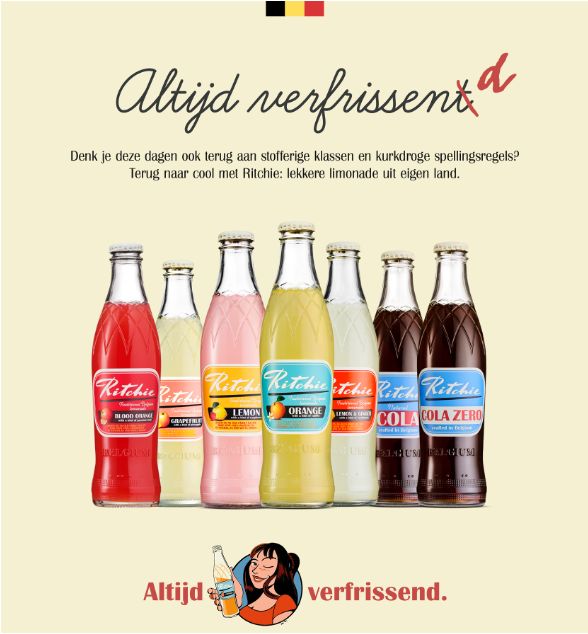
- Een nieuwe sneak peek van onze krantencampagne! Morgen in (bijna)alle kranten. Vorige week: Nederlands. Deze week: wiskunde. En de laatste? Die wordt Latijn. De écht aandachtige LinkedIn-volger heeft de Latijnse versie waarschijnlijk al gespot op mijn tijdlijn
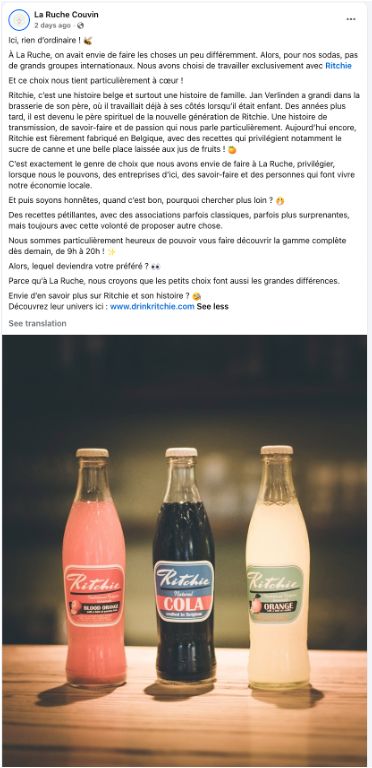
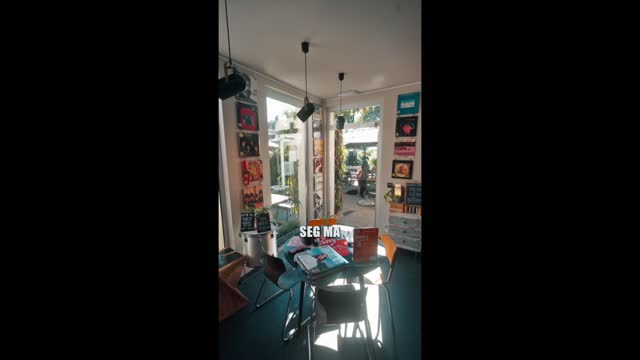
- Huiskamerkafee Polemiek in Herenthout: een cafébeleving zoals het hoort. Een living die werd omgetoverd tot café. Bij Polemiek draait alles om beleving, gezelligheid en nét dat tikkeltje anders. Je mag er zelfs je eigen plaat opleggen. Ook op de kaart vind je bewust producten die iets meer brengen... Daarom kozen ze bij Polemiek voor Ritchie. Want de betere horecazaak kiest voor belevingsproducten: Belgisch, lekker, mooi en vooral… instant dat ‘hier is het speciaal’-gevoel. Het café. Een cruciale ontmoetingsplaats waar mensen
- Het is waarschijnlijk geen kwestie van algemeen belang maar ik heb dringend je input nodig. Laat ons eerlijk zijn: wat is er nu belangrijker dan een strategische beslissing over de toekomst van de Belgische limonade? Dit weekend lanceerden we onze nieuwe krantencampagne, met een subtiele knipoog naar de ‘back to school’-periode. Heb je de advertentie gemist? Geen nood: hier is de link: https://lnkd.in/eCrP4GQZ (en ja ik weet het, er staat een grammaticale fout in de Franstalige advertentie 🤦♂️ ) De advertentie voor
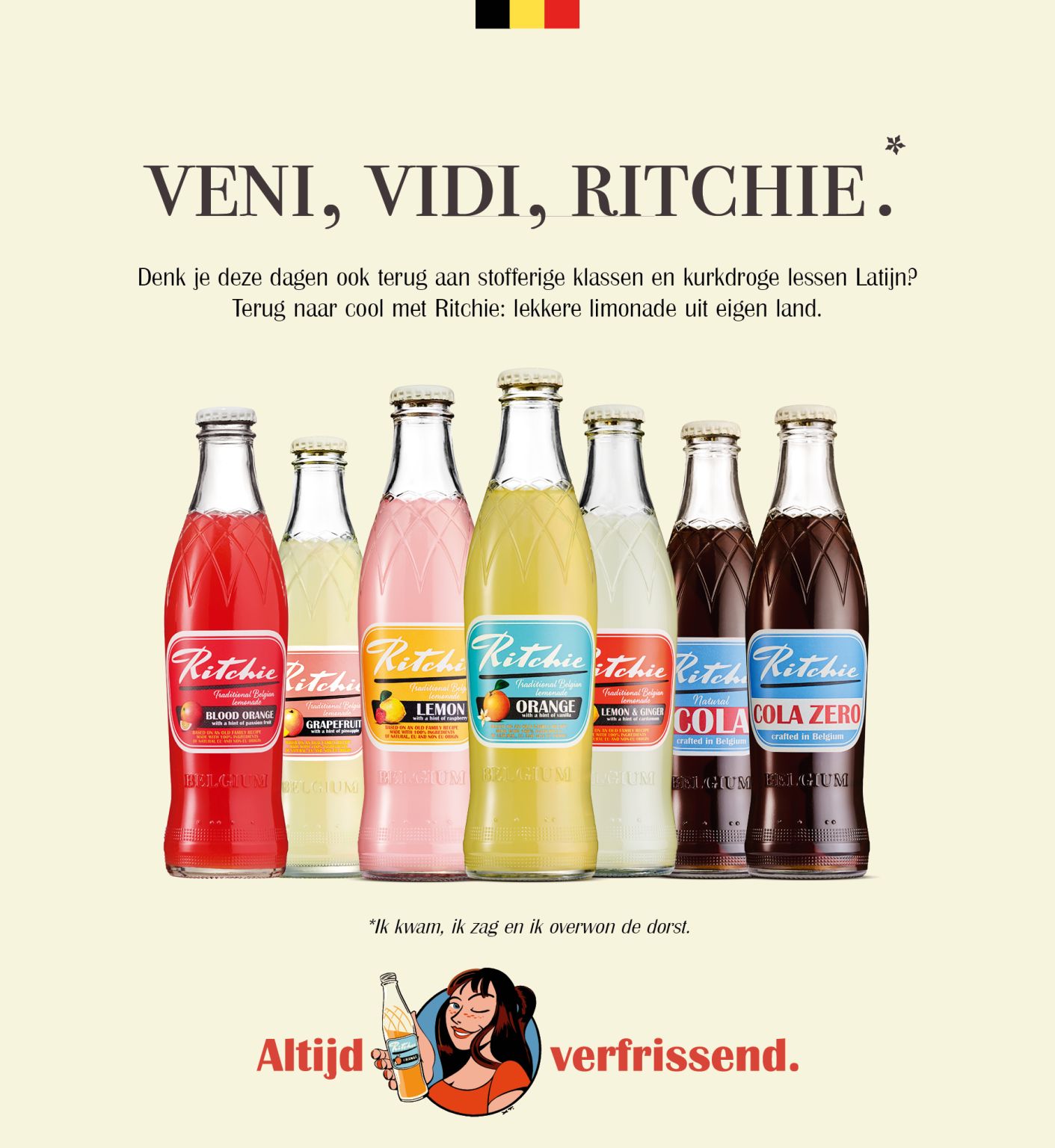
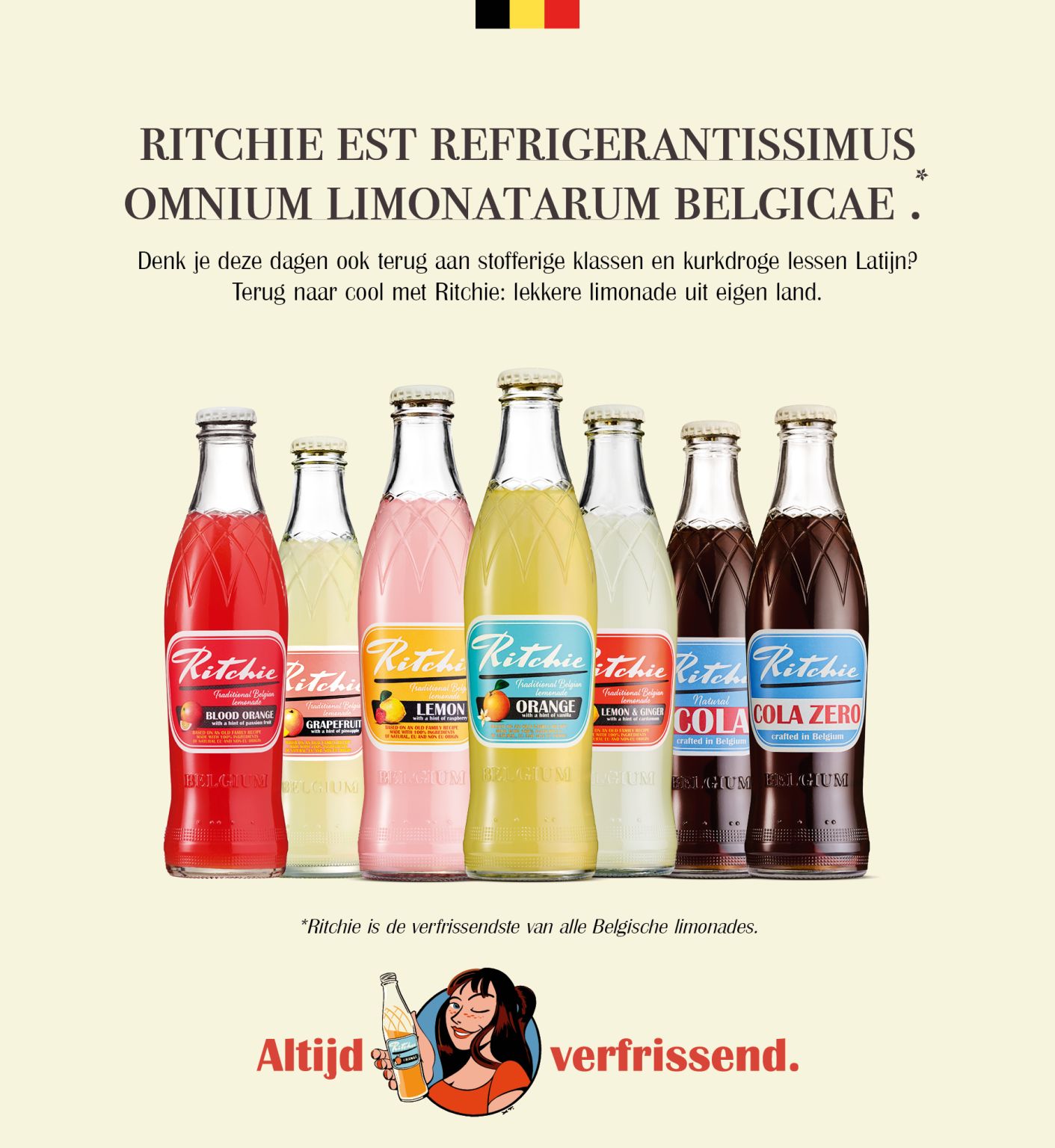
- Met veel trots geef ik je vandaag een sneak preview van onze nieuwe nationale krantenadvertentie, die morgen in (bijna) alle kranten verschijnt. Grappig. Hopelijk opvallend. En volgens mij (ik ben uiteraard niet helemaal neutraal) briljant in zijn eenvoud. Maar… wie goed kijkt, snapt dat dit verhaal nog niet helemaal verteld is. Dit is namelijk nummer 1 van 3. Twee andere vakken staan al ongeduldig klaar om het podium te betreden… Welke? Ik geef geen hints. Ben benieuwd of jij kunt raden welke twee andere vakken binnenkort hun
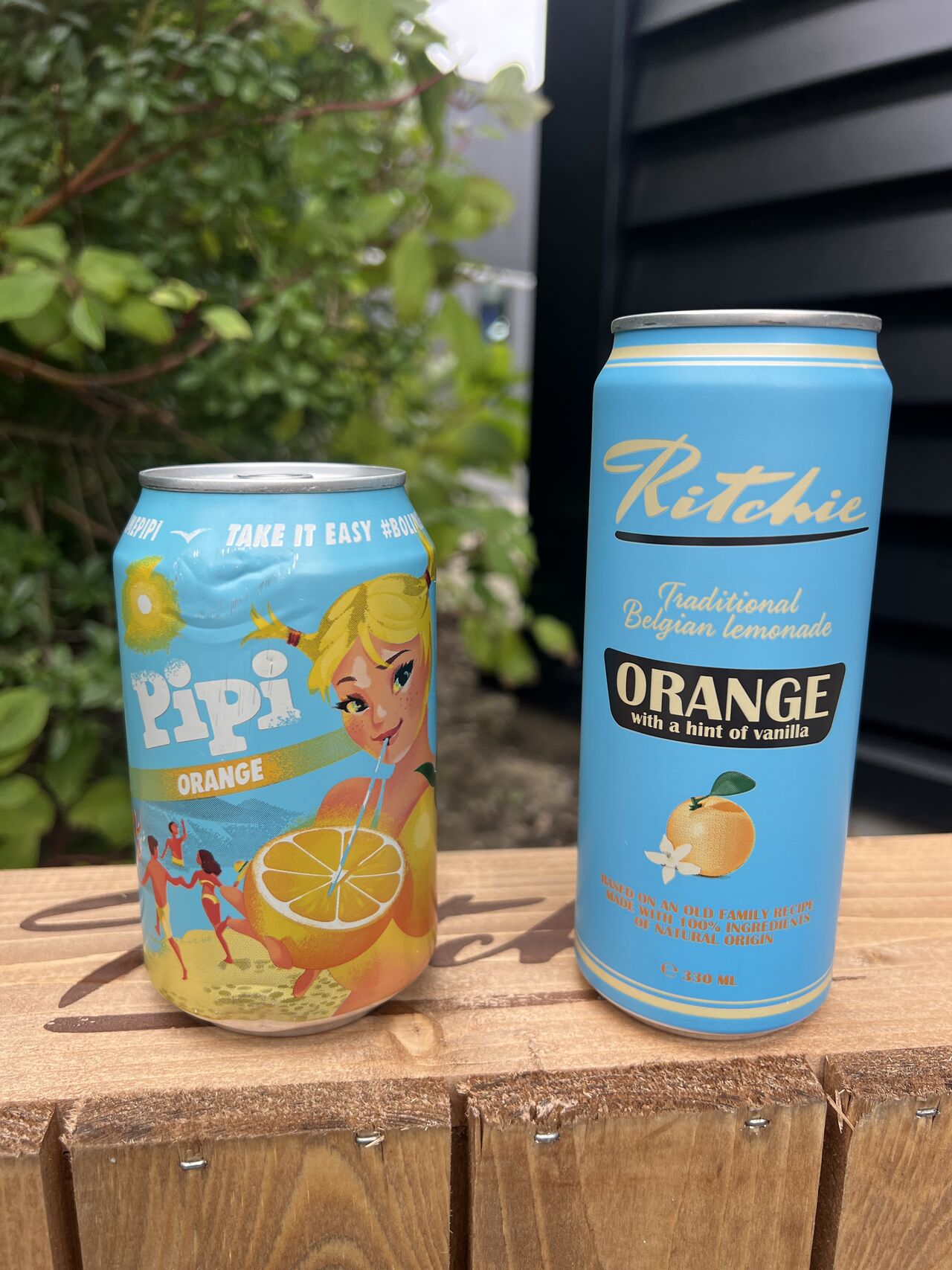
- Deze was alvast mijn grinnik momentje van de dag. Een concullega frisdrankenproductent uit Kroatië gebruikt, net als Ritchie, lichtblauw voor hun verpakking voor de orange smaak. Alleen… met ‘Pipi’ als merknaam (een merk dat al sinds 1971 op de markt is) is ‘oranje pipi’ in België wellicht nét iets moeilijker te verkopen. ... tot zover mijn bijdrage aan de pipi-kaka-humor
This page shows public professional information only, each fact cited. Is this you? send a correction, or ask for removal within 24 hours, no questions asked.