
Overview
In this BlackBird podcast, host Andy Coomans interviews Jo Deferm, who started online surf-travel company BoardX around 2000 and grew it to ~5,000 young travellers and 120 monitors per summer before selling his stake after 12 years when the passion turned into stress. He then co-founded marketing agency Content Crackers, which grew fast to 16 people but served everyone from bakers to bpost and Carrefour; with external guidance the partners made the hard call to shut the brand down and relaunch as Webhero, focused exclusively on affordable digital services for freelancers and small businesses. That pivot meant abandoning 70% of the business, reinvesting personally and bringing a silent investor on board, and took two to three years to become cash-positive. Recently Webhero acquired the client base of a bankrupt competitor in a four-week deal — taking over the trade fund without contracts — retaining roughly half of the ~230 clients, and Jo now sees selective acquisitions as an interesting growth lever. He also discusses radical transparency: publishing an annual report including failures and sharing real-time figures with his team and investor.
Talks about
Insights & ideas
The through-line
Everything Jo Deferm says circles back to one idea: the small operator deserves the same firepower as the big one. Webhero exists to give freelancers and small businesses "de wapens om tegen die grote bedrijven te strijden" [5], and the same instinct shows up in how he spends his time on the ground, updating local entrepreneurs on what AI search is doing to their visibility over a croissant and a coffee [1]. The second constant is a willingness to leap before the landing is clear: "Ge moet durven springen en soms denk ik wel van: we springen gewoon en we lossen het wel op" [5].
What has shifted is the machinery underneath the leaping. By his own account the first ten to fifteen years of entrepreneurship ran on instinct alone: "Alle beslissingen werden op buikgevoel genomen" [6]. Only later did coaches, consultants, targets, processes and dashboards come in, to the point where the company could run for a while without its founders, a stark contrast with the chaotic, organically grown agency where nobody knew who owned what [6]. The jumping has not stopped; it now happens on top of structure rather than instead of it.
On arming small businesses
The strategic decision that defines Webhero is choosing small clients over impressive ones. Big-brand agency work looks excellent on a website, but it comes with pitches that eat roughly 30% of capacity, 90-day payment terms and difficult collaborations, while small clients deliver higher impact and recurring revenue with the risk spread across many names rather than a few [5]. That choice imposes its own discipline: because the target group is freelancers and small businesses on affordable pricing, operations cannot afford "bokkensprongen", the erratic one-off exceptions that quietly destroy margin [6]. Affordability is an operational achievement before it is a pricing decision.
On digital marketing as a baseline skill
He puts digital literacy on the same footing as bookkeeping: "Als ondernemer moet je, of je dat nu wilt of niet, je moet een beetje boekhouding kennen om te ondernemen. Ik denk dat een beetje meer digitaal marketing kennen ook gewoon de basis [is]" [6]. The basics of digital marketing and internal digitalisation should be assumed knowledge, and in his reading most entrepreneurs are still at the very beginning of that curve [6]. It is the same conviction that has him standing in front of a local economic council explaining search behaviour to shop owners [1].
On the end of the SEO funnel
His current preoccupation is that search behaviour has changed fast and structurally. People reach for AI tools first and Google later, queries have become much longer, and voice conversation with ChatGPT is now part of normal search [1]. The SEO funnel worked well for twenty years, but from here it looks different: "Discovery becomes decision" [1].
The mechanism he points to is the query fan-out. For two decades SEO was reasonably predictable, one keyword leading to one page, but tools like ChatGPT, Gemini and Claude break an elaborate question into many sub-questions about context and intent, read the answers across all of them, and return a personalised summary rather than a list of links [3]. The practical consequence for entrepreneurs is blunt: ranking for a single loose keyword is no longer enough, and the job becomes claiming topical authority, proving you are the expert on the whole subject [3]. He is candid that AI tools still account for only a fraction of web traffic today, which is precisely why he frames this as an update rather than an emergency [3].
On pivoting, and killing a brand that worked
The Webhero pivot is the decision he defends most strongly: "dat moment was de beste beslissing die we sowieso genomen [hebben]" [6]. It was also expensive. Killing the Content Crackers brand meant surrendering 70% of the existing business and raising new capital, with partners reinvesting alongside a new investor, to cover two to three years of cash burn before the new model turned cash-positive [5]. The whole team was deliberately kept, but everyone moved from client project work to a single product, with new roles from one day to the next [6].
The lesson he draws is about branding, which he calls the most underestimated factor in a pivot; choosing and building the Webhero brand turned out in hindsight to be one of the best investments of the entire transition [5]. He also learned to calibrate ambition: setting growth targets too high burned money too quickly and put permanent pressure on sales and marketing, while recalibrating them made the work pleasant again and clarified what was actually possible [6].
On saying it out loud
Accountability, for him, is a deliberate technique rather than a personality trait: "Ik heb daar een sport van gemaakt om tegen zoveel mogelijk de juiste mensen te zeggen wat ik ga doen, want die mensen houden mij accountable" [5]. That extends to publishing yearly targets and results in public, including growth numbers that were missed, which he treats as a source of self-motivation rather than a genuine risk [5]. Writing targets down publicly means you cannot quietly lower them afterwards, and he accepts that as the price of daring to state them at all [6].
On buikgevoel and the mirror
He is clear that gut feeling carried him a long way and is no longer sufficient on its own. Only in the last five years did he bring in coaches and consultants who hold up a mirror and help position him against his own strengths and weaknesses [6]. He is equally clear that reading is not the same as doing: "Ge kunt veel boeken lezen, maar ge moet het nog wel omzetten in de praktijk natuurlijk" [5]. A self-aware note runs alongside all of it, in his mother's line that he has always had "een lichte vorm van grootheidswaanzin" [6].
On owner, manager and entrepreneur
He separates three roles that most SMEs blur together: owner, manager and entrepreneur. Failing to distinguish them is what made him the bottleneck in his own companies, at BoardX and again at Content Crackers [5]. The corrective is process. Clear flows and defined responsibilities are what let the company operate without its founders present, where the earlier agency had grown organically into a state where nobody knew who was responsible for what [6].
On energy, exit and what growth does not fix
He sold his stake in BoardX while it was still very successful, not because it was failing but because he had lost grip on a 130-person seasonal organisation and his energy and goesting were completely gone [6]. Selling was relief rather than achievement: "Voor mij persoonlijk was het voornamelijk de druk op mijn schouder, dat was echt 10.000 kilo van de schouders" [5]. He generalises the point: growth does not automatically make an entrepreneur happier, because happiness is a sum of life stage, responsibility pressure and personal fit rather than revenue [6]. The version he tells against himself is sharper: "Dat klinkt ongelofelijk om aan uw vrienden te vertellen, het begin klinkt dat fantastisch, maar na vijf jaar kunt gij een koffiekoek niet meer" [5].
On buying out of bankruptcy
The first acquisition came with no room for proper due diligence, the entire deal running about four weeks from the curator's first call [5]. He limited the exposure structurally, buying only the trade fund without contracts rather than shares [5]. The mistake was in the communication: telling the roughly 230 acquired clients too abruptly meant some felt rescued while others discovered the bankruptcy from the announcement itself, and a softer transition would have served everyone better [5].
On alignment without lock-in
Two relationships get the same treatment. With a silent investor, alignment is maintained through radical transparency: a shareholder agreement containing all the detail, plus a shared real-time dashboard of the company's figures [5]. With clients, Webhero deliberately works without long-term contracts, billing per year on the bet that delivered value rather than lock-in is what retains people, and churned clients often come back [5]. Hiring follows a similar logic of knowing what you are getting: recruiting through his own network and letting people grow from customer to monitor to full-time employee, as happened at BoardX, means both sides already understand each other and the hiring risk drops [6].
On the wave
The origin he keeps returning to is a photograph. On 17 August 2000 Laird Hamilton surfed the Millennium Wave at Teahupoo over razor-sharp reef and became a global sensation overnight [2]. Hamilton was sponsored by the French brand Oxbow, whose flower print was everywhere in Leuven around that year, and months later the new Oxbow brochures arrived at TWITS in Leuven with that photograph on the cover [2]. He was the snowboard man there, waxing, sharpening, selling and renting, and had just organised his first snowboard trip out of the shop; the perfect wave, the force of nature and the bear of a man on the cover produced an irresistible urge that set the direction of his life [2].
Takeaways
- Choose many small clients over a few large ones: big brands cost roughly 30% of capacity in pitches and impose 90-day payment terms, while small clients bring higher impact and recurring, risk-spread revenue [5].
- Ranking for one keyword is finished; AI tools split a question into sub-questions and return a personalised summary, so the target is topical authority across a whole subject [3].
- Search behaviour has already moved: longer queries, voice conversations with ChatGPT, less reflex use of Google, and a funnel where "Discovery becomes decision" [1].
- A pivot can be worth surrendering 70% of existing revenue, but budget for two to three years of cash burn and treat branding as a core investment, not an afterthought [5][6].
- Publish your targets and your misses; telling the right people what you are going to do is what keeps you honest [5][6].
- Growth ambitions set too high burn cash and pressure the whole team; recalibrating them restored both clarity and enjoyment [6].
- Buying out of bankruptcy leaves no time for due diligence, so limit risk structurally by acquiring the trade fund rather than shares, and communicate the change to inherited clients gently [5].
- Treat basic digital marketing knowledge as non-negotiable for entrepreneurs, on a par with knowing a little bookkeeping [6].
In the news
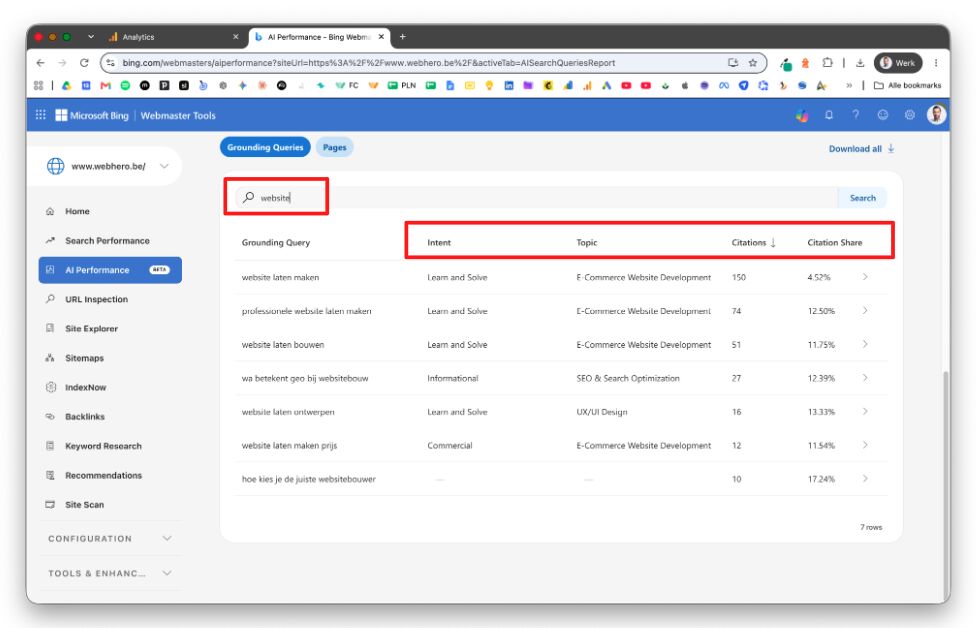
- Hoe weet je of AI-tools jouw bedrijf aanraden? Uit een Webhero-poll bij ondernemers: 82% heeft geen idee. Dus tijd voor een tip die je gratis kan toepassen: Check Bing Webmaster Tools. Zijn hebben nu een AI Performance sectie met resultaten uit Copilot, Bing en partner integrations (ChatGPT?). Ik kies voor "website" op als zoekterm. Niet omdat mensen letterlijk "website" typen, maar omdat Bing dan alle combinaties met dat woord bovenhaalt: 👉 "website laten maken" 👉 "professionele website laten maken" 👉 "website laten bouwen"
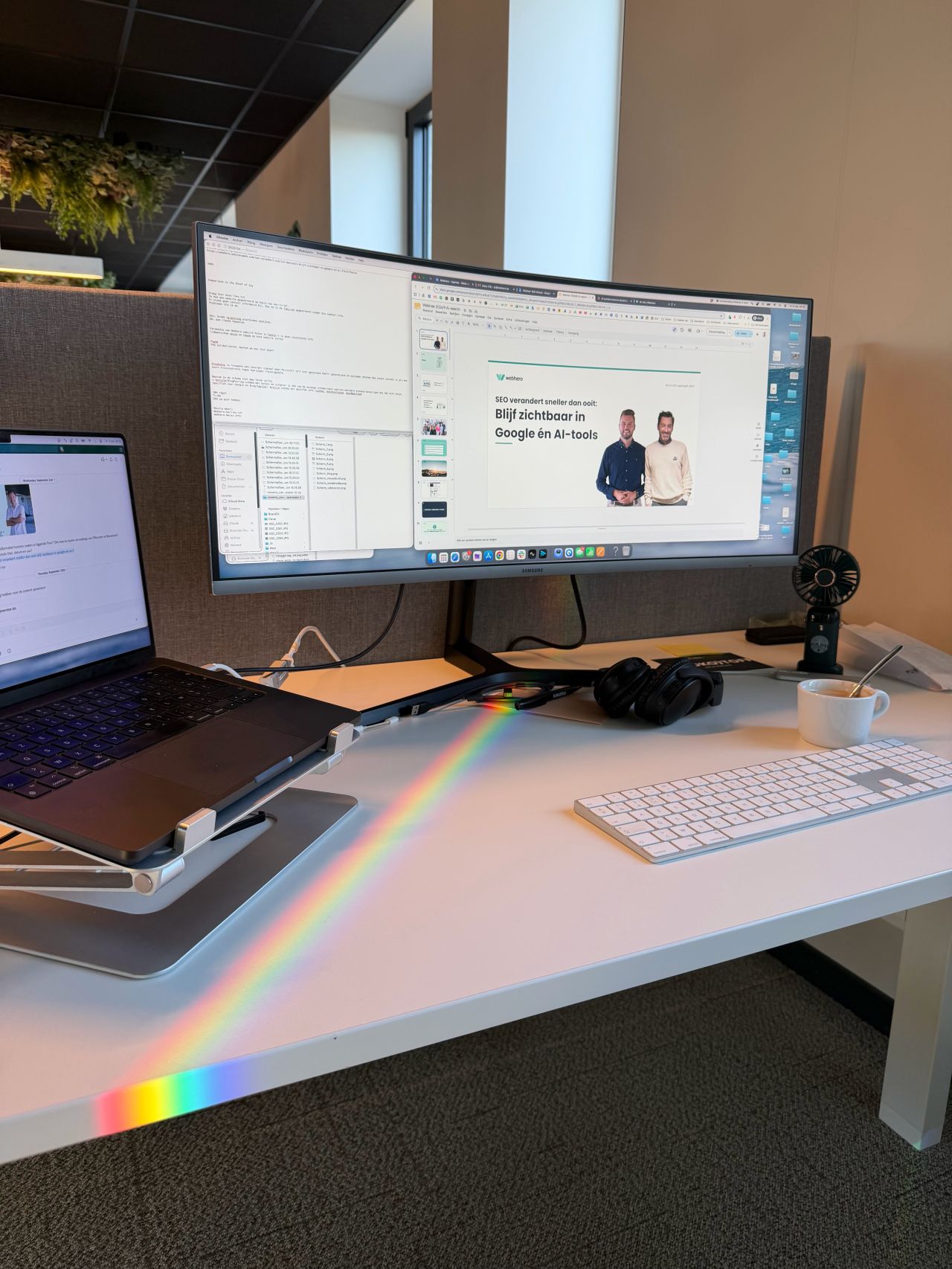
- Ik kreeg een signaal van hierboven dat het volgende webinar de pot met goud wordt. 😅
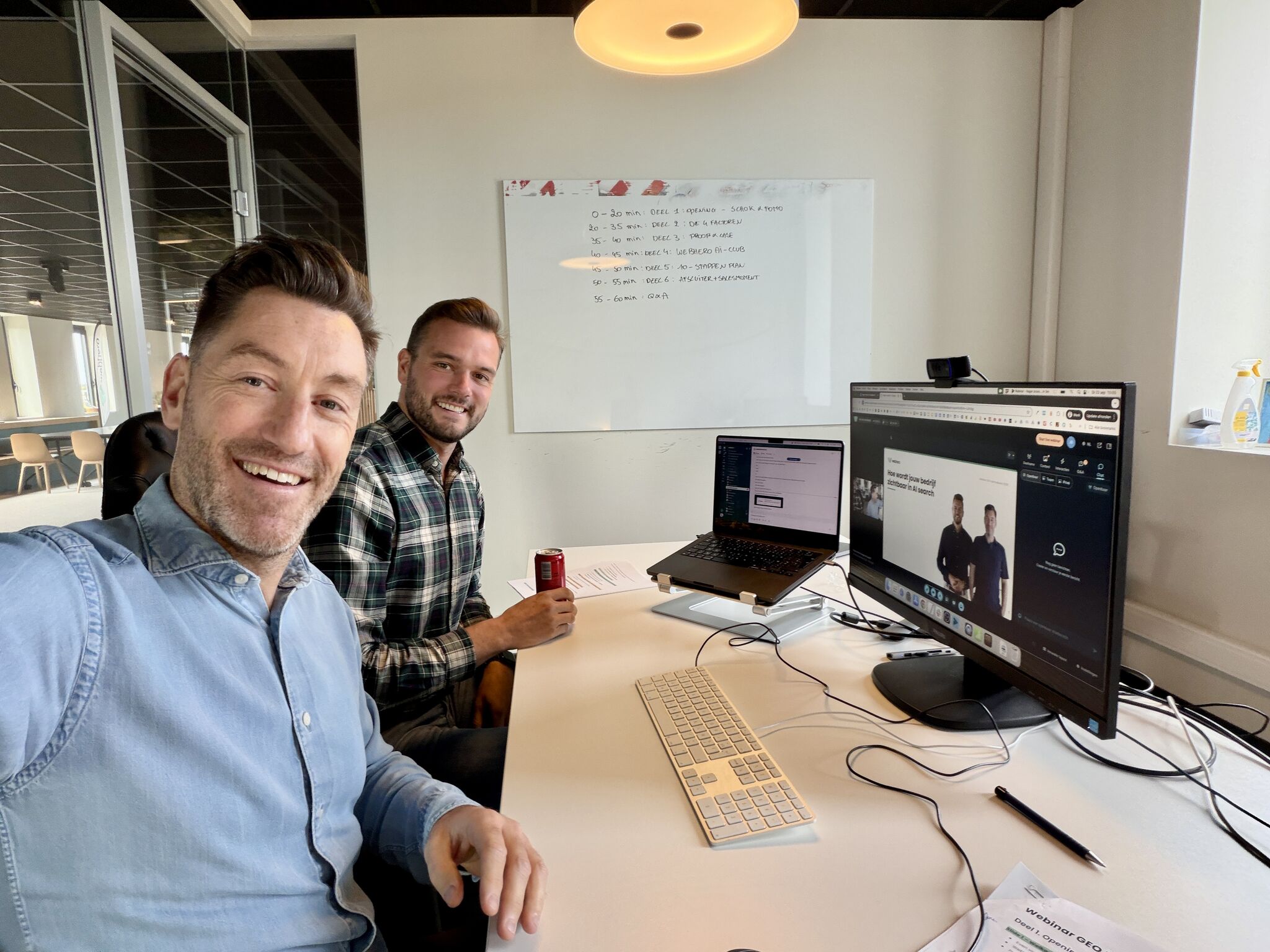
- AI Search webinar: last call! Morgen (di 15/9) delen Joren en ik onze laatste GEO-inzichten. 🚀 801 inschrijvingen, maar nog steeds welkom. Inhoud? 👇👇👇 10 antwoorden over AI-search (GEO): 1. Je scoort goed in Google. Waarom daalt je verkeer dan toch? 2. SEO is niet dood. Maar de regels zijn herschreven. 3. Wat er deze zomer veranderde aan ChatGPT en Gemini 4. Zo raden AI-assistenten jouw bedrijf aan (of net niet) 5. ChatGPT is niet meer de enige AI-zoekmachine die telt 6. Zoekwoorden tellen niet meer zoals vroeger 7. Sta jij al in
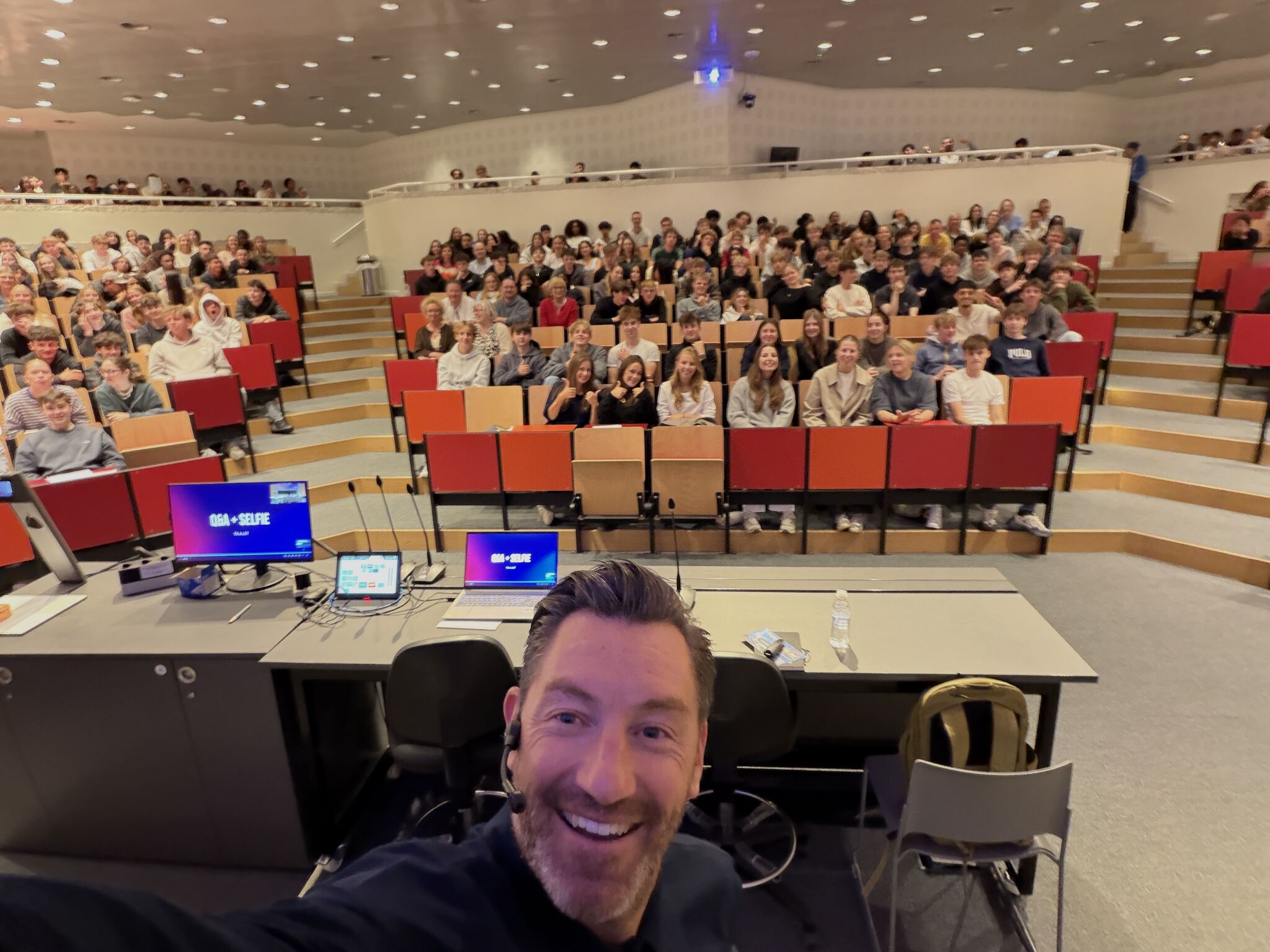
- Vandaag mijn 'Surfing & Scaling' keynote mogen geven voor 350 toekomstige ondernemers. Zij starten dit jaar hun VLAJO mini-onderneming. 5 key take aways: 1️⃣ zoek en ontdek waar je energie op zit. (en waar niet) 2️⃣ denk lange termijn (moeilijk voor jongeren) 3️⃣ zoek mentoren of sparringpartners met ervaring 4️⃣ never stop learning 5️⃣ work f!?king hard (dat helpt) Bedankt voor de uitnodiging Vlaamse Jonge Ondernemingen vzw (Vlajo) En voor de lekkere pralines Anuschka Vanlangendonck & Stéphanie Vanstals. 👊😅 #VLAJO
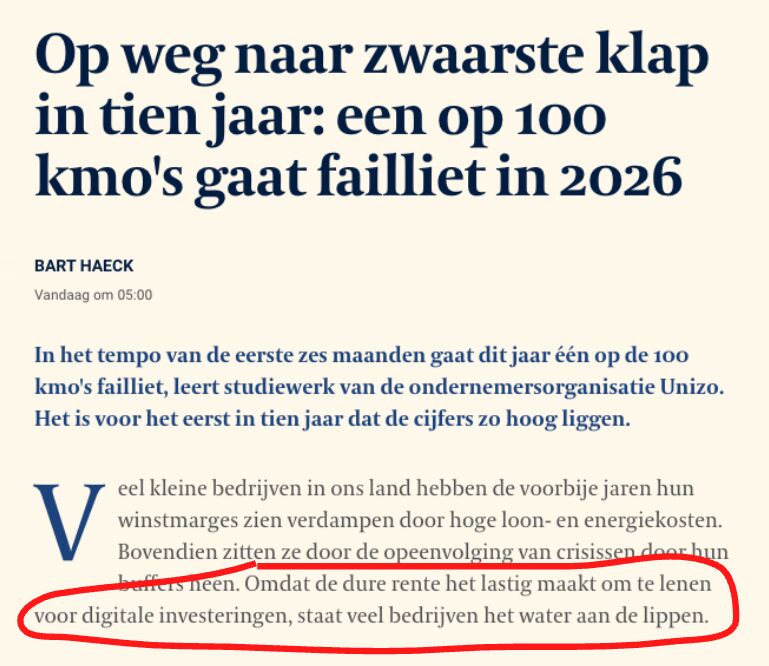
- We hebben dit al eens meegemaakt. Helaas. 😔 In 🇧🇪 discussieerden we jaren over e-com regels. NL en DE bouwden Bol en Zalando. Missen we de boot nog eens? 👇 Het resultaat is gekend: Belgen shoppen vandaag massaal bij buitenlandse webshops. Geld dat evengoed in onze eigen economie had kunnen circuleren. Maar het vloeit al jaren weg naar het buitenland. Too little, too late. Nu staan we met AI opnieuw voor een gelijkaardig moment. Maar het water staat te veel bedrijven aan de lippen... Ze hebben geen ruimte voor investeringen in
- Laat ik mijn website bouwen door AI, of door een agency? 🤔 Easy: een agency. ALTIJD. Here's why: 👇 Ik heb wat resultaten gezien van ondernemers (met tijd) die zelf aan de slag gingen. Mijn besluit: OK, not bad. Maar toch een gemiste kans. Je website is je enige owned media. De enige plek online die echt van jou is. Dus vertrouw je die 100% toe aan AI? #durftevragen Wel akkoord: Voor veel ondernemers is een AI-website al een verbetering. Gemiddeld beter dan wat ze hadden. De vraag is of "gemiddeld beter"goed genoeg zal zijn in
- Hulp gezocht (na 100 telefoons, forms en 10u frustratie) 😅 iPhone vd dochter verloren op een vlucht. Nu volgens Find My iPhone in Tunis Airport. Maar hoe recuperen? Dat weet niemand... Wie kan helpen? 🙏
- Fascinerende tijd als je met Google-resultaten bezig bent. Vorige week versleutelde Google elke link in de SERP. Officiële reden: Security. Echte reden: Money. 😅👇 Alles op een rijtje in het artikel hieronder.
Related profiles

This page shows public professional information only, each fact cited. Is this you? send a correction, or ask for removal within 24 hours, no questions asked.