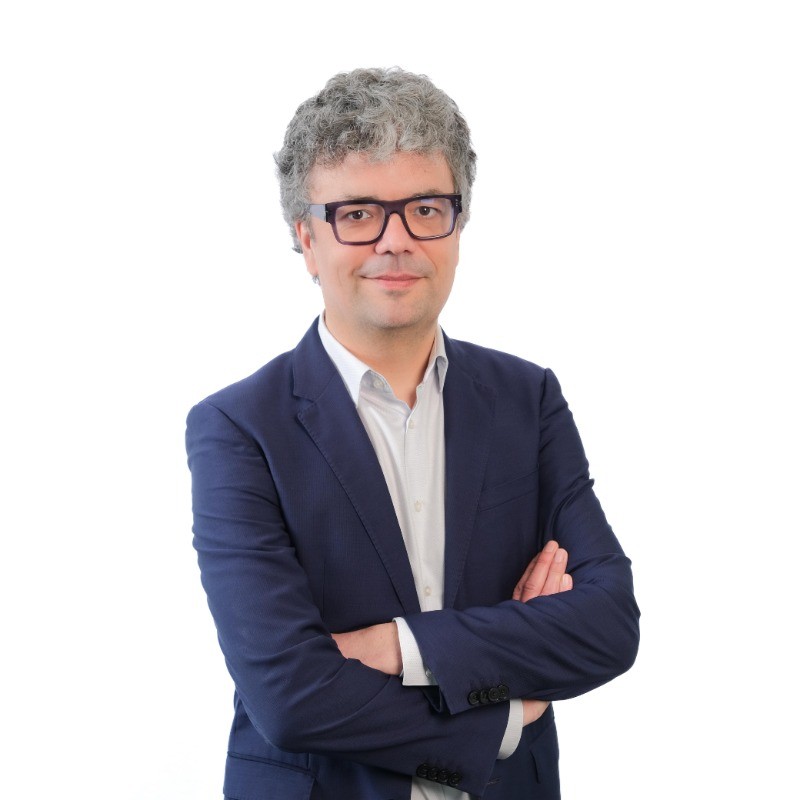
Overview
Gheerardyn completed a PhD in superstring theory at the University of Leuven and went on to spend close to twenty years in quantitative finance at international investment banks and startups. During that period he authored multiple patents applying quantitative risk management techniques to energy balancing markets. In 2017 he co-founded Yields with Sébastien Viguié and has since led the company as CEO, building model risk management and AI governance software for regulated industries.
Jos Gheerardyn is the co-founder and chief executive of Yields, a company he started in 2017 with Sébastien Viguié after years in banking. Yields.io builds software for model risk management and AI governance, helping regulated organisations oversee both traditional models and modern AI systems. The platform serves financial institutions and corporates across banking, insurance, asset and investment management, healthcare and energy, with BNP Paribas Personal Finance among its named customers. Gheerardyn brings nearly two decades of quantitative finance experience from international investment banks and startups. He holds a PhD in superstring theory from the University of Leuven and has authored multiple patents that apply quantitative risk management techniques to energy balancing markets. In July 2026 the company announced VLAIO funding to build a risk management agent that combines deterministic rule enforcement with conversational AI interaction.
Career history

Insights & ideas
The through-line
Across the sources, Gheerardyn keeps returning to one problem: governance for models and AI is scaling faster than the organizational and technical infrastructure meant to handle it, and most institutions are solving the same problems in isolation. Early talk material focuses on the mechanics of that problem, how data quality and multi-governance complexity make automation hard [11][12][13]. The 2026 posts shift toward its economic and regulatory consequences: whether banks should build or buy model risk management (MRM) platforms as AI coding tools make in-house builds tempting [4][8], and whether accountability for AI decisions can be outsourced to the system itself [3][6][7]. Running underneath both phases is a conviction that the field is fragmented and needs deliberate connective tissue, which is why he frames "Yields on Tour" as the part of his job he most looks forward to [1].
On build versus buy
Gheerardyn's recurring argument is that the AI-driven ease of building software has changed the wrong half of the equation. "With AI coding tools, our team can build this faster than ever" is true, he concedes, but "what hasn't changed is everything that comes after go-live" [8]. He locates the real cost not in construction but in upkeep: "the build was never the expensive part. Maintenance is" [4]. Because "frameworks keep changing, and a model risk platform has to keep up with all of them," and "that ability to adapt is not bank-specific," he concludes that a vendor spreading maintenance cost across many banks beats each institution "carrying that cost alone" [4]. He restates the bottom line plainly: "the build option in 2026 has a slightly lower initial cost. But the project risk has gone up, not down" [8].
On human accountability in AI governance
He treats "Human in the Loop" as necessary but insufficient as currently implemented, citing the UN Secretary-General's line that "Machines can inform, but humans must decide" as the standard he wants operationalized, not just stated [3]. For him this requires "technology to implement runtime controls and a proper risk-based oversight framework for the human" rather than a box-checking exercise [3]. He applies the same logic to a real incident: when insurance chatbots gave clients wrong information, he calls the insurers' response "precies het juiste instinct" because "De aansprakelijkheid verschuift niet naar de bot" [7]. His broader point is that organizations misclassify these systems: "Een chatbot is een model," yet "veel bedrijven hun chatbot als IT of als klantendienst" treat it, "Niet als een model dat onder governance valt" [7].
On regulation and risk-taking incentives
Gheerardyn argues that regulatory postponement does not pause real-world risk: "de betrokken risico's related to deploying and using AI systems" don't stop just because part of the EU AI Act is delayed, since "the purpose of AI risk management is to manage all risks, not just compliance risk" [6]. He frames regulation's function historically, using the Wolf of Wall Street to explain that "one of the main roles of regulatory guidance is to bring the cost of excessive risk taking forward," so that companies moving fast without AI risk discipline eventually face "the high probability event of being fined due to non-compliance" instead of a low-probability accident [9].
On community and fragmentation in model risk
He sees model risk management as a field where practitioners are isolated by design: "The ones who do are often solving the same problem at the same time, in a different bank, without ever talking to each other," so "the same problem gets solved from scratch, ten times over, behind closed doors" [1]. His response is a deliberate circuit of round tables and dinners across Paris, Brussels, New York and London, which he says "has become the part of the job I look forward to most" [1], echoing the same sentiment when he calls the informal exchange of "fine-tuning ideas, debating trends, sharing stories and enjoying food" what makes the Yields journey "precious" [10].
From the stage
In talk and interview material, Gheerardyn goes into technical territory the written posts don't touch. He explains that automating model validation runs into operational rather than technical obstacles, because different model types demand different standardization approaches that resist alignment across an organization [11]. He proposes that multi-governance MRM combined with better domain modeling can cut unit costs and maintenance effort by decomposing redundant model-usage combinations [11]. On data, he uses his own roomba losing sensor data, and DeepMind's AlphaZero, to illustrate how incomplete or incorrect data breaks machine learning models and why data quality is a core operating risk rather than a side issue [12]. On the future of MRM, he states that AI should assist rather than replace human decision-making in validation, help surface documentation weaknesses, and support real-time monitoring, arguing that traditional periodic review cycles cannot keep pace with AI systems that are built quickly [13].
Takeaways
- Before recommending an MRM build, weigh maintenance cost and framework-adaptation effort, not just initial build speed with AI coding tools [4][8].
- Treat any customer-facing AI system, including chatbots, as a model subject to governance, not as IT or customer service tooling [7].
- Design human-in-the-loop controls as runtime technical enforcement plus risk-based oversight, not as a policy statement [3].
- Continue AI risk management even when compliance deadlines slip, since operational risk does not pause with regulation [6].
- Use real-time monitoring instead of periodic review cycles for AI systems that are built and changed quickly [13].
- Create structured, recurring cross-institution exchange to counter the redundant, siloed problem-solving common in model risk teams [1].
Media & appearances
- Yields ioYouTubeDataOps Ghent Meetup - Monitoring Data Quality - Yields.ioJos Gheerardyn discusses how data drives value through visualization for pattern discovery and algorithmic learning, using examples like DeepMind's AlphaZero to illustrate how algorithms learn from data. He explains how incomplete or incorrect data can cause problems in machine learning models, such as his roomba example where missing sensor data led to unexpected behavior, and emphasizes that managing data quality is essential for sustainable model operation since data-related risks are a major component of operating models.
- Yields ioYouTubeAn interview with Jos Gheerardyn on the future of Model Risk ManagementJos Gheerardyn discusses how 2026 will require scaled AI governance due to rapid evolution of AI tools and increasing use cases, necessitating automated and differentiated governance approaches across models with varying risk levels. He emphasizes that AI should assist rather than replace human decision-making in model validation, help identify documentation weaknesses, and support real-time monitoring since traditional periodic review cycles are insufficient for quickly-built AI systems.
- Yields ioYouTubeNavigating Multi Governance Model Risk Management in AI - by Jos GheerardynJos Gheerardyn discusses how automating model validation faces operational rather than technical challenges, particularly because different types of models require different standardization approaches that are difficult to align across organizations. He explains that the growth of AI use cases, driven by multiple contexts for single AI systems and customizable AI tools, increases governance complexity, and proposes that multi-governance model risk management with better domain modeling can reduce unit costs and maintenance effort by decomposing redundant model-usage combinations.
In the news
- 𝗧𝗵𝗲 𝗯𝗲𝘀𝘁 𝗰𝗼𝗻𝘃𝗲𝗿𝘀𝗮𝘁𝗶𝗼𝗻𝘀 𝗵𝗮𝗽𝗽𝗲𝗻 𝗶𝗻 𝗮𝗻 𝗶𝗻𝗳𝗼𝗿𝗺𝗮𝗹 𝘀𝗲𝘁𝘁𝗶𝗻𝗴, 𝘄𝗶𝘁𝗵 𝗶𝗻𝘁𝗲𝗿𝗲𝘀𝘁𝗶𝗻𝗴 𝗽𝗲𝗼𝗽𝗹𝗲 𝗮𝗻𝗱 𝗴𝗼𝗼𝗱 𝗳𝗼𝗼𝗱. This roundtable was no exception. My main takeaway: everyone around the table agreed that the biggest challenge in managing AI agents is scale. Agents are no longer built by a handful of specialist teams, anyone in the organization can build one now, and model risk management has to keep up. To address that scale, three themes kept coming back: 1. Treat risk

- Here's something I'm very much looking forward to. On September 15, I'm hosting an invite-only round table in London with Jonathan Taylor from the Bank of England: "Is traditional MRM dead? Applying MRM to generative and agentic AI." The table filled up faster than I expected, and honestly, that tells you everything about where the industry's head is at right now. Everyone is trying to figure out how to govern generative and agentic AI, and not many people have real answers yet. Wish I could fit more people around that table. If

- I’m delighted to be speaking at the appliedAI Ecosystem Meetup ‘Building Trustworthy AI in the Enterprise’. Exclusively for appliedAI partners on 8 October in Munich. I'll be joining the panel "Trustworthy AI in Practice: Protecting Europe’s Knowledge. Governing Models. Scaling Value“ and look forward to exchanging ideas with leading figures in the field of Trustworthy & Agentic AI. Thanks to the appliedAI Initiative GmbH Initiative for the invitation! #TrustworthyAI #AgenticAI #appliedAIPartner
- The chat interface is becoming a fundamental part of how we work with software. Simultaneously, you don't want chat interfaces in every software you use. Rather, real value is discovered when you can link all your tools together and start working across systems. At Yields, we want to be at the front of that shift. That is why we built the Yields MCP Server, an important step in our VLAIO innovation project, which I announced earlier. It connects our platform directly to the AI tools your teams already use. Ask a question about a

- Model risk and AI governance is a small world. Not many people do this job. The ones who do are often solving the same problem at the same time, in a different bank, without ever talking to each other. So the same problem gets solved from scratch, ten times over, behind closed doors. That is not how a field gets better. It is why we started Yields on Tour. Paris, Brussels, New York, London. Round tables and dinners with the people who actually own this work. It has become the part of the job I look forward to most, so we are taking

- If you are looking for a challenge and want to build something that matters, come join Yields!
- Machines can inform, but humans must decide" At the inaugural United Nations Global Dialogue on AI Governance in Geneva, UN Secretary-General António Guterres delivered an urgent wake-up call to the global community regarding the trajectory of Artificial Intelligence. As AI rapidly transitions to an infrastructure integrated into every facet of society the need for robust, universal checks and balances has never been more critical. What stood out for me personally: Human Accountability Over Algorithms In high-stakes
- With AI, a question is back in plenty of model risk teams: why buy an MRM platform if we can build it ourselves now? Fair question. But the build was never the expensive part. Maintenance is. And maintenance is where the economics turn. Build it yourself and you carry that cost alone. A vendor spreads it across every bank on the platform. So building only pays off when what you build is truly specific to you, with nothing worth sharing. MRM can look like it fits that description. Every bank runs its models its own way, and SR 26-2
Related profiles
This page shows public professional information only, each fact cited. Is this you? send a correction, or ask for removal within 24 hours, no questions asked.