
Overview
Kamaria Scott is the founder and CEO of Enetic, a company she started in January 2015, and is based in Altamonte Springs. Between August 2021 and April 2023 she worked at Accenture on global employee experience transformation. Before that she spent several years at FIS, where she led North America learning from 2017, headed curriculum strategy and instructional design from 2019, and served as manager enablement and engagement lead in 2021. She was vice president for learning and performance at BNY Mellon from 2013 to 2016, manager of service excellence at Winn Dixie Stores from 2011 to 2012, and manager of employee development at Solantic Walk-in Urgent Care from 2009 to 2011. Earlier roles include Educator II at Shands Jacksonville, human resources analyst for the City of Jacksonville, and research psychologist at NAVAIR Orlando. She holds an EdS in adult education and human resource development from Florida State University, an M.S. in industrial/organisational psychology from the University of Central Florida, and a B.S. in psychology from the University of North Florida.
Career history

Insights & ideas
The through-line
Across these posts, Kamaria Scott keeps returning to one idea: managers are asked to carry enormous weight for organizational performance without being given the infrastructure, conditions, or support to do it well [2][10]. Early material frames this mostly as a systems and process problem, how one function's decisions create downstream problems elsewhere [1], and how organizations design (or fail to design) the conditions for people to thrive [9]. Over time the focus sharpens toward the manager as the pressure point of the whole system, the person expected to drive results, develop people, navigate change, and communicate strategy while still doing their own work [2][10], and toward success being redefined away from loyalty-and-ladder-climbing toward fit, strengths, and clarity [7][11][14].
On manager support
Scott's clearest recurring claim is that "we ask managers to carry an enormous amount of the organization's performance, but we don't always give them the infrastructure to do it well" [2]. She frames engagement failure as a manager-level breakdown, arguing the fix isn't to ask managers to do more but to give them "the clarity, structure, and everyday support they need to succeed" [10]. This extends to a broader belief that managers deserve care themselves: "caring for the people who care for everyone else" [10].
On conditions, not effort
Scott repeatedly argues that outcomes like wellness, retention, and engagement come from conditions leaders build rather than individual willpower. Wellness "isn't something we achieve by simply trying harder or adding more self-care to an already full calendar. It grows from the conditions we create" [9]. She applies the same logic to retention: it's "easy to celebrate a manager for asking a great question," but "harder to ask what conditions made it possible for her to do something with the answer," pointing to structural enablers like an internal "bungee program" and mandated passion projects [5]. She measures her own managerial success the same way, by her "ability to influence the conditions around my team" [8].
On systems thinking
Scott describes teaching managers to move past reactive event-fixing toward pattern recognition: "What patterns are we seeing? What's causing this to keep happening? What might be happening elsewhere in the organization that's contributing to it?" [1]. The payoff, in her account, was that managers realized their problems "weren't isolated within their own teams. They were connected," with decisions made upstream showing up as problems downstream [1], leading them to ask leadership for cross-functional time to solve root causes together [1].
On fit and success
Scott ties her own career logic to strengths-fit rather than compensation or prestige: she wanted "a home for my skills," a place to "use the parts of my I/O psychology background that energize me," and when a role stops giving her that, "I start looking for what's next... because the fit is wrong" [11]. She extends this to coaching clients navigating transitions, noting people want to know "what's expected of them," feel "capable of doing the work," and have opportunities, not necessarily passion or perfection [14]. She also questions whether the old formula, "working hard, staying loyal, climbing the ladder," still holds given layoffs and AI's effect on careers [7].
From the stage
In interview appearances, Scott describes change management explicitly as "a human-centered process of guiding people from their current state to a desired future state," involving deliberate strategies to help people stop unwanted behaviors or start new ones [17][18]. She also discusses a personal practice not present in her written posts: nominating managers for leadership awards and podcast features as a way of "giving back" and honoring people doing excellent work in their roles [17][18].
Takeaways
- Build cross-functional time into how managers solve problems, since root causes often sit upstream of where symptoms appear [1].
- Don't just celebrate a manager's good question, audit the organizational conditions (programs, mandates, flexibility) that let them act on the answer [5].
- Treat manager support as infrastructure: clarity and structure, not additional asks, are what fix engagement breakdowns at the manager level [10].
- Measure your own management success by your ability to shape conditions around your team, not just project outcomes [8].
- When evaluating a role or career move, weigh strengths-fit and energy drain/gain alongside compensation [11].
- In change initiatives, define the current state and desired future state explicitly and choose deliberate actions to stop or start specific behaviors [17][18].
Media & appearances
- HRTraciYouTubeRedefining Managerial Excellence: A Conversation with Kamaria Scott | Ep. 191Kamaria Scott discusses change management as a human-centered process of guiding people from their current state to a desired future state, involving deliberate strategies to help them stop unwanted behaviors or start new ones. She also explains her approach to recognizing and nominating managers for leadership awards as a way of giving back to those doing excellent work in their roles.
- HRTraciYouTube191. Redefining Managerial Excellence: A Conversation with Kamaria ScottKamaria Scott discusses change management as a human-centered process of guiding people from their current state to a desired future state, involving deliberate actions to help them stop unwanted behaviors or start desired ones. She also explains her approach to giving back by nominating managers for recognition and podcast features, viewing it as a way to honor and celebrate managers doing excellent work.
- Skill Masters MarketYouTubeEnhancing Nonprofit Health via People Manager Development with Kamaria Scott
In the news
- I am always so proud when something that I’ve developed for people leaders gets recognized. The Solomon Coyle Sales Leadership Program was just awarded a 2026 Brandon Hall Group Silver HCM Excellence Award, and this one was such a fun program to develop with Rachel Serago. One of the things I’m most proud of is that we didn’t treat development as something that happened only during the learning experience. Managers need perspective on what good looks like. They need opportunities to practice the skills. And they need people to learn
- I don’t like absolutes. So whenever I hear someone say, “People don’t want to work anymore,” it makes me itch. Really? None of them? I’ve been hearing some version of this a lot lately. And every time, I want to ask a different question: Under what conditions are people motivated to contribute? One of my coaching clients is actively looking for her next role. She wants to work. But she wants to work for a mission-driven organization where she can see the impact of what she does. One of my business clients recently had a team
- I’m an ADD butterfly. And for most of my life, I assumed certain things were just…me. The 37 open tabs. The shiny object that suddenly becomes more interesting than the thing I absolutely need to finish. The constant effort to understand how I focus, process, organize myself, and do my best work. For a long time, I assumed I was learning how to operate differently in a work world designed for “normal.” But lately I’ve started wondering.....Who exactly did we design work for? Because the more people I lead, train, and coach, the
- I’m an ADD butterfly. And for most of my life, I assumed certain things were just…me. The 37 open tabs. The shiny object that suddenly becomes more interesting than the thing I absolutely need to finish. The constant effort to understand how I focus, process, organize myself, and do my best work. For a long time, I assumed I was learning how to operate differently in a work world designed for “normal.” But lately I’ve started wondering.....Who exactly did we design work for? Because the more people I lead, train, and coach, the
- I once developed and facilitated a systems thinking workshop for a group of managers. We were helping them move beyond reacting to the events happening around them. Instead of simply asking what happened, and how do we fix it? We started asking: What patterns are we seeing? What's causing this to keep happening? What might be happening elsewhere in the organization that's contributing to it? And something interesting happened. The managers started realizing that many of their challenges weren't isolated within their own teams.
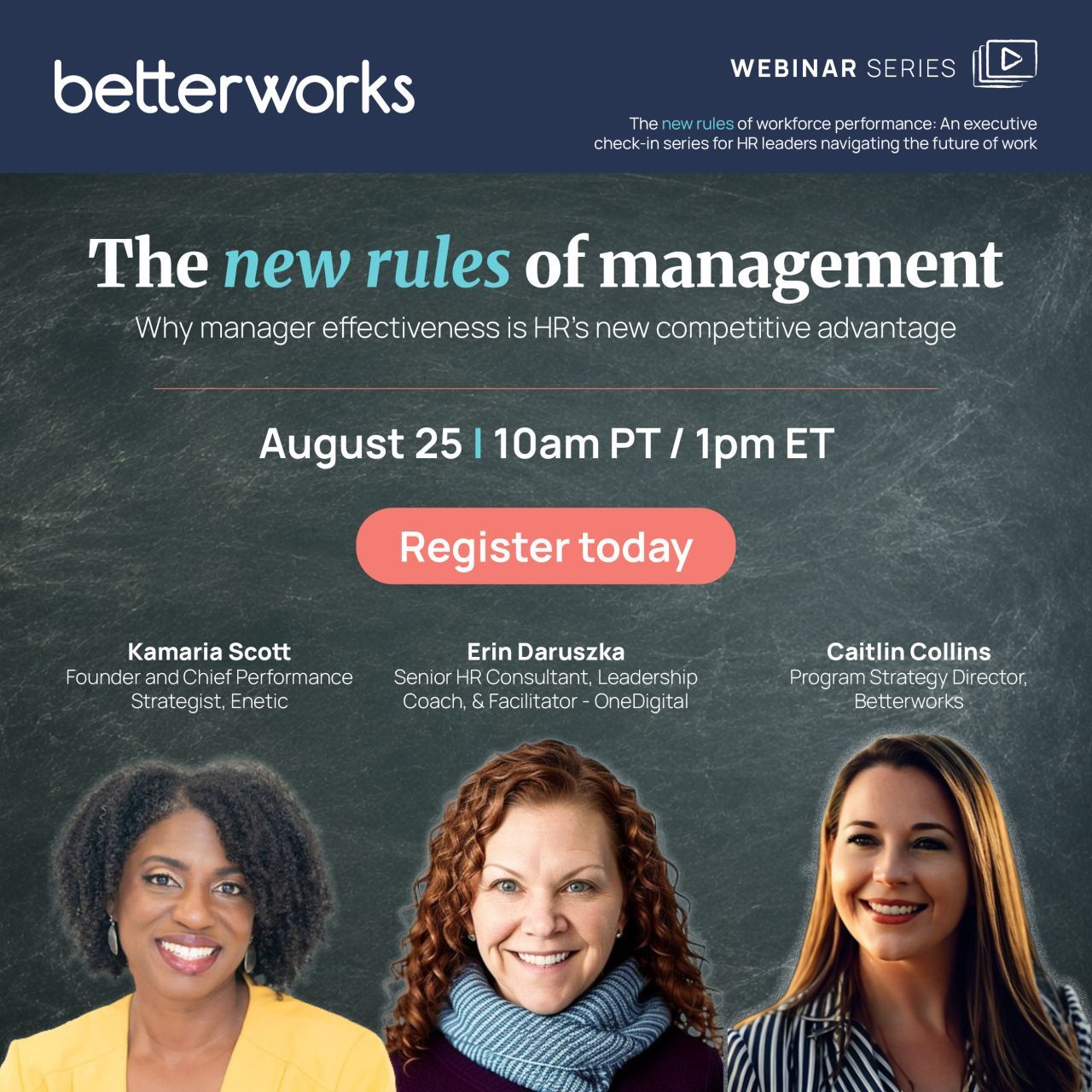
- I’ve been saying this for a while: we ask managers to carry an enormous amount of the organization’s performance, but we don’t always give them the infrastructure to do it well. Managers are expected to drive results, develop people, navigate constant change, maintain engagement, communicate strategy, and somehow find time to do their own work too. So I’m looking forward to tomorrow’s conversation on The New Rules of Management: Why Manager Effectiveness Is HR’s New Competitive Advantage. I’ll be joining Caitlin Collins of
- If you're an OD professional helping companies navigate AI, come learn with the GREATER ORLANDO ORGANIZATION DEVELOPMENT NETWORK! AI is already changing the way we work. The more interesting question for OD professionals may be: How do we help our organizations—and the people inside them—navigate that change well? That’s the focus of the GOOD Network's August meeting. We’re bringing together two perspectives on OD + AI: Charles Render, Director of AI Services at The Rick Goings Institute for Management and Executive Leadership,
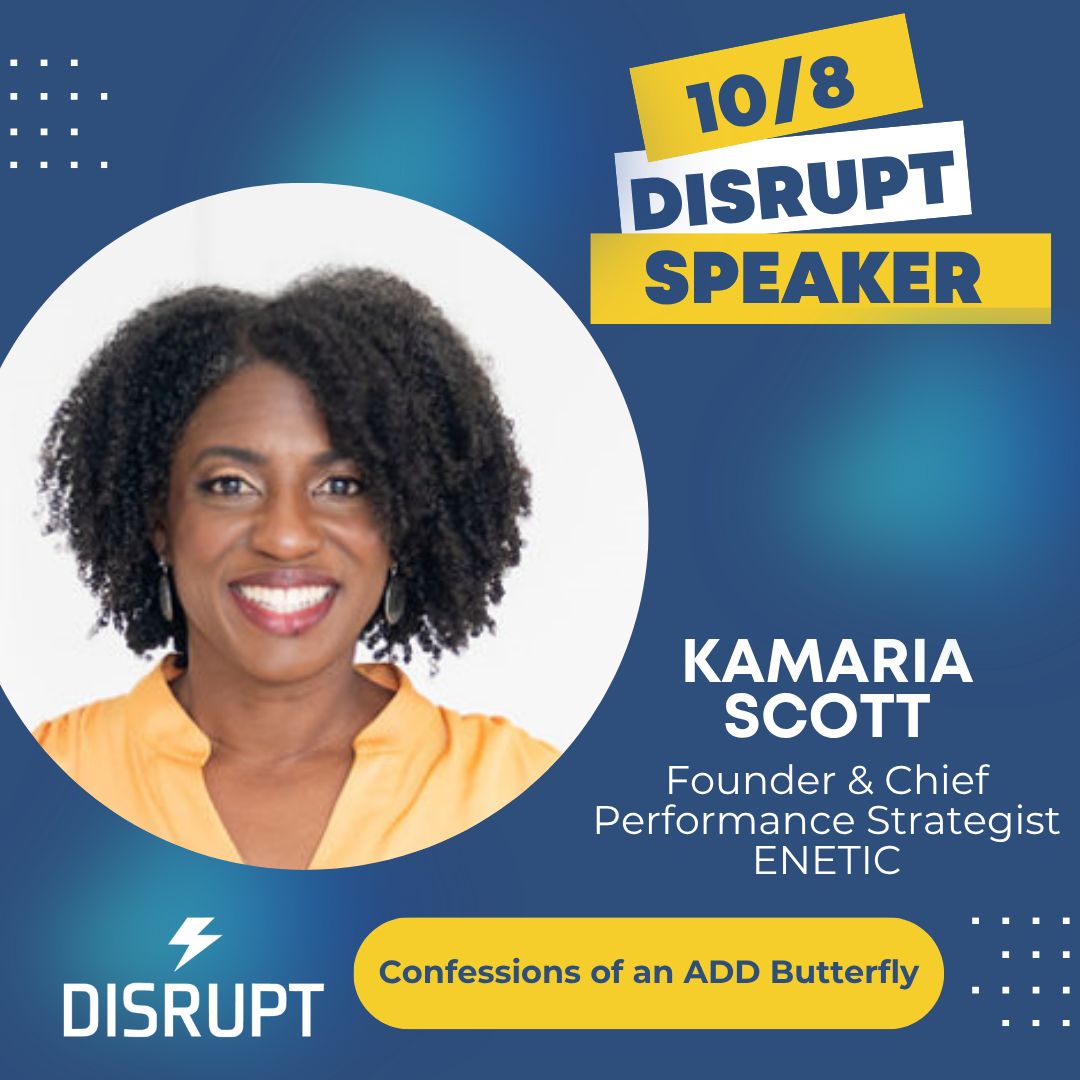
- I'm so excited to take my love of speaking at DisruptHR to Naples! This time I get to talk about what being an ADD butterfly has taught me about making sure that work works for everyone! If you're attending DisruptHR Naples, I look forward to seeing you on October 8th!
This page shows public professional information only, each fact cited. Is this you? send a correction, or ask for removal within 24 hours, no questions asked.