Overview
In this short Q&A-format video from Vlerick Business School, Professor Katleen De Stobbeleir answers the most searched questions about people management and leadership. She advises leaders of hybrid teams to set clear rules of engagement and shift from output to impact management, and to treat economic downturns as testing grounds for bold experiments rather than tightening up. She frames AI as a 'strategic co-pilot' that frees time for creativity and vision, calls emotional intelligence the 'secret sauce' of modern leadership, and recommends developing a CEO mindset by zooming out from operations to big-picture strategy. The video is largely promotional for Vlerick's leadership programmes, offering polished but fairly general advice.
Talks about
Insights & ideas
The through-line
The consistent instruction across Katleen De Stobbeleir's leadership advice is to widen rather than narrow: widen your attention, your remit, your tolerance for experiment, and your definition of what counts as work. The reflex she keeps arguing against is contraction. "In tough times, the instinct is always to tighten up, but the best leaders, they actually do the opposite" [1] is the clearest statement of it, but the same shape recurs elsewhere. Managers of hybrid teams are told to stop policing inputs and outputs. Ambitious executives are told to get curious about the whole business, not their slice of it [1]. Technology is framed as something that buys back attention for larger questions rather than something that tightens control.
The second thread is intentionality. Nothing she describes as valuable happens by default. Culture in a distributed team has to be deliberately built, AI only pays off inside a deliberately built culture, and a new leader's credibility has to be deliberately earned before change is attempted [1].
On leading through downturns
Turbulence is where she thinks the instinct most reliably misleads. The default response to economic pressure is defensive, and the leaders who do best refuse it: they "embrace a growth mindset and use turbulence as a testing ground for bold experiments" [1]. The argument is not that downturns are pleasant but that they are unusually permissive, a period when the appetite for trying something different is higher than in stable conditions and should be spent rather than hoarded.
On hybrid teams and managing for impact
Distance changes what a manager can usefully measure. The shift she asks for is away from input and output management toward impact management, which is to say away from tracking hours and deliverables and toward the difference the work makes [1]. The corollary is uncomfortable for anyone who assumed team spirit was a byproduct of proximity: culture "doesn't form by itself remotely" and has to be built through intentional conversations [1]. Left alone, a hybrid team does not drift toward a weaker version of its office culture; it simply does not develop one.
On emotional intelligence as the secret sauce
She puts emotional intelligence at the centre rather than the margin of the job. "In my opinion, emotional intelligence is the secret sauce for effective leadership today" [1]. It is the capability that makes the rest of her advice executable, since intentional culture-building, stakeholder trust and reading an inherited organisation all run through it.
On following a respected predecessor
Succeeding someone widely admired is treated as a sequencing problem, not a positioning problem. The advice is to stay authentic rather than impersonate the person who came before, take time to understand the culture you have inherited, build trust with key stakeholders, and only then roll out changes carefully, honoring the legacy as you go [1]. The order matters: understanding and trust come before change, and the legacy is something to work with rather than clear away.
On AI as a strategic co-pilot
Her framing of AI is deliberately deflationary about the technology and demanding about the organisation around it. "Think of AI as a strategic co-pilot. It's there to boost your decision making, to automate some of the routine work, and to unlock time for the big human stuff like creativity, innovation, and vision" [1]. The value is in the time released and where that time goes. But the tool is not self-executing: it only works if leaders build a culture of curiosity and experimentation, and if that culture is aligned with the organisation's values [1]. The same experimental posture she prescribes for downturns is the precondition for getting anything out of AI.
On developing a CEO mindset
The move from functional leader to enterprise leader is a move in altitude and scope. It means zooming out from day-to-day operations toward big-picture strategy, and it means a change in ownership: "Get curious about the entire business, not just your slice of it. Own more than your role" [1]. Curiosity here is not a personality trait but a discipline, the habit of taking an interest in parts of the business no one has made you responsible for.
Takeaways
- When conditions tighten, resist the defensive reflex and treat the turbulence as a testing ground for bold experiments [1].
- In hybrid teams, manage impact rather than inputs and outputs, and schedule the conversations that build culture, because remote culture does not form on its own [1].
- Treat emotional intelligence as the core leadership capability of the moment, not a soft supplement to it [1].
- Take over from a respected predecessor by staying authentic, learning the inherited culture and building stakeholder trust first, then changing things carefully while honoring the legacy [1].
- Use AI to automate routine work and free time for creativity, innovation and vision, and back it with a culture of curiosity and experimentation aligned with your values [1].
- To build a CEO mindset, zoom out to strategy, get curious about the entire business and own more than your formal role [1].
In the news
- Not everyone wants to be a manager. And that's perfectly fine. Career growth shouldn't always mean climbing the corporate ladder. Some employees want to deepen their expertise, take on new challenges or develop in a different direction. As Katleen De Stobbeleir highlights in her recent column in De Tijd, leadership roles aren't necessarily attractive to everyone. At myCareerCompanion, we believe meaningful career development starts with understanding both people's strengths and ambitions. By making different career paths
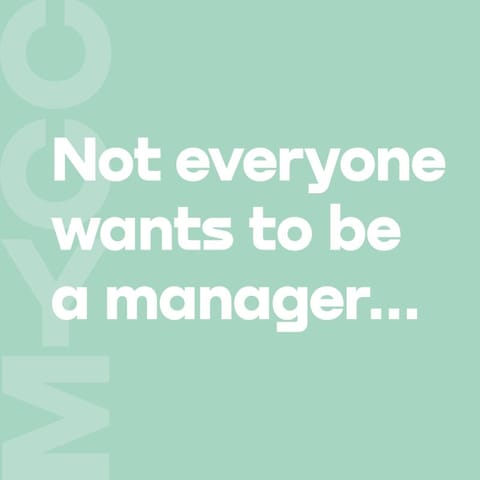
- An employee who doesn’t want to become a manager isn’t necessarily less ambitious. They might want to deepen their expertise, lead complex projects or help others grow. And some people might want to manage a team, but hesitate because of the workload or lack of support they see in that role. In her column in De Tijd, Katleen De Stobbeleir writes about people who consciously turn down leadership positions. She raises an interesting point: how attractive have we made those roles? If managers mostly talk about how busy they are and how
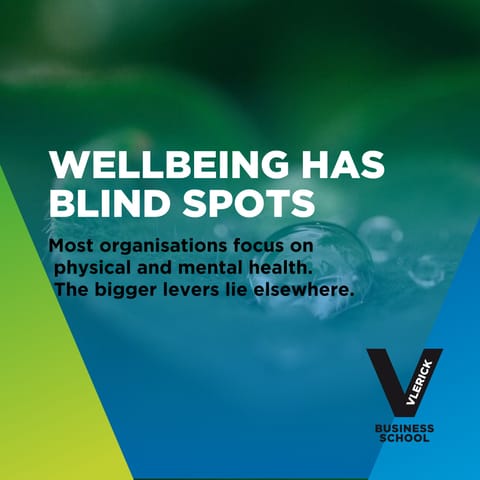
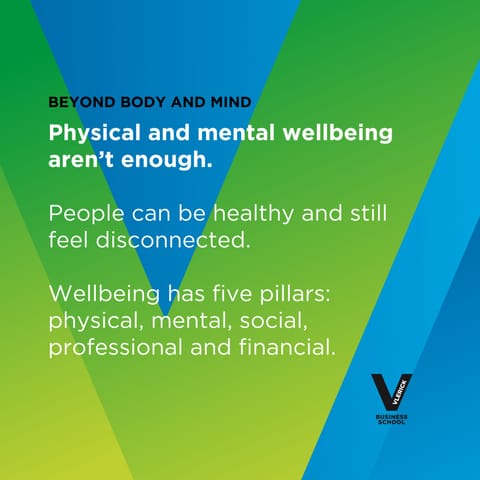
- Workplace wellbeing is about more than mental and physical health. Most organisations invest in those two, but people can be healthy and still feel disconnected, stuck in their career or worried about money. In a joint research project, KBC Bank & Verzekering (Head of Solutions Support Inge Hermans) and Vlerick Business School (Prof Katleen De Stobbeleir and Research Associate Elke Van de Wiele) explored how organisations can take a broader approach to wellbeing, built on five pillars: physical, mental, social, professional and
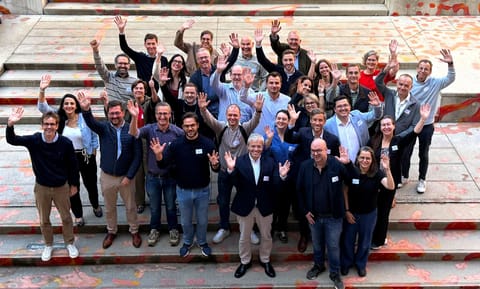
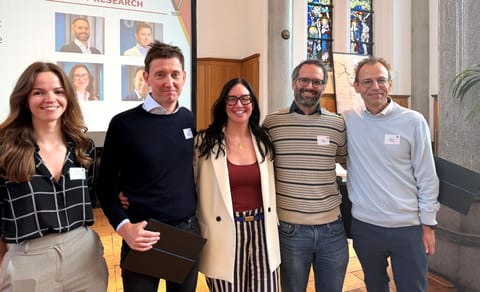
- Last week marked the beginning of a new research journey for 15 Executive PhD researchers at Vlerick. Under the guidance of Prof Katleen De Stobbeleir and Prof Veroniek Collewaert (she/her), they took their first steps into the world of academic research, while our more advanced cohorts continued progressing their doctoral journeys. The week concluded with a Research Day focused on the role of AI in research, featuring a keynote and discussion with Prof Dries Faems, and research presentations from current Executive PhD researchers.
This page shows public professional information only, each fact cited. Is this you? send a correction, or ask for removal within 24 hours, no questions asked.