
Overview
In episode 29 of the BlackBird Podcast, host Andy Coomans interviews Kevin Ringoot (34), founder of JustBite, a startup that curates healthy snacks for companies via subscription, gifting and resale models. Kevin recounts starting as a one-man side business for two years, going full-time in January 2020 via The Birdhouse accelerator, and immediately facing COVID — which he turned into an opportunity by pivoting to home-delivered gift boxes from employers to remote employees, even proactively calling clients to pause subscriptions. He details the deliberate onboarding of co-founder Aitor Somers (Belbin analysis, external coach, values analysis, shareholders agreement with reverse vesting) and the later capital round that brought experienced entrepreneur Jo De Clercq on board with monthly management meetings. He also shares lessons on lean teams (cutting from six to three people while growing revenue and profit), KPI-driven management, delegation, blocked focus time, and four annual 'deconnection weeks', with the ambition to make the business run without the founders.
Talks about
Insights & ideas
The through-line
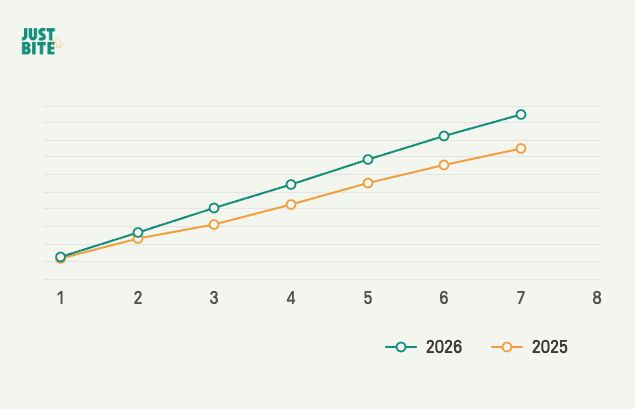
Kevin Ringoot builds by accumulation. The chart he is proudest of has no spike in it: "No spike. No viral moment. No lucky shots. Just a bit better than the month before" [1], and the thing worth looking at is not the top line but the widening gap between this year and last. That same instinct runs through how he talks about the business as an entrepreneur's job at all: "Dat is wat ons als ondernemers bezighoudt natuurlijk hè: blijven verbeteren, blijven optimaliseren" [8]. Growth is a monthly discipline, not an event, and it is easy to miss while it is happening [1].
What has shifted is the object of that discipline. Early on the work was proving the model and the partnership; only three years in, he and his co-founder were already deliberately constructing a company that does not need them, so they could launch new brands and businesses, installing the structure before problems forced it [9]. By 2024 that had hardened into a stated goal of a self-steering, sale-ready business, with the founder's own absence as the test [8]. The commercial engine, meanwhile, has not changed at all: "Taste first. The rest follows. That's basically how we pick everything" [4], and it is also how most of the growth happens [6].
On taste first, and letting the product do the selling
The selection rule and the sales method are the same rule. New companies join every month, each with their own reason, "But once they taste the selection, the conversation shifts from 'let's try it' to 'let's keep it.' That's still how most of our growth happens" [6]. Products are chosen the same way. He was openly sceptical about a snack made from brewery leftovers, expecting "the kind of thing that looks great on a pitch deck and tastes like cardboard" [4], and changed his mind by eating one. Only after that does the story matter: BiaSol, run by the brother and sister Ruairi and Niamh, rescues spent grain from Irish craft breweries, grain packed with fibre that almost always ends up in the bin, and brings it back into the food chain at 13g of fibre per bar, plant-based [4]. Sustainability credentials are real and worth naming, but they follow the taste test rather than substituting for it.
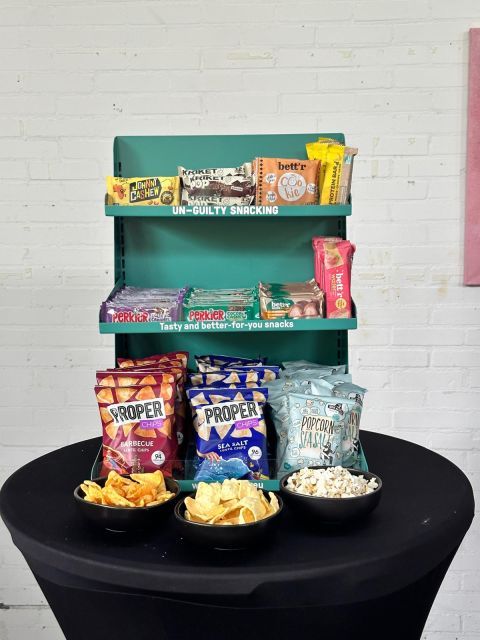
The mission underneath is stated plainly: "Onze missie is eigenlijk om van gezond snacken een evidentie te maken" [9], made operational as making better snacking easy, one office at a time [5], for customers across very different industries who share the same instinct that "a break should leave you better than it found you" [5].
On making the boring parts easy
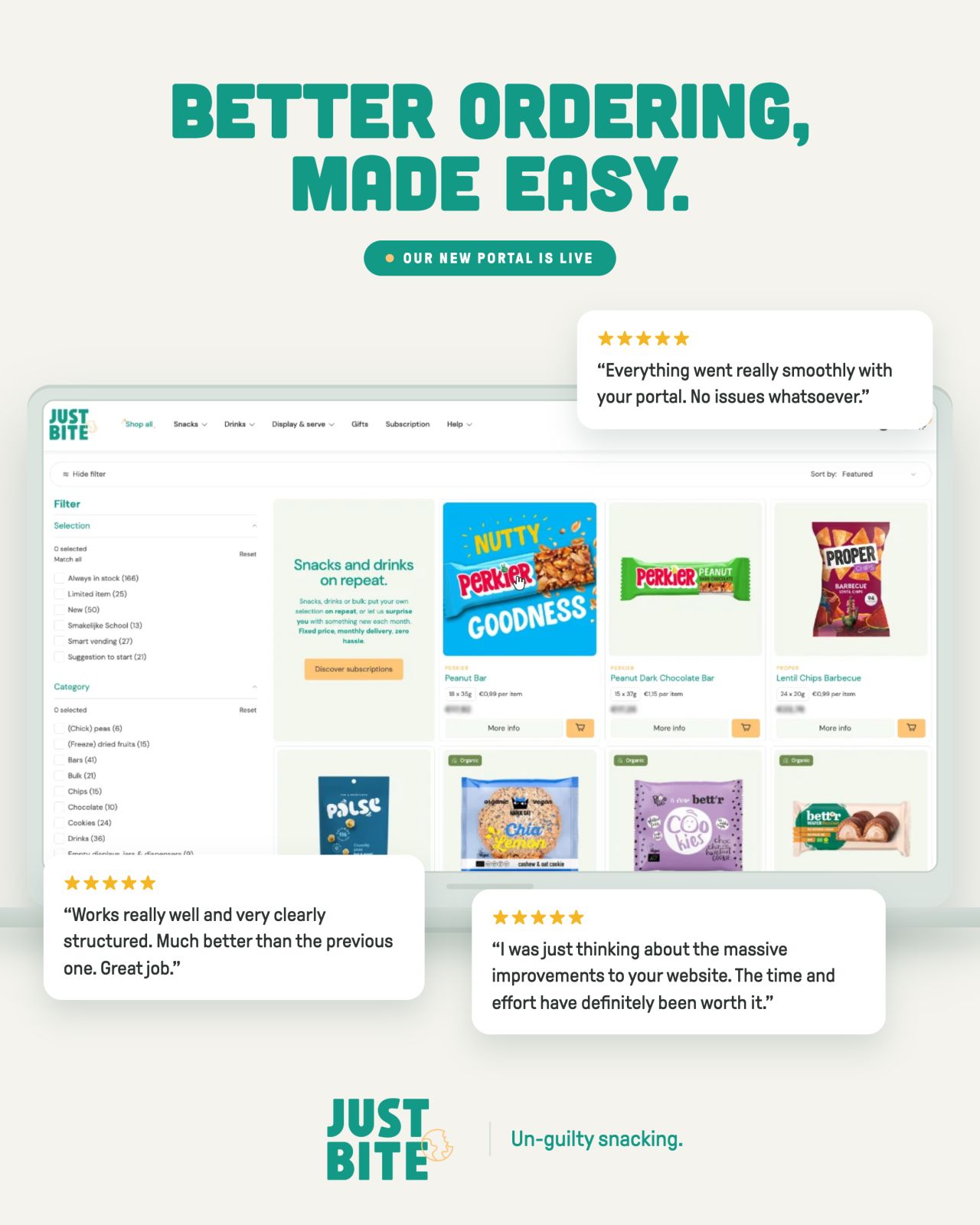
The rebuilt ordering portal exists on a single premise: "𝐁𝐞𝐜𝐚𝐮𝐬𝐞 𝐨𝐫𝐝𝐞𝐫𝐢𝐧𝐠 𝐟𝐫𝐨𝐦 𝐮𝐬 𝐬𝐡𝐨𝐮𝐥𝐝 𝐛𝐞 𝐭𝐡𝐞 𝐞𝐚𝐬𝐲 𝐩𝐚𝐫𝐭" [2]. That means favourites findable in seconds, a clear view of portions and average snack price, fewer clicks and less searching [2]. The proof he cares about is unprompted customer language, not internal metrics: "I was just thinking about the massive improvements to your website. The time and effort have definitely been worth it," followed in the same week by "Everything went really smoothly" and "Works really well and very clearly structured. Much better than the previous one" [2]. Operational strain gets read the same optimistic way. A batch of 600+ member boxes slowly taking over the warehouse is "Good problem to have," because more boxes mean more offices and teams snacking better [3].
On customers you keep
Loyalty, in his account, is bought in the moments when you have every commercial reason to hold on. When COVID emptied offices, JustBite proactively called clients to pause their subscriptions, and customers from 2018 and 2019 are still clients today [9]. The same crisis produced the pivot that outlasted it: employer-to-employee healthy gift boxes delivered at home became both a lasting business model and a tasting and acquisition tactic used to win office contracts later [9]. He still registers a certain disbelief at the client list, noting that some of the names in the pipeline are ones he "Genuinely didn't expect to see" when he started JustBite back in 2020 [6], and he names them, Polarsteps, Glass Lewis, ABBYY, Visma, Timefold, JustPlay, fbeta, Staedean, Van Dorp among them, when a best-ever July lands at +40% year on year despite terraces full and offices half empty [5].
On headcount as a false signal
The most counterintuitive lesson he offers is that cutting the team from six to three, removing the wrong people from the wrong seats, raised both revenue and profit: "Ons team was gehalveerd en we deden meer omzet, meer winst" [9]. His conclusion is that headcount says nothing about company health [9]. What the small team needs instead is completeness of capability: "We zijn hier samen een Zwitsers zakmes die zo goed als alle capaciteiten in huis heeft om een onderneming te gaan sturen" [9]. He also does not delegate a role he has not understood. After letting someone go he deliberately went back to working in the warehouse himself, used the hands-on experience to fix the processes, and only then handed the role to a new hire inside a defined framework [9].
On vetting a co-founder before the paperwork
Before co-founding with Aitor, the two did Belbin analyses, a values analysis and hired an external coach, specifically to test complementarity and identify where they could clash, and only then wrote a shareholders agreement [9]. The agreement itself carried a reverse vesting system: equal shares at the start, but shares returning to Kevin at initial value if one of them left early [9]. The same preference for structure agreed in advance shapes the investor relationship with Jo De Clercq, run through disciplined monthly management meetings with prepared financials and reporting aimed at future challenges rather than the past, which in practice makes the shareholders agreement irrelevant [9].
On rhythm: meetings, targets and time away from the laptop
Internal communication is deliberately rationed to one fixed weekly meeting with a set agenda, with issues parked until then, a conscious culture choice against overly flat, unstructured communication and the continuous stream of interruptions it produces [9]. Targets are handled with the same mechanical clarity: a revenue goal is reverse-engineered into the number of clients needed, then weekly clients, then calls or leads per week [9]. Reviews are candid and immediately raise the bar. Hitting the half-year targets was followed by raising them for the second half, alongside an honest conversation about what is working and what is not, and unscripted answers from everyone about how they experienced the first six months [7]. What came back was that people know what they are working on and trust the person next to them, and he rates that above the numbers: "That kind of trust? Harder to build than revenue" [7]. Then the team went to a high ropes course [7].
He protects his own thinking time on the same principle, planning four deconnection weeks per year at the start of the year, positioned after or before busy periods, to work ON the business rather than IN it and to recharge [9]. The reasoning is blunt: "Ik heb nog nooit een fantastisch idee gekregen terwijl ik achter mijn computer, achter mijn laptop staat" [9].
On building a company that does not need you
The endpoint of all of this is a business that runs without the founder. "Het gaat erover om een bedrijf zelfsturend te maken, dat wil ook zeggen minder stress op mijn schouders en dat heeft ook een heel mooie waarde" [8]. He frames the return on investing in his own development as freedom first and financial return second [8]. Sale-readiness is not primarily about selling: "Uw bedrijf verkoopsklaar maken betekent ook per definitie dat het een gezond bedrijf is" [8]. And the test is empirical. Being physically away from the business for five days revealed that his company was not yet fully autonomous [8], which is precisely why the founders started installing that structure early, before problems forced it, so they would be free to launch new brands and businesses [9].
Takeaways
- Judge growth by the widening gap between this year's line and last year's, not by spikes: "No spike. No viral moment. No lucky shots. Just a bit better than the month before" [1].
- Let the product close the deal. Once prospects taste the selection the conversation moves from "let's try it" to "let's keep it," and that is still the main growth channel [6]; the same rule governs which products get listed: "Taste first. The rest follows" [4].
- Headcount is not a health metric. Halving the team by removing the wrong people from the wrong seats produced more revenue and more profit [9].
- Test a co-founder partnership with Belbin and values analyses and an external coach before drafting the shareholders agreement, and include reverse vesting so early departure returns shares at initial value [9].
- Ration internal communication to one weekly meeting with a fixed agenda and park issues until then, rather than accepting a continuous stream of interruptions [9].
- Reverse-engineer revenue goals into weekly operational KPIs: revenue target, clients needed, clients per week, calls or leads per week [9].
- Schedule four deconnection weeks at the start of the year around busy periods to work ON the business, because ideas do not arrive at the laptop [9].
- Treat five days away as a diagnostic of how self-steering the business really is, and remember that making a company sale-ready by definition makes it a healthy one [8].
In the news
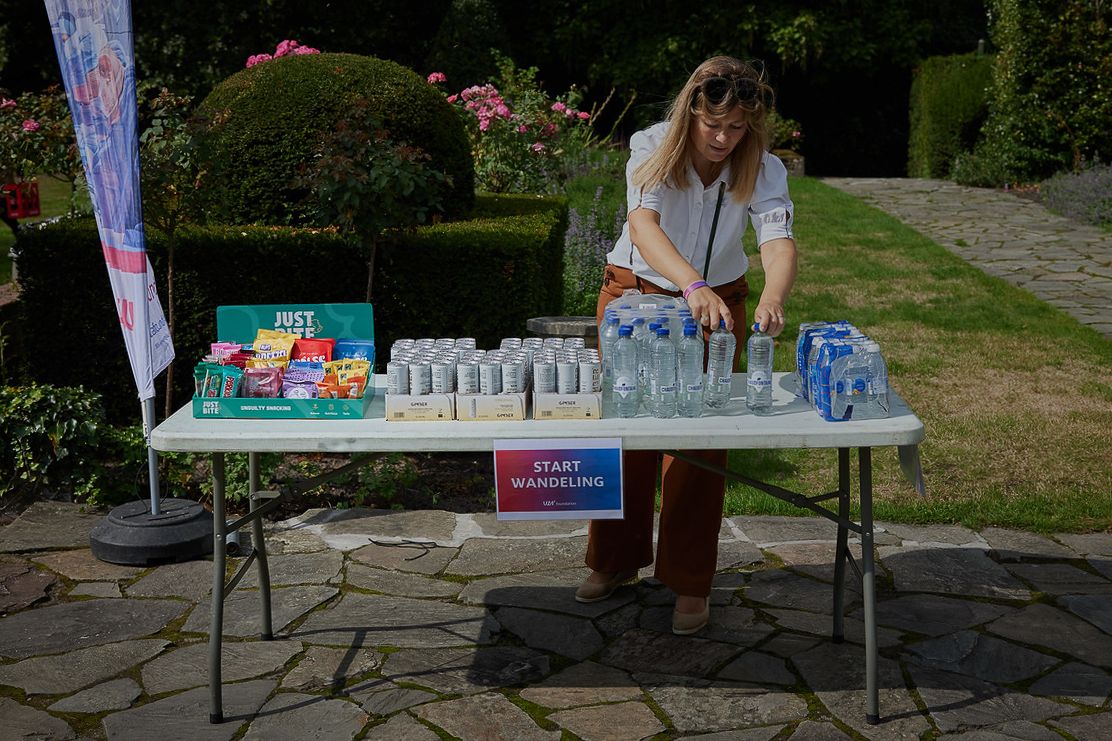
- A handful of snacks. €203.200 for childhood leukaemia research. Here's how those connect. This summer UZA foundation asked us to sponsor the snacks for their charity bike race. Some nuts, bars and good energy for the people walking the route. We said yes. September 12, Domein Wolvenbos. €203.200 raised for CAR-T cell therapy: kids with aggressive leukaemia. We didn't do much. But I'm glad we said yes. Congrats to the whole UZA Foundation team and to everyone who rode, walked and gave. 🙌 #UZAFoundation #cancerresearch #givingback
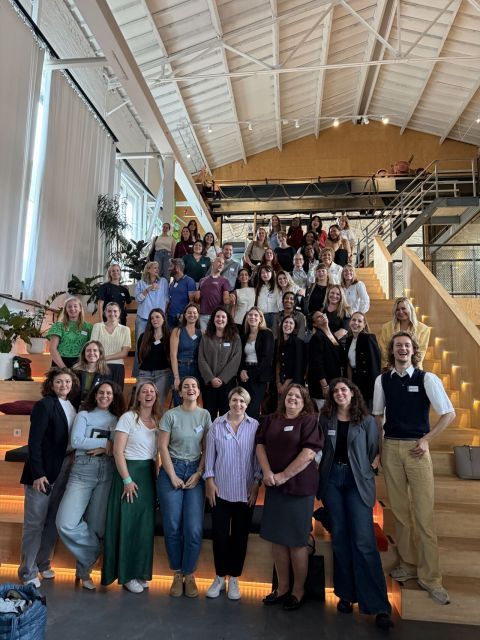
- A full day of conversations with office and workplace managers who care deeply about how their space feels, not just how it runs. Friday we were at the Office Impact Summit in Amsterdam. One thing that stood out: 𝐭𝐡𝐞 𝐛𝐫𝐞𝐚𝐤 𝐫𝐨𝐨𝐦 𝐢𝐬 𝐧𝐨 𝐥𝐨𝐧𝐠𝐞𝐫 𝐚𝐧 𝐚𝐟𝐭𝐞𝐫𝐭𝐡𝐨𝐮𝐠𝐡𝐭. 𝐈𝐭'𝐬 𝐛𝐞𝐜𝐨𝐦𝐢𝐧𝐠 𝐚 𝐫𝐞𝐚𝐥 𝐦𝐨𝐦𝐞𝐧𝐭 𝐨𝐟 𝐞𝐧𝐞𝐫𝐠𝐲 𝐚𝐧𝐝 𝐜𝐨𝐧𝐧𝐞𝐜𝐭𝐢𝐨𝐧. 𝐓𝐡𝐚𝐭'𝐬 𝐞𝐱𝐚𝐜𝐭𝐥𝐲 𝐰𝐡𝐞𝐫𝐞 𝐰𝐞 𝐜𝐨𝐦𝐞 𝐢𝐧. And yes, we brought snacks. Because every good conversation gets better with something
- Two lines on a chart. The bottom one is last year. The top one is now. The best part isn't that the top line is higher. It's the gap between them. It gets a little bigger every month. No spike. No viral moment. No lucky shots. Just a bit better than the month before. And a bit better than the same month last year. Easy to miss while it's happening. Until you look back and see the two lines side by side. 📈 Proud of this. Proud of the team 🥰 . We keep building, month after month.
- I was just thinking about the massive improvements to your website. The time and effort have definitely been worth it." A customer sent us that last week 🥰 . Unprompted. We put a lot of work into rebuilding our ordering portal. Wyh? 𝐁𝐞𝐜𝐚𝐮𝐬𝐞 𝐨𝐫𝐝𝐞𝐫𝐢𝐧𝐠 𝐟𝐫𝐨𝐦 𝐮𝐬 𝐬𝐡𝐨𝐮𝐥𝐝 𝐛𝐞 𝐭𝐡𝐞 𝐞𝐚𝐬𝐲 𝐩𝐚𝐫𝐭. Find your favourites in seconds. A clear view of portions, average snack price.... Fewer clicks, less searching. Then we launched. And two more messages landed that same week: ✅ "Everything went really smoothly" ✅
- This is what 600+ member boxes look like. August is packed and ready. Biggest batch we've done so far, and they're slowly taking over the warehouse. Good problem to have. More boxes mean more offices and teams snacking better 😎 #unguiltysnacking
- When I first heard "a snack made from brewery leftovers 🍺 "... Sounded like the kind of thing that looks great on a pitch deck and tastes like cardboard. Then I actually tried one. Apple pie. Chewy, warm, a bit of raisin. BiaSol is run by Ruairi and Niamh. Brother and sister. They 𝐫𝐞𝐬𝐜𝐮𝐞 𝐬𝐩𝐞𝐧𝐭 𝐠𝐫𝐚𝐢𝐧 𝐟𝐫𝐨𝐦 𝐈𝐫𝐢𝐬𝐡 𝐜𝐫𝐚𝐟𝐭 𝐛𝐫𝐞𝐰𝐞𝐫𝐢𝐞𝐬. Grain that's packed with fibre, but almost always ends up in the bin. They bring it back into the food chain. That's what these Oat Bites are made of. 13𝐠 𝐨𝐟
- Summer. Terraces full, offices half empty. And yet: our best July ever. +40% compared to last year 😍 Polarsteps, Glass Lewis, ABBYY, Visma, Timefold, JustPlay, fbeta, Staedean, Van Dorp... and many more. Different industries. Same instinct: a break should leave you better than it found you. That's what we do. We make better snacking easy. One office at a time. Thanks for the trust 🙏 JustBite. Un-guilty snacking. #JustBite #WorkplaceExperience #BetterSnacking
- Every month, new companies join JustBite. Here are a few we're putting in the spotlight for June. Some of these names? Genuinely didn't expect to see them in our pipeline when I started JustBite back in 2020 🥰 . Every company has their own reason for joining. But once they taste the selection, the conversation shifts from "let's try it" to "let's keep it." That's still how most of our growth happens. Taste first. The rest follows. Welcome, all of you 👋 #unguiltysnacking #justbite
This page shows public professional information only, each fact cited. Is this you? send a correction, or ask for removal within 24 hours, no questions asked.