
Overview
Kris Peeters founded Dataminded in August 2014 to bring engineering-first discipline to enterprise data work in Belgium, after concluding from four years at McKinsey & Company that the gap between data strategy decks and shipped data platforms was where most of the value was being lost. Under his leadership the company has grown into one of Belgium's deeper data engineering benches, building cloud data platforms and data mesh architectures for clients including Telenet, KBC, the Flemish Government, bpost, De Persgroep, Goodyear, and Essent.
He has been the sponsor behind Conveyor, the managed DataOps and data-product workbench spun out of Dataminded's consulting work, and an active voice on the Belgian data scene through Medium writing, conference talks, and the Data Science Belgium community. He speaks regularly on data mesh, data products, and the operating model of modern data teams, including at events like DDD Europe.
Career history
- Founder and CEOAug 2014 to presentDataminded
- Technology SpecialistAug 2010 to Aug 2014McKinsey & CompanyETL tooling and data platform design for global clients
- Software EngineerSept 2009 to Aug 2010Belgacom
- ConsultantAug 2007 to Aug 2009Alten Nederland
- Software EngineerAug 2007 to June 2009eventIS
- Software EngineerApr 2006 to July 2007i.know
- Software EngineerOct 2005 to Apr 2006Profel


Education
MSc in Computer ScienceHasselt University(2000 to 2005)
- Vlerick Business School executive program2016
- AWS Certified Solutions Architect Professional2019
- Microsoft Certified Azure Solutions Architect Expert2019
Insights & ideas
The through-line
Kris Peeters keeps returning to one question: as agentic AI changes how organisations use data, what actually creates value, and what is just noise. Early posts frame this as an architecture problem, where should logic and semantic meaning live once agents start querying data directly [1][5]. Later posts sharpen into a harder line against automation for its own sake: more tokens and more code do not equal more value, and much of the "automated by AI" tooling on the market solves nobody's real problem [4][6]. The shift is from describing the technical opportunity (headless BI, lowered barriers to data work) [1][5] toward prescribing discipline: pick models on cost and performance rather than loyalty [2], rethink the delivery process from scratch instead of bolting agents onto old roles [6], and keep paying for human expertise and accountability [4].
On the semantic layer
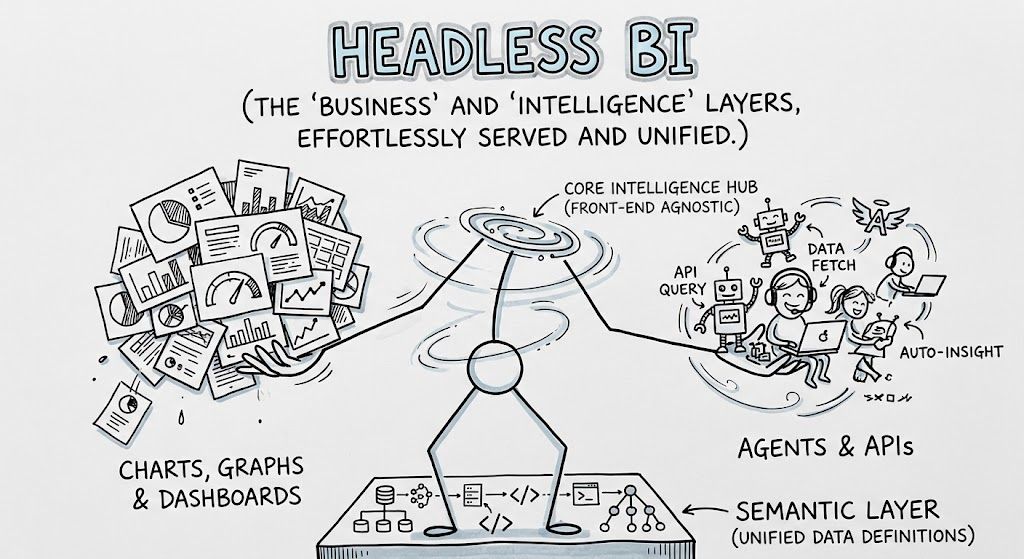
Peeters traces how agents change the BI stack. He notes that logic, metrics and definitions have historically lived "locked inside a BI tool," which "wasn't really problematic until agents became a thing" [1]. Because agents also need to talk to data, he argues they "need a high quality semantic layer," which gave rise to the idea of Headless BI: strip logic out of BI tools, turn them into "a thin visualisation-only layer," and move logic to a semantic layer close to the data [1]. But he is candid that this is aspirational rather than realistic in most organisations, since it forces analysts to learn dbt or Spark instead of their BI tool, and requires migrating "1000s of reports with built-in logic" to the platform [1].
On model commoditization
Watching foundational models proliferate, Peeters treats price and performance convergence as a structural fact to plan around, not a curiosity. He points out that "foundational models are becoming a commodity," that open-weight models "like Kimi and GLM are competitive on performance," and that there is "a HUGE variety in price" [2]. Comparing GLM 5.2 to Claude Sonnet 5 or Opus 4.8, he observes it is "~0.95x the performance" but "~10x cheaper" [2]. His conclusion is operational: "build your organisation to take advantage of all the models out there" and "don't let yourself lock into model providers that are too expensive" [2].
On AI slop and human accountability
Peeters is skeptical of startups packaging "<a-very-specific-human-experience>, Automated by AI," listing lead-gen, recruiting, strategic advisory and legal advice as examples, and asking bluntly, "who is buying this?" [4]. His objection is that AI-generated output is now trivial to produce and to spam: "everyone can generate AI-slop lists and texts and slides now... and put it in a for loop to turn it into spam" [4]. He draws a line between using AI internally and what he wants to buy: "I very much still want to pay for a human to understand my business, my needs and is accountable for delivering results," and he says he values "companies who have deep expertise" [4]. The same instinct shows up socially: he calls a human-only meetup "a guaranteed AI-slop-free evening" [3].
On rethinking the SDLC
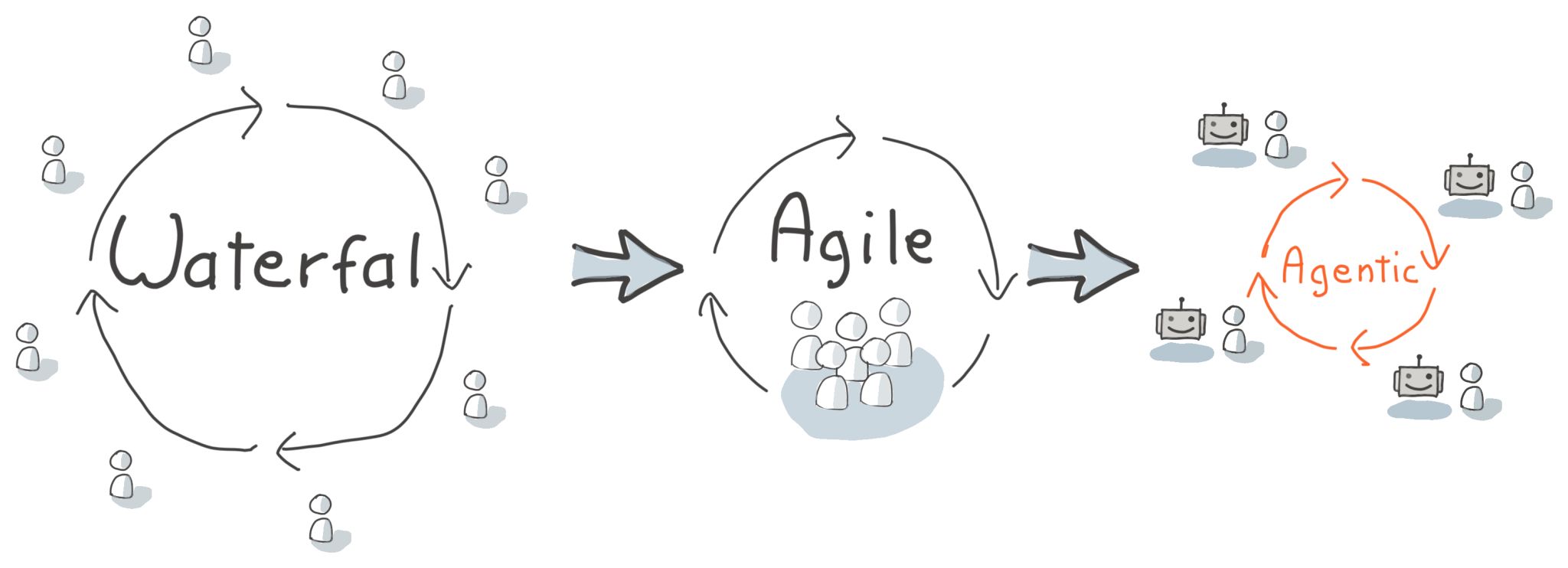
On engineering delivery, Peeters repeats an old line with new force: "'Code is a liability, experience is an asset.' We said it already 10 years ago. In the days of AI, it's even more true" [6]. He argues that giving engineers token access "usually only results in more code. Not in more value," especially in large enterprises where "'typing in the code' was never the bottleneck in the first place" [6]. His prescription is structural, not incremental: "throw out what you know. Start from scratch," questioning which handoff steps between business analyst, SCRUM master, engineer, QA, platform engineer, UX designer and architect an agent could absorb, since "each human is a hand-over, and loss" [6]. This same experimental posture drives Dataminded's innovation days, where prototypes are benchmarked with real numbers, for example a knowledge-graph agent moving "from 37 to 83 out of 100" in accuracy, and to 100 with a human in the loop [9], and where his broader takeaway is that "we're still at the very early days with agents," comparable to the iPhone 1 or Netscape moment [11].
From the stage
On the podcast, Peeters frames the starting point for data work differently than in his written posts: teams should begin with a clear business question rather than a technology choice, because without one they "waste time and money exploring endless possibilities and creating unnecessary complexity" [12]. He also stresses that data's value is often counterintuitive, some use cases that look impossible become feasible once you understand data quality, while others that look obvious turn out impractical [12]. In conversation with Jonny Daenen, he explores a value chain that runs from data to applications and products, to insights, to decisions, and finally to actions that create real value [13]. And discussing Dataminded's founding, he explains he built the company as engineering-first specifically because he had seen engineers treated as "second-class citizens" executing consultants' decisions, and describes his own move from hands-on engineering into delegating operational work like performance reviews and billing while staying close to clients and prospects [14].
Takeaways
- Before investing in a full semantic-layer migration, weigh the realism: moving logic out of BI tools into dbt or Spark and migrating thousands of existing reports is often harder than the "headless BI" pitch suggests [1].
- Architect for model portability rather than provider loyalty, since open-weight alternatives can deliver ~95% of a leading model's performance at roughly a tenth of the cost [2].
- Be wary of tools that just wrap "X, automated by AI" for legal, recruiting or advisory work; buyers still want a human who understands the business and is accountable for outcomes [4].
- When adopting agentic AI in delivery, don't just hand engineers more token access, redesign the workflow and question every human handoff in the SCRUM/QA/architect chain [6].
- Run structured, benchmarked experiments (like a four-tier accuracy benchmark or model-routing cost tests) before trusting agent-based systems in production [9].
- Start data initiatives from a specific business question, not from a technology or platform decision, to avoid open-ended exploration that burns time and money [12].
Media & appearances
- DatamindedYouTubeBuilding an Engineering-First Company: Dataminded’s Founder Story with Kris PeetersKris Peeters discusses how he founded Dataminded in 2014 after working as an engineer at a management consulting firm where he realized engineers were treated as second-class citizens executing consultant decisions rather than leading projects. He explains that he deliberately built Dataminded as an engineering-first company where engineers are central to decision-making, and he discusses his evolution from hands-on engineering work to gradually delegating operational tasks like performance reviews and billing while maintaining a role talking to clients and prospects about the company.
- DatamindedYouTubeYou Don’t Need the Latest Stack. You Need Better Questions. Episode with Rushil Daya & Kris PeetersKris Peeters discusses how data teams need to start with clear business questions rather than technology choices, arguing that without a specific question to answer, teams waste time and money exploring endless possibilities and creating unnecessary complexity. He emphasizes that data's value is often surprising—sometimes use cases that seem impossible become feasible once you understand the data quality, while other seemingly obvious applications turn out to be impractical.
- DatamindedYouTubeWhat It Really Takes to Build a Data-Centric Organization, with Jonny Daenen & Kris PeetersIn this podcast excerpt, Kris Peeters interviews Jonny Daenen about building data-centric organizations. Jonny discusses how organizations should expect value from data through a value chain that progresses from data to applications and products, insights, decisions, and ultimately actions that create real value.
In the news
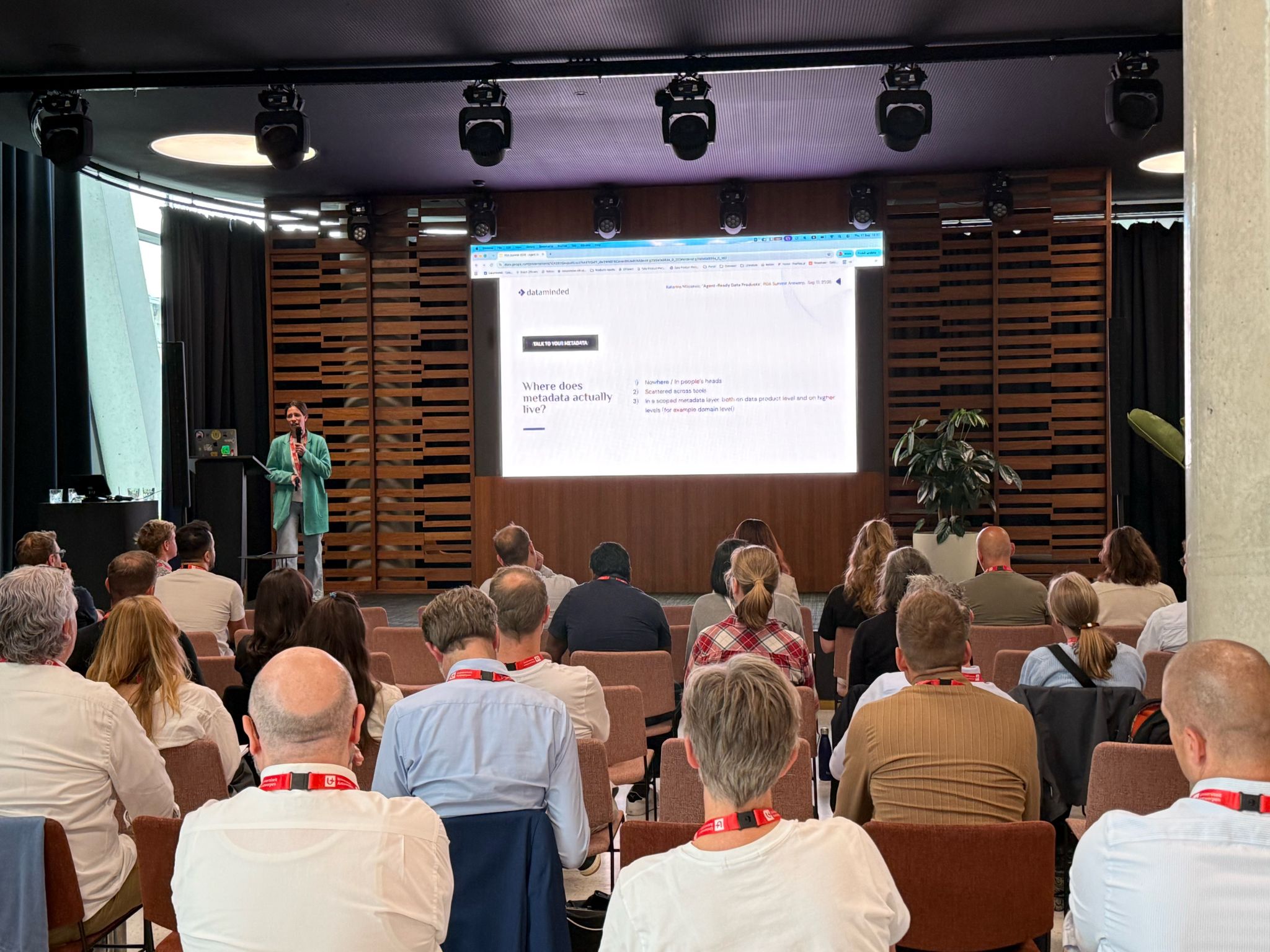
- Dont ask what your agent can do but ask what you can do for your agent." Great quote by Katarina Milosevic at the POA Summit today
- I feel this is a pivotal moment in software. Anyone remembers "We are uncovering better ways of developing software by doing it and helping others do it. Through this work we have come to value..." ? I absolutely loved that approach. And I absolutely hated the industry that came out of it. Now 25 years later, I feel a new manifesto is coming... Who's up for writing it down? Please no Claude-generated slop.
- With talks from imec, ABN AMRO, Mercedes Benz and more , this is a great opportunity to hear how leading companies are building modern data organisations. See you there!
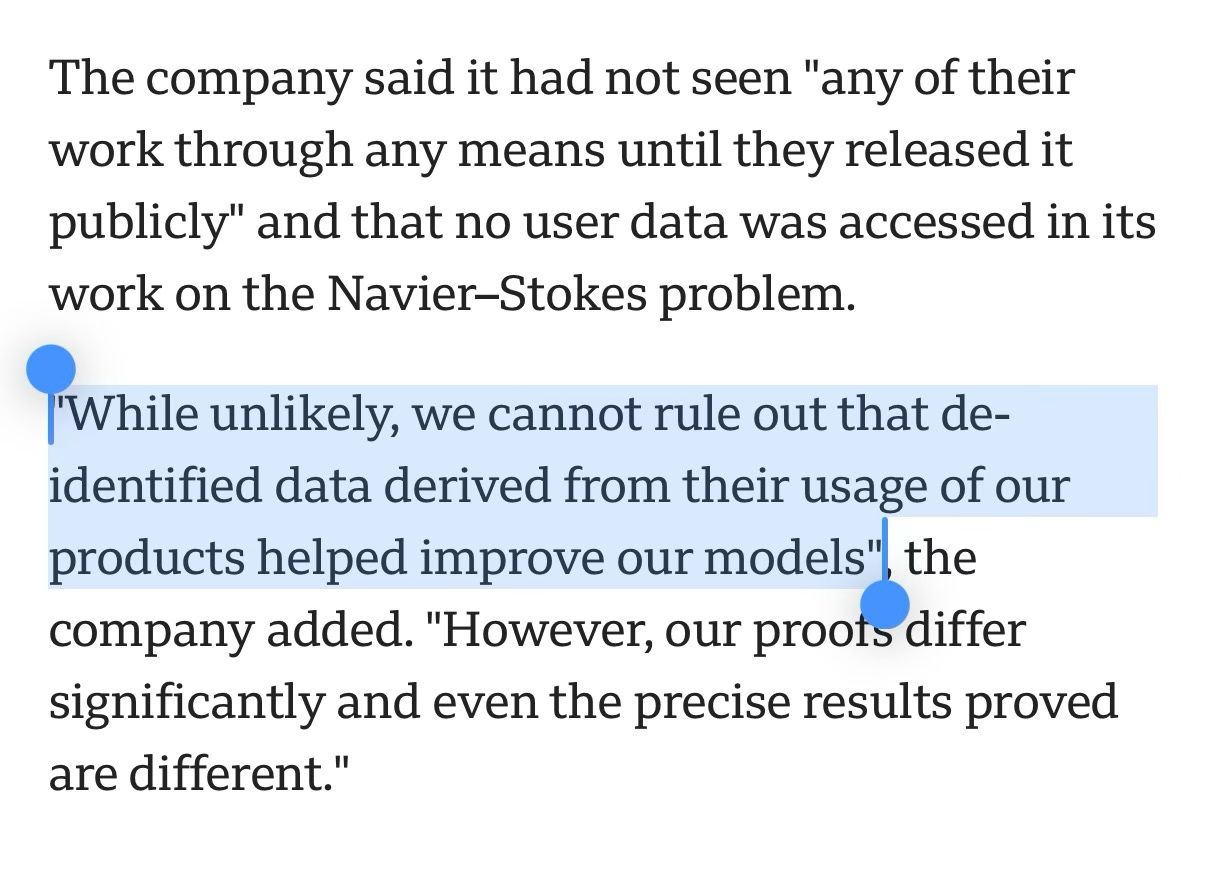
- While unlikely, we cannot rule out that de-identified data derived from their usage of our products helped improve our models" - OpenAi Read that sentence again. It's about solving the Navier Stokes challenge. A hard mathematical problem. I don't claim to know what that problem is. I do know that if your problem is interesting enough for their business, they will learn about it from you using their product. At least they can't rule that out. Maybe all you have is boring challenges. Or you work in a boring industry. But this is
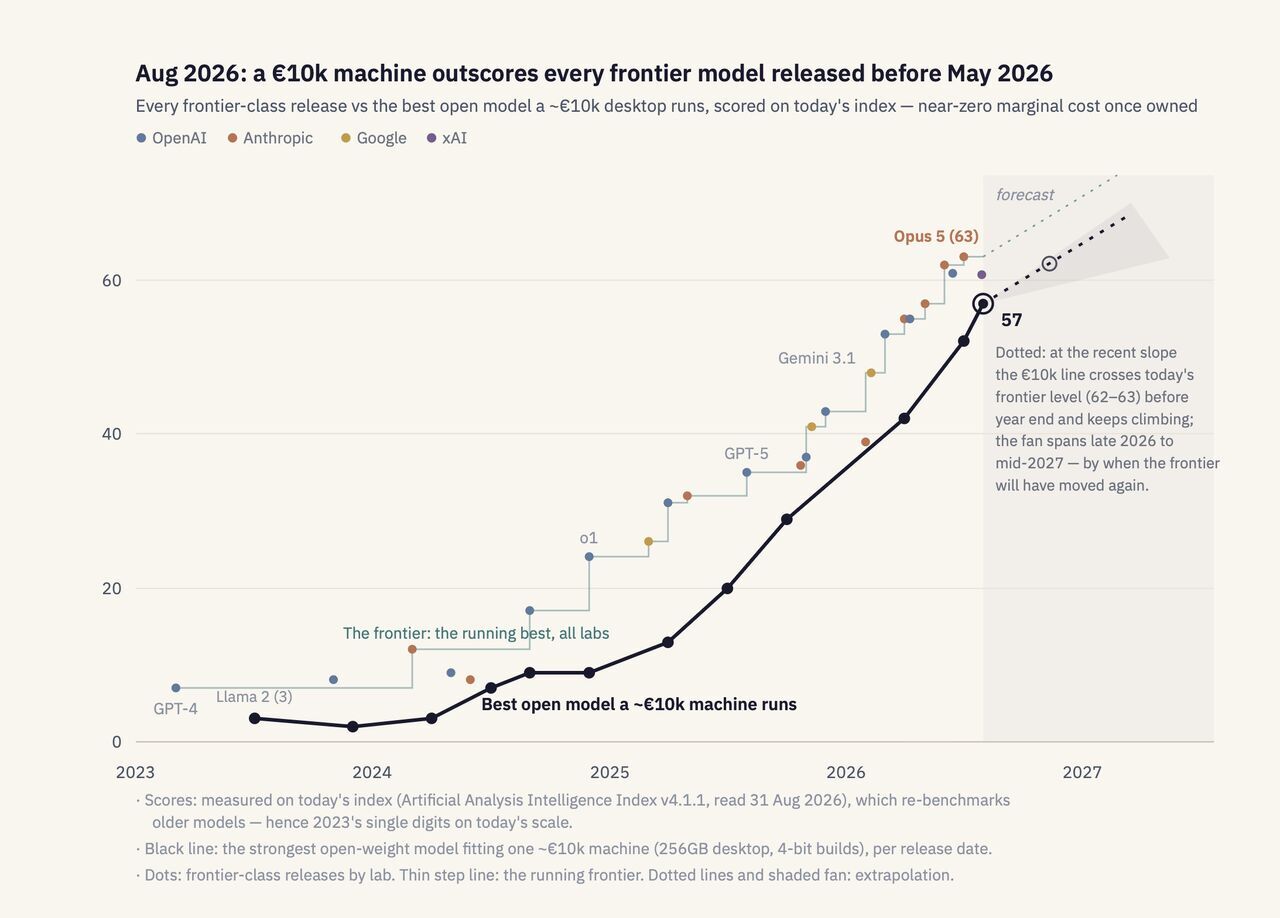
- The thing that blows my mind the most about AI, is the speed at which "mid-size" models catch up with Frontier models. They are basically trailing them by only 6 months. And instead of needing expensive clusters, you can run it on a (beefy) local machine. That would be like: - Ryanair selling EUR 50 supersonic flights between London and Paris 6 months after the Concorde was released - Running a data pipeline on your laptop in 10min that needed a 20 node Databricks cluster 10 hours, only 6 months ago - Effortlessly preparing a whole
- Your BI tool is a black box. Data goes in, clean reports and dashboards come out. What happens in the middle, only your BI team knows. There could be joins, aggregations, metric definitions, joins with hardcoded mapping tables, one-off corrections, ... That's why when two different teams report on "Items in stock", they usually get two different answers. Your agents, even if having access to the same input data, cannot replicate that logic either. That's why you need to move the logic out of the BI tool and onto your data
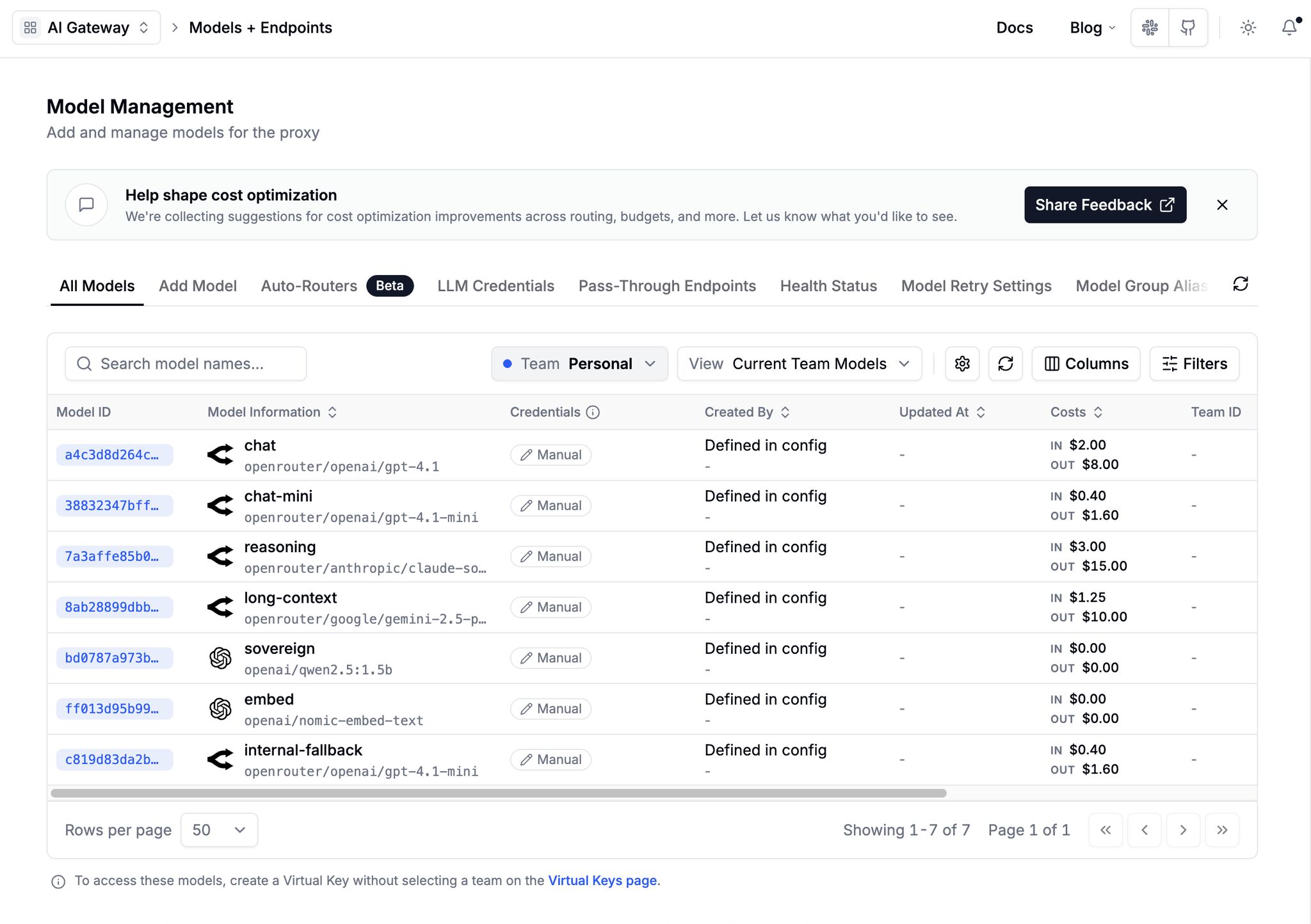
- If your organisation is moving beyond a few experimental AI use cases, it is probably time to install an AI Gateway. But what is it and why do you need it? What: An AI Gateway is an application that serves as an endpoint to all your AI workloads: Chatbots, coding agents, Operational applications that use AI, Talk to your data, ... Why: 1. Model provider independence: New models come out every day, and it's a price war. You can only benefit from that price war if you're not tied hand and feet to one provider 2. Guardrails: Set and
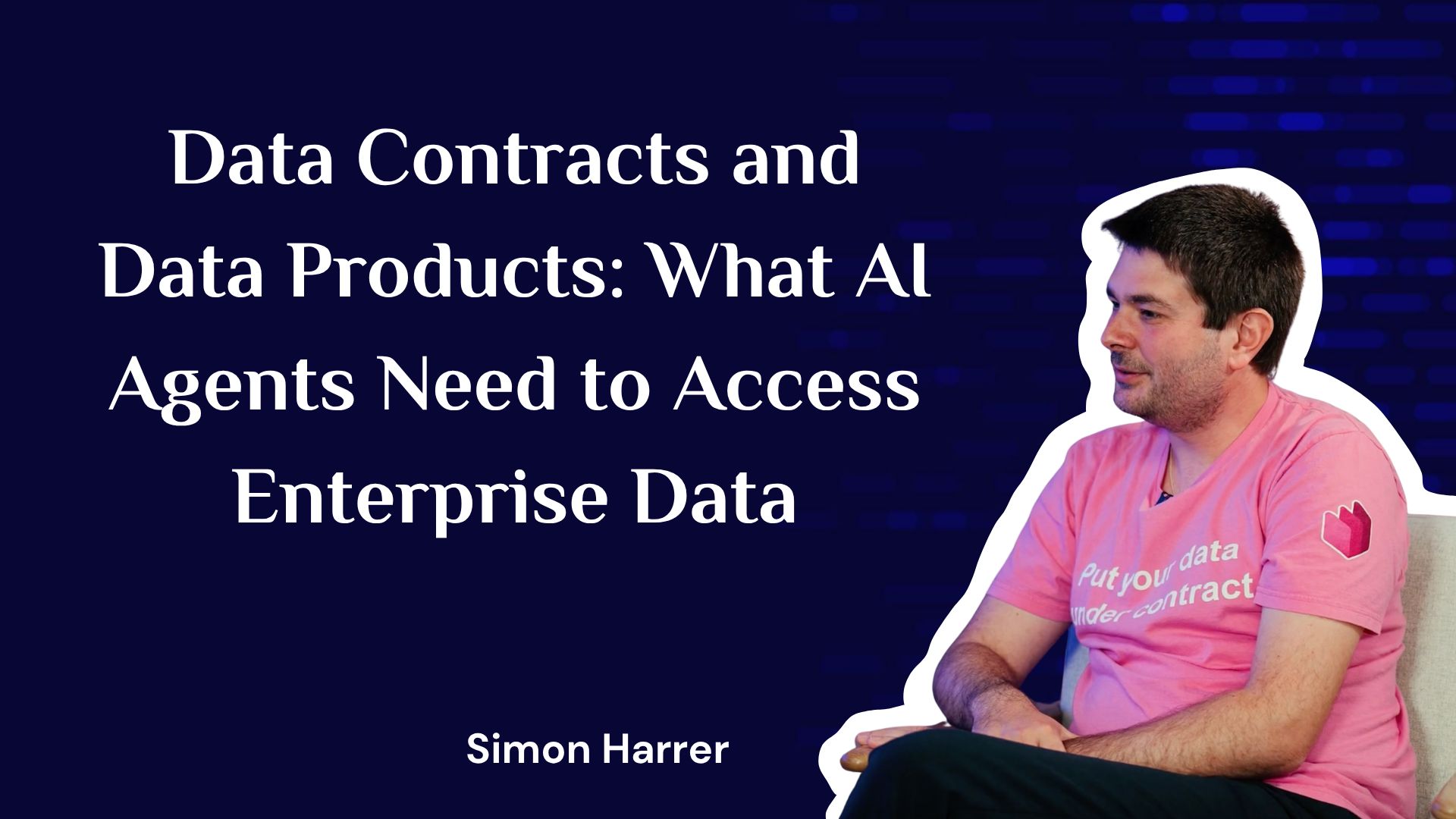
- New episode of the Data Playbook podcast is live. Dr. Simon Harrer, CEO and co-founder of Entropy Data, joins our host and CEO Kris Peeters for his second appearance on the show. The conversation centers on a problem more data leaders will face this year: AI agents need access to company data, and the access rules built around humans do not hold once an agent can query, request, and act on its own. We talk through the difference between data contracts and data products, why purpose-based access control matters once an agent can

Related profiles
This page shows public professional information only, each fact cited. Is this you? send a correction, or ask for removal within 24 hours, no questions asked.