
Overview
Kurt Vanroy is CEO of Assign, an IT consultancy and IT services company at Jaarbeurslaan 29/1A in Genk. Assign was founded in 2007. It runs two business lines. The consultancy line places consultants on client projects, with expertise in software development in .NET and Java, functional analysis, business analysis and testing. The IT services line covers IT strategy, IT support, custom software and hardware, modern workplaces and cloud migration. The company sums up its mission as improve + care = match for growth in IT. Assign took on a new visual identity in 2012 and moved to its office on Jaarbeurslaan in Genk in 2013. In 2018 it set up the subsidiary Assign kmo IT Services to cover customer automation as well. By 2022, around fifteen years after the start, Assign had roughly 40 consultants with Vanroy as CEO, and entered a partnership with Elmos Group. Elmos Group brings together five IT companies and more than 350 IT professionals from Generaal de Wittelaan 9 1A in Mechelen, and lists Assign among its companies. Alongside Vanroy, Assign lists Jan Vansteenwegen as Sales Manager, Marc Stevens as Account Manager and Nico Verheyen as CTO.
Career history

Insights & ideas
The through-line
Across every post, Kurt Vanroy returns to one preoccupation: eliminating the manual, repetitive work that sits between people and their actual jobs. Whether the topic is sales, finance, security or hardware, the pattern is the same, identify a friction point (copying data between apps, late reports, phishing risk, heavy administration) and show how a specific Microsoft or partner product removes it. The language is consistent and formulaic: a problem question, a bullet list of what the tool does, then a set of checkmarked outcomes, always ending in "minder" (less) friction and "meer" (more) time or focus. There is no visible evolution of thinking over the period covered; the posts function as a steady cadence of product-led content rather than a developing argument, but the underlying conviction, that small technical changes free up real time, repeats with only the product name changing [1][3][6][13].
On sales without administration
Vanroy frames selling as fundamentally a human activity that technology should protect from paperwork. He opens directly with the claim "Verkoop draait om mensen. Maar administratie slorpt tijd op." [13] and lists the cost: "Topverkopers zitten vast met notities en CRM-updates" and "Follow-ups raken te laat of vergeten" [13]. The fix is automation that stays invisible to the seller, Copilot for Sales gives "Automatische notities" and "CRM-updates zonder extra werk" [13], while an integrated Business Central and Outlook flow means "Geen cijfers die tussen apps gekopieerd moeten worden" and "Meer deals die vlot gesloten worden" [1]. The end goal stated explicitly is "Meer focus op klantgesprekken" [13].
On real-time data over after-the-fact reporting
A second recurring theme is his impatience with reporting that arrives too late to act on. He describes the common failure mode as discovering "pas achteraf hoe de week echt liep" [3], and notes that by the time a report is compiled, "de cijfers al dagen oud" zijn [3]. His proposed remedy is connected, always-current data: "Je gegevens worden verbonden en gestroomlijnd" and "Iedereen ziet real-time hoe het bedrijf ervoor staat" [3], summarized in the line "Geef je team de maandagochtend terug met Assign" [3]. The same logic extends to audit and finance: he argues an audit should be "een beoordeling — geen zoektocht" [8], achieved because "Elke transactie blijft traceerbaar" and "Afstemmingen worden automatisch gelogd" [8], while stressing that automation stops short of full autonomy, "Copilot-suggesties ondersteunen, maar de goedkeuring gebeurt door een medewerker" [8].
On security as something that should not be felt
Vanroy treats security less as a compliance requirement and more as another source of friction to remove. On email threats he states plainly that "goed ingesteld voorkomt het dat die aanvallen ooit in de inbox landen" [6], and lists layered defenses, anti-phishing scans, Safe Links, Safe Attachments, attack-simulation training, whose payoff is "Meer vertrouwen in veilige communicatie" and teams that stay "productief zonder constant risico's te checken" [6]. The same instinct appears in his hardware framing, where he highlights "HP Wolf Security met quantum-resistente bescherming, ingebouwd van hardware tot OS" [12] as a baseline expectation for a modern work device, alongside "Enterprise-beveiliging — betrouwbaar en bedrijfsklaar" [5].
On tools for hybrid and mobile work
Vanroy consistently pairs software arguments with device recommendations, treating the physical tool as part of the same efficiency story. He summarizes his view of the moment directly: "De toekomst van werk vraagt niet om méér inzet, maar om tech die meebeweegt" [12]. This plays out in product after product, an ultra-fast mouse promising "Minder onderbrekingen door snel opladen" and "Betere controle bij hybride werken" [4], earbuds offering "Meer concentratie tijdens calls" [7], and AI-ready laptops meant to deliver "Efficiëntie in AI-workflows" and "Werkcomfort onderweg" [12]. Even tablets are pitched on the same terms, valued for working "waar je maar wilt" [10] and supporting "professionele videogesprekken en presentaties" on the move [2].
Takeaways
- Positions cloud migration as a managed, low-risk service rather than a technical hurdle: "We plannen én voeren je migratie uit" with "Minder risico's, meer focus op bedrijfsdoelstellingen" [11].
- Frames Copilot for Sales as removing CRM busywork so sellers can prioritize "gesprekken die echt waarde brengen" [13].
- Treats audit readiness as a byproduct of traceable, automatically logged transactions in Business Central, not a separate compliance project [8].
- Views security tooling (Defender for Office 365, HP Wolf Security) as productivity infrastructure, judged by how invisible it stays to the end user [6][12].
- Ties hardware choices (EliteBook, iPad Air, MacBook Neo, Poly Voyager, HP mouse) directly to hybrid-work comfort and uninterrupted focus rather than specs alone [4][5][7][9][10][12].
- Uses Microsoft Fabric and Power BI to argue that decision-making should run on same-day data instead of week-old manual reports [3].
In the news
- De meeste deals gaan niet verloren tijdens de pitch. Ze gaan verloren bij de overdracht tussen verkoop en financiën. ⚠️ Wat gebeurt er vaak? - Offerte als PDF, versieverwarring - Factuur met fouten - Onderhandelde kredietvoorwaarden over het hoofd gezien - Een week heen-en-weer mailen Het gevolg? 😕 De klantrelatie koelt al af voordat alles correct gefactureerd is. Hoe vermijden we dat? Met Business Central blijft de informatie één keer correct: ✅ Offerte in Outlook wordt order in het systeem ✅ Order wordt factuur in Finance ✅

- Klanten onthouden wie ze kunnen vertrouwen. 🔒 Wat betekent dat in de praktijk? - De afspraak gaat door. - De factuur komt veilig aan. - E-mails zijn echt. - Bestanden staan op de juiste plek — en alleen bevoegden hebben toegang. Dat vertrouwen berust op werk dat vaak onzichtbaar blijft. Met Microsoft Defender Suite en Microsoft Purview Suite voor Business Premium bescherm je op de achtergrond: ✅ apparaten ✅ e-mail ✅ identiteiten ✅ samenwerkingstools ✅ gevoelige bedrijfsgegevens Zo kan je bedrijf blijven bewegen. En blijven

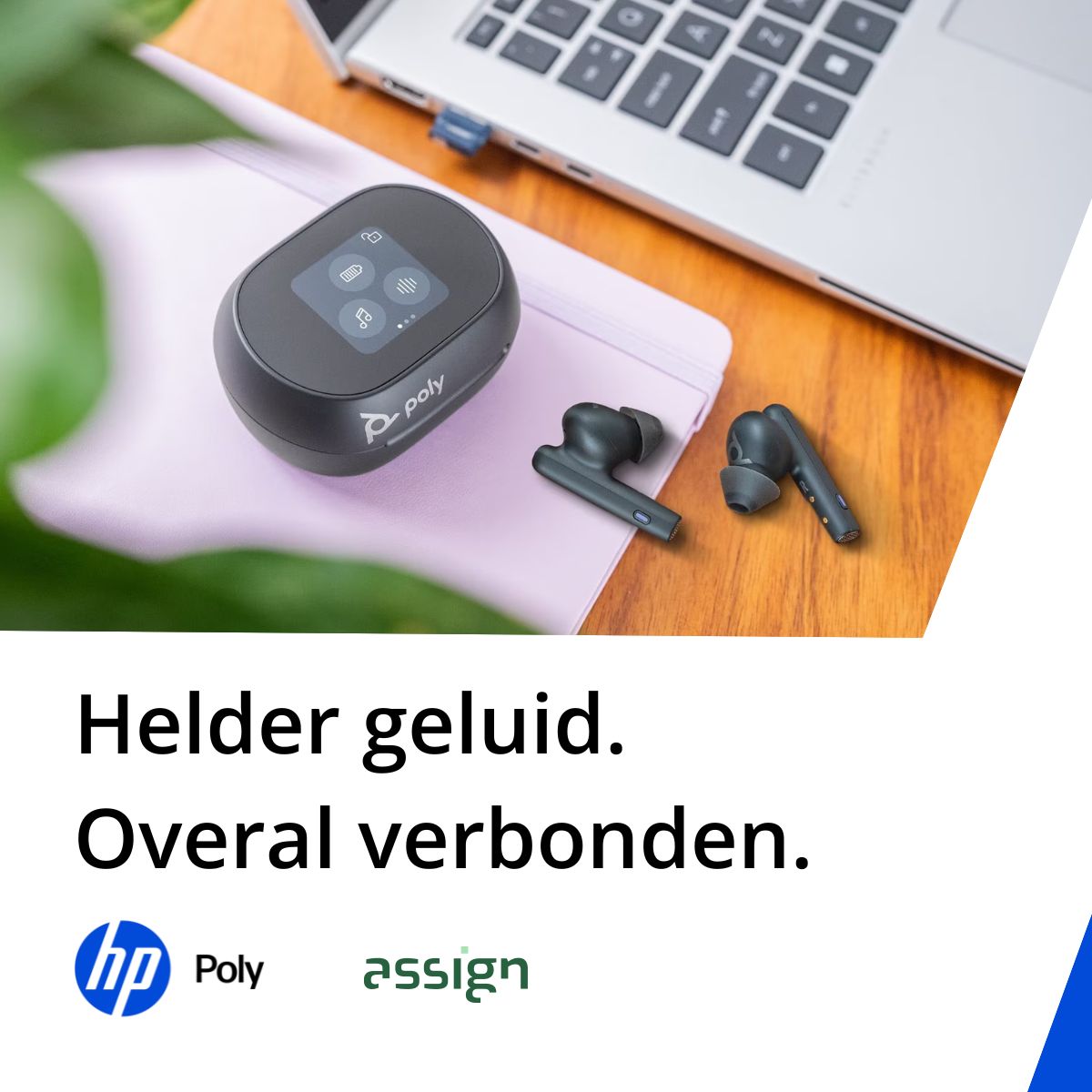
- Op kantoor, onderweg of in een online meeting — duidelijk geluid maakt elke dag productiever. 🎧 Waarom de Poly Voyager Free 60-serie bijdraagt: - Adaptieve Active Noise Cancelling, voor maximale focus en minder achtergrondgeluid - 3 microfoons per oordopje + WindSmart-technologie, voor heldere gesprekken, ook buiten - Transparantiemodus, zodat je de buitenwereld hoort zonder je oordopje te verwijderen - Compatibel met laptop, tablet en smartphone Het resultaat? ✅ Beter verstaanbare calls. ✅ Minder afleiding tijdens
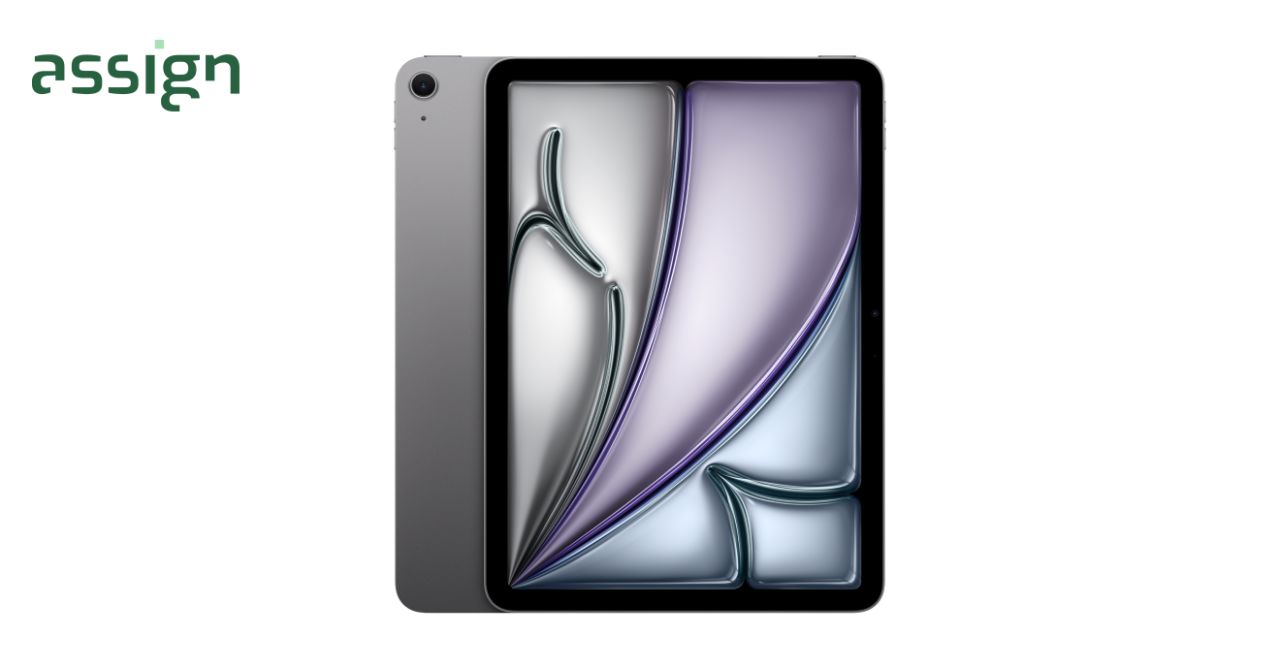
- De 11inch iPad Air. Gemaakt voor Apple Intelligence. M4 is de kracht achter ongekende prestaties, en multitasken is een makkie dankzij de flexibele vensters in iPadOS. iPad Air heeft een schitterend Liquid Retina-display, een geavanceerde camera aan de voorkant voor professionele videogesprekken, supersnelle wifi 7 en 5G, zodat je onderweg verbonden blijft. Bovendien werkt iPad Air met essentiële apps als Microsoft 365 Copilot, Shopify, Procreate, Zoho Solo en Intuit Quickbooks. Voeg er een Apple Pencil Pro en Magic Keyboard aan
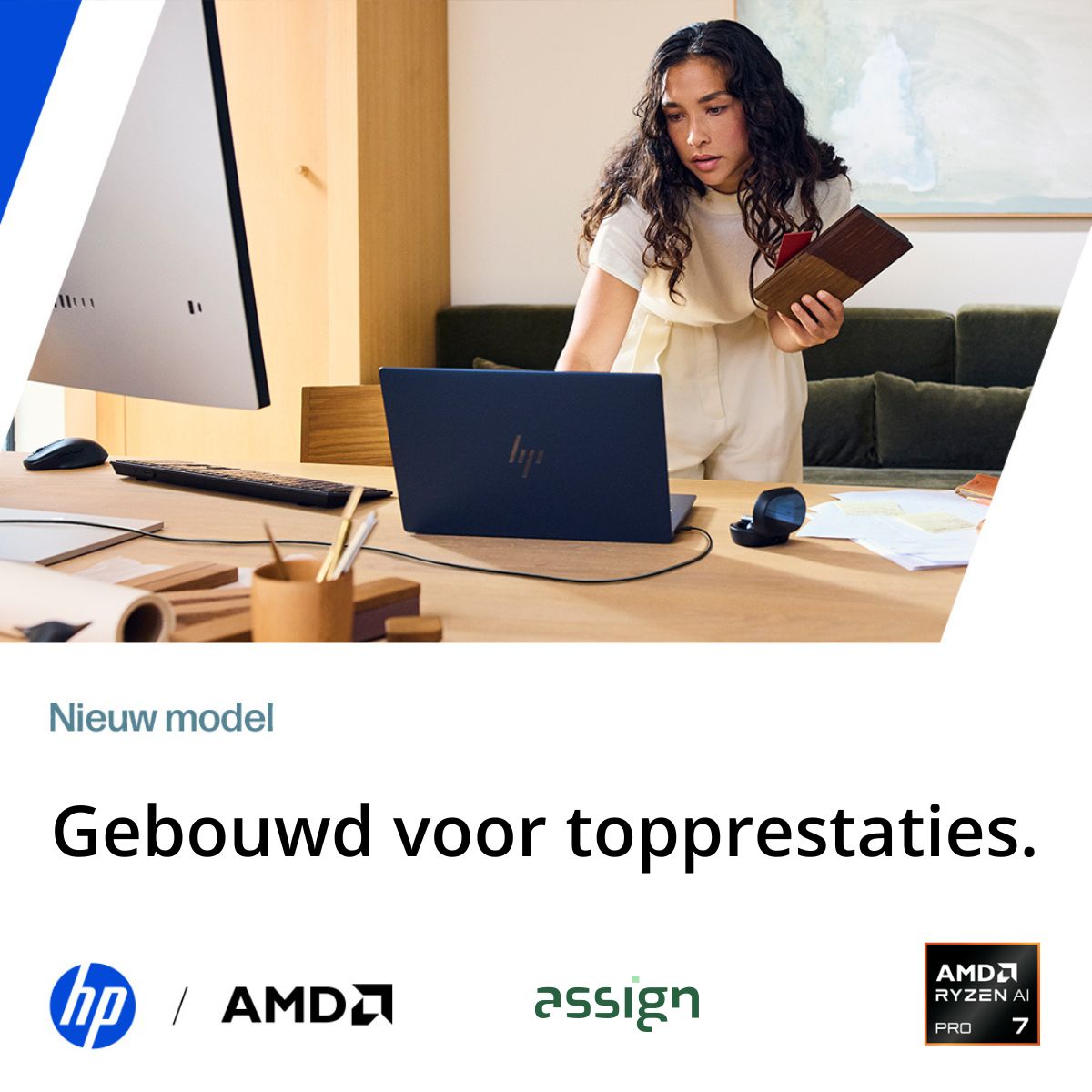
- Nieuwe werkplek, zelfde ambitie: maximaal productief zonder concessies. 🚀 De HP EliteBook X G2a Next Gen AI PC is gebouwd voor professionals die mobiliteit, prestaties en beveiliging even belangrijk vinden. Wat betekent dat concreet? - AI-ondersteunde productiviteit met Copilot+ PC - Kracht van de AMD Ryzen™ AI 7 PRO 450 processor - Ultralicht ontwerp, ideaal voor hybride werken - Professionele videovergaderingen met Poly Camera Pro - Continu beschermd door HP Wolf Security - Razendsnelle connectiviteit dankzij Wi‑Fi 7
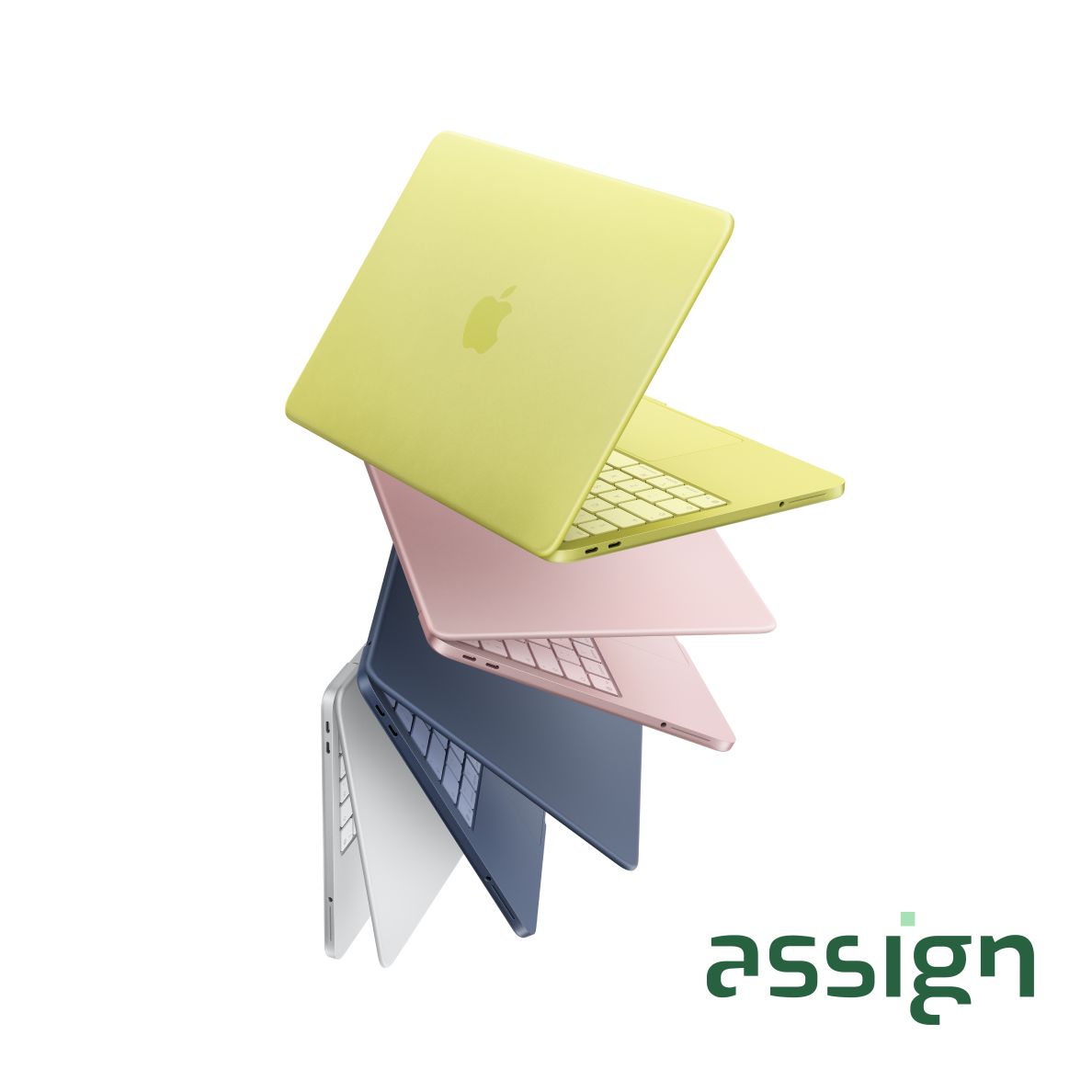
- MacBook Neo vliegt door wat je elke dag voor je bedrijf doet, of je nu de voorraad bijhoudt, je website bijwerkt of knappe presentaties maakt. Een sterk design van aluminium, een briljant Liquid Retina-display, de A18 Pro-chip die is gemaakt voor AI en Apple Intelligence, een batterij die tot 16 uur meegaat en vier prachtige kleuren. Dit is een geweldige Mac voor bedrijven, voor een verrassende prijs. #Assign Bestel nu MacBook Neo https://lnkd.in/eghbGvHq
- Gegevens verspreid over systemen? Dat vertraagt groei. 📊 Microsoft Fabric brengt alles samen in één dataplatform: - Eén plek voor je bedrijfsgegevens - Ingebouwde analytics en AI voor snelle inzichten - Security en governance alvast geregeld, ook bij groei Waarom dit werkt voor jouw team: ✅ Snellere beslissingen op basis van betrouwbare data ✅ Minder tijd aan zoeken, meer tijd om te handelen ✅ Een AI-ready datafundament zonder extra complexiteit Wil je een duidelijk en veilig data‑fundament voor je bedrijf?

- Kiezen voor betrouwbare printers en extra voordeel? Dat kan met HP LaserJet Pro. ⚡ Wat je krijgt: - Betrouwbare printkwaliteit voor je kantoor - Sterke beveiliging voor je documenten - En nu: financieel voordeel via het HP LaserJet Cashback programma Hoe werkt het? 1. Koop een in aanmerking komende HP LaserJet printer 2. Registreer je aankoop binnen 30 dagen 3. Ontvang cashback na goedkeuring Wil je weten welke modellen meedoen of hulp bij het claimen van je cashback? We helpen je graag bij de keuze en het proces.

This page shows public professional information only, each fact cited. Is this you? send a correction, or ask for removal within 24 hours, no questions asked.