
Overview
ChainComply was founded in 2022 and is headquartered in Brussels. It has between 2 and 10 employees. ChainComply offers an enhanced due diligence solution that reveals the source of funds of incoming value transfers from crypto exchanges. Its SaaS platform combines on-chain and off-chain data so that banks and crypto firms can run AML and financial crime compliance checks. The company describes the product as a decision layer that delivers an auditable yes, no or why on crypto source-of-wealth by consolidating exchange, wallet and DeFi data. It targets banks, VASPs and CASPs, wealth managers and crypto tax accountants, and sells a product called CashoutReady to individual crypto holders. ChainComply was accelerated by Blockchain Founders Group, appears in FCT50 2025, and is a member of Fintech Belgium and INATBA. The company won a Top European Start-up award at the European Startup Ecosystem Awards at Wolves Summit in Poland and the pitching competition at the Nordic Blockchain Association conference. It received a business angel investment from Werner Hoffmann.
Career history

Insights & ideas
The through-line
Across Lukasz Lukaszewski's posts, one idea keeps resurfacing: blockchain analytics tools show transactions, but they do not show wealth. He returns again and again to the gap between "where the money moved" and "how the wealth was made" [2], arguing that Enhanced Due Diligence built only on blockchain analysis alerts will miss the real story [2][4][5]. Over the period covered, this preoccupation with Source of Wealth as a narrative-reconstruction problem expands from individual case studies into a broader thesis about what banks should be doing with crypto altogether: not bolting on a "buy Bitcoin" button, but building a source-of-wealth workflow and lending product (the mortgage) that can actually absorb on-chain wealth [11][12][13][14]. The regulatory-accountability angle, seen in his commentary on the Lombard Odier and UBS cases, reinforces the same point from the enforcement side: superficial checks and undocumented reasoning eventually catch up with institutions, sometimes over a decade later [7][8][10].
On Source of Wealth beyond the tools
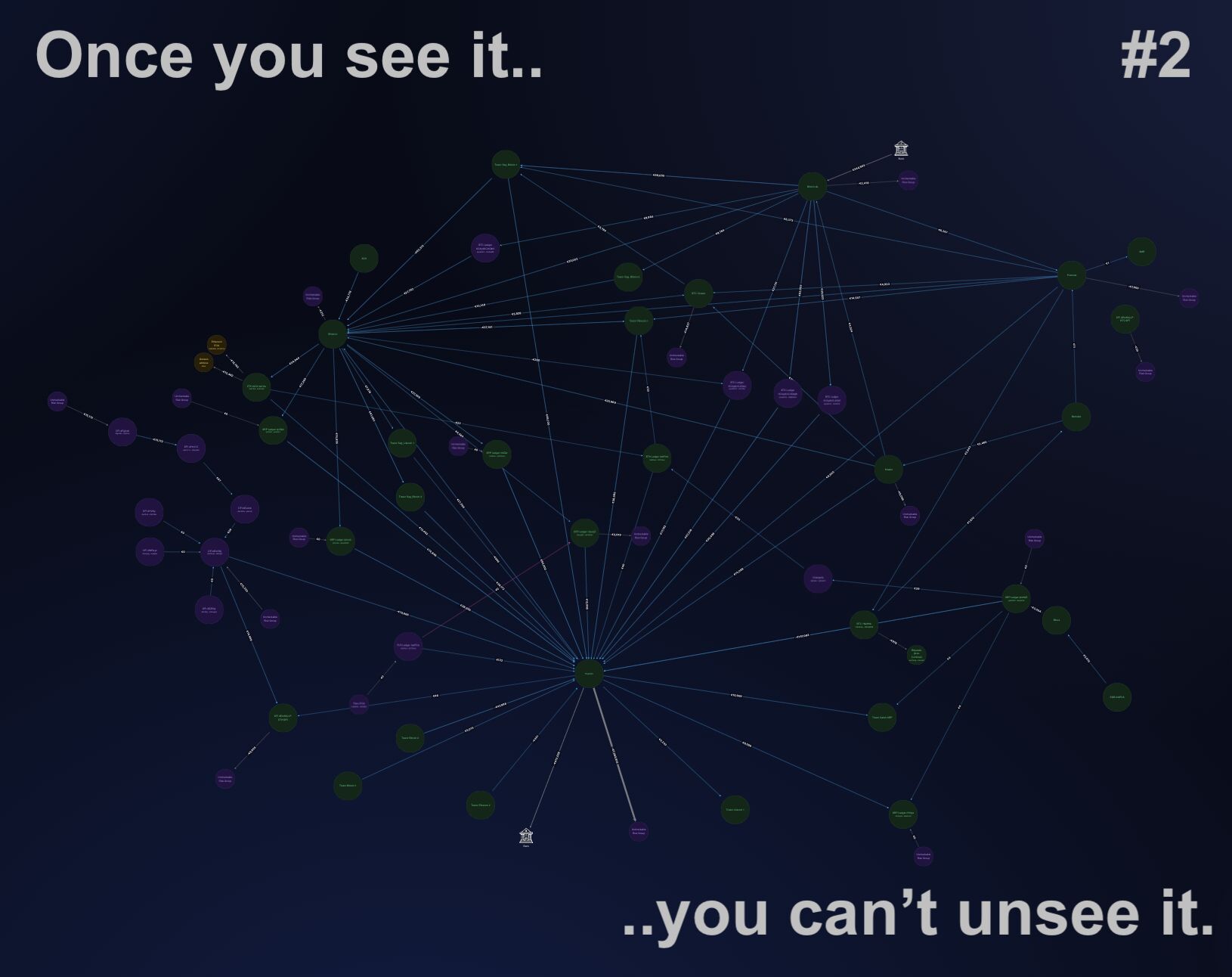
Lukaszewski's central metaphor is that "The bank sees a dot. We see a universe" [4][5]. In a case he describes, an off-ramping client's transaction pattern showed "no alerts" from automated Blockchain Analysis Tools, but shifting focus "from where the money moved to how the wealth was made" revealed that the client had received "a controlling stake in a meme coin (due to last-minute protocol manipulation)" [2]. He frames this discovery process with the recurring line "once you see it, you cannot unsee it" [2][4][5], used to describe both the visual and analytical shift from transaction-level checks to full client-universe reconstruction. In one case with "around 50 blockchain wallets," he notes that banks and exchanges typically only see "2 bank off-ramps" or "4 exchanges" as isolated dots, missing the value-flow picture and gains calculation entirely, which is why he insists "crypto EDD cannot stop at the final transaction, whether at banks or crypto exchanges" [4][5].
On banks' crypto strategy
Lukaszewski argues that offering crypto trading is a dead end for banks because it is "a commodity" [11][13][14]. Drawing on his own background, he recalls sitting in bank pricing committees where "the product was identical everywhere. Price was the only lever" [14], and warns that crypto buy-buttons are heading the same way, since "200 MiCA exchanges, neobanks and fintechs" already offer the same feature [14]. His proposed alternative is that banks compete on "the one product only banks can offer - the mortgage," through "deep, long-term liquidity transformation. Turning short-term retail deposits into 25-year mortgages" [13]. He cites Boerse Stuttgart Digital statistics that "25% of European investors hold crypto" and "35% would switch banks for a better offering" [11] as evidence of the opportunity, and identifies the real obstacle as internal process, not risk appetite: "the blocker is not risk appetite. It's a source-of-wealth workflow that was never designed for on-chain wealth" [11]. He describes the current failure mode as a bank's source-of-wealth process "built for salaries, inheritances and business sales. Not for wealth scattered across 5 exchanges, 3 wallets and a DeFi protocol" [12], leading to "blanket de-risking" that regulators reject, since "the EBA has explicitly stated that refusing entire categories of customers is NOT a compliance strategy" [12].
On compliance accountability
Commenting on the Lombard Odier Group AML judgment, Lukaszewski stresses that consequences of weak EDD "may arrive 15 years later" [7], and draws the lesson that "your EDD decision may be examined 10 or 15 years after you made it," by which point "the relationship manager may be gone. The compliance officer may be gone" and "people will not remember why a decision seemed reasonable" [7]. He highlights that the Swiss Federal Criminal Court found the relationship manager "settled for superficial checks" despite awareness of corruption evidence, and that this was not just an individual failure but that "the bank's compliance organisation failed to ensure that the necessary additional enquiries were actually conducted and documented" [8]. His summary lesson is blunt: "Seeing a red flag is not the same as understanding a case. And performing checks is not the same as reaching a defensible" conclusion [8]. He places this alongside other large enforcement actions, such as the "$125M fine for UBS for AML failures, including customer due diligence issues" [10], as part of a pattern he tracks closely.
From the stage
On The Connector Podcast, Lukaszewski goes further than his written posts on why banks refuse crypto-originated transfers in the first place, tying it explicitly to regulation rather than just internal process design. He explains that banks' reluctance stems from "concerns about source of funds verification, regulatory penalties, and lack of proper processes and technology," and frames the Markets in Crypto-Assets Regulation (MiCA) as the mechanism forcing banks to "assess risks, update procedures, invest in proper technology, and train staff" [16]. This regulatory-compliance framing of MiCA as an operational mandate, rather than just a market backdrop, is not spelled out in the LinkedIn posts, which focus more on case narratives and product strategy.
Takeaways
- Do not treat a clean blockchain-analytics alert as proof of legitimate wealth; check how the wealth was created, not just how it moved [2].
- When investigating crypto Source of Wealth, look for the full client universe (all wallets, exchanges, off-ramps) rather than the single transaction a bank or exchange initially sees [4][5].
- Banks should stop competing on crypto trading, since it has become a commodity matched by "200 MiCA exchanges, neobanks and fintechs" [14], and instead build source-of-wealth workflows that support crypto-backed mortgages [11][12][13].
- Blanket de-risking of crypto clients is not a viable compliance strategy per the EBA; individual risk assessment is expected [12].
- EDD decisions can be scrutinized a decade or more later, so decisions and reasoning need to be defensible and documented at the time, not just superficially checked [7][8].
- MiCA is pushing banks to overhaul risk assessment, procedures, technology, and staff training around crypto transfers, according to Lukaszewski's podcast remarks [16].
Media & appearances
- The Connector. PodcastYouTubeThe Connector Podcast - Demystifying Crypto Compliance: Lukasz on Revolutionizing Bank-Crypto Tra...Lukasz Lukaszewski discusses how ChainComply addresses the problem of banks refusing to accept transfers from crypto exchanges by providing compliance solutions that make crypto wealth transferable to bank accounts. He explains that banks' reluctance stems from concerns about source of funds verification, regulatory penalties, and lack of proper processes and technology, which the Markets in Crypto-Assets Regulation (MiCA) aims to address by requiring banks to assess risks, update procedures, invest in proper technology, and train staff.
In the news
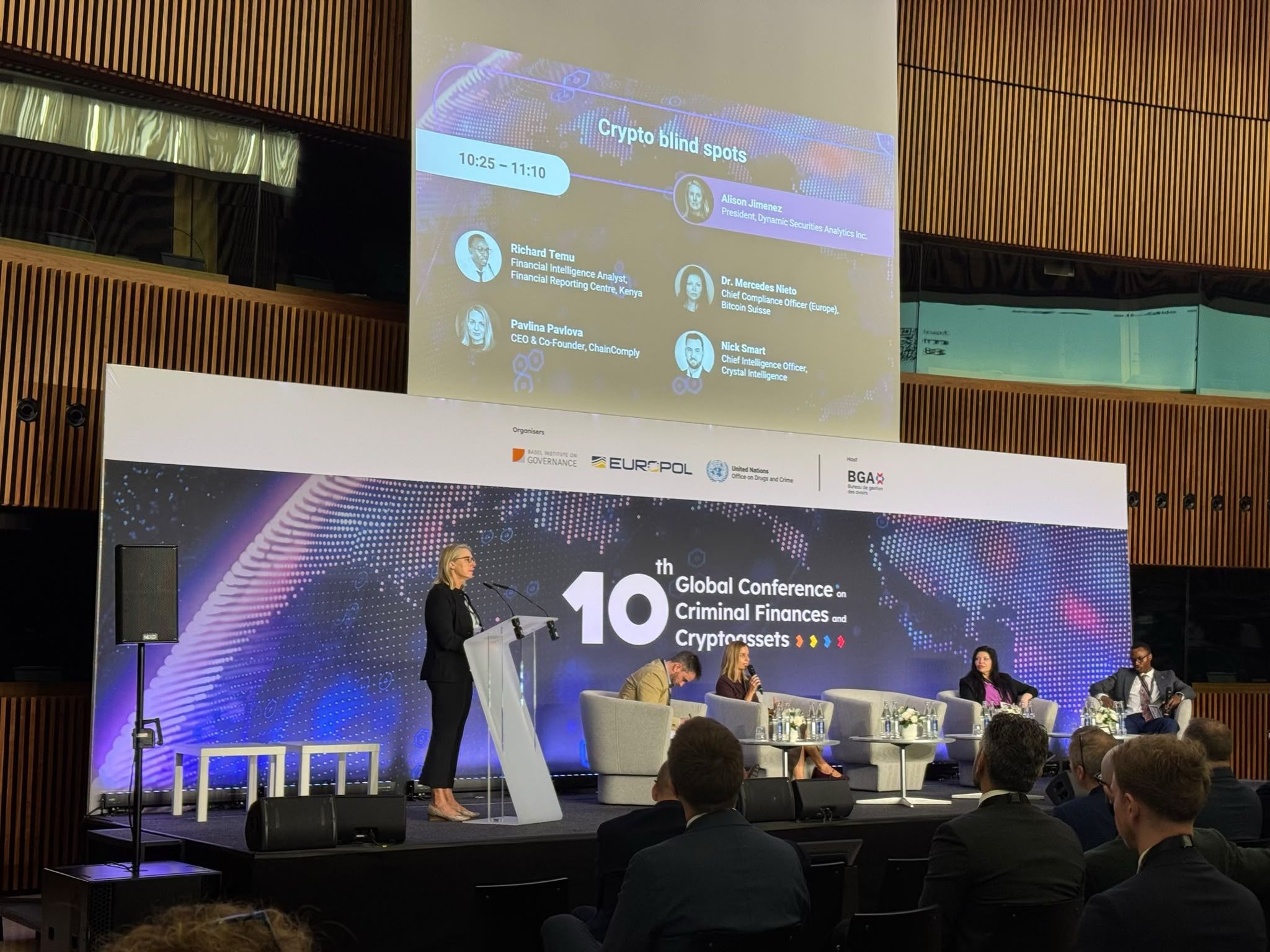
- Our CEO Pavlina Pavlova staring the prime time panel at the Europol / UNODC event!
- 76,000 worth of BTC arrived to your customer from an unknown wallet. What next? 🛑 CryptoSwift and ChainComply are hosting a webinar on 6 October to explore the end-to-end compliance process, from Travel Rule to EDD to Source of Wealth compliance. Uve Poom will look at a new way to detect custodial/self-hosted wallet types (Know Your Wallet), walk through the required Travel Rule operations, and discuss the value of whitelisting user wallets. We'll cover the common part: triggering the Enhanced DD process. I will then discuss

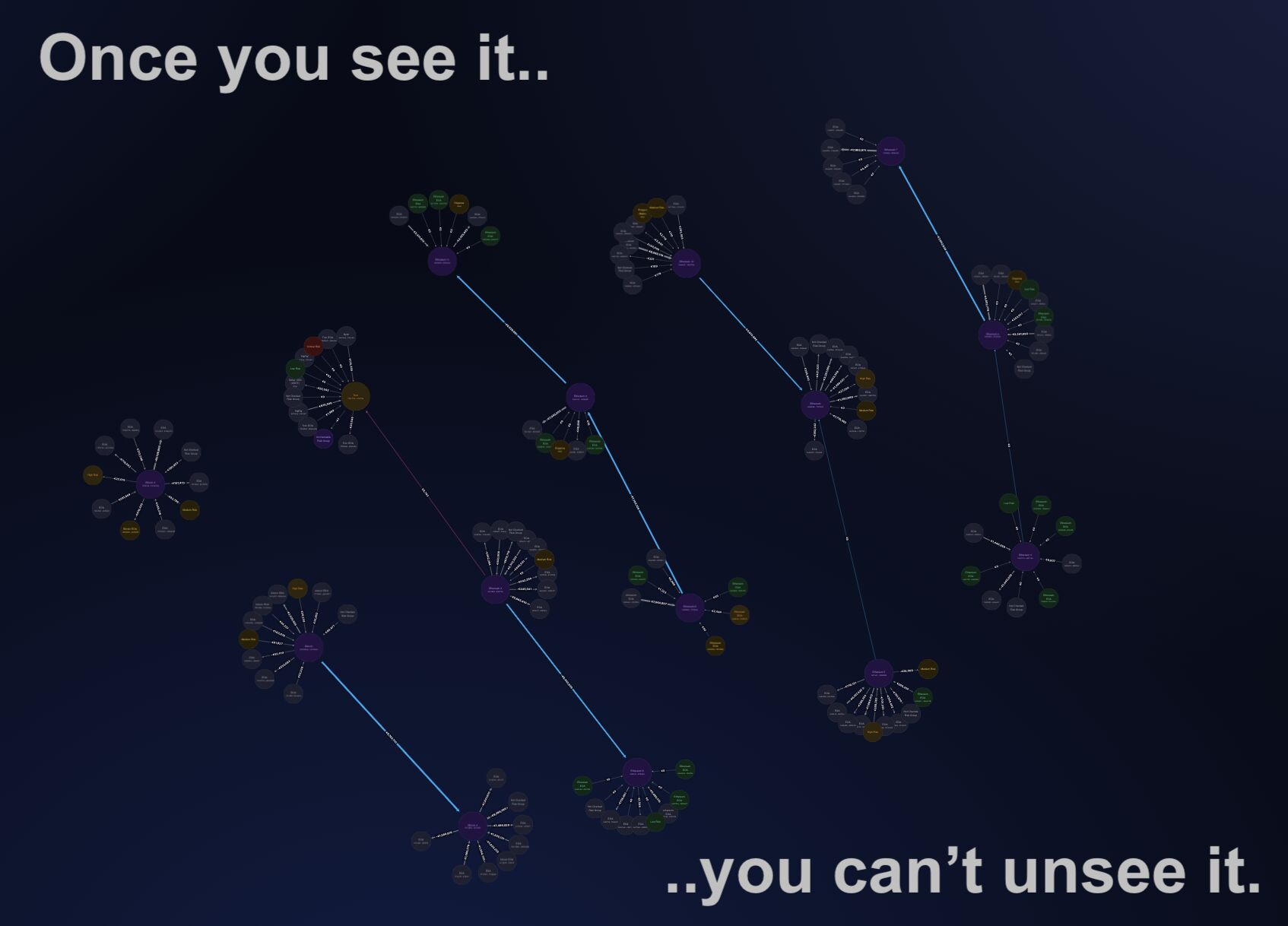
- Once you see it, you can’t unsee it #5 Sometimes, a crypto case looks like five separate stories, as in the picture below - taken from a real case. Address 1 → Address 2 → Address 3 Even if you account for the probability of bridges, the story still does not connect. And for a compliance officer, a story that doesn't connect is a story that doesn't make sense. This is the beauty of crypto EDD - the client is not just the subject of the review; the client is the key to solving it. In our experience: in ~75% of cases, what connects
- 150+ registrations already - and we’re aiming for 200. 🚀 This Thursday, we’ll discuss a question more banks and crypto exchanges need to confront: Where does on-chain analytics stop being enough? We’ll look at the blind spots that appear when compliance teams rely on blockchain analytics without understanding the client’s full Source of Wealth story. Join us - and help us get to 200 registrations! ‼️
- Once you see it, you can’t unsee it - a story with a smoking gun. People sometimes imagine that the most interesting blockchain work is all about chasing darknet flows, hacks, or sanctioned wallets. But sometimes the real smoking gun can still be found somewhere else: after the crime, during the Enhanced DD of an off-ramping client, by looking at the way the wealth was created. In one case, a client wanted to off-ramp proceeds from a meme coin through a financial institution. At first glance, the money movements alone did not look
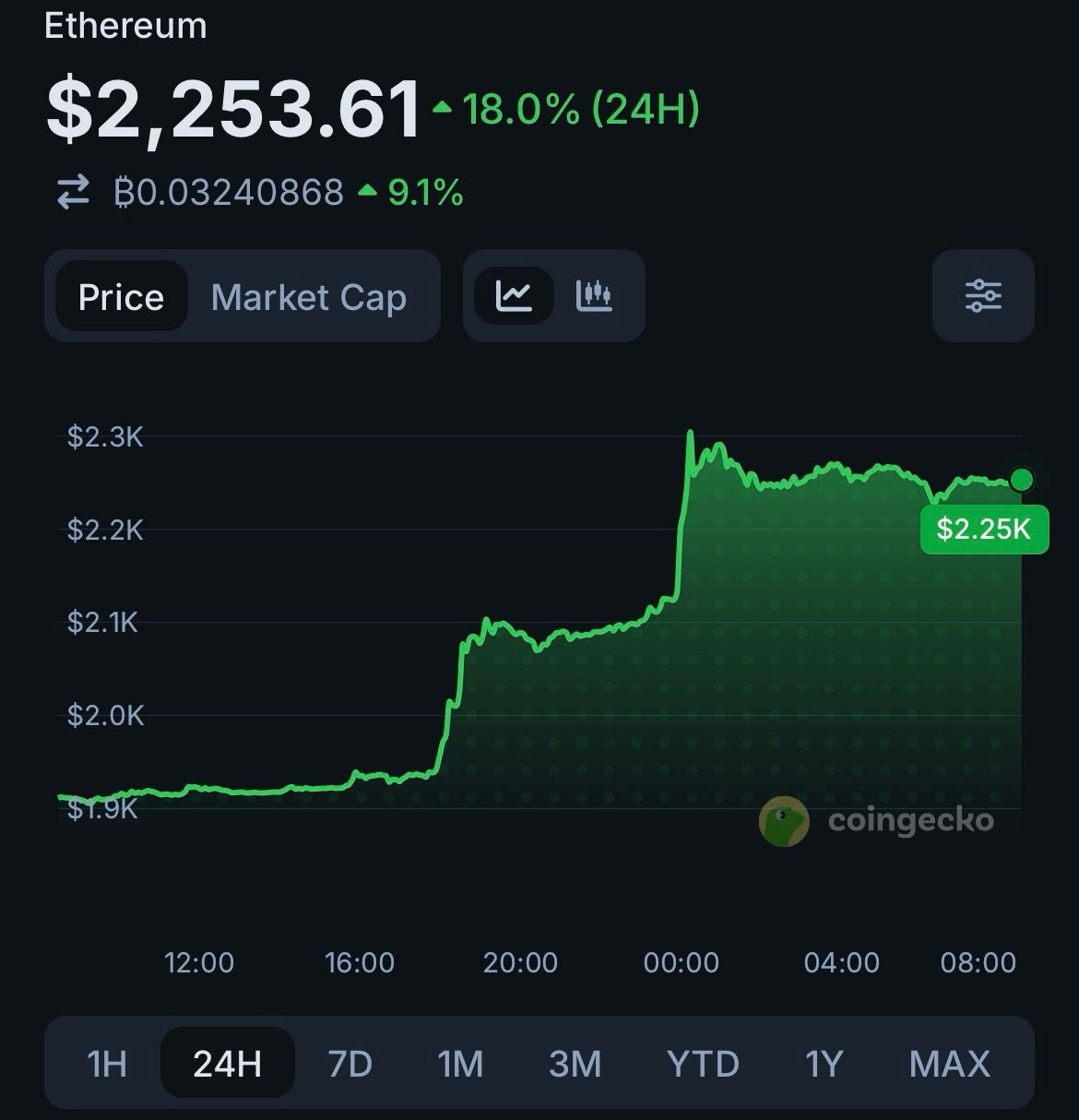
- Happy ☀️ Thursday to all fellow Ethereum lovers. Not sure why anyone would be shorting ETH at $1.9K, but the liquidations work mercilessly both ways, following US Treasury announcements. There are three habits that can bring any man down: alcohol, chasing women, and LEVERAGE! Which explains why ladies have better credit scores… but that’s a different story, from my past live as a lender. Let’s enjoy the view (while it lasts) - I think we all needed that to boost morale a bit.
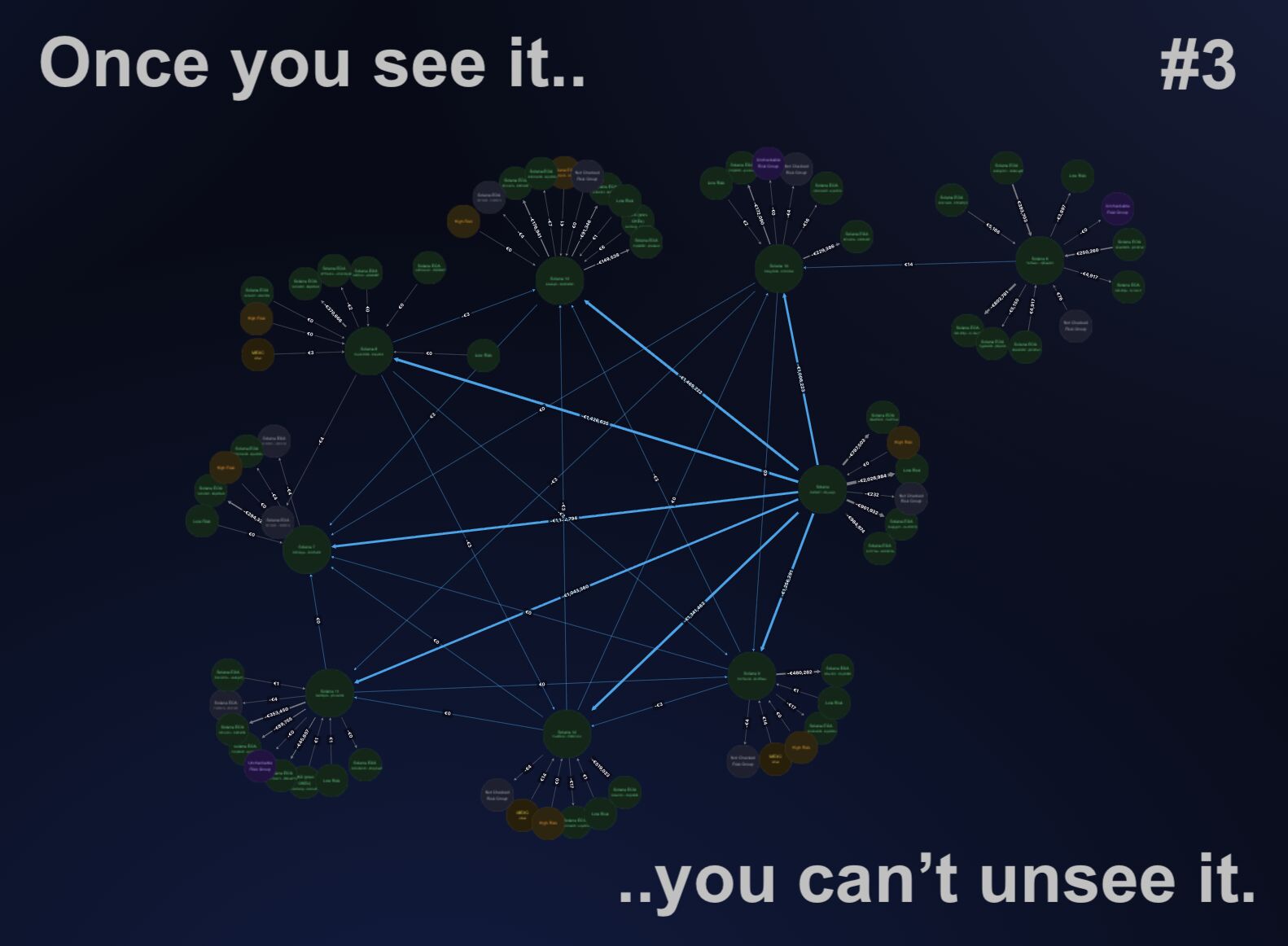
- The bank sees a dot. We see a universe. This is one of my favourite ways to explain crypto Source of Wealth, and "once you see it, you cannot unsee it." In this case, there are around 50 blockchain wallets. And 2 things blockchain analysis tools won't show you: 1️⃣ 2 bank off-ramps Do you see the 2 white dots? That is the story the bank sees. Or sometimes even just one dot. The rest of the client universe is what the bank does not see when it accepts a crypto transfer. 2️⃣ 4 exchanges Do you see the 4 concentration points of the
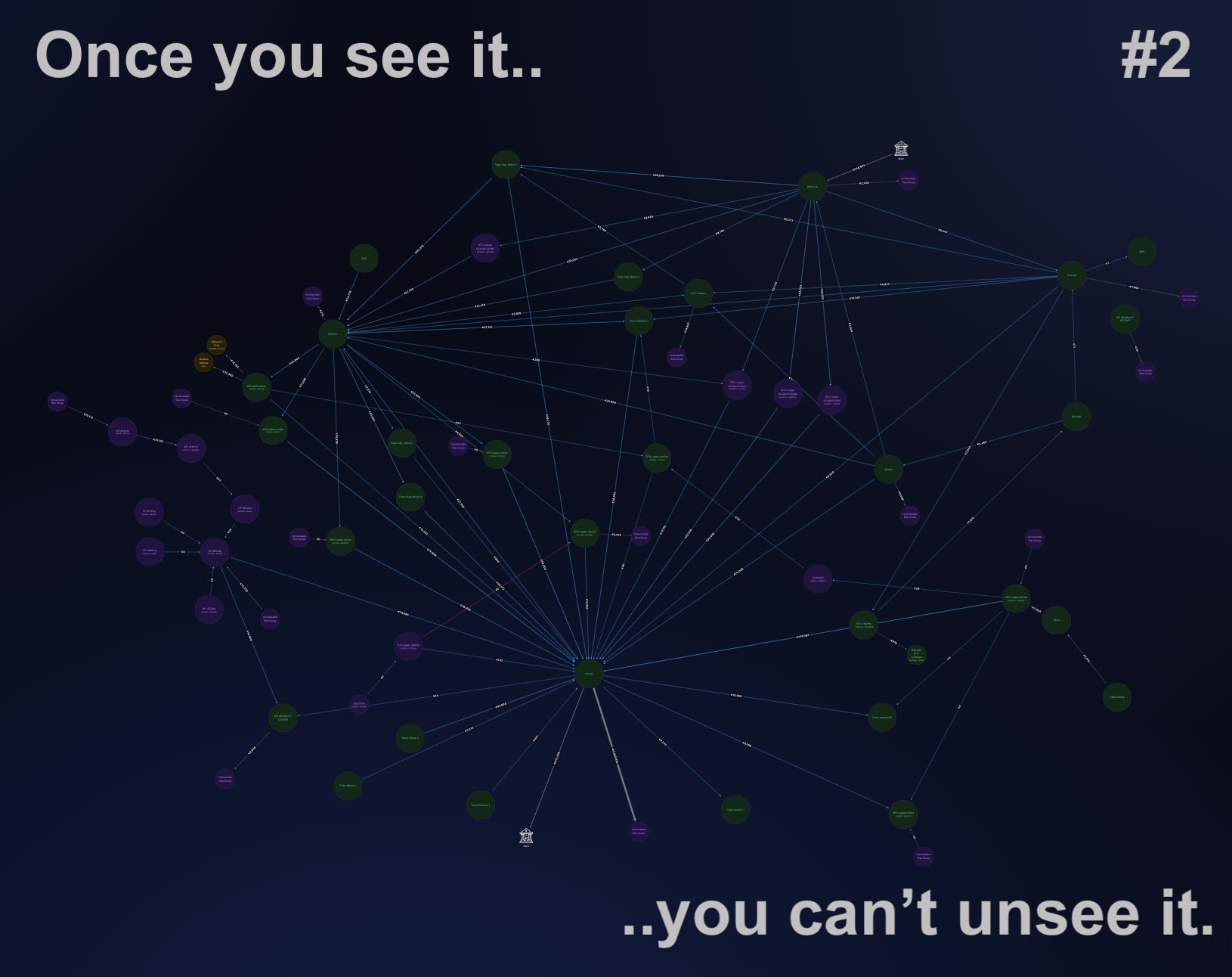
- The bank sees a dot. We see a universe. This is one of my favourite ways to explain crypto Source of Wealth, and "once you see it, you cannot unsee it." In this case, there are around 50 blockchain wallets. And 2 things blockchain analysis tools won't show you: 1️⃣ 2 bank off-ramps Do you see the 2 white dots? That is the story the bank sees. Or sometimes even just one dot. The rest of the client universe is what the bank does not see when it accepts a crypto transfer. 2️⃣ 4 exchanges Do you see the 4 concentration points of the

Related profiles
This page shows public professional information only, each fact cited. Is this you? send a correction, or ask for removal within 24 hours, no questions asked.