
Talks about
Career history

Insights & ideas
The through-line
Everything Michael Humblet says circles one claim: the bottleneck in B2B is not attention, information or effort, it is belief. "Marketing deals in attention. Sales deals in trust" [6], and the mistake he sees everywhere is teams trying to solve a trust problem with a marketing solution, pushing more cold emails, automated DMs and AI-generated comments while optimising for speed and volume. "But speed is not belief" [6]. He calls the current moment a credibility disruption, with 75% of buyers saying they never want to talk to a salesperson, which tells him the scarcity is not content, it is credibility, and that most teams are fighting over the 2% of the market ready to buy now while ignoring the 98% that still needs educating [6]. His prescription is to reverse the funnel: earn trust before the first conversation, then sell.
The second, quieter through-line is that this is a process problem, not a talent problem. He is blunt that empty pipelines come from ad hoc process, not from being bad at sales, and he says it from experience: eighteen years in sales, titles collected like trophies, and then one day nothing, no predictability, only panic when the diary emptied [2]. He thought more calling was the answer and it solved nothing. The process had to be rebuilt [2]. From that follows almost every practical thing he teaches, and the boundary he draws around his own role: "Ik ga u leren hoe te vissen, maar ik ga niet vissen voor u" [8].
On the credibility disruption
Credibility is the currency of the next two years, and the question he keeps getting is how you acquire it, especially as a startup with no track record [5]. Part of the answer is nerve. He is scathing about the Flemish reflex of being "zo belachelijk braaf" about use cases and logos, where everyone says they first have to ask permission, two months pass and all momentum is gone [5]. He points out that most keynote speakers filling books with examples did not do those things themselves and are not working with those companies, and they use them anyway [5]. The essence is getting trust and credibility, and the shortcut exists.
The other part of the answer is being visibly, personally human. Credibility comes from a person, not a logo, "a moving, talking, sometimes stumbling human being" [3]. Company pages do not have faces, trust does [3]. This is also why he distrusts polish: things that are too perfect are not believed, which is why game designers add dirt and chaos to make worlds feel real, and why slick AI-written copy is recognisable on sight [8]. He still writes his own posts for exactly that reason [8].
On why classic sales training stopped working
The standard objection he hears is that the sales team already knows its trade, that they have had all the classic trainings, SPIN, Solution Selling and the rest [7]. His reply is to ask why, then, they struggle so much to get through to prospects, and why the sales cycle keeps getting longer. The answer is simple: the world changed, the sales trainings stayed the same. He recently saw the same training he was given 25 years ago [7]. What people are asking for now is a completely different approach, done with classic closing techniques and standard patter, and inspiration and strategic insight into how the sales process itself is built [7]. The live questions are no longer which information to share in order to convince, but how you get attention, how you build thought leadership at scale, and how you use AI for signal-based prospecting [7].
The rebuild he teaches follows that shift. His two-day deep dive splits into smart prospecting on day one, sharpening the ideal customer, qualifying leads with AI, and mail and LinkedIn templates that work, and authority and demand creation on day two, becoming visible [2]. For a company genuinely in trouble, he goes back to basics with a daily quota: add 10 LinkedIn connections, send 5 cold emails, make 2 to 3 warm calls, every day. "Als je dat 20 dagen volhoudt, ge wint. Maar de mensen vergeten dat" [8]. And a scheduling detail he insists on: Friday afternoon is the best time to call and email, because everyone you reach has time and is relaxed [8].
On AI: velocity is not demand
He hears endless sales teams talking about AI and very few actually deploying it, and he blames strategy-by-slogan: the firm decides it must "do something with AI", so it buys a co-pilot [1]. When he asks from the stage what they actually do with it, there is a long silence until someone shouts "meetings samenvatten", which draws a very large sigh [1]. His own contribution is deliberately not a technical show and not jargon about models and prompts, but what already works today for entrepreneurs who simply apply it, and a stack of practical examples of how AI accelerates sales and marketing rather than replacing it [1].
The warning underneath is that AI applied to a trust problem makes it worse. "AI gives you velocity, but bad AI does not create demand. It creates distance" [6]. Where he does see it working is in qualification and signal-based prospecting [2][7]. Where he thinks it will not soon take over is content creation, because it is trained on existing material and because the human guidance on set, "kom, adem uit, het komt in orde", cannot yet be replaced, though he expects editors and designers to be hit first [8].
On content as the trust engine
Content is how you buy credibility before the conversation, and his rule for it is unromantic: "Consistentie is de sleutel... die consistentie is belangrijker dan de perfectie van de post" [8]. He blocks every Tuesday morning at the breakfast table for one LinkedIn post a week, and it is that predictable rhythm, not the quality of any single post, that builds trust [8]. "Gewoon probeer het. Er kan niks mislopen. Te perfect moet het niet zijn" [8]. He also tells people to ignore the engagement counter: dark traffic, the silent audience that sees your posts and never likes or comments, is vastly larger than visible engagement and can be exploited sales-wise, so low metrics are no reason for frustration [8]. Expect roughly 8 weeks to 3 or 4 months of consistent posting before trust exists and you can flip to proactive selling and closing techniques [8].
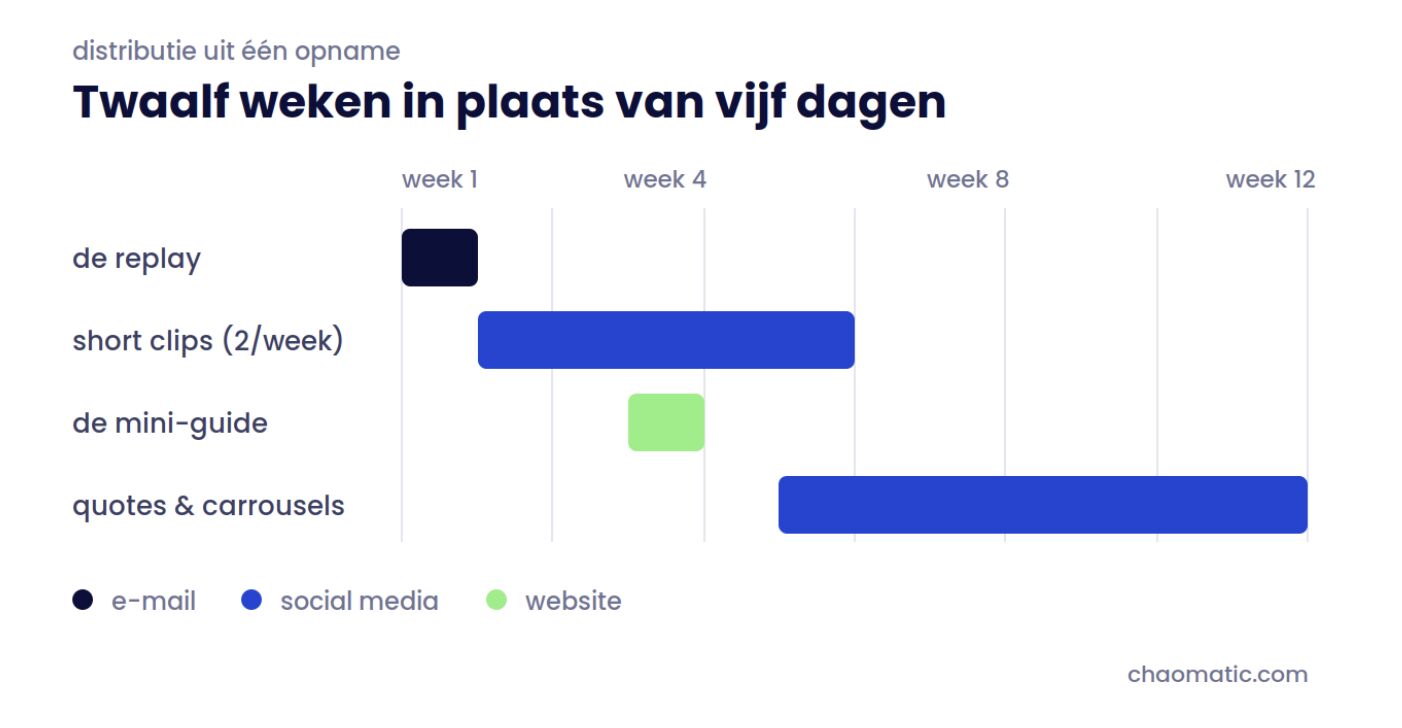
At scale, he industrialises it. One production day, split into four blocks of an hour and a half, four people, four decors, yields 20 to 25 expert videos, which are then repurposed into reels, photos, quotes and carousels, producing a full year of weekly content [8]. On channel choice he is firm that "YouTube does not work for your B2B company" is simply wrong, and that the objection is the wrong question [3]. Three reasons: every AI agent your prospects use is trained on public data and YouTube is one of the biggest public archives of credible, timestamped, human content on earth, so if you are not on it the machines recommending vendors to your next customer have nothing to work with; credibility comes from a person, not a logo; and attention is wired to movement, pure biology, the same reason you cannot look away from TikTok [3]. YouTube also keeps growing at an incredible pace [3]. He rates one format above all others for sellers: "Uw podcast, by the way, is de beste sales tool ooit in de wereld als je iets wilt verkopen" [8].
On conversation, curiosity and not selling on social
His model for opening a conversation is his daughter, who talks to everyone, everywhere, and once chatted with fifty people on a walk in Leuven, a city where, as he notes, people do not talk to each other [4]. Her method is spontaneous open questions full of curiosity: "Mooie dag vandaag, he." "Wat een mooie jas heb jij." "Ik ben xxxx, en jij?" Irresistible, disarming, and everybody responds [4]. The objection that business is different he rejects outright. He caught himself adopting the style, asking curious questions, and people kept talking, especially about their passion, which for entrepreneurs happens to be their business [4]. Curiosity is the key to good sales [4].
The corollary is that social channels are not for selling. "Ge kunt toch niks verkopen op socials. Het enigste dat je wilt is een gesprek aanknopen" [8]. So never open with "Ik ben de X van firma Y", because only salespeople talk that way, and deliberately do anti-sales things such as waiting two or three days after connecting before you message [8]. Rejection is priced in from the start: "No is part of the deal" [8].
On design and visual storytelling as sales
Design is sales, not decoration. If something looks right, the prospect has unconsciously already bought before you say a word, which is why Microsoft sells cloud licences with box icons: people trust boxes [8]. The same logic drives the advice he would give his younger self, to learn to touch-type blind and to learn visual storytelling, because you convince ten times more easily with an image, and sketching a client's business model on paper wins deals [8].
On building a business that is not you
Two structural lessons run against instinct. The first is that a consultant can only scale by hiring people who do things he cannot do, camera and design, rather than cloning himself [8]. The second is that merging your personal brand with your company brand becomes a curse: everyone assumed Chaomatic was Michael's sales training business, so he is now deliberately pulling the two brands apart and having his team build their own personal brands [8]. Size is a choice too. He caps Chaomatic at 12 to 15 people on purpose, because beyond that processes and rules multiply every time one person messes up, which kills the boutique quality and the fun [8]. Alongside that he wants to remain unavoidable in his own domain: "Als het over sales gaat wil ik lichtjes in de weg staan, dat je niet rond de Michael kunt" [8].
On forcing yourself to execute
His method for getting things done is to make retreat impossible by committing publicly to dates before anything exists, announcing a book with only a title and a cover, or selling event tickets with no agenda yet [8]. The same acceptance of discomfort applies on stage: he still gets stress before every keynote after decades, and needs it, reframing pre-stage nerves as adrenaline that helps him perform, a trick he took from speaker Marnick Vandenbroeck [8].
Takeaways
- Treat credibility, not content, as the scarce resource: "AI gives you velocity, but bad AI does not create demand. It creates distance" [6].
- Reverse the funnel and build trust before the first conversation, since 75% of buyers say they never want to talk to a salesperson and chasing the ready-to-buy 2% ignores the 98% that still needs convincing [6].
- If the pipeline is empty, run the basics daily: 10 new LinkedIn connections, 5 cold emails, 2 to 3 warm calls, and hold it for 20 days [8]. Call and email on Friday afternoon, when people have time and are relaxed [8].
- Post on a fixed weekly rhythm rather than waiting for the perfect post, and ignore low engagement, because dark traffic is far larger than visible likes and comments [8].
- Expect 8 weeks to 3 to 4 months of consistent content before trust is high enough to switch to proactive selling and closing [8].
- Put a face on video, including YouTube: AI agents recommending vendors are trained on public data, and "Credibility comes from a person, not a logo" [3].
- Compress video production into one day of four 90-minute blocks with four people and four decors to get 20 to 25 expert videos, then repurpose into a year of weekly content [8].
- Open with curiosity rather than a pitch, never with "Ik ben de X van firma Y", because on social the only goal is to start a conversation [8][4].
- Use real customer examples and logos instead of waiting months for permission and losing all momentum [5].
- Force execution by announcing dates, books or tickets before the thing exists, so retreat is impossible [8].
- Keep the personal brand and the company brand separate, hire for skills you lack rather than cloning yourself, and cap headcount if you want to keep boutique quality [8].
In the news
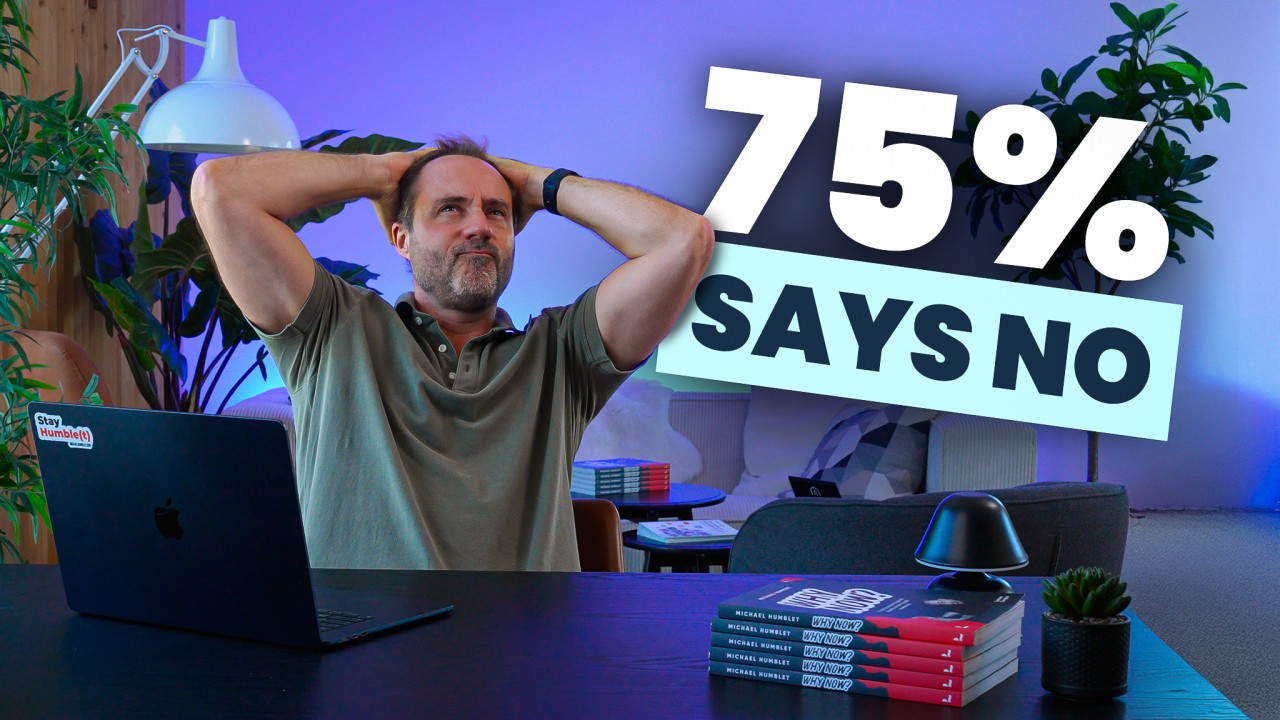
- 75% of B2B buyers never want to talk to a salesperson. That's not a sales problem. It's a trust problem, and it starts long before the sales conversation. We sales are to blame for this because we keep making these 3 mistakes: 1) Cold emails that are way too long and entirely about the seller. 2) The LinkedIn connect-and-pitch. A connection request has one job: getting the connection. Nothing else. 3) AI-written cold outreach. 99% of it still fails, because it was trained on bad examples. Cold email still works. Only when it's
- Een goeie vriend vertelde me laatst dat ze bijna 3 miljoen euro draaien met zes webinars per jaar. Zonder ads, geen beurzen, geen koude prospectie lijsten. Zes keer 45 min online gaan en hun expertise delen (zelfs geen sales pitch). Webinars zijn een compleet onderschatte bron van lead generatie. En nog straffer: van constante credibiliteit online. Het ding is dat iedereen zijn focus legt op hoeveel aanwezigen er zijn in deze stijl: 'dertig inschrijvingen en negen dagen er op'. Iedereen staart vervolgens naar die negen. "Ja maar
- Ik ben niet fan van 'objection handling'. Heel dat idee dat je prospect op het einde iets zegt en dat jij de juiste zin moet klaar hebben om hem toch nog over de streep te trekken. Je prospect zegt: “Het is te duur.” => oké, ik moet uitleggen waarom de ROI zo goed is. Je prospect zegt: “We moeten er nog eens over nadenken.”=> ik moet vragen wanneer we opnieuw kunnen bellen. Je prospect zegt: “We werken al met iemand.” => En sales begint uit te leggen waarom zij beter zijn dan de concurrent. Maar heel vaak zit het probleem niet in

- Onze LinkedIn werkt gewoon niet." vertelde een ceo me vorige week. Ik vroeg maar wie post dan en waar? "Marketing. Vanaf de bedrijfspagina." Ah. Dat en laat me raden, je reshared? En dan niks...4 likes en geen bereik. Misschien moet je eens iets anders proberen. Twee weken later postte diezelfde CEO zelf iets. Ongepolijst, eigen gezicht, geen goedkeuringsronde. Duizenden impressies. En drie reacties van mensen die zijn sales team nog nooit aan de lijn had gehad. Posts van CEO's halen tot 8x meer engagement dan posts
- De kost van graag gezien willen worden... Ik zie heel veel verkopers deals verliezen omdat ze te graag een goed gesprek willen hebben. Niet per se omdat ze niet weten wat ze doen maar omdat ze vermijden om het gesprek een beetje ongemakkelijk te maken. Je prospect zegt:" Wat moeten hier intern nog eens naar kijken." En wat je zou moeten vragen dan is: “Is dit nu echt een prioriteit of vinden jullie het gewoon interessant?” Nog zo eentje, je prospect zegt:"stuur die informatie maar door." En wat je dan zou moeten vragen is:"Wat ga je

- De meeste sales trainingen leren je een truc(jes). Wij hebben er 3x 1/2 dagen voor nodig, en dat is niet toevallig. Jorik en ik doen een deep dive in onze 3-daagse over B2B prospecteren tot en met closing (en zowat alles ertussen...hoe werkt vertrouwen, cold calling watte, sales pitching, pricing optimalisatie en closing. Als je eens een voorproefje wil, kom dan eerst volgende week naar de webinar en dan weet je onmiddellijk of het iets voor je is.
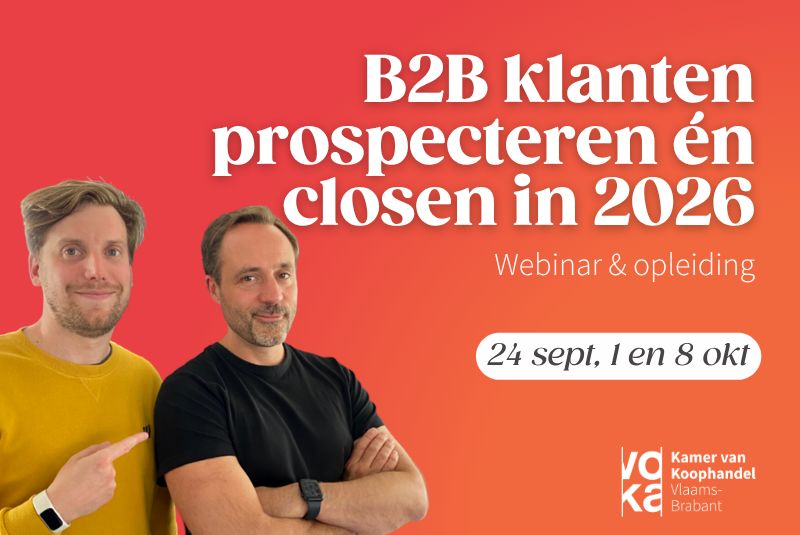
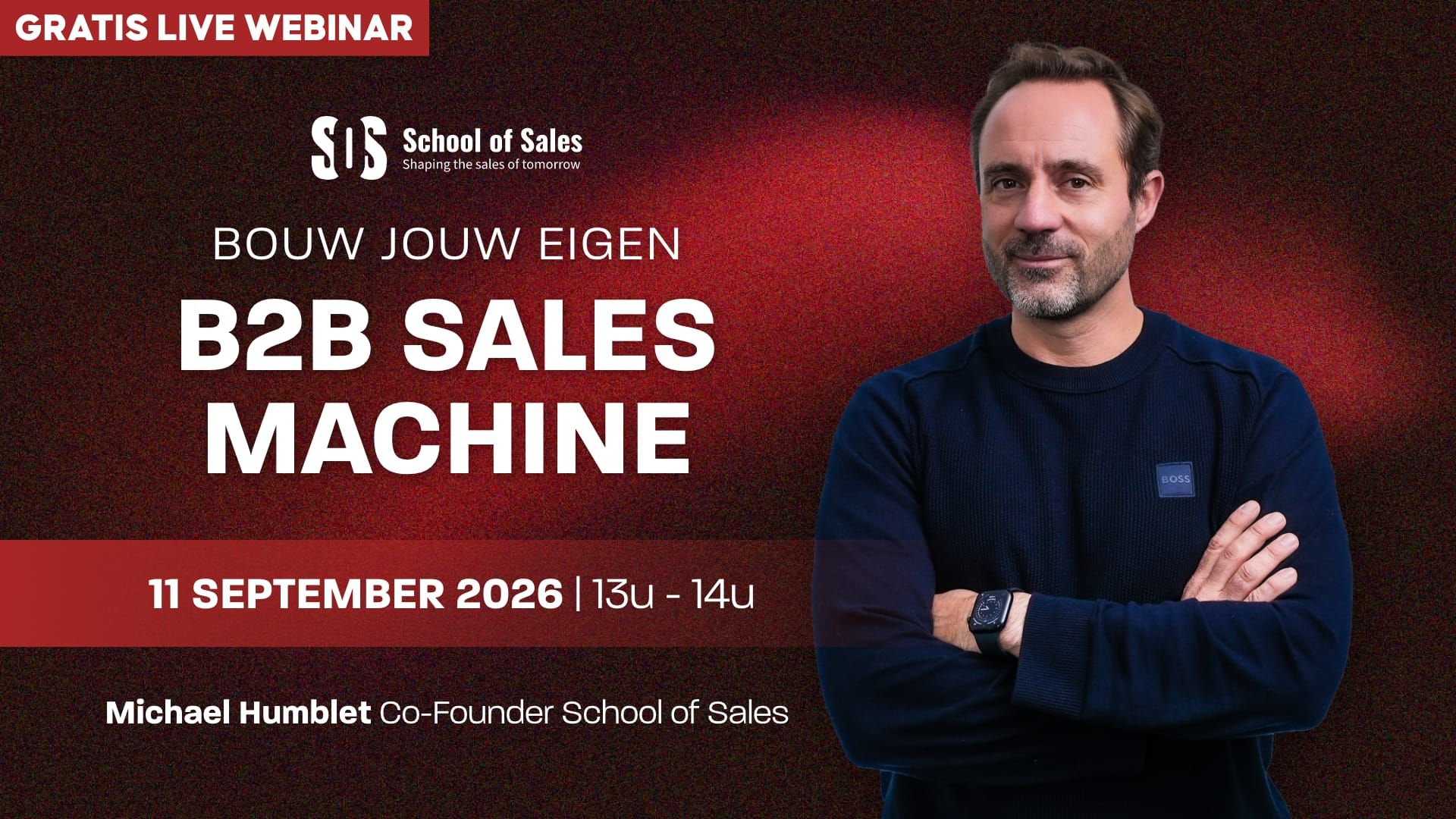
- Het zal gaan tijd worden, al die video's en uitleg...nu het volledige framework in een webinar. De laatste maanden zijn Jorik Van den Bosch en ik heel druk bezig geweest met het bouwen van B2B sales machines (vroeger deed ik veel uitleg, tegenwoordig is het uitleg en ook bouwen..ja ja walk the talk enzo). Gewoon komen luisteren hoe je dit kan bouwen (en vooral wat er niet werkt). Ik zal het algoritme hier nog eens testen, de link in de comments.
- Laatste kans om jouw Early Bird ticket voor am𝗮𝗶! te strikken. 🐦 Op 01.10 staan er vier sprekers op het podium in De Montil: Rik Vera, Michael Humblet, Jeroen De Wit en Jens De Roeck. Elk met een eigen kijk op wat AI vandaag doet in een bedrijf zoals het jouwe. Early bird nog tot en met zondag 31.08. Tickets via de link in comments. #amai #conversal #AI

This page shows public professional information only, each fact cited. Is this you? send a correction, or ask for removal within 24 hours, no questions asked.