
Overview
Hidden Data Lab has been registered since 18 April 2022 and its site carries a copyright line running from 2022. In April 2024 the site presented a set of big data projects on separate sub-domains: trends.hiddendatalab.com for reports analysing trends, monetize.hiddendatalab.com for turning trends and events into commercial opportunities, and education.hiddendatalab.com as a learning hub. By March 2025 the company described itself as a Belgian company building products from raw big data, and pointed to trend detection software that identifies trends by analysing writing patterns, emotions and context. The same year it published a series of PDF eBooks in English and Dutch on practical ChatGPT use cases for customer service, marketing, HR and sales.
Mohamed Boulahfati is the founder of Hidden Data Lab, a research company based in Antwerp that develops and uses AI-powered research systems to turn complex information into insight about what is changing now and what could matter later. At the centre of the business is @trends, a system that researches new trend signals, emerging trends and structural developments across technology, the economy, business, consumer behaviour, innovation and regulation, combining AI with a continuously updated database that connects individual signals. A client names a topic, market or industry and a geographic focus and receives a trend report setting out the developments found, the underlying signals, the analysis and the sources. Separately, the company produces commercial insights, which trace which companies are already commercially active around an emerging development, what customers are paying for, how revenue is generated and how strong the evidence is. Hidden Data Lab also develops AI systems for investment research and fact-checking, and publishes guides and worked trend examples in domains such as security and defence, energy and utilities, agriculture and food systems, and supply chain and logistics. The business is registered in Belgium under enterprise number 0812.339.762, a natural-person registration in the name Boulahfati, Mohamed, active since 18 April 2022, with VAT activities covering data processing and hosting and other information service activities. It lists Antwerp, Flanders as its base, a size of two to ten people, and publishes in English and Dutch.
Career history

Insights & ideas
The through-line
Across sectors as different as furniture manufacturing, drones, quantum hardware, satellite broadband and AI-driven software pricing, Mohamed Boulahfati keeps returning to the same question: has a technology moved from being a discrete capability into something embedded in the systems around it. He treats the headline technology itself as less informative than what surrounds it. In quantum computing this means "watch where quantum hardware is being put, built and tested" [12]; in advanced ceramics it means noticing that "manufacturing discipline matters as much as material performance" [7]; in AI vision it means tracking whether "the inspection result can move directly into the rest of the factory workflow" [8]. This preoccupation holds steady across his output rather than shifting over time, appearing in reports on furniture production [1][2], drones [3][4][5], and infrastructure-heavy fields like quantum and space [12][14][15] alike.
A second, closely related interest is in the commercial mechanics that make new technology durable: how it gets billed, who pays, and whether usage translates into recurring revenue. This runs through his posts on AI agent billing [10], food R&D software [9], and creator income [11].
On supporting infrastructure
Boulahfati's clearest statement of method is his instruction to "follow the supporting infrastructure around the quantum device itself. Manufacturing capacity, packaging, optical control, cloud access, timing resilience and integration into existing systems increasingly indicate how individual technologies are being prepared for practical use" [12]. He applies the same lens to ceramics, arguing that "advanced ceramics are reaching the point where manufacturing discipline matters as much as material performance," pointing to "process control, qualification, throughput, post-processing and supply capacity" as the real technical challenge [7]. In drones he frames the shift as one "from remotely piloted aircraft used for discrete tasks into increasingly autonomous components of industrial, logistical, governmental and military systems" [3], and in propulsion he highlights how a new approach is validated only "against the drag and atmospheric conditions it was actually designed to handle" [14].
On usage-based monetization
He is attentive to how new technology gets priced against the work it actually performs. On Trimble's AI agent product he notes "the billing unit here is getting closer to work performed," since the subscription includes fixed hours of agent time with charges for overage while "keeping user seats unlimited" [10]. On food R&D software he observes that "the economic case here is tied directly to how expensive food R&D can be," since "software that reduces those iterations can therefore create measurable value before a new product even reaches the market" [9]. He extends this to creators, describing income as "becoming more layered around the same audience," with "several commercial relationships with different payers and different revenue mechanics" [11].
On AI as analytical infrastructure
Boulahfati is explicit that he sees AI's role in strategic work as supportive rather than decisive. He writes that "strategic foresight is moving closer to the decisions it is meant to inform" and that "AI fits into this picture as analytical infrastructure. It can expand scanning, organise large amounts of information and support early analysis, while people retain responsibility for framing the search, interpreting signals, prioritising what deserves attention and deciding what follows" [13]. He cites Fraunhofer ISI's "combination of AI-based scanning, expert analysis and de-biasing" as "a good example of that architecture" [13].
On production data as intelligence
In manufacturing contexts he treats sensing and inspection as valuable mainly when the resulting data feeds back into the wider system. "AI vision is becoming more useful when the inspection result can move directly into the rest of the factory workflow," he writes, noting that "a detected defect can become part of the inspection history, traceability and product record instead of remaining inside a separate vision system" [8]. He concludes that "the camera is increasingly becoming a source of structured production intelligence" that other manufacturing functions can draw on [8].
Takeaways
- When assessing quantum computing progress, track manufacturing capacity, packaging, cloud access and timing resilience rather than the device alone [12].
- In advanced ceramics, process control, qualification and supply capacity are now as decisive as material performance itself [7].
- Usage-based software pricing, like Trimble's model of bundled agent hours plus overage charges, ties revenue directly to work performed rather than seats [10].
- AI's most durable role in strategic foresight is as analytical infrastructure that expands scanning and organizes information, while humans keep responsibility for interpretation and decisions [13].
- Manufacturers should evaluate AI vision systems by whether inspection results integrate into traceability and MES/QMS records, not just detection accuracy [8].
- Creator monetization is increasingly multi-layered, combining brand deals, subscriptions, product sales and paid experiences around one audience [11].
In the news
- Trend signals in healthcare innovation and medtech (Belgium) 1. Four Belgian breast clinics are evaluating AI that predicts treatment-relevant characteristics of breast cancer (AZ Delta, az Groeninge, AZORG, ZAS, KU Leuven). 2. H.U.B becomes the first Belgian hospital to adopt dedicated technology for biportal endoscopic spine surgery (Brussels University Hospital H.U.B, Erasmus Hospital). 3. Grand Hôpital de Charleroi becomes the first Belgian centre to start enrolling patients in the international LEAVE NOTHING

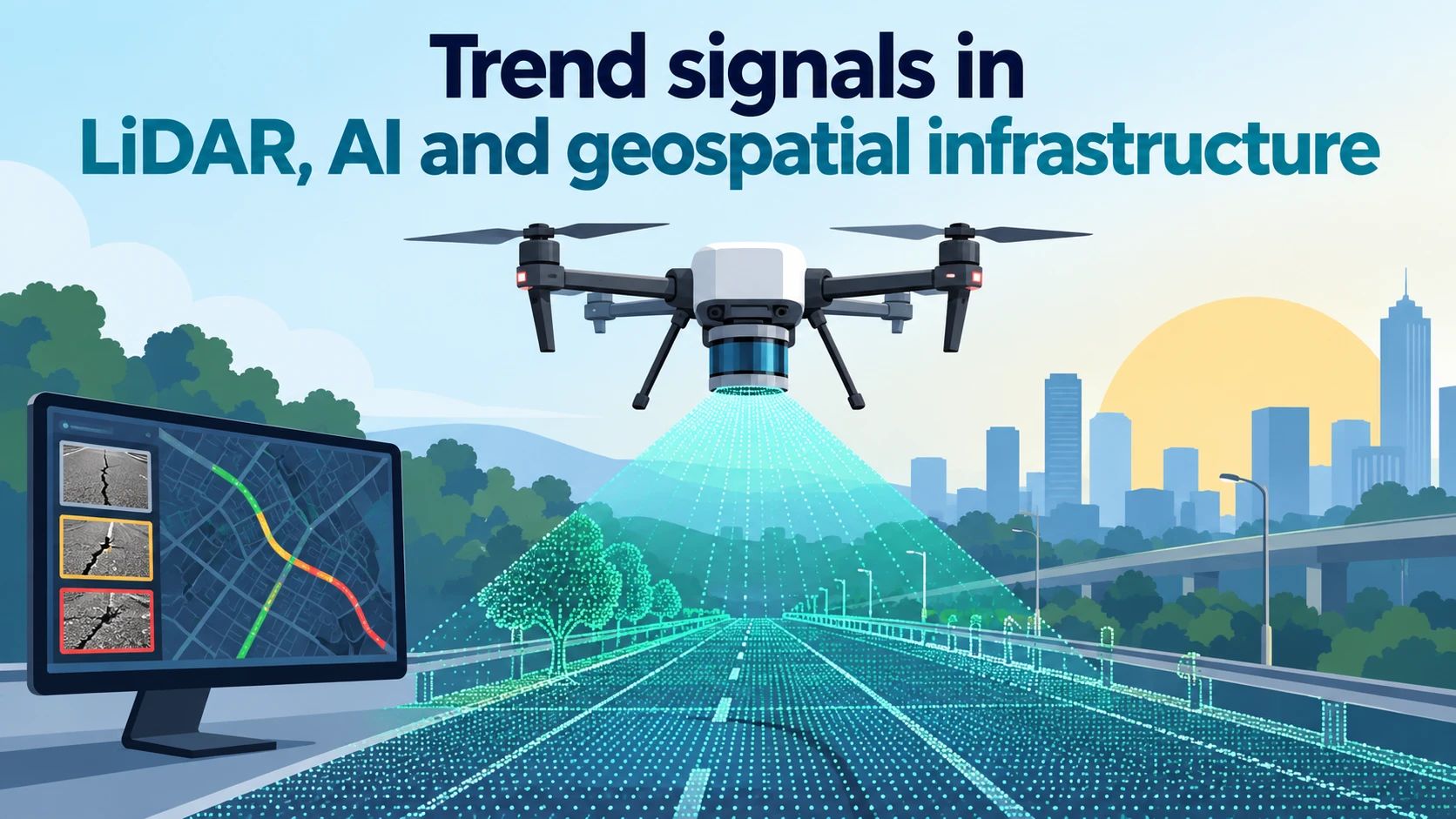
- Trend signals in LiDAR, AI and geospatial infrastructure 1. Atlanta is using LiDAR and AI to systematically map road damage and prioritize maintenance (Atlanta Department of Transportation, Cyvl). 2. Ouster and GeoCue are integrating a US-made digital LiDAR into drone platforms for infrastructure and utility inspections (Ouster, GeoCue). 3. Ouster is increasing the measurement accuracy of its Rev8 OS1 Max for drone-based LiDAR mapping (Ouster). 4. GeoCue is launching a drone LiDAR system combining LiDAR, dual cameras and GNSS/INS in
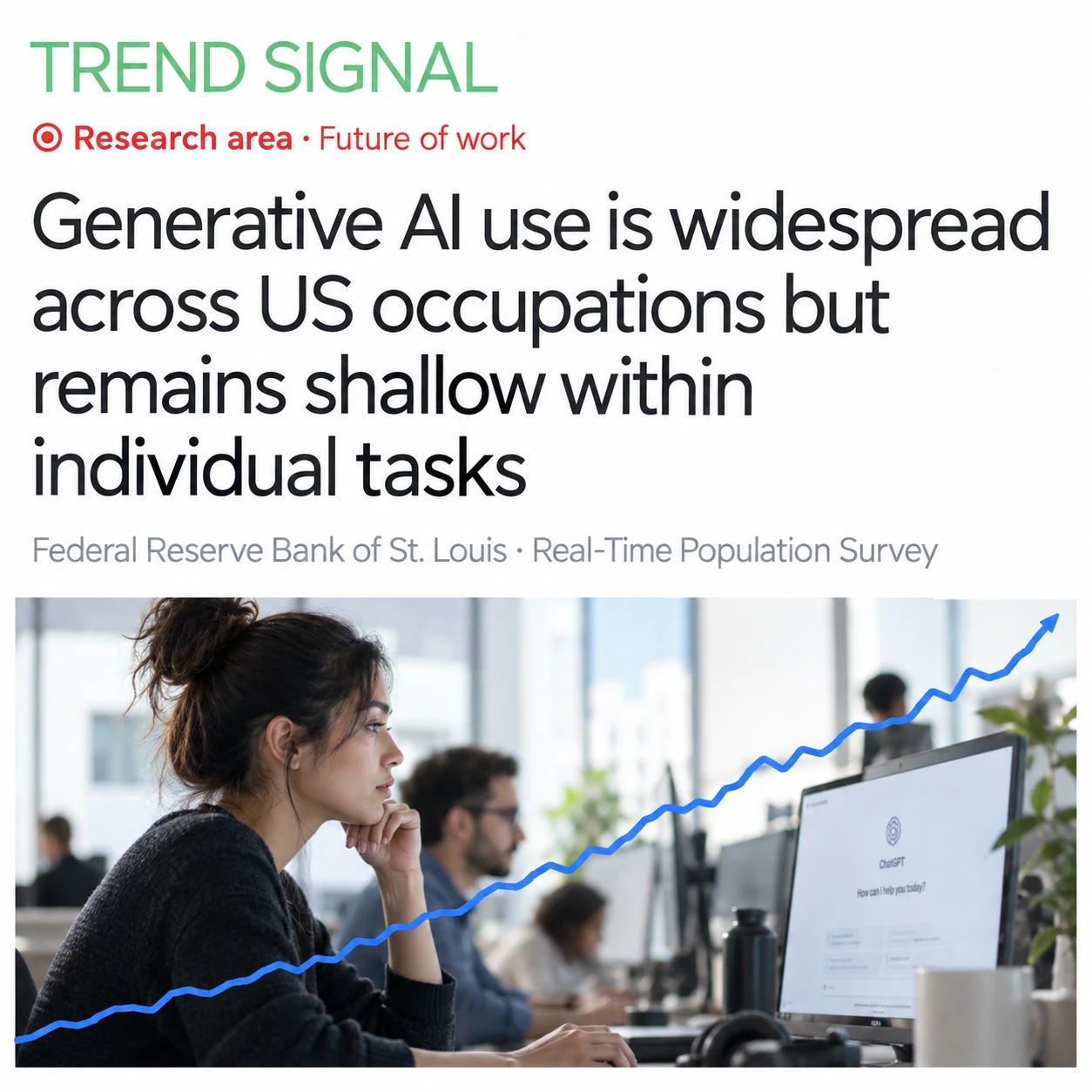
- Using more AI does not necessarily have to be the goal. The value will probably increasingly come from quickly recognizing which tasks benefit from AI and when doing the work yourself is faster or better.
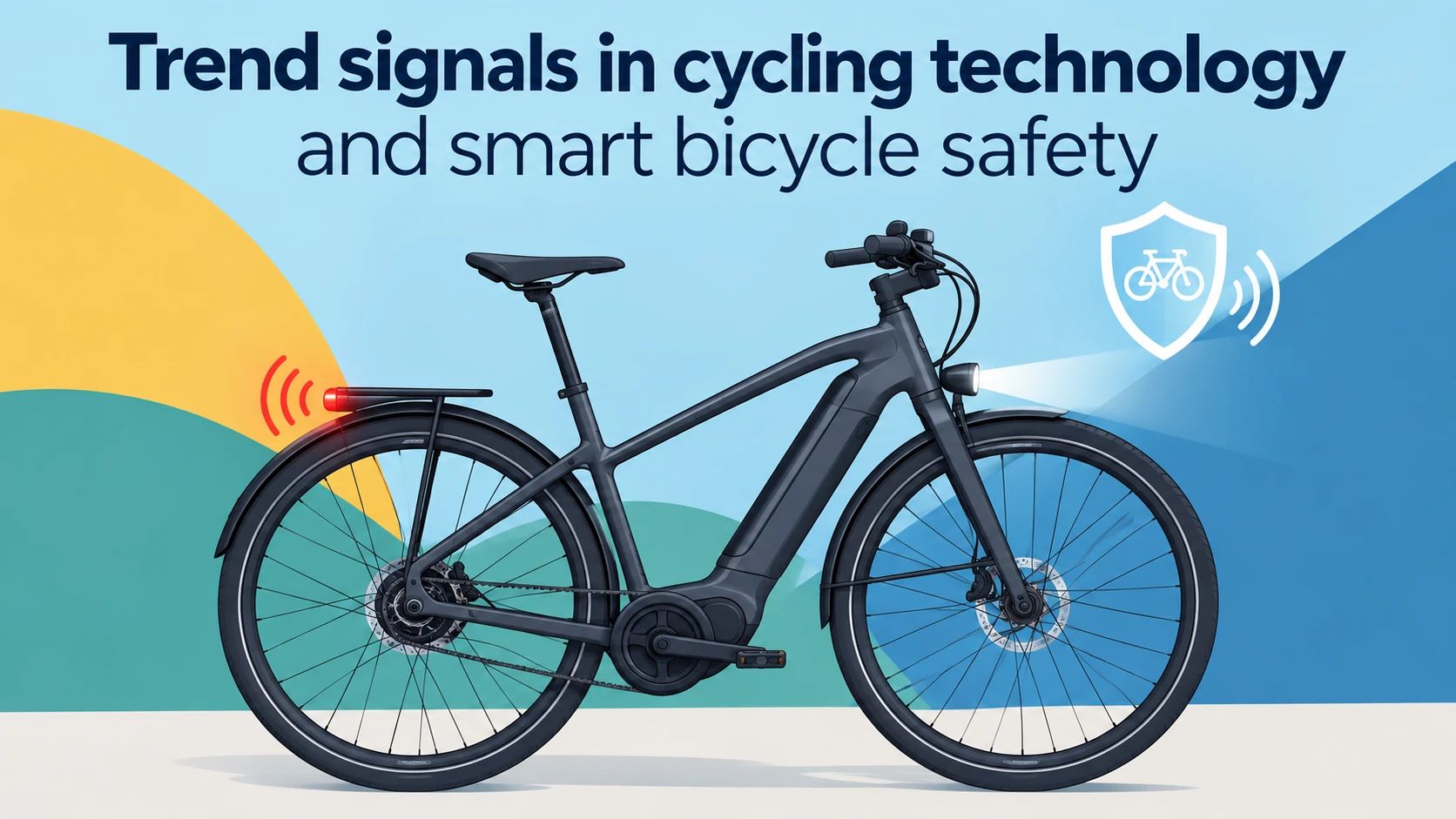
- Radar, cameras, smart lighting and rider alerts are starting to form one connected safety system. Volkswagen and n+ give a good sense of where this could go. The bike detects approaching traffic, warns about blind spots and connects that information to a helmet and glasses. Active safety could gradually become a normal part of bike design, especially on faster and more expensive e-bikes.
- 85% are open to working with an AI agent, while only 9% are open to autonomous purchases within predefined limits I think the real breakthrough lies in delegated convenience. Let AI search, compare, filter and eventually handle recurring purchases within a budget or fixed preferences. Once real money or an unexpected choice enters the picture, people want a clear way to step in. Mastercard sees exactly that gap: 85% are open to working with an AI agent, while only 9% are open to autonomous purchases within predefined limits.
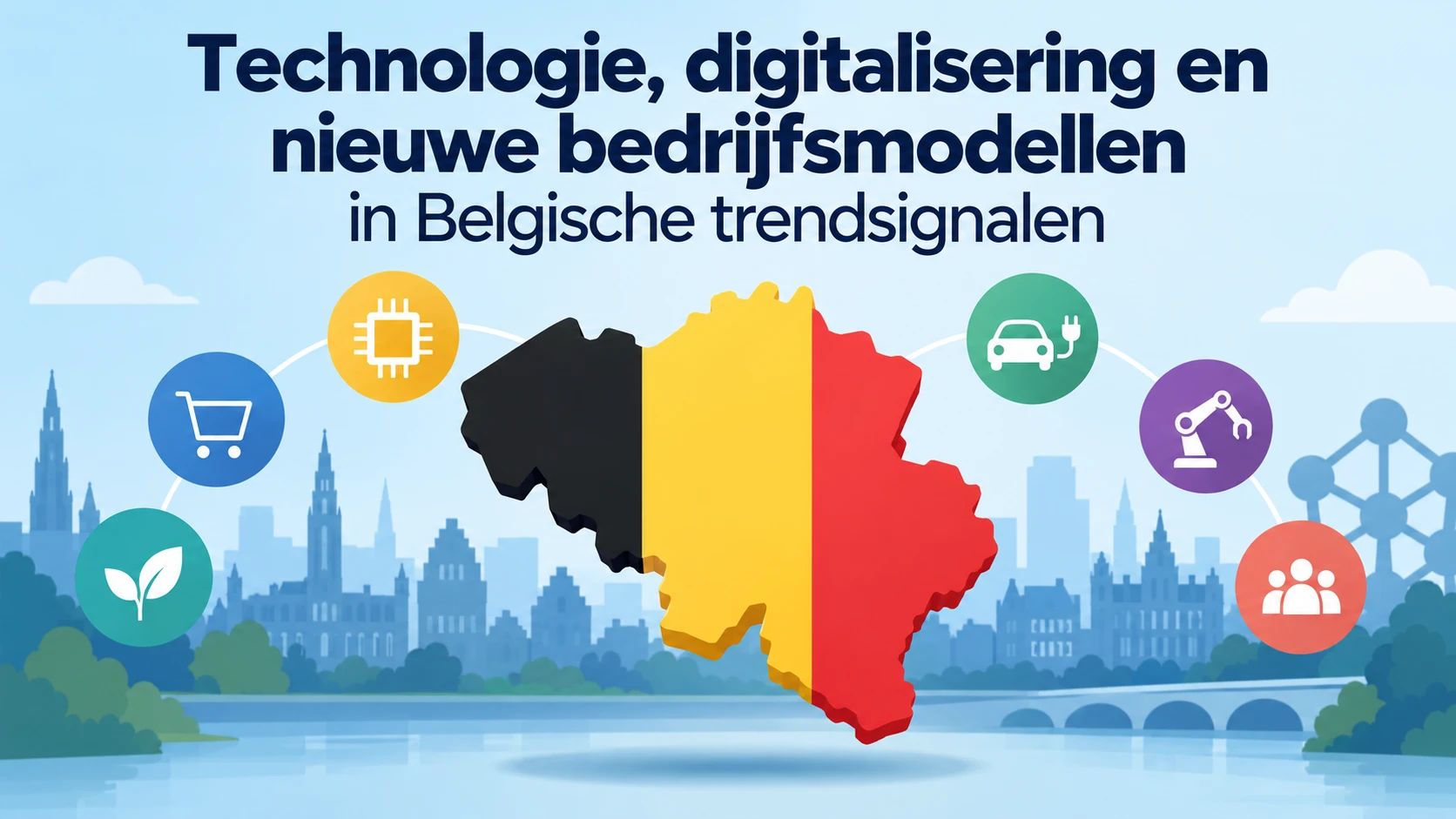
- Technologie, digitalisering en nieuwe bedrijfsmodellen in Belgische trendsignalen ⟶ Zelfscannen via de eigen smartphone wordt uitgerold bij Belgische discounters → Lidl België ↳ Lidl België startte op 24 augustus 2026 met de Belgische uitrol van Scan&Go als functie in de Lidl Plus-app... --- ⟶ Autonome elektrische voertuigen worden getest in Belgische luchtvrachtoperaties → Brussels Airport, WFS Cargo, Charlatte Autonom, Charlatte Manutention, Navya Mobility ↳ Brussels Airport startte een praktijktest met een autonome elektrische
- If these constructions prove effective at managing heat, I can see applications emerging far beyond running. Think cycling, hiking, workwear and other situations where people stay active in hot conditions for long periods. Open textiles could then become a much broader design technology.
- Grocery shopping is especially well suited to this. People often start with what they want to eat that week, how much time they have or who is joining. If AI can turn that directly into a suitable basket, quite a few small decisions disappear from a recurring chore.

This page shows public professional information only, each fact cited. Is this you? send a correction, or ask for removal within 24 hours, no questions asked.