
Overview
Deschauwer has more than 18 years of experience guiding organisations through agile transformation. He co-founded Pyxis Technologies Belgium in 2014 with Pierre-Emmanuel Dautreppe and is based in Nivelles in Wallonia.
At Pyxis Belgique, Deschauwer works as agile coach and co-host of the company's podcast, supporting clients in Scrum, Lean, and Kanban adoption alongside organisational change programmes.
Career history

Insights & ideas
The through-line
Across these posts, Norman Deschauwer keeps returning to the same discomfort: the gap between what organizations claim about themselves and what they can actually measure or admit. Whether the topic is AI adoption, KPI dashboards, or "agile" transformations, he repeatedly asks people to check whether the numbers or the culture behind a claim are real, or just paint. In a room asked "qui imagine que 30 % du code de sa société est écrit par une machine ?" he notes "très peu de mains. Soit on ne sait pas. Soit on a peur de dire oui" [1].
Over time the emphasis shifts from agility-as-community-building (the origin story of the Journée agile, run for 16 years [13][17]) toward AI and vibecoding as the new terrain where this same honesty problem plays out. The vocabulary changes from KPI and rituels to prompts and curseurs, but the underlying question stays constant: are you measuring what's actually happening, or are you comfortable not knowing?
On measuring what's real
Deschauwer treats measurement avoidance as a form of denial. On AI adoption inside companies he pushes teams to name the share of code a machine writes, noting the range "entre 30 et 90 %" he saw circulating among Anthropic and Salesforce, and insisting "la tendance, elle, ne bouge pas : le développeur devient manager d'agents qui écrivent du code" [1]. On KPIs and OKRs, drawing on a guest with "près de 30 ans de conseil," he warns against the "indicateur pastèque. Vert à l'extérieur, rouge à l'intérieur," concluding that "tant qu'un chiffre sert à sanctionner, on le maquille. Le jour où il sert à apprendre, on arrête de le cacher" [6]. He applies the identical lens to agility itself: it is not the method that fails but the cover-up, since agility gets "utilisée comme une rustine sur un pneu crevé ou utilisée pour cacher les merdes sous le tapis" [12], and "la culture d'une entreprise va manger sa stratégie au petit déjeuner" when people are afraid to speak [12].
On delegating to AI
He frames AI delegation as a skill to be dosed, not a switch to flip. After moving past "copier-coller dans ChatGPT," he settled on principles like "sheet in, sheet out," coding "par intention, pas par instruction," and deciding "niveau par niveau ce que je lâche à la machine," concluding "la délégation n'est pas un interrupteur. C'est un curseur" [7]. He is candid that this changes his professional identity: "mon boulot n'est plus d'être développeur. Et ça me va" [7]. At the same time he relays a guest's caution that offloading "easy cases" to AI is not a clean win: juniors "arrivent directement face à des problèmes de senior sans être passés par l'étape junior" and "s'appuient sur l'IA pour des sujets complexes, et ces sujets sont moins bien traités," while seniors "s'entraînent moins" and "traitent moins bien les cas complexes aussi" [2]. On new model releases he keeps asking whether claimed gains like "moins d'interventions" are "un vrai gain de productivité, ou juste un argument marketing" [5], and stresses that access changes like Fable 5's rollout come with "garde-fous automatiques" and an admittedly "imparfait" model-switching mechanism [14].
On starting before you're ready
A recurring move is to reject the idea that you need permission, a business model, or full confidence before you act. Recalling the first Journée agile drawing only 32 people, he quotes the advice that kept it alive: "Non. C'est exactement comme ça que ça commence" [13], and draws the lesson "pas besoin d'être prêt·e. On ne l'a jamais été - on a juste commencé" [13]. The same instinct shapes how he reads a young entrepreneur's story: "sors un produit qui marche, le modèle vient après" and "sois ton premier client" [3]. It also shapes his read on team dynamics, quoting a colleague's line, "le problème, c'est quand tout le monde attend, et personne ne démarre," and turning it into a self-directed checklist rather than a complaint about others [4].
On culture over method
He separates surface-level agile practice from the substance underneath it. Quoting one accompanying voice, he defines the real starting point as returning "à qui on est et qui on veut," adding "je travaille beaucoup sur l'intention. Le processus suit" and the commitment to "reconsolider ensemble, et puis on prendra le temps qu'il faut pour que ça marche" [11]. He links this to personal accountability more broadly, citing "la plus grande chose qui m'empêchait de me réaliser pleinement, c'était moi-même" and "la liberté vient avec le choix, et le choix vient avec l'espoir" [10]. For him, agility surviving or dying is not about rituals but about whether "les gens ont le droit de parler, ou peur de le faire" [12].
From the stage
In podcast appearances he describes agility itself with a definition not found in his written posts: it means "remaining connected while decoupled," a form of "voluntary and governance-based practice" [17]. He also frames his own podcast's purpose more explicitly there than in his posts, positioning it as looking at agility "through a business efficiency lens rather than agility for its own sake," aimed at entrepreneurs, managers, and agile coaches, and addressing "practical value and financial impact" for "business owners and decision-makers who are often overlooked in agility discussions" [16]. He notes his consulting company may itself
Media & appearances
- Journée agile By PyxisYouTubePodcast : Le Teaser - Norman DeschauwerNorman Deschauwer presents "Pyxis," a podcast dedicated to entrepreneurs, managers, and agile coaches that examines agility through a business efficiency lens rather than agility for its own sake. He emphasizes that the podcast will feature various guests including entrepreneurs, coaches, and experts, and will address agility's practical value and financial impact, particularly for business owners and decision-makers who are often overlooked in agility discussions.
- The Podcast Factory Org (NPO)YouTube#498 Norman Deschauwer - Humana event: conversations agiles (FR)Norman Deschauwer discusses his role as founder of Pixis Belgium, a consulting company specializing in agility, and as co-founder of the Journée Agile event, which has been running for 15 years to bring speakers together on enterprise agility topics in the French-speaking Belgian agile community. He explains that agility involves remaining connected while decoupled, describing it as a form of voluntary and governance-based practice, and mentions how Pixis may evolve over time as an example of agility in practice.
- The Podcast Factory Org (NPO)YouTubehrmeetup.© podcast#477 - Norman Deschauwer Co-Founder Pyxis Technologies Belgium
In the news
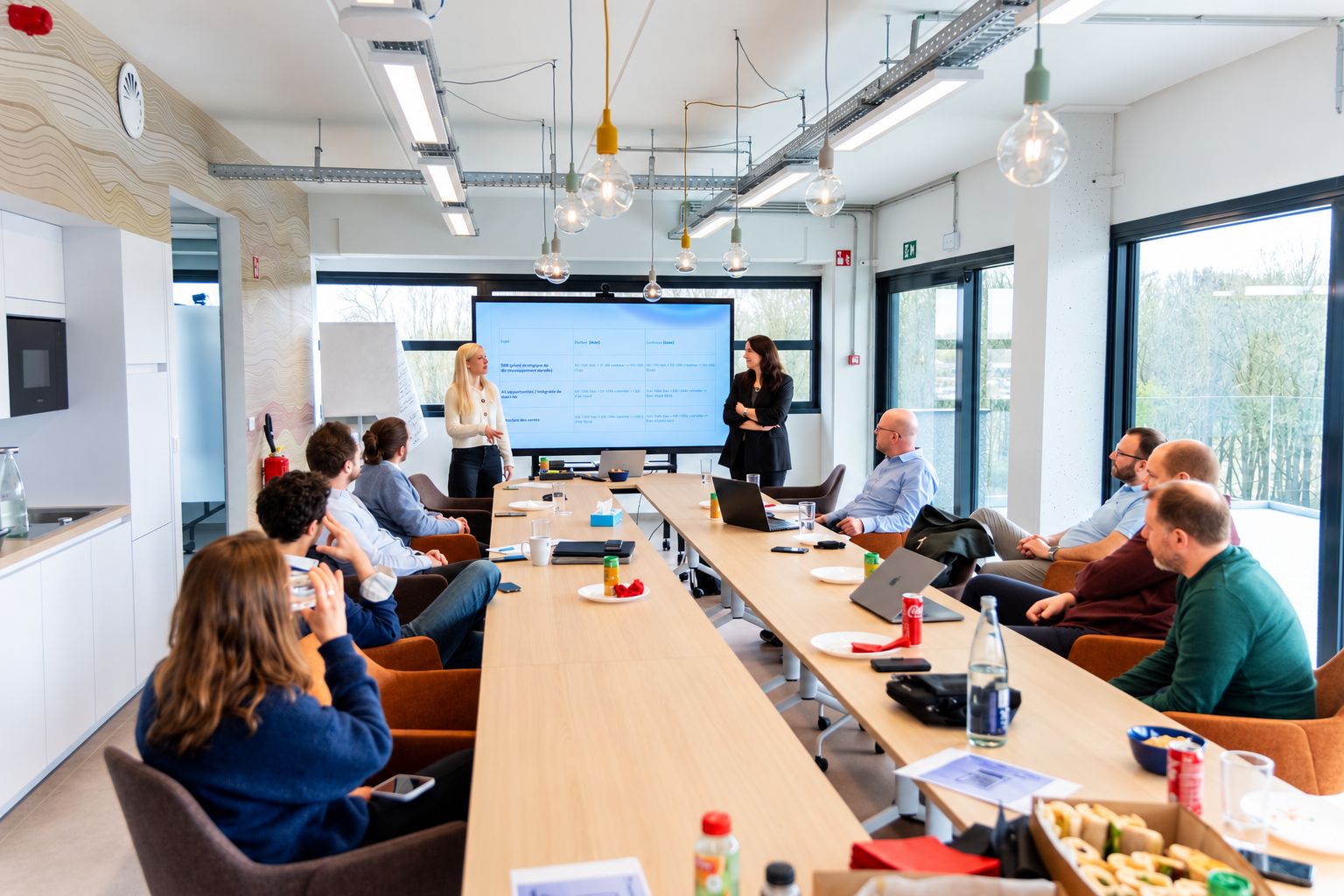
- In 2 days, we're talking cybersecurity across the value chain. Your suppliers. Your cloud partners. The APIs and AI services you don't fully control. The customers whose environments shape your own risk. Olivier Pereira, Professor of Cryptography at UCLouvain - Université catholique de Louvain, joins as scientific sparring partner. Norman Deschauwer 🚀 (CEO, Pyxis Technologies Belgium) will facilitate. Only 15 spots. Confidential, peer-to-peer setting, space to talk about what's still unresolved, not just what works. 📅
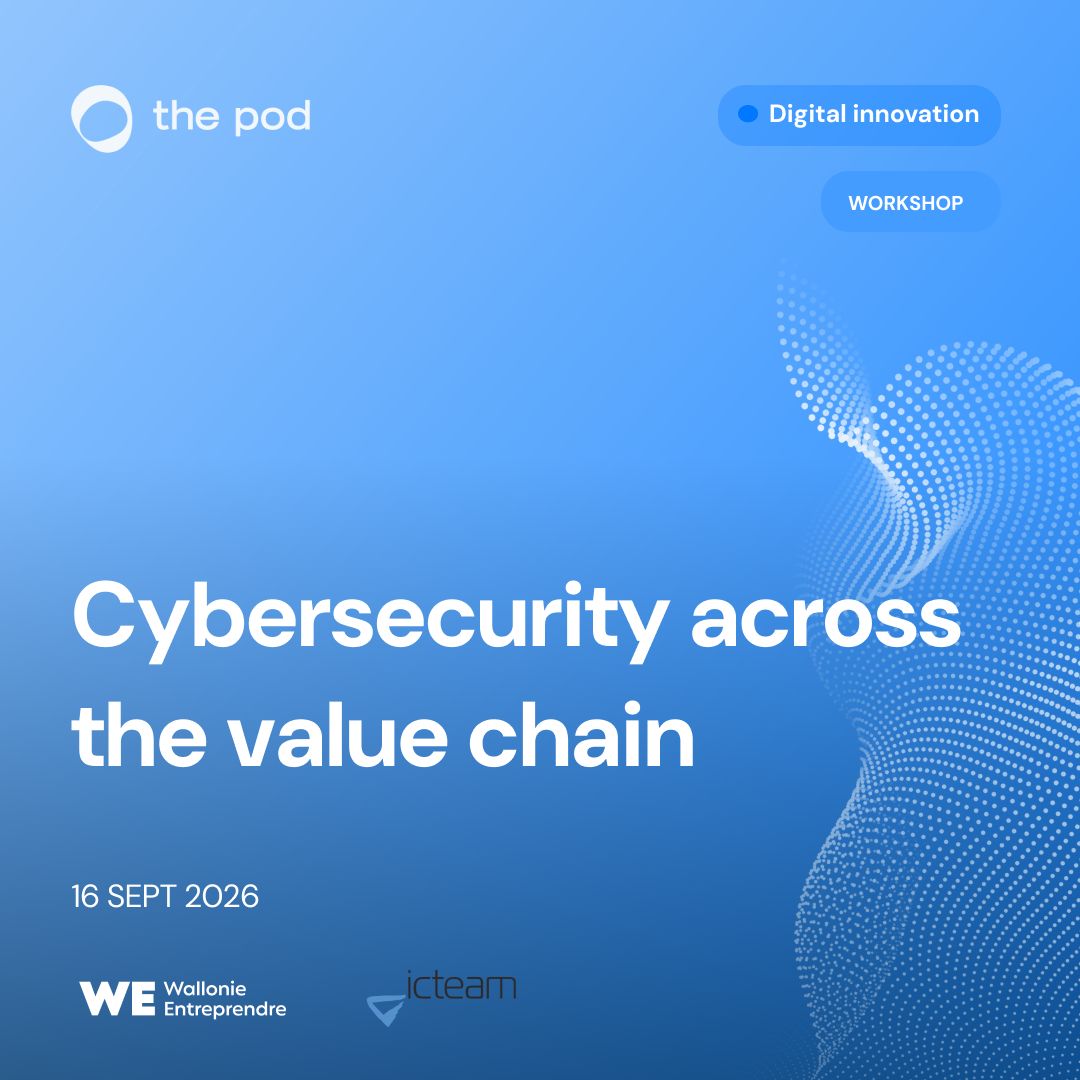
- Your customers’ security requirements don’t stop with you... And neither do yours! A security questionnaire from a client. A contractual requirement. A supplier certification. A critical technology you’ve chosen to outsource. For CTOs, cybersecurity is increasingly about understanding where responsibility, trust and dependency sit across the entire value chain. At our next CTO Circle, we’ll move beyond the usual supply-chain checklist and discuss the actual technology decisions behind it: → What really needs to be secured across
- Entre 30 et 90 % du code écrit par une machine. C'est la fourchette que j'avais sous les yeux en préparant ma session vibecoding à la Journée agile : environ 90 % chez Anthropic, environ 30 % chez Salesforce. Au même moment, Arthur Mensch (Mistral AI) expliquait que ses ingénieurs n'écrivaient plus une ligne de code. Dans la salle, j'ai posé la question à main levée : « Qui imagine que 30 % du code de sa société est écrit par une machine ? » Très peu de mains. Soit on ne sait pas. Soit on a peur de dire oui. Ces chiffres datent
- Le raisonnement paraît imparable. L'IA traite les cas simples. Donc les humains se concentrent sur les cas complexes. Donc tout le monde monte en compétence. Dans notre podcast, Olivier Vergeynst (Institut Belge du Numérique Responsable) démonte ce raccourci, études à l'appui. Et ce qu'il décrit devrait intéresser tous ceux qui pilotent des équipes. Il y a deux effets de bord. Le premier touche les juniors. Les cas faciles, c'est leur terrain d'apprentissage. Retirez-les, et ils arrivent directement face à des problèmes de senior
- 24 ans. Pas de diplôme. Déjà 3 boîtes. Dans notre podcast, on a reçu Hugo Duchêne, jeune entrepreneur IT. Il a appris à coder à 14 ans, une main dans le plâtre, en voulant recréer Facebook. Ce qu'il raconte démonte 6 croyances que beaucoup traînent 👇 ☑️ « Je dois trouver le business model d'abord » Non. Sors un produit qui marche, le modèle vient après. ☑️ « Il me faut des clients pour valider » Sois ton premier client. « Je l'utilise, ça marche » convainc plus qu'un pitch. ☑️ « L'immobilier, c'est de l'argent facile » L'effet de
- Le problème, c'est quand tout le monde attend, et personne ne démarre. » Cette phrase, c'est Eric Decossaux, mon collègue, qui la pose dans notre podcast. Il présentait son atelier au titre volontairement piquant : « Suis-je un équipier idéal ? » À la première personne. Exprès. Pour qu'on arrête de dire « ils devraient », et qu'on commence par soi. La checklist que je me suis faite en l'écoutant : ☑ Avant de dire « l'équipe n'avance pas », qu'est-ce que moi j'ai lancé cette semaine ? ☑ J'attends la direction du chef, ou je
- Fable 5 est de retour. Et ce n'est pas juste une mise à jour 🚨 Vous savez ce que ça change vraiment ? Le dernier modèle d'Anthropic s'attaque à vos plus gros défis… avec moins d'interventions de votre part. Traduction pour nous, les moldus : moins d'allers-retours, moins de "reformule", plus de résultat du premier coup. Trois choses à retenir : Jusqu'au 7 juillet, vous pouvez cramer jusqu'à 50% de votre limite hebdo sur Fable 5. Limite atteinte ? Vous continuez avec des crédits d'utilisation. Petit astérisque : Fable 5 mange
- On peut arrêter les KPI maintenant qu'on a les OKR. C'est faux. On a reçu Couthaïer FARFRA dans notre podcast. Près de 30 ans de conseil. Et il voit des entreprises abandonner leurs KPI en croyant faire mieux. La vraie réponse dépend de ce que vous mesurez : - les OKR portent l'ambition et la direction - les KPI mesurent l'atteinte et le résultat - l'un sans l'autre, vous pilotez à l'aveugle Le piège classique ? L'indicateur pastèque. Vert à l'extérieur, rouge à l'intérieur. Tout le monde est rassuré, jusqu'au jour où on l'ouvre.
Related profiles
This page shows public professional information only, each fact cited. Is this you? send a correction, or ask for removal within 24 hours, no questions asked.