Overview
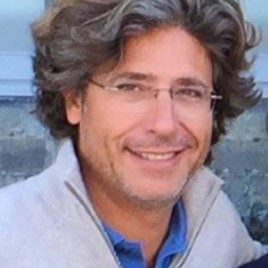
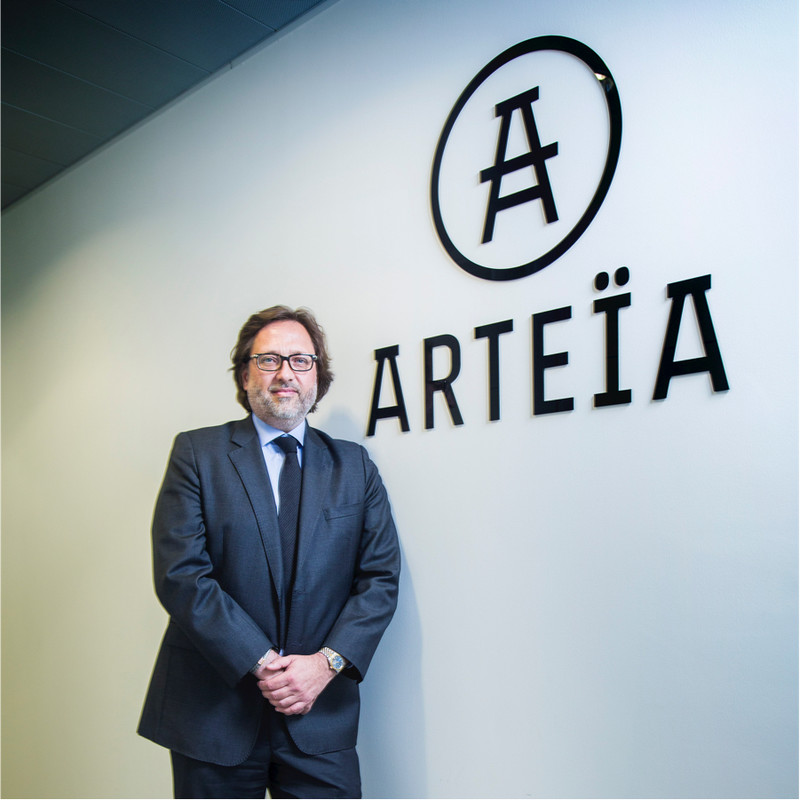
Olivier Marian is co-founder and chief strategy officer of Arteïa, a Brussels technology company that builds digital tools for the art market. He founded the company together with Philippe Gellman (CEO), Marek Zabicki (CTO), Marie Fontaine Taittinger and Hugues Taittinger. Arteïa develops collection management software with private showrooms, online viewing rooms, a digital catalogue raisonné anchored in a blockchain, and Arteïa Connect, an NFC tag system that links physical artworks to their digital records. The company has offices at Avenue Louise 140 in Brussels and in Krakow, Poland, and lists a team of 20 IT professionals. It partners with Eeckman Art & Insurance, OwnArt and Articheck, and is a member of the Art Innovators Alliance, the AIS Art Identification Standard, The Khube and The LHoFT. Arteïa also spearheads the Art Identification Standard initiative with close to twenty industry representatives. In April 2019 the Taittinger champagne family invested in the company.
Career history

Insights & ideas
The through-line
Across his posts, Olivier Marian keeps returning to one gap: the physical object and the record of what it is, who made it, who owns it, and where it has been are almost always separated. He describes collectors whose collections "live in three places — a notebook, a spreadsheet, and their memory" [1][2], works whose history sits "in a folder somewhere" while the object hangs "on the wall" [14][15], and artists who lose "authority" over their own catalogue raisonné to third parties over a lifetime [5][6]. The throughline shifts register depending on the product he's discussing, collector-side record-keeping (COLLECT), object-side provenance (CONNECT), artist-side authorship (DCR), but the underlying claim is constant: trust and control over provenance should sit with the owner or the creator, not with paperwork or intermediaries [8][9][10][11]. More recently he has widened the lens to the market itself, arguing that established auction houses are chasing "luxe et collectibles" revenue because that market now dwarfs fine art in scale [3].
On provenance
Marian's recurring frustration is that provenance today travels as fragile paper rather than with the object. On the secondary market, he says "the hardest question is always: can I trust this provenance?" [8][9], and CONNECT's answer is "an NFC-based digital passport attached to the object itself — authentication and history that travel with the piece, not with paperwork that gets lost" [8]. He frames this as closing a structural gap: "A physical work and its history usually live apart" [14][15], and the NFC tag both verifies the object and "gives the maker a direct line to whoever owns it next" [14]. In the Louvre interview he grounds this in a concrete case, describing a project where an artist worked with the museum to attach a secure NFC chip to a metal plate artwork in the Louvre's archives, creating a digital passport accessible via smartphone, which he contrasts directly with traditional paper certificates of authenticity [16].
On artist authority
For Marian, the catalogue raisonné is not just an archival exercise but a question of who controls an artist's legacy. He notes that historically "a catalogue raisonné used to take a lifetime to compile — and even then, authority over it often left the artist's hands" [5][6]. DCR is built to reverse that: "every work registered, verifiable, and under their control," which he insists "is not just a record — it's authorship, preserved" [5]. He states plainly that this reclaiming of control is "the shift I care about most in this project," describing DCR as letting artists take back authority through attributions that are "recorded, timestamped, and controlled by the artist, not a third party" [10][11].
On collectors' fragmented records
Marian's read on collectors mirrors his read on artists: information about what people own is scattered and unreliable. He says "every collector I talk to has the same problem" of a collection split across "a notebook, a spreadsheet, and their memory" [1][2], and positions COLLECT as "one private, secure record of what you own, its provenance and its value" [1]. Applied to artists specifically, he frames the same tool as protecting legacy: "your catalogue is your legacy... in one private archive you control. Less time chasing records, more time creating" [12][13].
On the market's shift toward luxury and collectibles
Responding to a claim that the art market is recovering, Marian offers a more specific explanation: dealers are pursuing "croissance externe" by adding new product categories to attract clients, not seeing organic recovery [3]. He points to auction houses "comme Christie's et Sothebys" now targeting "30 à 40% de leur ÇA sur luxe et collectibles" [3], and argues that the collectibles market "représente bien plus chaque année que le marché de l'art," which he says "reste très limité en taille globale" despite headline numbers [3]. He ties this to new collector behavior, noting that new collectors are "souvent d'abord attiré par le luxe, les montres, les objets memorabilia sportifs," which is where he positions Arteïa CONNECT as adding value [3].
From the stage
In the Techno Impact interview, Marian goes further than any written post by walking through an actual museum deployment: an artist partnering with the Louvre to affix a secure NFC chip to a metal plate artwork held in the museum's archives, generating a smartphone-accessible digital passport of authentication data [16]. He uses this case to make his comparison to paper certificates concrete rather than abstract, explicitly framing the problem as verifying that a physical artwork matches its documentation [16], a real-world proof point that doesn't appear in the LinkedIn posts about CONNECT.
Takeaways
- When evaluating provenance tools, look for solutions that bind authentication to the object itself (e.g., NFC tags) rather than relying on separable paperwork [8][9][14].
- Treat catalogue raisonné projects as governance questions: ask who controls attribution and timestamping, not just who compiles the record [5][6][10][11].
- For collectors or artists managing scattered records across notebooks, spreadsheets, and memory, consolidating into a single private, controlled archive reduces both risk and time cost [1][2][12][13].
- Read auction houses' pivot toward luxury and collectibles (30-40% of revenue at firms like Christie's and Sotheby's) as a deliberate growth strategy, not evidence of art-market recovery [3].
- The Louvre NFC-chip project on a metal plate artwork is a concrete precedent for museum-grade digital passports replacing paper certificates of authenticity [16].
Media & appearances
- Techno Impact by NFT BusinessYouTubeART & CULTURE / Olivier Marian, il fait entrer la Blockchain et les NFT au Louvre !Olivier Marian discusses how his startup Arteia uses NFC chip authentication technology to verify and trace artwork authenticity and provenance. He explains a specific project at the Louvre where an artist worked with the museum to attach a secure NFC chip to a metal plate artwork in the Louvre's archives, creating a digital passport that stores authentication information accessible via smartphone. Marian compares this solution to traditional paper certificates of authenticity, addressing the problem of verifying that a physical artwork matches its documentation.
In the news
- Every collector I talk to has the same problem: their collection lives in three places — a notebook, a spreadsheet, and their memory. That's the gap Arteïa COLLECT was built to close: one private, secure record of what you own, its provenance and its value. https://lnkd.in/efKd3M8C
- Chaque collectionneur avec qui je discute a le même problème : sa collection vit à trois endroits — un carnet, un tableur et sa mémoire. C'est cet écart qu'Arteïa COLLECT est né pour combler : un registre privé et sécurisé de ce que vous possédez, sa provenance et sa valeur. https://lnkd.in/efUT6PZT
- Merci Julien Abitbol Il faut être assez optimiste pour dire que le marché de l’art retrouve des couleurs. Je dirais plus, et c’est très justement ce que vous soulignez , que les acteurs du marché de l’art font de la « croissance externe » en allant chercher des nouveaux produits ( luxe et collectibles ) pour attirer des nouveaux clients, et recréer du chiffre d’affaire. Effectivement on entend les acteurs comme Christie’s et Sothebys ( mais les autres aussi ) expliquer qu’ils visent maintenant 30 à 40% de leur ÇA sur luxe et
- Merci Marion pour cette invitation. J'ai beaucoup parlé :-) J'espère avoir été clair et avoir apporté quelques informations sur ce monde passionnant dans lequel ARTEIA travaille et apporte des solutions. J'espère aussi que j'ai pu partager notre passion et la valeur de nos solutions. Je reste bien sur disponible pour toute question sur le sujet global, et sur Arteïa également bien sûr. Merci ! olivier@arteia.com
- A catalogue raisonné used to take a lifetime to compile — and even then, authority over it often left the artist's hands. With Arteïa DCR, artists build their own blockchain-based catalogue raisonné: every work registered, verifiable, and under their control. It's not just a record — it's authorship, preserved. https://lnkd.in/efKd3M8C
- Un catalogue raisonné prenait autrefois une vie entière à constituer — et l'autorité sur ce travail échappait souvent à l'artiste. Avec Arteïa DCR, les artistes construisent leur propre catalogue raisonné sur blockchain : chaque œuvre enregistrée, vérifiable, sous leur contrôle. Ce n'est pas seulement un inventaire — c'est l'autorité de l'artiste, préservée. https://lnkd.in/efUT6PZT
- Merci pour l’invitation ! Je suis disponible pour toute questions. Olivier@arteia.com
- Buying on the secondary market, the hardest question is always: can I trust this provenance? Arteïa CONNECT answers that with an NFC-based digital passport attached to the object itself — authentication and history that travel with the piece, not with paperwork that gets lost. Have you run into this provenance doubt yourself? Tell me about it in the comments → https://lnkd.in/efKd3M8C
Related profiles
- PHugues TaittingerCo-founders
- PMarie Fontaine TaittingerCo-founders
 Philippe GellmanCo-founders
- PMarek ZabickiCo-founders
This page shows public professional information only, each fact cited. Is this you? send a correction, or ask for removal within 24 hours, no questions asked.