
Overview
Quentin Lancrenon is the CEO of 2030, a role he took up in November 2025, and is based in Brussels. Before that he spent from February 2023 to August 2025 at Accenture Belgium as an environmental intelligence manager in the advisory practice, within IX Sustainability Gallia.
He held several roles at Greenfish over an extended period, joining in February 2017 as a principal consultant in the strategic advisory department, a position he held until December 2024, while also working as project manager for local energy communities between May 2019 and October 2021 and as knowledge and content specialist from December 2019 to December 2024. Earlier, he was a project manager at Dhamma Energy in 2013 and an engineer at Groupe Tenergie - Tenergie Developpement in 2012, covering technical, competitive and regulatory development monitoring on energy efficiency. In 2011 he worked at Société Le Nickel - SLN - ERAMET in nickel metallurgy handling, and earlier that year took part in an industrial study project at Altran as external contact manager and team member.
Lancrenon studied mathematics in preparatory classes at Lycée Jules Garnier in Nouméa, New Caledonia, from 2008 to 2010, then completed a master's degree in general engineering at Centrale Nantes between 2010 and 2014. From 2014 to 2015 he took a Master of Energy Studies at The University of Queensland, specialising in low carbon solutions and carbon management, alongside studies at the International Energy Centre.
Career history
- 2030Current
In the news
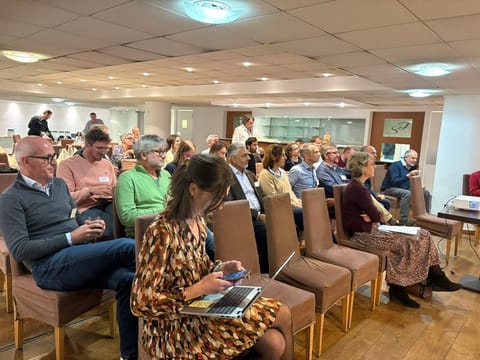
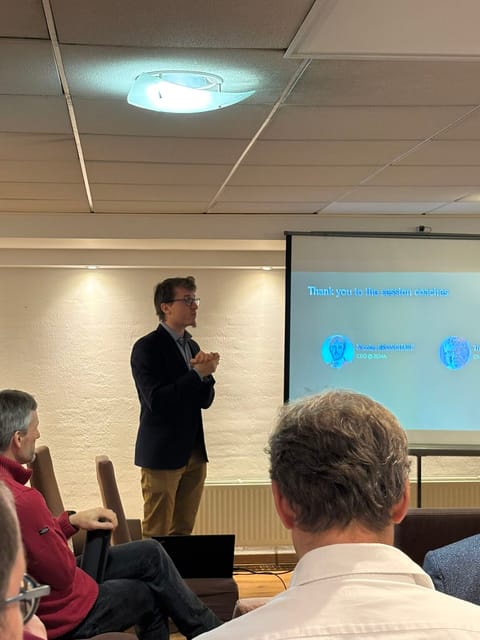
- Université catholique de Louvain has already done a lot on its transition — and the scale of the work is impressive. As Alexia Autenne, General Administrator of Université catholique de Louvain and a 2030 member, put it during the evening: ‘𝑻𝒓𝒂𝒏𝒔𝒊𝒕𝒊𝒐𝒏 𝒊𝒔 𝒍𝒊𝒌𝒆 𝒂 𝒎𝒂𝒓𝒂𝒕𝒉𝒐𝒏. 𝑾𝒆 𝒉𝒂𝒗𝒆 𝒅𝒐𝒏𝒆 𝒕𝒉𝒆 𝒇𝒊𝒓𝒔𝒕 15𝒌𝒎 𝒒𝒖𝒊𝒕𝒆 𝒆𝒂𝒔𝒊𝒍𝒚. 𝑵𝒐𝒘 𝒘𝒆 𝒂𝒓𝒆 𝒈𝒆𝒕𝒕𝒊𝒏𝒈 𝒊𝒏𝒕𝒐 𝒕𝒉𝒆 𝒉𝒂𝒓𝒅𝒆𝒔𝒕 𝒑𝒂𝒓𝒕.’ Through 𝐂𝐀𝐏 2030, its transition plan to 2030 (https://bit.ly/4dSK7Hz), the university
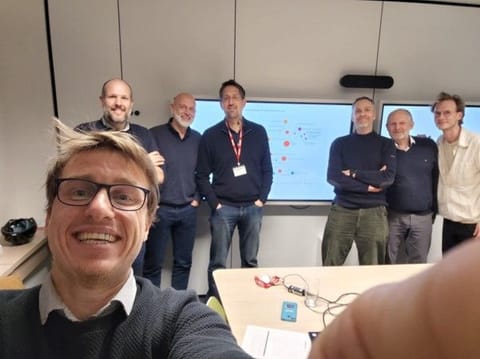
- During one of our 2030 Share & Build sessions this year, we used the 2026 World Economic Forum 's Global Risks Report as a starting point for conversation. The report, published annually, looks at global risks across 5️⃣areas: 🚶♂️➡️🚶♀️➡️societal, 🛰️technological, 🛢️geopolitical, 🌱environmental and 💲economic. What makes the picture especially challenging is how closely these global risks are connected (see below) : 👉 Geopolitical tensions can affect economies and supply chains. 👉Environmental pressures can deepen
This page shows public professional information only, each fact cited. Is this you? send a correction, or ask for removal within 24 hours, no questions asked.