
Overview
Sabri Skhiri is Chief Technology Officer at Euranova, a role he has held since November 2009, and is based in Brussels. His stated areas of expertise are data science, distributed systems, architecture, computer science and data governance. Since September 2016 he has also been an invited lecturer at Euranova, teaching an AI and Data Architecture course and a Stream Processing course.
Between March 2010 and March 2017 he headed the European R&D Architecture Team at Huawei. Before that he worked at Nokia Bell Labs Antwerp, joining as a research engineer in September 2005 and going on to serve as R&D technical project manager from August 2007 and as R&D project leader from December 2008, until November 2009. He began his career at the Université libre de Bruxelles, where he was a bioinformatics research engineer from September 2003 to September 2005.
He studied at the Athénée Royal de Waterloo and completed a master's degree in computer sciences engineering at the Ecole polytechnique de Bruxelles between 1997 and 2003.
Career history

In the news
- Is AI actually helping students learn—or just saving them from the effort of thinking? I recently used an AI assistant to teach my 6-year-old music scales. It solved my ignorance instantly, but raised a core question: Does the tool build understanding, or just replace cognitive effort? If AI provides raw answers, it weakens learning. If it acts as a Socratic tutor, it deepens it. The ultimate goal remains: to be able to "play the scales" without the tool. Read the post here 🇫🇷 (Note: Article written in French). How are you

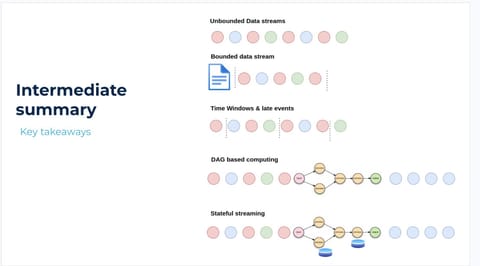
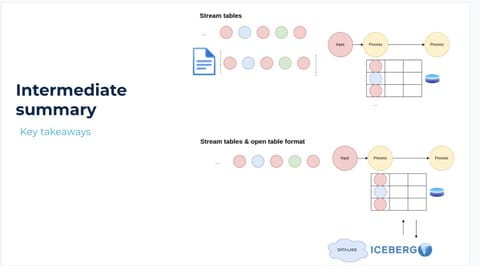
- This month I'll be teaching a seminar at Ghent University on Stream Processing and Stream Data Management. Why this topic, now? The data lake won. Storage got cheap, and open table formats (Iceberg, Delta, Hudi, etc) delivered on their promise: one copy of the data, readable by any engine, no format lock-in. But that win moved the problem rather than solving it. What we build on top of the lake is still overwhelmingly batch. Medallion pipelines that copy the same data three times. Business logic written twice, once for the
- The era of the "Two-Hour Prototype" is here. What used to take months of development and massive budgets can now be built by a product manager in a single afternoon or a few days. Generative AI has turned software execution into a commodity. But there is a hidden cost. When building is cheap, the most valuable question is no longer: "Can we build it?" It becomes: "What should we build?" While innovation is accelerating, so is technical debt. Early adopters are discovering a harsh new reality: a prototype might take two hours to
This page shows public professional information only, each fact cited. Is this you? send a correction, or ask for removal within 24 hours, no questions asked.