Insights & ideas
The through-line
Everything Steven Krekels says comes back to a single argument: the airspace just above our heads has become a live security domain, and almost nobody is watching it. His sensors show that only 10-15% of drone flights worldwide broadcast the remote ID the law requires, and that around Belgian airports 90-95% of flights are unauthorized [1][2]. The consequence he draws is less about drones as such than about a blind spot in how organisations think. Companies spend on badges, facial recognition and guards on the ground, and then leave the vertical axis open: "Vergeet uw derde dimensie niet, want je kan bij bedrijven binnengaan en passen en gezichtserkenning en fysische bewaking en al wat dat je wilt" [1][2].
The shift he reports is in how that argument lands. "Drie, vier jaar geleden hadden we het gevoel dat we wat in de woestijn aan het roepen waren en nu is dat gevoel volledig verdwenen" [1][2]. That new receptiveness comes with its own distortion, and he is careful not to ride it: he is as quick to deflate drone panic as he is to describe real attacks.
On the clueless, the careless and the criminals
His taxonomy of illegal drone flying is deliberately calming before it is alarming. "Je hebt de Clueless, de Careless en de criminals" [1][2]. The clueless simply do not know the rules, a population that spikes after Christmas when new drones come out of their boxes; the careless know the rules and fly anyway; only the third group actively works to evade detection [1][2]. So the headline number, 90-95% unauthorized flights at Belgian airports, is mostly made up of innocent people, and the operational task is separating the small criminal fraction from the noise [1][2]. The same gap shows up in remote ID compliance: the legal broadcast requirement is honoured by a small minority of the flights his sensors actually see [1][2].
On the third dimension
The corporate security case is the one he presses hardest. Access control stops at the perimeter and at the door, while a drone goes straight to the top floor where executives are printing confidential documents [2]. The attacks he describes are concrete rather than theoretical, and some of them happened in Belgium and Europe: a drone landing on a roof carrying a router to run a man in the middle attack on the network, drones fitted with solar panels sitting on rooftops for days to eavesdrop, and a jammer drone that knocked out the scanners of a logistics centre [1][2]. That last case ends the way these things now end: "Heel dat logistiek centrum plat. Vrachtwagens op de snelweg stapelen zich op en dan telefoon. Vervelend hè? Zoveel bitcoins op die rekening en we zullen hem afzetten" [1]. Drones, in his framing, are not only a physical threat but a delivery mechanism for cybercrime.
On why you go after the pilot, not the drone
The legal picture shapes the product. Only defence and police are permitted to neutralize a drone; private actors, port security at the Port of Antwerp among them, are not [1][2]. That constraint is why Senhive locates the pilot as well as the aircraft, so that security staff can walk up to the person instead of trying to bring down the machine [1][2]. The technical basis is interception of the link itself: "Onze sensoren zien tot 25 km ver de communicatie tussen de drone en de piloot" [1].
On hybrid warfare and who is testing us
He reads recent incidents as probing rather than accident. "Ik ben er redelijk van overtuigd dat een aantal landen en niet alleen Rusland ons gebruikt om hier en daar wat dingen aan te testen" [2]. The same logic extends beyond drones to any connected platform operating inside European society: "Al de BYD die rondrijden, dat zijn ogen en oren van China in ons socio-economisch weefsel" [1][2]. The asymmetry is what makes the whole domain worth taking seriously: "Een drone van een paar honderd vernietigt een vliegtuig van een paar miljoen" [1].
On drone panic and what the media does to perception
Against that, he refuses to confirm the story everyone wants confirmed. He has seen no evidence that the Copenhagen airport incident actually involved drones, and no confirmation that the sightings were anything more than human observation [1][2]. Saturation coverage produces a UFO effect: once drones are in the news, people start seeing them everywhere [1][2]. Someone selling drone detection saying this is worth noting on its own terms.
On the tempo of innovation
The lesson he takes from Ukraine is that nothing you build stays useful. The Estonian startup behind Operation Spiderweb, based near Tallinn, expected its drone to have a six month useful life; Russia neutralized it in three, and a new version had to follow [1][2]. "Het tempo van innovatie in dat wereldje is zo hoog dat je moet er continu mee bezig zijn om dat te kunnen volgen" [1][2]. He is precise about what today's drones actually are: human-controlled carriers of a camera or a bomb, not autonomous weapons, with the qualification "yet" [1]. Spiderweb did use AI landmark-based positioning, comparing camera images against stored maps, to navigate where GPS was denied [1][2]. The strategic consequence is visible on the map: the active battlefield in Ukraine is roughly 20 to 30 km wide because that is the operational range of a drone [1][2]. His general reading of technology sits underneath all of this: "En zo is dat meestal met innovatie hè. Dat lost een probleem op en dat creëert weer een nieuw probleem" [1].
On the Paris Olympics and building to a deadline
The Olympics deployment is his case study in responsiveness. The French gendarmerie called because the French solution was not fully working: "Die hebben letterlijk 2,5 maand voor de opening van de Olympische Spelen gezegd: we hebben jullie nodig" [1]. In that window Senhive built a mobile version of its system and delivered 20 mobile units alongside fixed installations, and the deployment intercepted 800 illegal drones [1][2].
On how a small company scales
Senhive is 20 people and does not sell direct at scale. It grows through a network of resellers and integrators who understand local conditions, which is how it reached Central Park in New York and prospects in Japan [1]. The company's existence is itself an argument for following demand over attachment to a product: it began in wildfire detection via satellites and moved to drone detection because that was where customers' attention had gone [1].
On knowledge without understanding
His broader worry is educational. "Kennis is heel toegankelijk, maar het begrip en het begrijpen van die kennis, dat is gedisconnecteerd geraakt met die kennis" [2]. AI has made information trivially available and severed it from comprehension, which is why he argues education must put critical thinking first [1][2].
On what drone delivery will actually look like
He does not expect parcels at the front door by 2030. A van serving an entire street remains more efficient than individual flights [1][2]. What is realistic is dedicated corridors, with a proposed route above the Albert Canal for urgent packages, and air taxis over water [1][2].
Takeaways
- Treat airspace as part of physical security: badges, facial recognition and ground guards do nothing against a drone that reaches the executive floor [1][2].
- Expect most unauthorized flights to be harmless. Sort traffic into clueless, careless and criminal, and build detection around isolating the third group [1][2].
- Do not rely on remote ID. Only 10-15% of flights Senhive's sensors observe broadcast it, and 90-95% of flights at Belgian airports are unauthorized [1][2].
- If you cannot legally down a drone, locate the pilot instead; that is the only lawful response available to private security such as the Port of Antwerp [1][2].
- Drones are now a cybercrime vector: rooftop routers for man in the middle attacks, solar-powered eavesdropping over days, and jammer-driven shutdowns followed by bitcoin ransom demands, some in Belgium and Europe [1][2].
- Assume any countermeasure has a shelf life measured in months. Spiderweb's drone was expected to last six and was neutralized in three [1][2].
- Be sceptical of drone sightings during a media wave; Krekels saw no confirmation that Copenhagen involved drones at all [1][2].
- Follow the market rather than the original product: Senhive moved from satellite wildfire detection to drone detection because that is where customer attention went [1].
In the news
- Our next Dual Nexus Meetup (DNM008: investment & defence readiness) on 29 September is full. If you were planning to register - sorry. There's still the waiting list, though👇 There are always a few cancellations in the last week before the event, and any spots that free up will go to the waiting list (link in the comments). On why we don't just add seats even though the auditorium at Silversquare (thank you for your support, guys!) is big enough: the value of the meetup comes from having entrepreneurs, investors, defence staff

- If your core technology relies on unvetted offshore suppliers, your dual-use strategy is dead on arrival. When commercial tech meets defence, there are many reasons why it fails. The less-expected one is provenance: where the hardware was manufactured, who maintains the code, where the data is stored, etc. And - just to make things extra spicy - provenance cuts both ways. 🔺It creates the opportunity. Belgian Defence commissioned Noordzee Drones to build a training drone with no foreign components: the THEQ-1. A clean supply
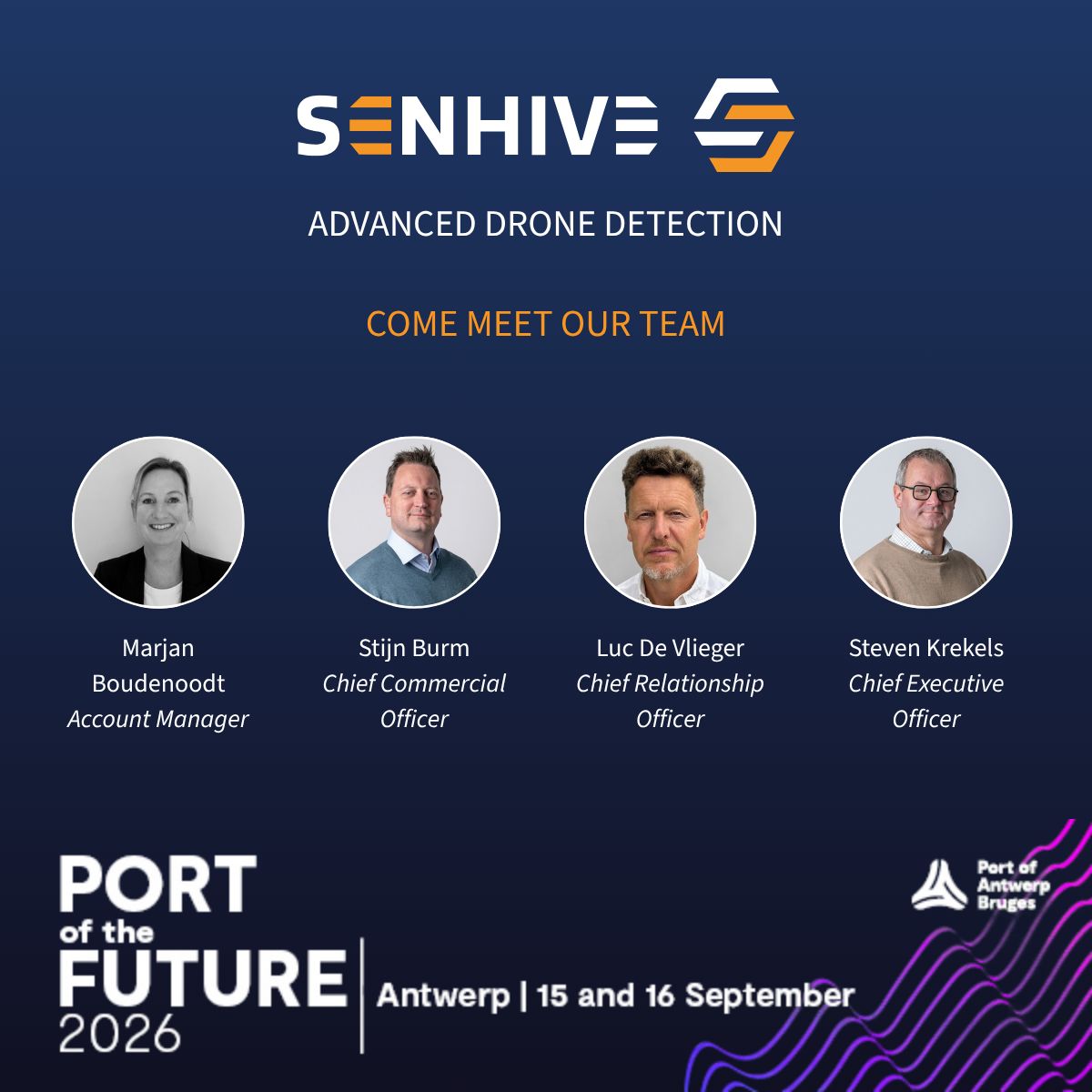
- See you in Antwerp today and tomorrow! Port of Antwerp-Bruges Senhive
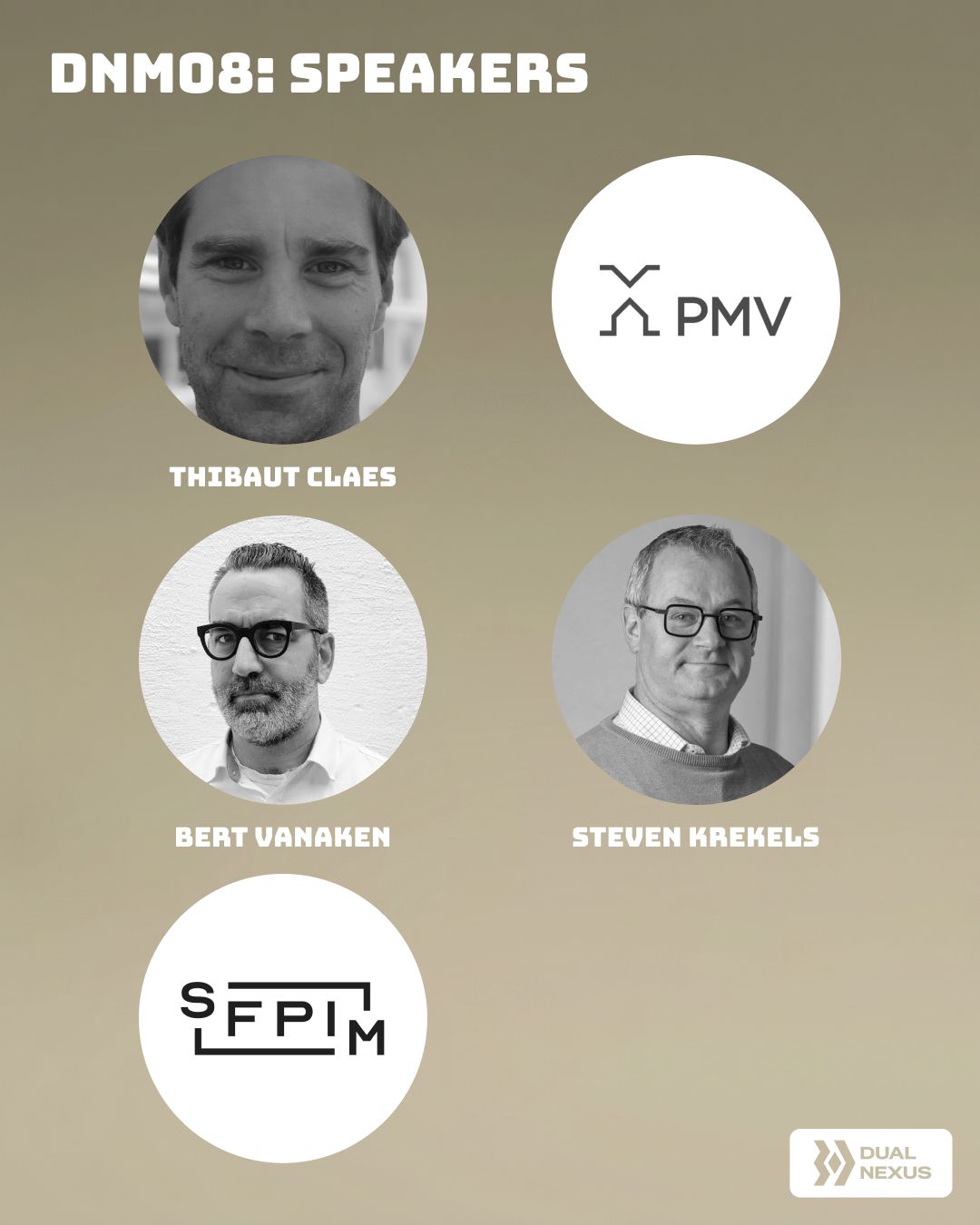
- Slapping a camouflage sticker on an enterprise software product does not make you a dual-use company. Founders struggling in civilian markets sometimes rebrand generic B2B tools as defence tech to chase new funding (I can perfectly understand that, that's where the big money is heading). But when these teams get in front of military buyers, the conversation dies in five minutes. Defence buyers rarely pay for do-everything software. They pay for a specific fix to a concrete operational problem. That is why we invited Steven
- We’re growing our team and looking for the talent to build what’s next! Join us!
This page shows public professional information only, each fact cited. Is this you? send a correction, or ask for removal within 24 hours, no questions asked.