Overview
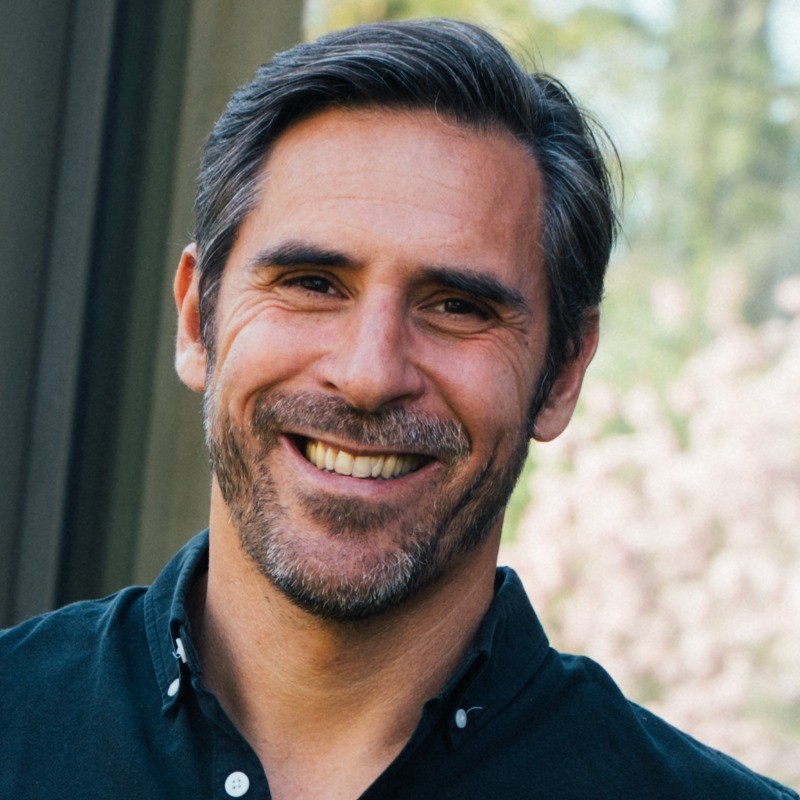
Thibaud Elziere is a French entrepreneur who first built Fotolia, a stock photography platform, which was acquired by Adobe for approximately 800 million EUR. In 2011 he co-founded eFounders (rebranded to Hexa in 2022) alongside Belgian co-founder Quentin Nickmans, a startup studio operating from Brussels and Paris that has built over 40 B2B SaaS companies. As an angel investor he has backed approximately 100 startups, with notable investments in Algolia, Notion, and Hugging Face. He has also launched other ventures including Gama Space (solar sail project), Iconic House (prestige real estate), and Kate (microcar manufacturer).
Career history
- Founded Fotoliasold to Adobe for ~800 million EUR
- Co-founded eFounders (now Hexa) with Quentin Nickmans2011
- Angel investor~100 startups including Algolia, Notion, Hugging Face
- LaunchedGama Space, Iconic House, Kate
- FounderHexa

Insights & ideas
The through-line
Across two decades of ventures, Thibaud Elzière keeps returning to the same question: what actually counts as entrepreneurship, and what separates it from simply taking risk or running a business. He traces this explicitly to Schumpeter's idea that the entrepreneur is not "ni un propriétaire, ni même nécessairement un patron" but a function, the person who introduces a "nouvelle combinaison" into the economy [2][4]. This preoccupation has moved with him as his own activity has diversified from tech (Photolia, HEXA's startup studio) into hospitality and real estate (Iconic House, Side House, WAT, KAFET), and he now tests the definition against his own newer projects, wondering openly whether opening a restaurant or launching a fund really qualifies [2][4]. The shift over time is less a change in belief than an expansion of the domains he applies it to, alongside a growing impatience with slogans that flatten entrepreneurship into either 24/7 grind or pure money-chasing, which he says pushed him to spend ten years thinking about writing a book that shows what actually happens behind the scenes [18].
On entrepreneurship as a function
Elzière's clearest theoretical statement is his adoption of Schumpeter's "nouvelle combinaison": the entrepreneur "introduit dans l'économie une nouvelle" combination, whether a new product, method, market, or way of organizing [2]. He frames this against a looser popular definition built on risk-taking and independence alone, insisting "instinct was that something was missing from the definition," something closer to "creative energy" and "creating something that did not exist before" [4]. The point recurs as a live question rather than a settled answer, he raises it as a discussion starting point at Café de Paris rather than a conclusion, testing it against his own restaurant and fund projects [2][4].
On building physical places
A large share of his current output is about creating spaces people gather in, and he describes each one with the same insistence on hospitality and accessibility. WAT.BXL is pitched against the idea that a tech incubator amid social housing is "un affront fait aux habitants du quartier," a claim he says he thinks "exactement le contraire" of, framing tech and entrepreneurship as "des plus puissants moteurs d'ascension sociale" and running free No-Code stages for neighborhood kids [8]. The same beta space he describes as chaotic and improvised, "il fait toujours un peu trop froid... on bricole. On s'adapte," yet charged with "une énergie de dingue" that reminds him of San Francisco [12]. KAFET, the planned restaurant in the old Imprimerie building, is conceived as "un diner américain des années 50 repensé pour aujourd'hui: plus sain, plus contemporain, mais toujours généreux, simple et accessible," open to everyone from breakfast to dinner [1]. In luxury hospitality, Iconic House rests on the conviction that "la maison pouvait devenir l'expression la plus aboutie du luxe," with the sector's center of gravity moving "de l'hôtel vers la maison. Du spectaculaire vers l'émotion... Du parfait vers le vrai" [13].
On AI and building companies
He treats AI less as a topic and more as a structural shift in how work and companies get organized. Yousign's evolution into Youtrust is explained through a world "où des agents IA signent, négocient, déclenchent des workflows et exécutent des transactions" [10]. In insurance, he cites Sequoia's view that brokerage is "la plus grande opportunité mondiale de services à transformer grâce à l'IA," describing brokers who spend "près de 70% de leur temps sur de l'administratif" and framing the change as one where "le logiciel exécute, l'humain pilote" [11]. He distinguishes genuine "AI Native" companies from those merely using AI to go faster, pointing to Verso as a company that rebuilt its workflow entirely around agents, cutting a six-week consumer study down to 72 hours [14]. He is far more skeptical about AI-generated writing itself, comparing it to Instagram's Valencia filter and asking people to "stop sending AI-generated emails and memos that are twice as long as they need to be and say half as much" [6].
On mentors and countering startup myths
Elzière names Paul Graham as the closest thing he has had to a mentor, crediting him with shaping "l'importance du produit," "la place du CTO," "l'obsession de résoudre de vrais problèmes," "la vitesse d'exécution," and "l'équilibre entre investisseurs et fondateurs" across a generation of founders [15]. This sits alongside his stated reason for writing his book, a reaction against "radical and simplistic narratives about entrepreneurship on social media" such as the claim that founders must work 24/7 or that money is the primary driver, which he wanted to counter with his own lived experience [18].
From the stage
In interview, he gives concrete numbers and reasoning not found in his written posts: Photolia, his crowdsourced image bank launched around 2004, was sold to Dailymotion for 800 million dollars after ten years [17]. He explains that Iconic House is financed through borrowing rather than external investment, a deliberate contrast with how he built his tech companies [17]. On HEXA, he states the studio has created 30 companies, three of them unicorns, and frames this as dramatically improving the odds of startup success compared to normal founding paths [16]. He also raises, without resolving, the question of what actually drives entrepreneurs to build repeatedly, wondering aloud whether it is "dopamine addiction, childhood trauma, or desire for impact," while noting that the successful founders he has observed shared complete focus on their business during the first three years [16].
Takeaways
- He defines entrepreneurship through Schumpeter's "nouvelle combinaison" rather than through risk or ownership alone, and applies this test to his own newer restaurant and fund projects [2][4].
- WAT.BXL's free No-Code stages for local children are framed as a direct rebuttal to the claim that a tech incubator in a social-housing neighborhood is exclusionary [8].
- Yousign's growth from 2M€ revenue in 2018 to over 40M€ in 2025, and its rebrand to Youtrust, reflects his thesis that AI agents will increasingly sign, negotiate and execute transactions [10].
- He holds up Verso as a rare truly "AI Native" company, citing its cut of a six-week consumer study to 72 hours as the kind of full workflow rebuild most companies only claim to do [14].
- Photolia's sale to Dailymotion for 800 million dollars after ten years is the concrete tech success he points to before pivoting into real estate and hospitality financed by borrowing rather than outside investors [17].
- His book "Les pieds sur terre, la tête dans les étoiles" was written to counter what he sees as radical, simplistic social-media narratives about entrepreneurship, such as the 24/7 work myth [18].
Media & appearances
- Benjamin WattinneYouTubeStart-up Studio: The secret recipe for multiplying successes by 100, Thibaud Elzière @HEXAThibaud Elzière discusses how his startup studio HEXA has created 30 companies, three of which are unicorns, increasing success odds dramatically. He reflects on what drives entrepreneurs to repeatedly build companies, questioning whether it stems from dopamine addiction, childhood trauma, or desire for impact, while noting that successful founders he has observed shared complete focus on their business during the first three years.
- Jérémy NabaisYouTubeLocation ULTRA LUXE, 34 Startups, Fortune 500... Thibaud Elzière, fondateur d’Iconic HouseThibaud Elziere discusses how he founded Photolia, a crowdsourced image bank platform launched around 2004 that was sold to Dailymotion for 800 million dollars after 10 years. He explains that after his success in tech, he shifted into real estate and hospitality through Iconic House, a luxury property business he runs with his brother and associate, choosing to finance projects through borrowing rather than external investment, contrasting this with his tech entrepreneurship experience.
- HexaYouTube15 ans, 1000 projets, 1 livre : Thibaud Elzière sans filtreThibaud Elziere discusses his motivation for writing a book titled "Feet on the Ground, Head in the Stars," explaining that he spent ten years thinking about it because he was frustrated by radical and simplistic narratives about entrepreneurship on social media that lack nuance, such as claims that entrepreneurs must work 24/7 or that money is the primary driver. He wanted to use his own lived experience to reveal what actually happens behind the scenes and counter the unrealistic slogans about entrepreneurship that he disagrees with.
In the news
- Qu'est-ce qui distingue un excellent CFO d’un bon CFO, finalement ? Cette question, je me la pose tous les jours. J'aimerais qu'Olvyn propose un jour les meilleurs services CFO pour PME, de manière incontestée. Plus j'y pense et plus je me dis que la réponse dépasse largement les compétences financières pures. Sur base de notre expérience de terrain, il me semble que.. 1/ Le CFO porte en entreprise l'un des rôles les plus inconfortables : celui de bousculer les certitudes, de challenger la performance et, parfois, de dire non à
- Six months ago, when Gauthier Rodaro and Basile Cassiers joined Hexa Sprint, they told me: “We’re not building software. We’re building a software factory.” I remember thinking: it sounds good, but I have no idea what they’re talking about 😁 Six months later, it’s very, very clear. They started with the catering industry. In just a few months, they built a complete vertical software: CRM, quotes, invoicing, staff, inventory, production... with AI at the core, doing part of the work for the user. And now they’re doing it again. 131
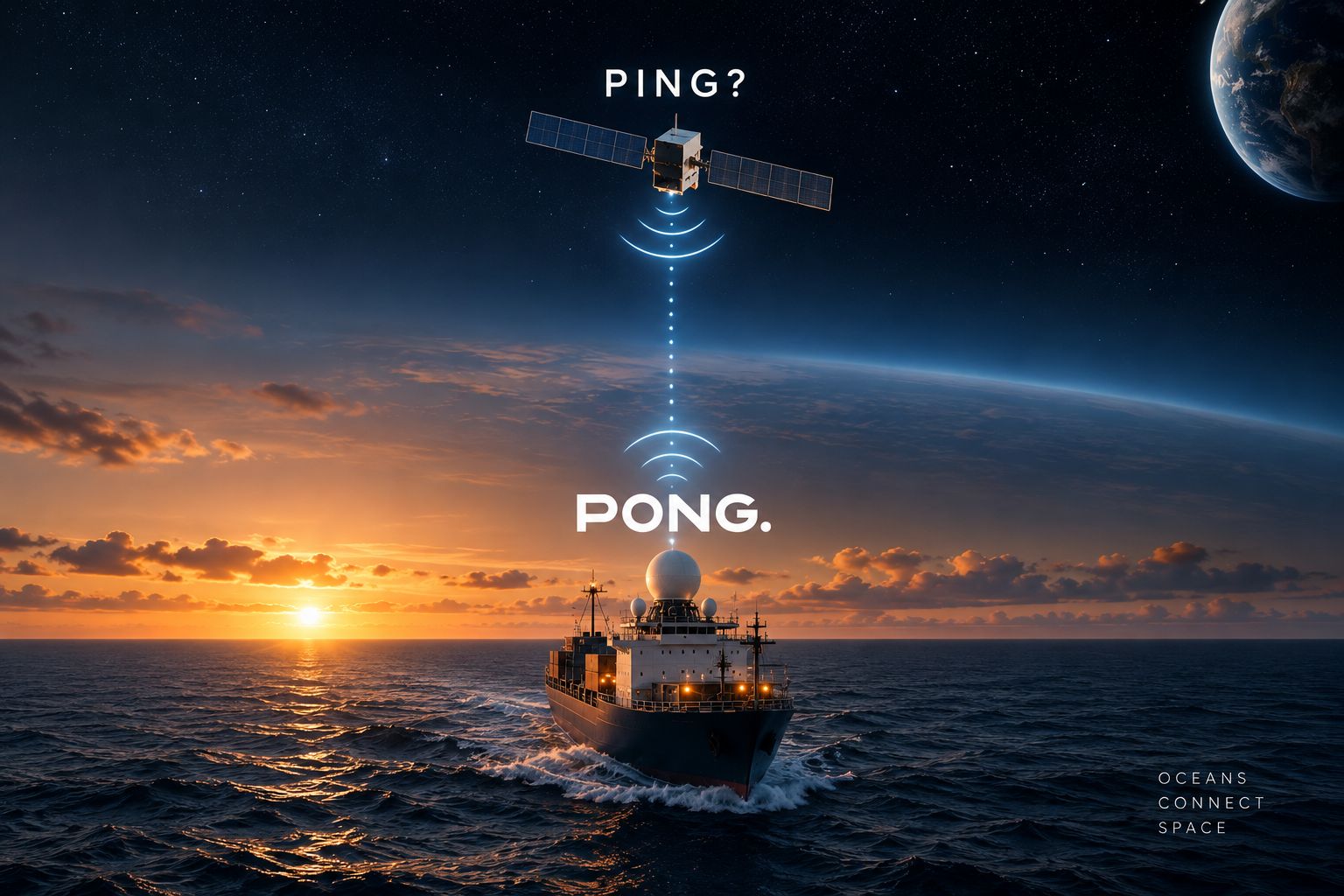
- We’re launching a fisrt space 🚀 project at Hexa And you know I’m not exactly unhappy about that :) We’re looking for a co-founder to build a new kind of company. It’s very early, and it all started with Guerric de Crombrugghe, our new Partner at Hexa. He started with a simple observation: satellites in low Earth orbit spend a large part of their time unable to communicate with the ground. Why? Because ground stations are.... on the ground. And 70% of the Earth is covered by water. So instead of building more and more antennas on
- Je t’aime, moi non plus. C’est le titre d’un chapitre de mon bouquin sur les avocats. Ça résume assez bien la relation que j’entretiens avec eux. Depuis Fotolia, 20 ans quand même, je reste toujours un peu sur mes gardes. Le modèle du paiement à l’heure n’aligne pas forcément les intérêts. Ca fait longtemps que j’ai envie de réinventer le cabinet d’avocats. Finalement, j’ai trouvé mieux : une équipe meilleure que moi pour le faire :) Lina Law (HX26) vient de nous rejoindre chez Hexa Sprint. Franck-Victor Laurant, Cyrille De

- Aujourd’hui, j’offre mon livre gratuitement. 🎁 En français ou en anglais. L’un des grands avantages d’être son propre éditeur, c’est qu’on peut faire absolument ce qu’on veut de son livre. Du coup, j’ai décidé de faire quelque chose d’un peu déraisonnable : vous l’offrir. Pendant quelques jours, je partage gratuitement le PDF complet de “Les pieds sur Terre, la tête dans les étoiles”, en français ou en anglais. C’est l’histoire de plus de 20 ans d’entrepreneuriat : 📸 Créer Fotolia, puis la vendre à Adobe 🏗️ Lancer eFounders,

- I’m giving away my book for free. 🎁 In English or in French. One of the great things about being your own publisher is that you can do whatever you want with your own book. So today, I’ve decided to do something slightly unreasonable: Give it away for free. For the next few days, I’m sharing the full PDF of Feet on the Ground, Head in the Stars - in English or French. It’s the story of 20+ years of entrepreneurship: 📸 Building Fotolia, and eventually selling it to Adobe 🏗️ Creating eFounders, now Hexa 🎯 Investing as a

- In 2021, I cofounded a slightly crazy project: Gama . The dream was to build solar sails, using nothing but sunlight to travel through space. Andrew Nutter, my cofounder and Gama's CEO, together with Daniel Chapman (CTO) and the team, soon realised something bigger: The technology needed to deploy a giant solar sail is exactly what next-generation satellites need to generate massive amounts of power. Today, Gama is announcing a major step in that journey. Eclipse Space has chosen Gama to power its satellites. Eclipse was founded

- Avec les années, j’ai dû admettre une chose : j’ai longtemps sous-estimé l’importance du rôle de CFO dans une boite. Mettez un excellent CFO à côté d’un excellent entrepreneur et vous obtenez une potion magique 🧪. Maintenant que j’ai compris ça, je ne peux plus m’en passer :) Nous cherchons le prochain CFO de Hexa. CFO n’est peut-être même pas forcément le terme idéal pour ce poste tellement il est singulier, on a mis Directeur Financier. Hexa est aujourd’hui construit autour de trois activités : 1) Start, où nous créons des

Related profiles

This page shows public professional information only, each fact cited. Is this you? send a correction, or ask for removal within 24 hours, no questions asked.