
Overview
He is an EU public affairs consultant, web developer and AI integration engineer with more than 10 years of experience in the Brussels policy landscape, working in six languages: English, Spanish, Italian, French, Dutch and Catalan. Brubru combines conversational AI with legislative tools so that lobbyists, trade associations, law firms, and NGOs can analyse policies, draft amendments, and navigate EU institutional processes. Subscriptions run from €39 to €99 per month with a 14-day free trial, and an EU Data API exposes 935 REST endpoints across 88 EU institution folders. Beyond Brubru, Beresol runs 8 live policy monitors drawing on more than 18 institutional sources and ships several other products: Metagrafi, a free transcription service, Aymap, an AI-powered GIS platform in preparation, and Massimino, an AI fitness coaching webapp in beta. The company's service lines span EU public affairs, AI discoverability, AI integration, web and GIS development, and GovTech.
Solé Ferioli worked as a parliamentary assistant for seven years before moving into consultancy and building Beresol, a Brussels EU affairs firm. He launched Brubru under Beresol to bring AI tooling to lobbyists, trade associations, law firms, and NGOs operating across the European institutions.
He leads product and direction at Brubru, including legislative analysis tooling, an Akoma Ntoso amendment editor, vote prediction, and compliance workflows for EU public affairs teams.
Career history

Insights & ideas
Solé Ferioli views AI development through the lens of applied infrastructure and multilingual accessibility rather than speculative futures. His concrete focus centers on agent-based AI systems, chatbots, monitoring platforms, legal databases, deployed across actual EU contexts [1]. He builds products like Brubru and Massimino specifically to serve professionals operating across multiple European languages and regulatory zones, treating language parity not as a feature but as foundational [4]. This includes translating EU legal texts into Catalan "because 10 million Catalan speakers deserve access to EU law in their language" [4].
His political economy view is skeptical of European capacity relative to American models. He observes that SpaceX's success stems from risk tolerance and financial reward that "in the EU a company like SpaceX would" struggle to achieve, though the sentence remains incomplete [6]. Yet rather than calling for deregulation, he tracks EU legal evolution closely, noting the AI Act itself has been substantially revised barely two years after passage [5], and engages with EU governance constraints as structural facts requiring adaptation rather than obstacles to overcome.
On labor and corporate structure, Solé Ferioli supports stronger worker protections within EU regulatory harmonization. He affirmed the European Parliament Employment Committee's position that worker rights should follow employees' actual location, not corporate registration, and that "an EU Inc. registered in one Member State cannot avoid stronger worker participation rules elsewhere" [3]. He frames this not as anti-business but as essential to preventing "social dumping" [3].
Infrastructure sustainability appears as his lens on EU AI competitiveness. Europe's AI future depends on tripling data center capacity within five to seven years, yet "Europe does not have a reliable map of its own data centres," creating a baseline problem before any policy can function effectively [7]. His recurring stance combines operational specificity with skepticism toward grand claims, including a philosophical caution about anthropomorphizing AI systems that he frames through classical Greek conceptual frameworks [8].
In the news
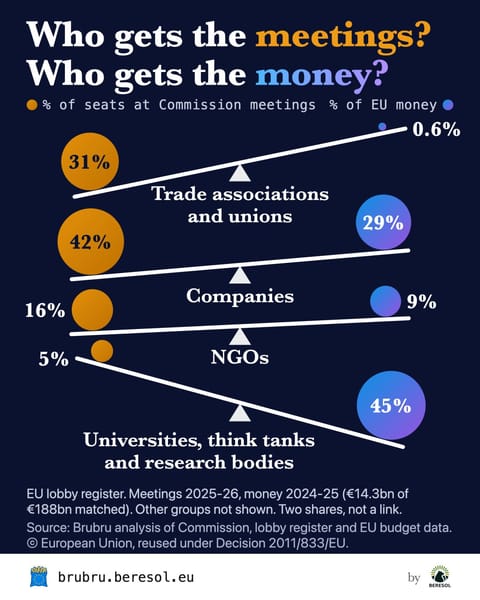
- At Beresol we've created a very potent API and scraper to the europa.eu digital ecosystem. We get so much data from and about the EU (legally!) that we can use #AI to build on that data and, of course, to #analyse it. The #EU is not only a bureaucratic giant, it is also a giant pile of data (and that data keeps being made and made and made, and it's not that AI-sloppy!). Data of anything you / we can imagine. The data is there, it is both very well organised and managed (such as in and from the Publications Office of the
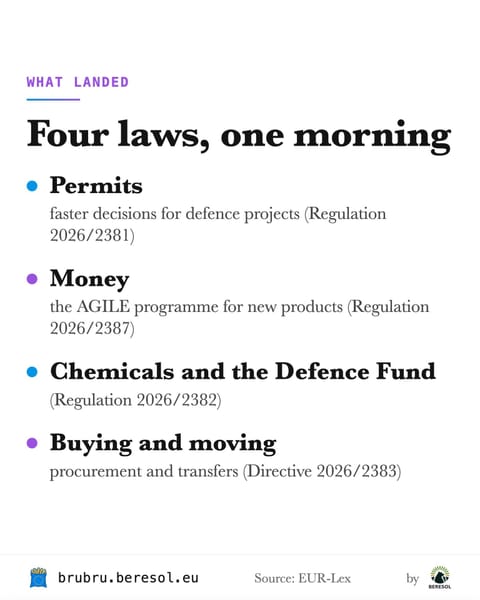
- So here is my question: would you accept "silence means yes" for a factory down your road, if it gets Europe ready by 2030? The #EU has adopted four new defence laws introducing significant changes to permitting, funding, chemicals exemptions and procurement. The most striking measure is the introduction of a “silence means consent” principle for designated defence projects, with permits automatically granted if authorities fail to respond within 42 working days (up to 102 in exceptional cases), applicable from February 2027. The
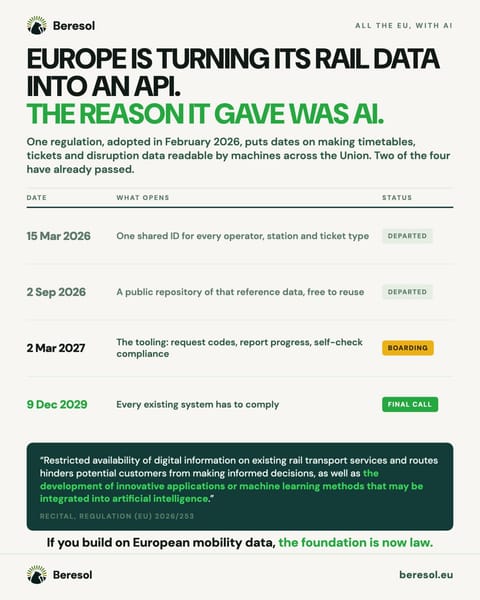
- I pointed our #EU data #API at #rail law and found this: "Restricted availability of digital information on existing rail transport services ... hinders ... the development of innovative applications or machine learning methods that may be integrated into artificial intelligence." European law arguing for open data because closed data blocks AI. Regulation 2026/253 sets four dates for making every railway's timetables, tickets and disruption data machine-readable. Two have already passed this year. The last is 9 December
- The work that the people working at the Publications Office of the European Union is truly amazing. They offer (for free!) hundreds of datasets, free to check, download, analyse, and manage. All the AI-powered legislative monitors, all the EU-related data providers, all the LegTech and GovTech with EU data fetch from the EU Data Portal. It's one of the main sources of information, and it is important to, from time to time, give them the wholesome credit they deserve. So what better way to use their Licencing Assistant? Again,
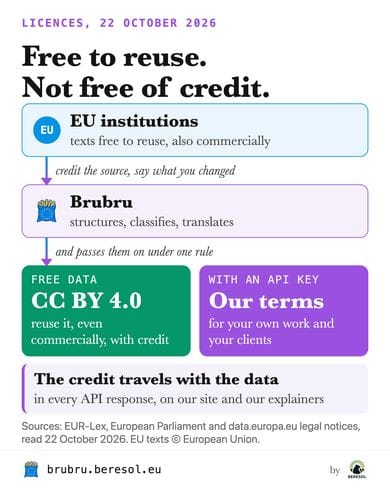
- The work of the people working at the Publications Office of the European Union is truly amazing. They offer (for free!) hundreds of datasets, free to check, download, analyse, and manage. All the AI-powered legislative monitors, all the EU-related data providers, all the LegTech and GovTech with EU data fetch from the EU Data Portal. It's one of the main sources of information, and it is important to, from time to time, give them the wholesome credit they deserve. So what better way to use their Licencing Assistant? Again,
- This was a truly beautiful (and intense!) experience! The moderators and facilitators did a great job, the whole hackathon was very well organised (and it was the very first of its kind!) Together with Martin Demovič, Petros Stratis and Mahmoud Elfil (aka Feel) we proposed an #agritech & #govtech solution based on LPIS compliance within the CAP framework: a webapp meant to improve the information and communication of and for farmers with advisers / civil servants from paying agencies and managing authorities in order to ease
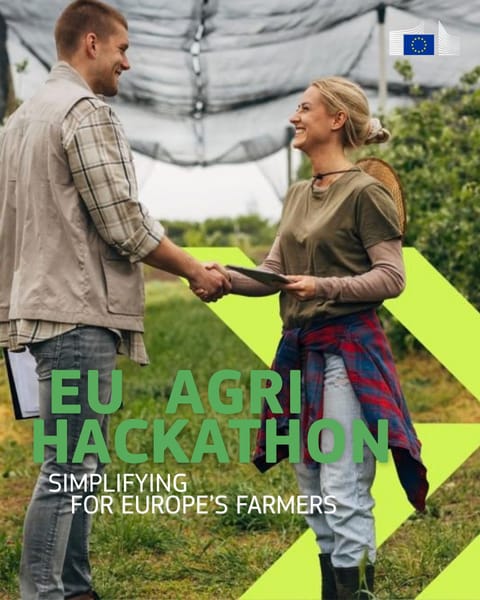
- This was a truly beautiful (and intense!) experience! The moderators and facilitators did a great job, the whole hackathon was very well organised (and it was the very first of its kind!) Together with Martin Demovič, Petros Stratis and Mahmoud Elfil (aka Feel) we proposed an #agritech & #govtech solution based on LPIS compliance within the CAP framework: a webapp meant to improve the information and communication of and for farmers with advisers / civil servants from paying agencies and managing authorities in order to ease
- ATENCIÓ! Problema de ciberseguretat molt greu relacionat amb el llenguatge de programació #PHP! Dues vulnerabilitats crítiques de PHP posen en risc llocs web. Això és el que cal saber: PHP és un #llenguatge de #programació que alimenta una part important d’#internet. WordPress , Drupal i moltes altres #aplicacions web en depenen. S’executa al #servidor, processant peticions, interactuant amb bases de dades i generant el #contingut que mostra el navegador. El problema? S’han identificat dues #vulnerabilitats crítiques en PHP que

Related profiles
This page shows public professional information only, each fact cited. Is this you? send a correction, or ask for removal within 24 hours, no questions asked.