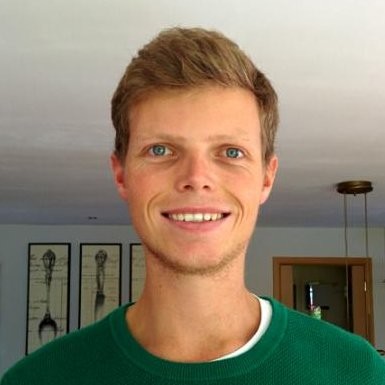
Overview
Yoran built Curvo as a response to the complexity and cost of traditional investing, targeting a generation that wants simple, automated, index-based portfolios. He is also known for his writing on personal finance and investing in Belgian context.
As CTO of Curvo, Yoran leads product and engineering for the platform. He combines technical depth with a strong public voice on passive investing and financial independence, earning him an audience beyond the startup ecosystem.
Yoran co-authored "De hangmatbelegger," a Dutch-language guide to passive investing that sold 15,000+ copies and won "Woord van het Jaar 2024." A French edition, "Gagner en bourse sans se fatiguer," followed in 2024. He combines product and engineering work at Curvo with a public voice on ETFs and financial independence for younger generations.
Career history
- Co-FounderSep 2019 - PresentCurvo
- Co-Founder & CTOMay 2013 - PresentSutori
- Frontend Web DeveloperNov 2012 - Feb 2013Luminary, Melbourne

Education
- EUMSc, Embedded Systems2009 - 2011Eindhoven University of Technology
BSc, Computer Science2006 - 2009KU Leuven
Insights & ideas
The through-line
Across nearly every post, Brondsema returns to one idea: the hard part of passive investing is not the strategy itself but sticking to it. He frames "hangmatbeleggen" (hammock investing) as simple in theory and difficult in practice, and his writing has shifted from explaining the basic case for index investing toward dismantling the objections and behavioral traps that make people abandon it: market timing, panic selling, unclear diversification, tax confusion, and the false comfort of a savings account. The second book, "Hangmatbelegger voor het leven," makes this shift explicit: "Het basisthema van het boek is: volhouden is een stuk moeilijker dan beginnen met beleggen" [5], echoed almost verbatim in his description of the podcast conversation about the same struggle [3]. The recurring subtext is that most financial mistakes are not calculation errors but behavioral ones, discovered too late, as in Christiane's story: "Christiane heeft niets fout gedaan. Ze kwam het alleen te laat te weten" [6].
On volhouden (staying the course)
Brondsema treats persistence, not cleverness, as the deciding factor in investment outcomes. He repeatedly shows that investors in identical products end up with wildly different results purely because of behavior: "Twee groepen beleggers zaten in exact hetzelfde fonds. De ene groep haalde 7,7% per jaar, de andere 4,3%" [11], with the better outcome explained simply by the fact that they "bleven storten tijdens de daling" [11]. He is skeptical of market timing on principle: "Je moet niet één keer gelijk hebben, maar twee keer na elkaar: op tijd verkopen én op tijd terugkomen" [4], and points out that "elk jaar dat de beurs stijgt, wordt die drempel hoger en het scenario onwaarschijnlijker" [4]. Even the amount saved matters less than when the habit of saving more begins, as in his comparison of two savers: "Robert en Ilse begonnen allebei op hun 25ste met €200 per maand beleggen. Op hun 65ste heeft Ilse €186.000 meer, en dat komt niet doordat ze slimmer belegde" [13].
On spreiding (diversification)
He pushes back on the instinct to add funds in the name of safety, arguing that apparent diversification can secretly be concentration. Buying a world ETF plus an S&P 500 and a Nasdaq-100 tracker feels safer but isn't: "Je portefeuille oogt uitgebreider, terwijl ze geconcentreerder is geworden" [7]. His conclusion is that "spreiding zit in wat er achter je posities schuilt" [7], not in the number of line items on a statement. The same logic applies to filtered products like halal ETFs, where he is explicit about the tradeoff: "Wat je opgeeft is spreiding, niet de lage kosten van indexbeleggen" [9].
On pensioenopbouw (building your own pension)
Brondsema treats the statutory pension as insufficient and largely outside individual control, which is precisely why he automates the part he can control. He lays out the numbers by employment status, noting "een zelfstandige zit gemiddeld onder de armoedegrens. Ik ben er zelf een, dus dat cijfer kwam even binnen" [12], and draws the practical conclusion: "Dat is de reden waarom ik al jaren elke maand automatisch beleg. Omdat dat het enige stuk is dat ik zelf in handen heb" [12]. He frames checking the three pension pillars as a basic, non-optional exercise, using Christiane's story as a cautionary tale about learning this too late [6], and treats products like pensioensparen or tak-21 as often underperforming a globally diversified alternative by hundreds of thousands of euros over a working life [15].
On controle (children and money)
When it comes to investing for his daughter, Brondsema frames the choice as one about control, not returns. Investing in a child's name transfers legal ownership at eighteen, which he sees as a real tradeoff rather than a default good: "Alleen verlies je de controle. Vanaf zijn achttiende beslist je kind, en jij niet meer" [2]. His own choice is to keep the money in his own portfolio with a separate monthly contribution earmarked for her, which lets him decide when the money is handed over: "Maar tot dan beslis jij wanneer dat geld iets betekent" [2].
From the stage
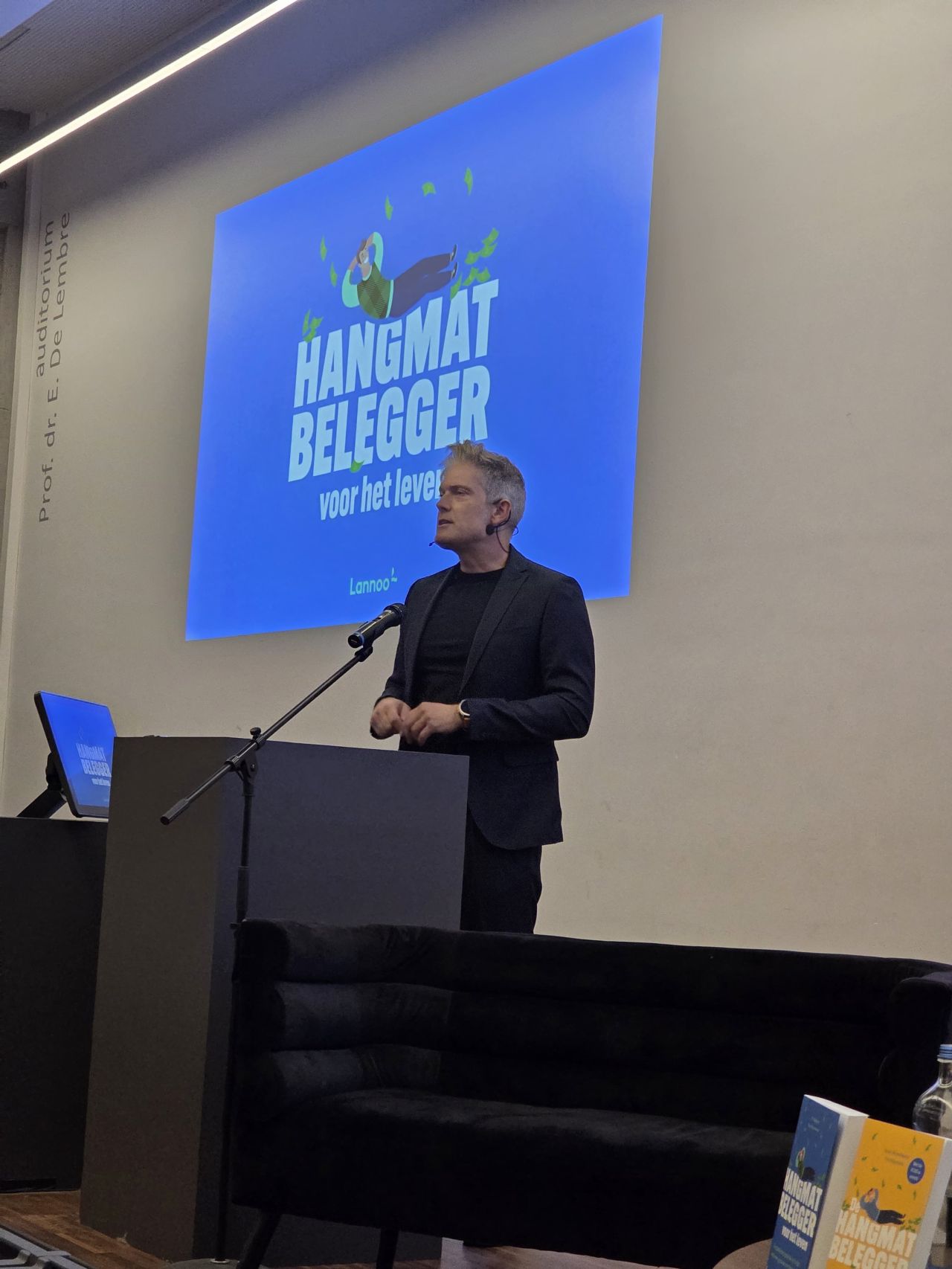
In interviews he adds context absent from the written posts: that the first book came about because a publisher discovered his startup Curvo and approached him, and that he chose to co-author with Tim specifically to avoid two similar books competing in the small Dutch-language market [16]. He also describes Curvo's backtesting tool, using historical data to show investors the returns and volatility to expect from different portfolios [18], and gives a personal detail on his own working rhythm as an entrepreneur pursuing passive strategies, saying he works roughly one day per week [18]. He also traces his path from studying computer science and embedded systems to co-founding the online education platform Sutori before building Curvo [18].
Takeaways
- Keep your emergency buffer in a reglemented Belgian savings account rather than invested; at 1.5% interest you can hold about €68,000 before triggering tax on the interest [1].
- If investing for a child, consider keeping the portfolio in your own name with a separate monthly contribution so you retain control past their eighteenth birthday [2].
- Don't try to time the market: you need to be right twice, both on the exit and the re-entry, and each rising year makes the "crash is coming" scenario statistically less likely [4].
- Use mypension.be and an online simulator to add up your three pension pillars before assuming your statutory pension plus pensioensparen will be enough [6].
- Adding more ETFs that hold the same top companies (Apple, Microsoft, Nvidia) can make a portfolio look more diversified while actually concentrating it further [7].
- Automating contributions, as in pension-account investors versus self-directed investors in the same Vanguard fund, converts a 4.3% behavior-driven return into a 7.7% one over the same period [11].
Media & appearances
- Michiel van Vugt en Je Geld en of Je LevenYouTube#178 - De hangmatbelegger Yoran Brondsema over beleggenYoran Brondsema discusses his book "The Hammock Investor" (De Hangmatbelegger), which promotes passive investing for people with limited time, arguing that successful investing does not require constantly following financial news or actively picking stocks. He explains how the book came about when a publisher approached him after discovering his startup Curvo, which makes investing accessible to young people, and how he decided to co-author the book with Tim rather than having two similar books released simultaneously in the small Dutch-speaking market.
- Sebastien Aguilar - The FIRE Belgium ShowYouTubeMaking index ETF investing simple and accessible to everyone in Belgium - with Yoran BrondsemaYoran Brondsema discusses how he co-founded Sutori, an online education platform, and is now building Curvo, an index investing platform designed to make index investing accessible to people in Belgium and beyond. He explains how to use backtesting to analyze portfolio performance using historical data and demonstrates what returns and volatility investors can expect from different portfolios. He also shares his personal journey from studying computer science and embedded systems to becoming an entrepreneur who works roughly one day per week while pursuing passive investing strategies.
- CurvoYouTubeAlles over ETFs met Tim Nijsmans en Yoran Brondsema
In the news
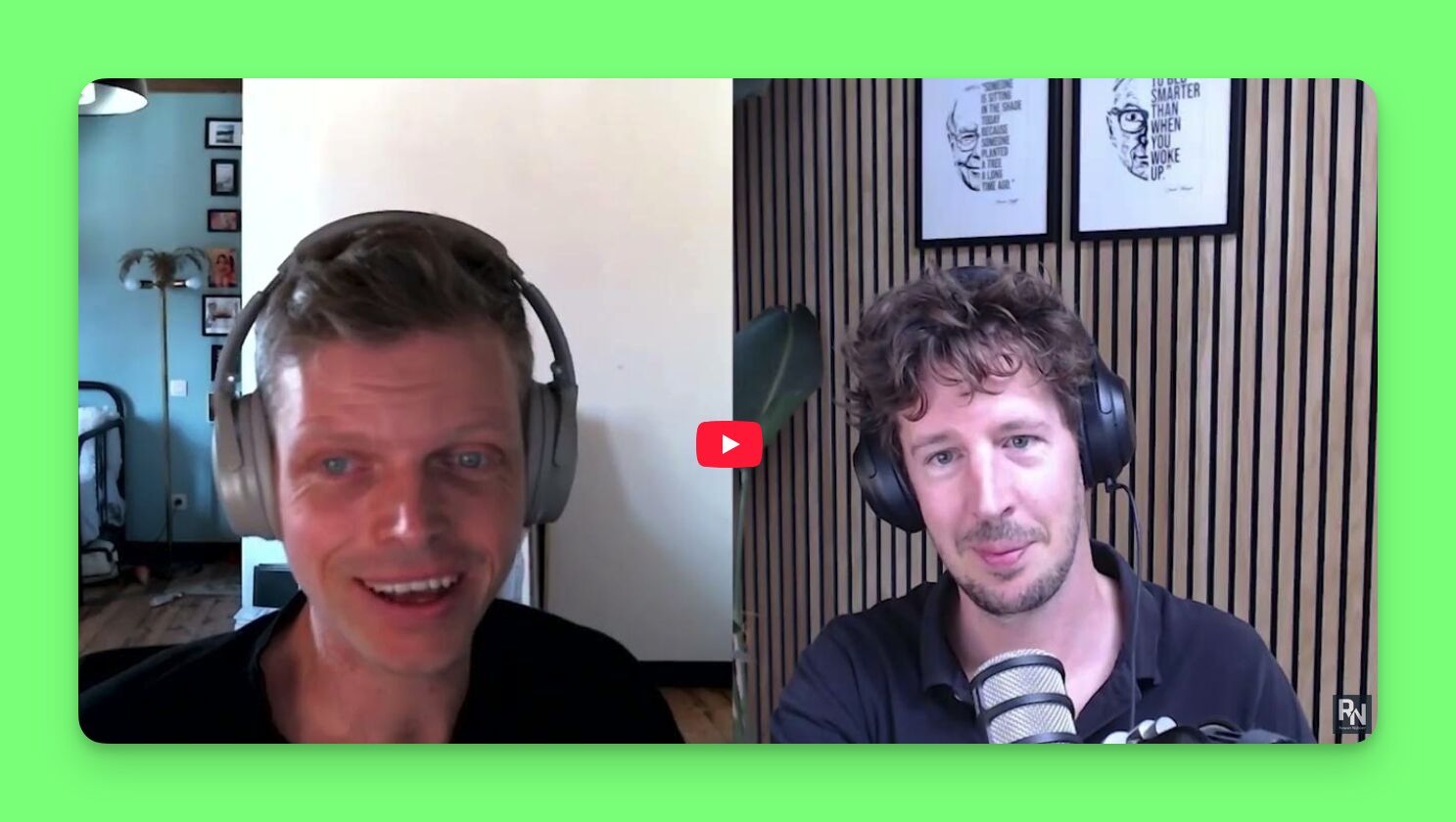
- Een tip die ik kreeg voor de promotie van "De hangmatbelegger": zet geen advertenties op Instagram. Die werken absoluut niet. Die kwam van Rowan Nijboer. Hij had het jaar ervoor het uitstekende "Aandelen selecteren als een Pro" uitgebracht, dus ik vroeg hem om raad. We hebben die advertenties dan ook nooit gezet :) Nu zat ik zelf bij hem aan tafel, voor zijn podcast "Beleggen met Rowan Nijboer". We spraken over de levenscyclus van de belegger: actief en passief beleggen, beleggen voor je kind en samen met je partner, afbouwen
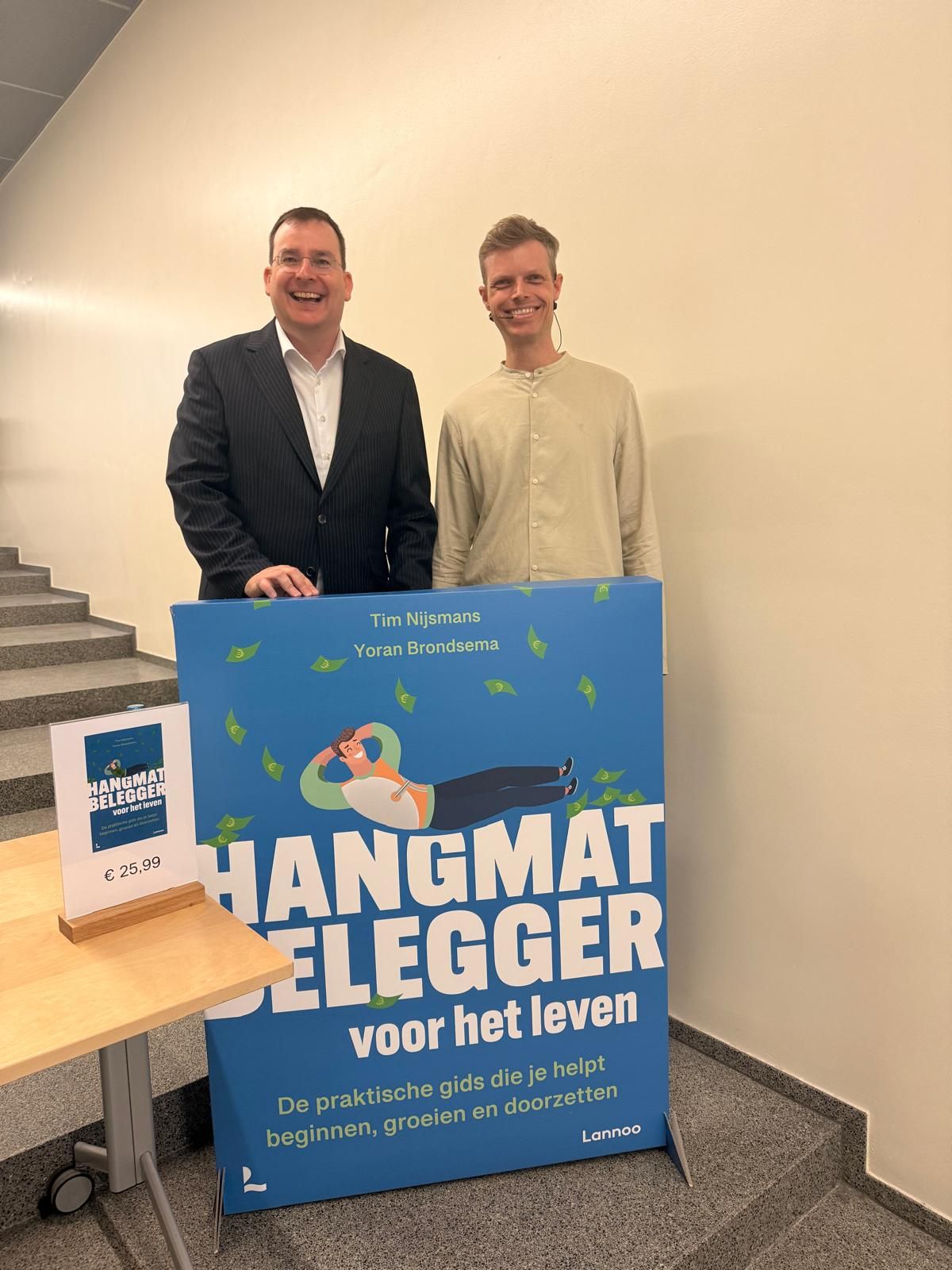
- Hangmatbelegger voor het leven" ligt sinds 25 augustus in de winkel, maar pas gisteravond voelde het gelanceerd, met 300 mensen in een zaal in Gent. Op onze "Avond van de Hangmatbelegger" hebben we de lancering feestelijk gevierd. Maarten Vangramberen, die je waarschijnlijk kent als presentator bij Sporza, leidde de avond van begin tot einde. Hij was daar de perfecte persoon voor, want hij was drie jaar geleden dankzij "De hangmatbelegger" zelf begonnen met hangmatbeleggen. Juist omdat hij zo'n druk leven heeft, past
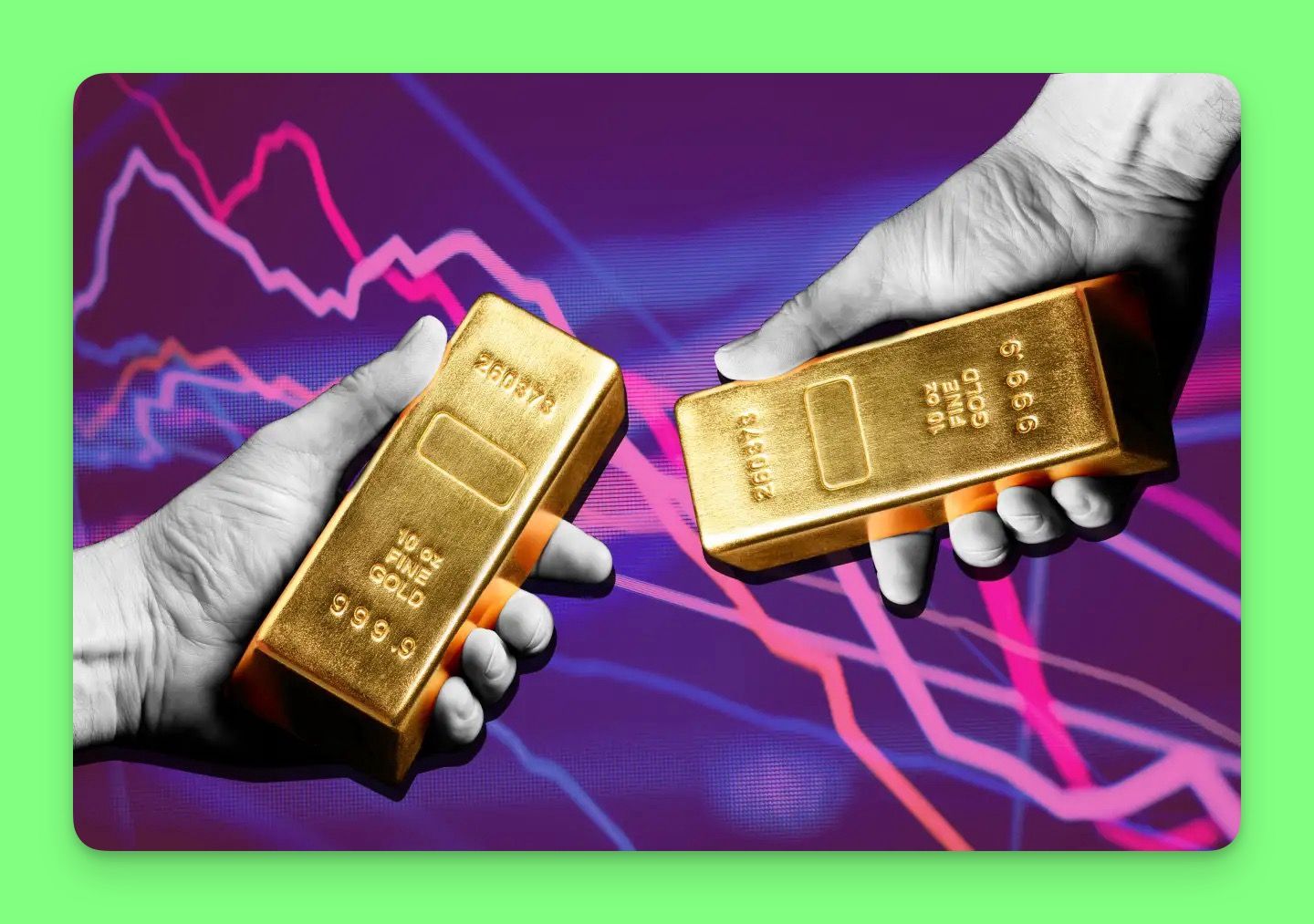
- Een kilo goud kost vandaag ongeveer 123.000 euro. Sinds 1900 leverde goud 1,3% per jaar op na inflatie. Amerikaanse aandelen deden 6,6%. Op het webinar van vorige week kreeg ik de vraag over goud opnieuw. Ze komt op zowat elke lezing terug. Die cijfers komen uit de Global Investment Returns Yearbook van UBS, samengesteld door Dimson, Marsh en Staunton, met data van 1900 tot en met 2025. Over veertig jaar groeit 10.000 euro daarmee tot 16.800 euro in goud, en tot 129.000 euro in aandelen. Het verschil zit in wat je koopt. Een kilo
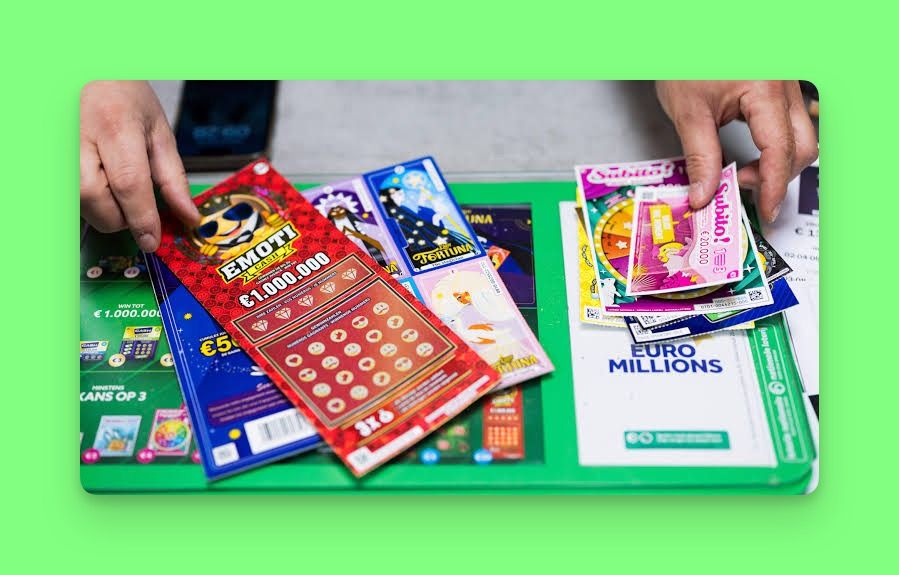
- Bij de Nationale Loterij weet je op voorhand hoeveel je verliest: 24 cent van elke euro. En toch is het de beurs die te risicovol heet. Belgen zetten vorig jaar 1,666 miljard euro in bij de Nationale Loterij. Daarvan ging 1,266 miljard aan prijzen terug naar de spelers. 76 cent per ingelegde euro. Ik heb daar niets op tegen. Een biljet kopen is ontspanning, en de winst van de Loterij vloeit terug naar de samenleving. Over 2024 was dat 362,5 miljoen euro. Maar van mensen die ik ontmoet krijg ik geregeld te horen dat de beurs te
- Mijn noodbuffer is negen maanden uitgaven groot, de bovenkant van wat ons boek aanraadt. Ik zit daar omdat ik nooit gedwongen wil worden om mijn beleggingen te verkopen. Dat is een antidoel. En ik merk dat mensen daar veel makkelijker op komen dan op een doel. Vraag iemand waarvoor hij belegt en je krijgt meestal "genoeg hebben later". Dat is vaag, en je kan er niets mee. Zeker als je jong bent. Een bedrag plakken op iets dat veertig jaar weg ligt voelt als gokken. Vraag wat hij absoluut niet wil, en het antwoord is plots pijnlijk
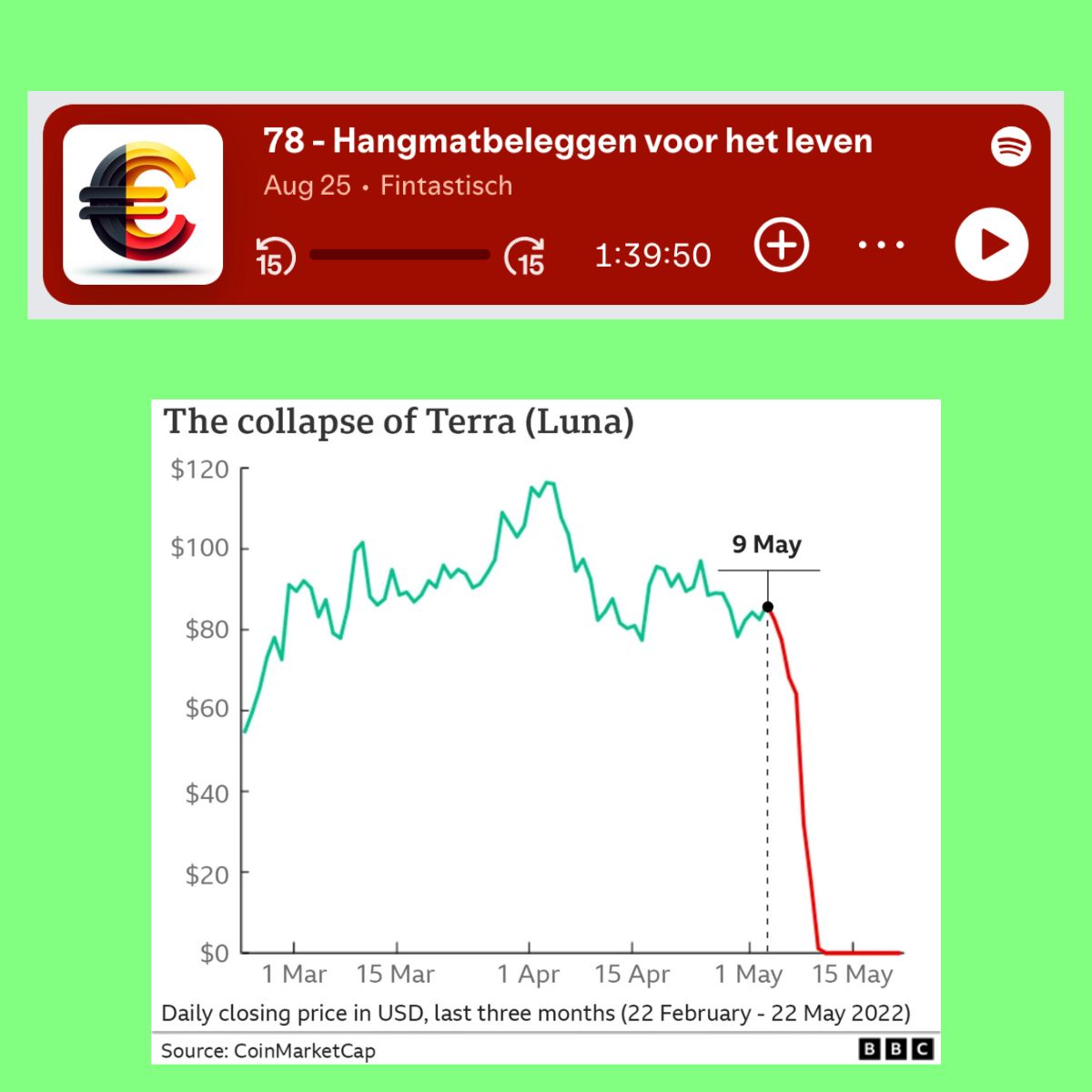
- Een vriend van mij parkeerde een groot deel van zijn noodbuffer in een cryptoproject dat 9% per jaar beloofde. Een paar maanden later stond er niets meer op. Dat was in 2022, toen Terra en Luna in elkaar stortten. Zijn redenering was nochtans niet gek: waarom laat je geld staan aan bijna niets als het elders 9% kan opbrengen? Omdat een noodbuffer geen rendement moet opleveren. Hij moet er zijn op het moment dat je hem nodig hebt, en dat is meestal net het moment waarop alles tegelijk misloopt. Waar het wel loont om kieskeurig te
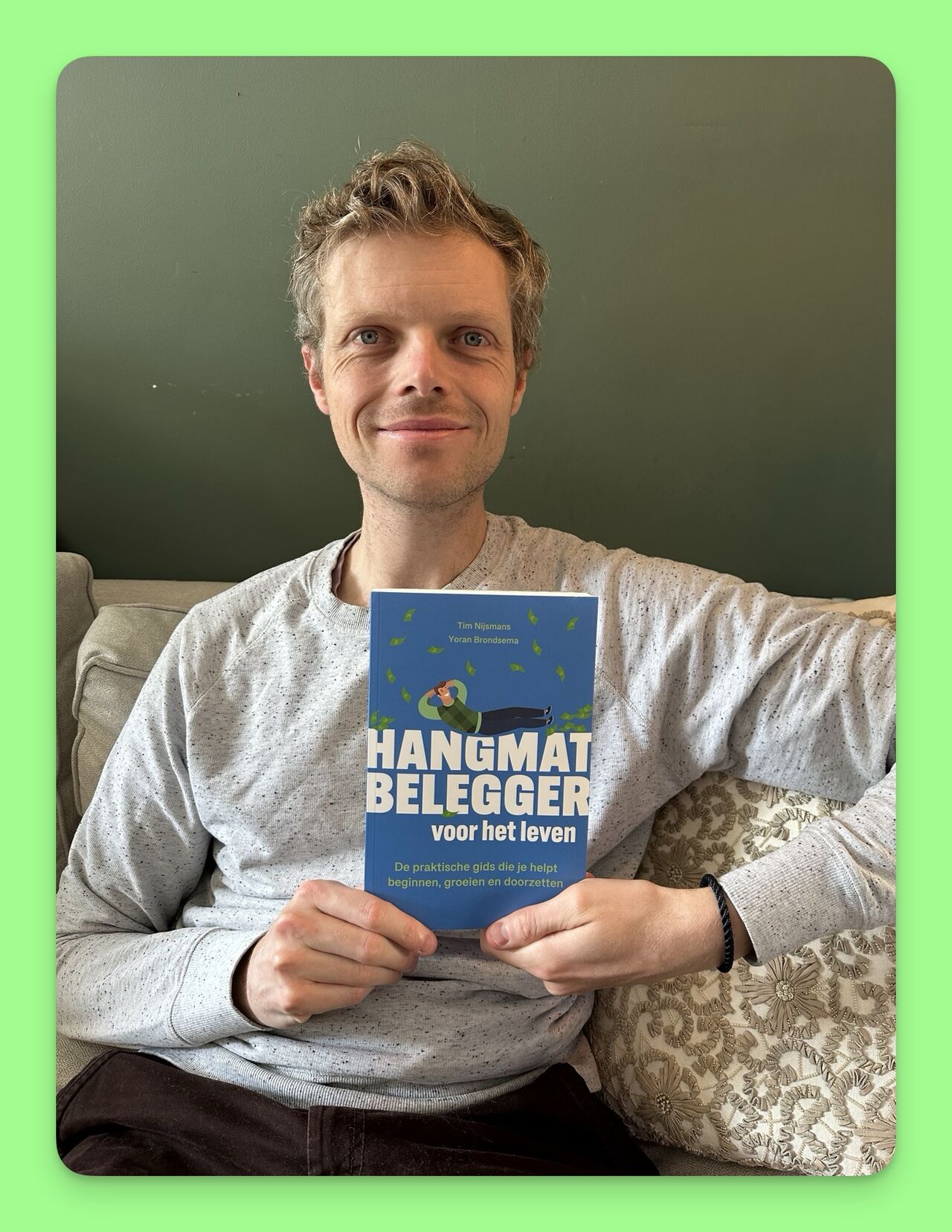
- Bijna 50.000 exemplaren later mag ik het wel toegeven: de eerste maanden na het afronden van "De hangmatbelegger" zei ik tegen mezelf "dit nooit meer". Maar na verloop van tijd vergeet je het weekendwerk en de prangende deadlines. Wat blijft, zijn de goede herinneringen. De vele verhalen van lezers die dankzij het boek met hangmatbeleggen zijn begonnen. Het woord ‘hangmatbeleggen’ dat in Van Dale is opgenomen en intussen in Vlaanderen synoniem staat voor passief beleggen. Zelfs de interne documenten van private banken die ik te zien
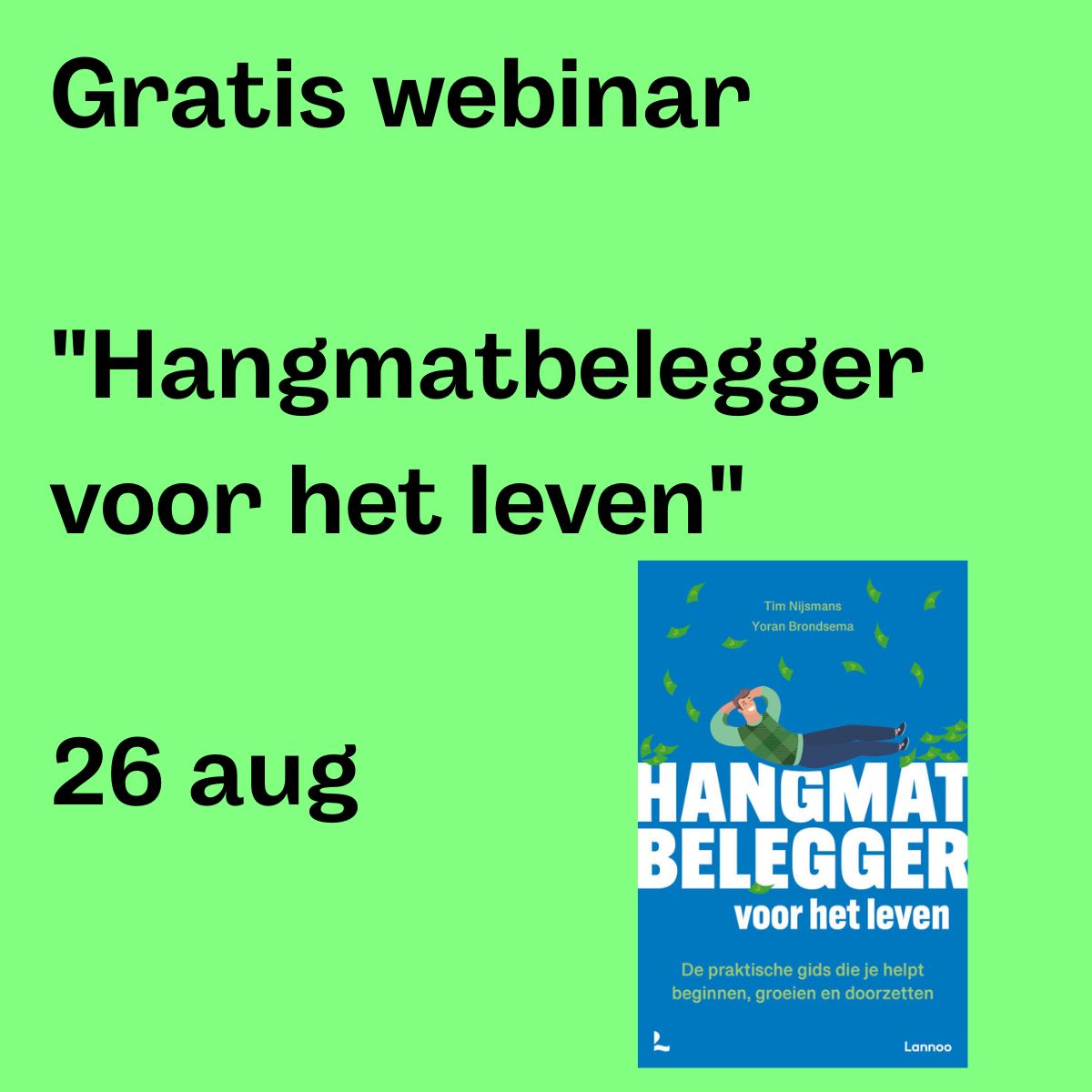
- Vandaag is het zover, "Hangmatbelegger voor het leven" is uit! Wat begon als een idee ongeveer een jaar geleden, is nu werkelijkheid geworden. Om dit te vieren organiseren Tim en ik een gratis webinar, waaraan jij ook kan deelnemen. We zullen ons nieuw boek presenteren en al allerlei tips meegeven. Maar er zal ook genoeg ruimte zijn voor een Q&A waar je je vraag kan stellen en wij die live zullen beantwoorden. Wanneer? Woensdag 26 augustus om 19u30 Inschrijven kan hier 👉 https://lnkd.in/ecYzCCms Hopelijk tot dan!
Related profiles
This page shows public professional information only, each fact cited. Is this you? send a correction, or ask for removal within 24 hours, no questions asked.