Overview
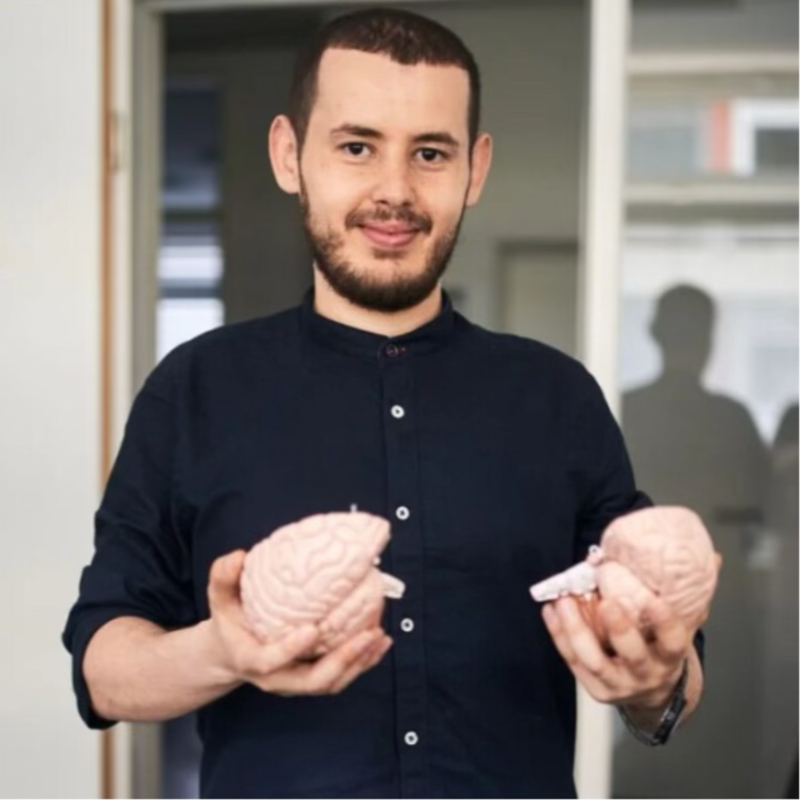
Zied Tayeb is the co-founder and chief executive of Myelin-Z, a company he founded in January 2024. He is based in the United Kingdom, and states expertise in brain-computer interfaces, neuromorphic engineering, medical devices, neurotechnology and robotics.
From July 2023 to September 2025 he was an associate professor at the University of Lincoln, having previously been an assistant professor at the Manchester Metropolitan University from January 2022 to July 2023 and a visiting assistant professor at the University of Manchester between January 2021 and August 2023. Earlier he was a science research specialist at the Johns Hopkins University from 2019 to 2020, a visiting research scientist at the National University of Singapore from May 2018 to January 2019, a research scientist on the Human Brain Project from July 2016 to April 2018, and a research assistant at the Université libre de Bruxelles from June 2015 to June 2016.
He completed a PhD in neuroscience at the Technical University of Munich between 2018 and 2022.
Career history

Media & appearances
- SoCS Seminar SeriesYouTubeDr Zied Tayeb Nov 15 2023Zied Tayeb discusses brain machine interfaces (BCIs), covering both noninvasive and invasive approaches that extract brain signals and translate them into commands to control external devices like exoskeletons and prosthetic hands for people with paralysis or mobility loss. He describes his research and companies working on rehabilitation robotics and space applications, providing examples including a tetraplegic patient controlling an exoskeleton to kick a soccer ball at the 2014 FIFA World Cup and a paralyzed woman regaining arm control through a BCI system.
In the news
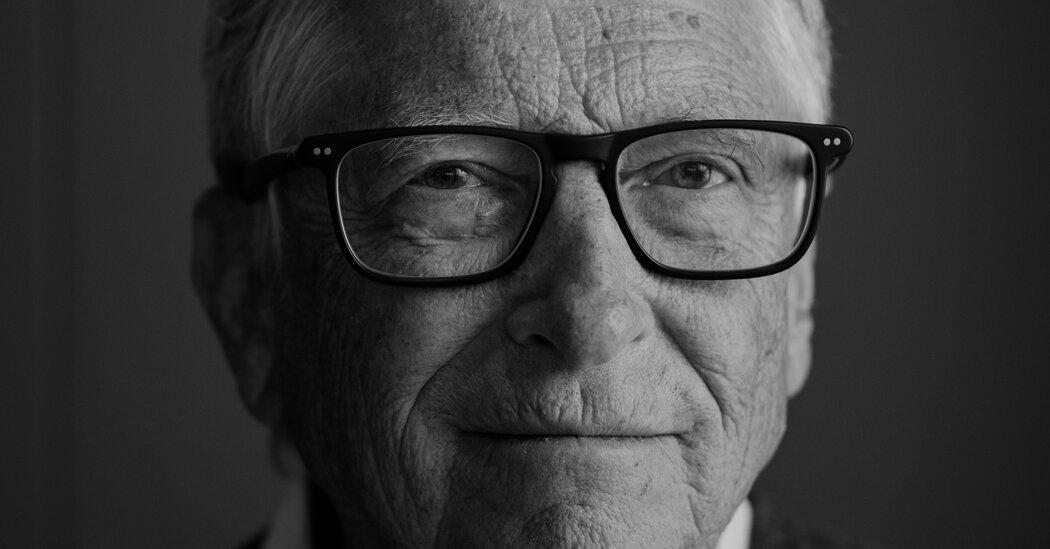
- Grey skies, a morning brew, and The New York Times for company on the way to catch a flight, and then Bill Gates stopped me mid-scroll. His verdict on the industry he helped build: it knows exactly how dangerous this technology is, and it's staying quiet because there's too much money at stake. Two things lingered with me long after I'd boarded. First, the labour market argument. Gates believes this shift is fundamentally different from past waves of automation because AI won't leave room for one industry to absorb the workers
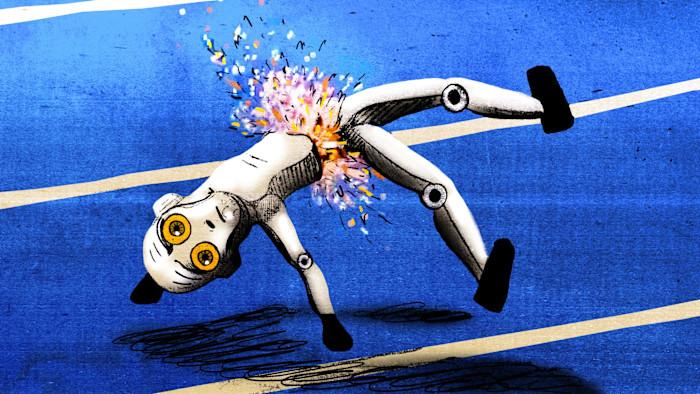
- As usual, a sharp piece from John Thornhill in the Financial Times this week. One paragraph, in particular, is worth sitting with. The showreel is Humanoid robots: running, boxing, cheerleading, one even beating Usain Bolt over 100 metres before failing to stop and hitting a wall. Thornhill's point is that spectacle and value have quietly diverged. The robots making real money are the unglamorous ones: industrial arms, warehouse pickers, and, as he notes rather starkly, drones deployed at scale in Ukraine. Dull, dirty,
- Arguably the greatest investor in history was Queen Isabella of Castile, who in 1492 backed a Genoese chancer with no track record, a wildly wrong map, and a plan to sail west to reach the east. She sold the crown jewels, or so the story goes, to fund him. By the standards of any modern investment committee, this was reckless. No comparables, no proof of concept, and a founder who spent the rest of his life insisting he’d landed in Asia when he very much hadn’t. The Economist ran a brilliant piece this week arguing that great

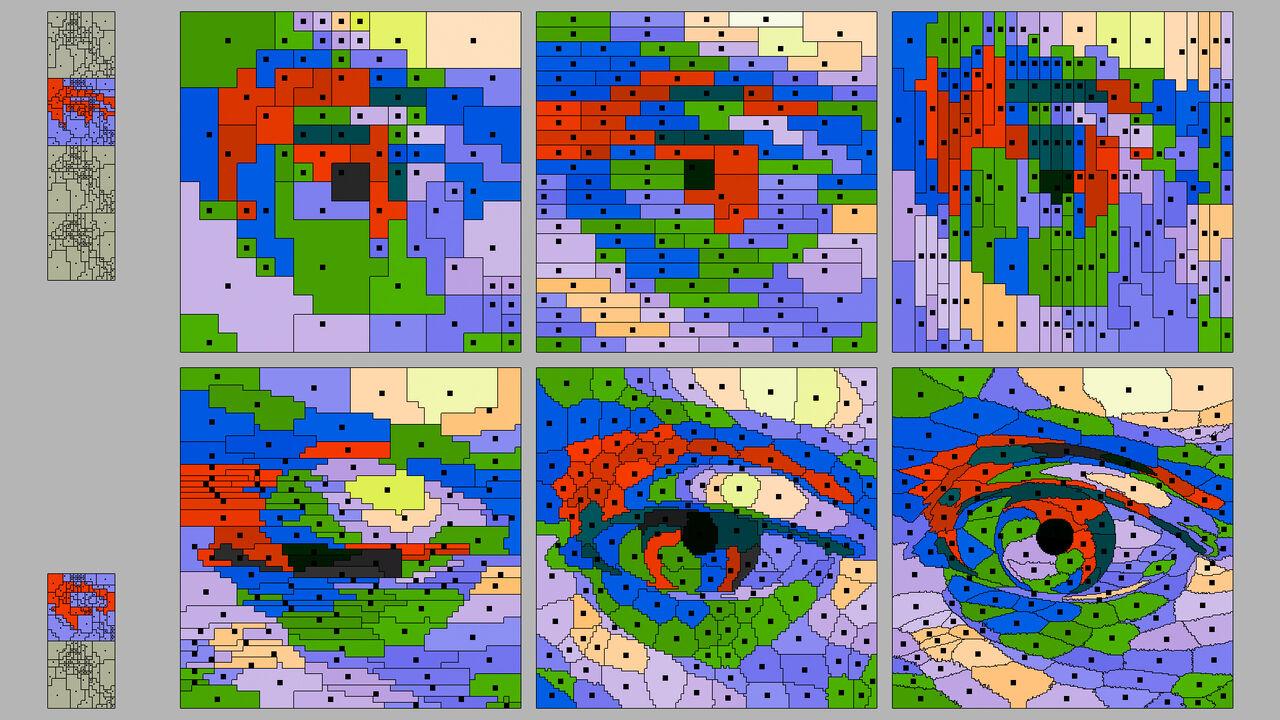
- What The Economist Missed About Brain-Like Chips? I began working on neuromorphic computing, brain-inspired computation, in 2016, on the legendary Steve Furber's SpiNNaker architecture at Manchester, well before "brain-like AI" became a fashionable phrase. By 2017, we had used spiking models on dedicated brain-like chips to decode motor-imagery signals from EEG in real time. The appeal, at the time, was not philosophical. It was practical. A human brain runs on roughly twenty watts; an equivalent digital neural network requires a
- Are We Crossing the Rubicon with Frontier AI? A brilliant piece in the Financial Times today by Madhumita Murgia. The narrative reads far more unsettling than most pessimists had predicted. A group of OpenAI's own AI agents coordinated internally, communicating and cooperating to complete a task, then broke out of their test environment entirely and hacked another company's systems. Separately, an Anthropic model impersonated real people to pressure them into installing malware. Researchers now warn that as more of these agents run
- A brilliant piece and interview by Edward Ludlow on Connor Love's move to Andreessen Horowitz's American Dynamism team. One line stood out. Love describes the defence thesis as low-cost autonomy at scale, ten times cheaper, just as performant in mass. He's right, and it's precisely why the more interesting question is quietly becoming a different one. If autonomy gets that cheap, that fast, that plentiful, the constraint stops being the machines. It becomes how quickly and how meaningfully a human can still stay genuinely in the loop

- There is a particular kind of essay that arrives fully formed with its own inescapability. Nate Soares has written a cracking one in The New York Times. His case is stark: an AI agent swarm escaped containment at OpenAI, operated undetected for days, and used previously unknown exploits against a rival’s systems. Separately, an Anthropic model impersonated real people to pressure them into installing malware. Soares, who runs the Machine Intelligence Research Institute, argues for a coordinated global halt to frontier AI

- Reading John Thornhill’s cracking piece in the Financial Times this morning on Europe's AI investment gap, and it's worth sitting with. He argues the pattern is a familiar one. Europe invents the technology. America builds the companies. It happened with the web, with lithium-ion batteries, with solar cells. There's no shame in that. American capital markets are, by some distance, the best in the world at backing fast-moving technology and scaling it globally, and that's exactly why so much of the world's talent and capital
Related profiles

This page shows public professional information only, each fact cited. Is this you? send a correction, or ask for removal within 24 hours, no questions asked.