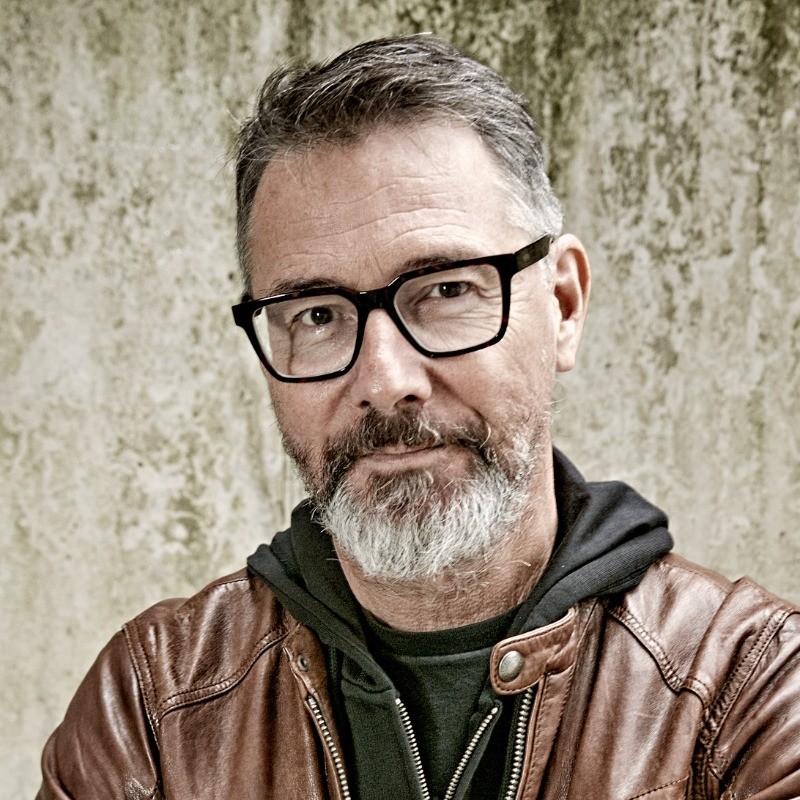
Jo Caudron
Jo Caudron has been active in Belgian digital business since the mid-1990s, making him one of the country's earliest voices on digital strategy and agency services. Over a 30-year career he founded or co-founded more than 20 companies spanning digital agencies, consultancies, and media ventures.
His most prominent co-founding efforts include Scopernia, a media and innovation consultancy, and Duval Union, which he built alongside Dado Van Peteghem. Together they co-authored "Digital Transformation" in 2014, a practical framework for companies navigating technology-driven change.
Jo's long tenure in Belgian digital positions him as a historical anchor for the country's digital services ecosystem, connecting the early web era to the current AI transformation wave.
Insights & takeaways
Jo Caudron's recent output circles obsessively around one question: does Europe still have the strength to remain relevant, and what does it take to get there. He frames this not as an abstract policy debate but as a matter of survival, and he is explicit that the threat he worries about most is not the one people expect. "Rearm Europe, dat gaat niet om ons militair en economisch te verdedigen tegen de Russen," he says, "de essentie is dat we ons moeten verdedigen tegen de Amerikanen" 1617. He is careful to clarify what he means by that: not conflict, but leverage, "niet dat we daar ooit mee gaan vechten, maar wel om niet meer geboed te kunnen worden" 16. This reframing of "rearmament" as technological and economic autonomy rather than military buildup is one of his most consistent and provocative positions, and he repeats it almost verbatim across appearances, suggesting it is the core thesis he wants to lodge in people's heads 1617.
That thesis extends into a broader argument about sovereignty as the real battlefield. He lists energy sovereignty, digital sovereignty, and a strong economic landscape investing in future industries like food, mobility, and housing as what Europe actually needs to defend itself, adding almost as an aside that organizing weaponry and military power is "not necessarily the biggest priority" . He backs this with a running tally of evidence that Europe is already moving, faster than the dominant narrative admits: France replacing Palantir with ChapsVision, Mistral AI reaching a million French civil servants, a €500 million European defence VC fund, the E5 defence ministers positioning as the engine of a Defence Union, EC and EIB adding €22 billion to InvestEU . His point is not triumphalist so much as corrective, "most people are not noticing" , and he frames dependence-reversal as achievable on a real timeline. He points to Huawei building its own OS and cars after being cut off from Android in under a decade as proof that "al die dat geld dat naar sociale media gaat, dus naar Amerikaanse platformen, dat kunnen wij perfect op 10 jaar omdraaien als we dat zouden wensen" 17.
His concern about American leverage is not theoretical, he treats it as a live mechanism already being tested elsewhere. He points to Brazil's PIX payment system, "93% of Brazilians use it," being labeled a "discriminatory trade barrier" by the US Trade Representative and threatened with tariffs, alongside a designation of Brazilian gangs as terrorist organizations that could expose Brazilian banks to secondary sanctions . For him this is a direct warning for Europe's own plan to roll out the Digital Euro by 2029 "in order to build our own financial infrastructure outside the American perimeter" . He draws the same lesson from Anthropic's Claude Fable 5 episode, where the US government ordered the model made unusable for non-Americans: "the superior model stays in American hands while the rest of the world is left with inferior versions" . He treats episodes like these, along with his profile of Peter Thiel as "arguably the most dangerous man in the US," as evidence of a worldview taking hold in Washington where technology, ideology, and state power are converging in ways Europe cannot afford to be naive about .
Alongside geopolitics, Caudron has a sustained critique of media and how it relates to trust, community, and AI, developed at length in his "Virtual" podcast appearances. He rejects the popular fix of "mediawijsheid," media literacy, insisting instead that "we hebben wereldwijsheid nodig" 1617, world wisdom, because the deeper problem is a moral compass that is no longer individual but algorithmically shaped. He is skeptical of the idea that legacy media ever built real community in the first place: "het journaal om 7 uur is geen community en zal het waarschijnlijk ook nooit zijn en moet het misschien ook niet zijn" 1617. His argument is that loyalty and community are different things, and that digital platforms won not because of superior content but because connection and user creation are in their "basic DNA" 16. He separates news avoidance from distrust as distinct problems, arguing many people still trust journalism but are exhausted by relentless negative coverage with no solutions offered, which is his case for solutions journalism, and he pushes newsrooms to become more representative, noting that communities like Molenbeek won't watch a journaal in which they are structurally absent.
On AI specifically, his tone is closer to alarm than enthusiasm. He does not believe the standard reassurance from media executives that humans will always supervise AI systems, arguing instead that AI will become so capable that "we either won't understand it or will let go" 1617, and that within two to three years it could "decimate and op termijn zelfs vervangen" the entire news value chain by answering queries straight from source material 17. He frames this as part of a larger moment of rupture, saying flatly, "ik geloof wel dat we op een scharnierpunt staan, echt een keerpunt in de maatschappij, geopolitiek, de wereldorde, economisch" 17, and warns that "technologie is op de rand van toxisch geworden als we niet opletten" 17. Even his commercial thought experiments carry this edge: he raises the "economic singularity," the scenario where robots and AI drive costs to near zero without paying human wages, collapsing purchasing power, and argues capitalists may be forced to artificially sustain consumer income much as Henry Ford deliberately raised wages and cut hours to create a market for his own cars 1617.
Taken together, his output reads as one long argument that Europe's crisis is one of nerve and infrastructure, not capability. He insists repeatedly that the tools, funding, and political will already exist and are quietly accumulating, but that the narrative of European passivity is dangerously out of date . His recommendation, if it can be called that, is not a call to fight anyone, "niemand verplicht ons nog om met de VS mee te spelen, niet in voetbal, maar ook niet in bv. ons gebruik van hun sociale media, AI of cloud oplossingen" , but a call to build the option to walk away, in payments, in media, in AI, before that option disappears.
- 'Rearm Europe' is not about defending against Russia but about gaining enough autonomy from the Americans that Europe can no longer be bullied and can negotiate as equals — not cutting ties, but being able to.
- Classic media companies never built real communities: a home audience watching the 7pm news is loyalty, not community — digital platforms won because connection and user creation is in their basic DNA.
- 'Nieuws nieuws nieuws' on TikTok reaches young people where they are ('news follows me') but it's broadcast, not community — social platforms used as distribution channels for repackaged news.
- Community is an instrument to restore connection and trust, not a goal in itself — brands like the bus company De Lijn shouldn't build communities, their buses should just run on time.
- The old ideological 'zuilen' (pillars) actually informed people more evenly than today's 12 million hyper-individual algorithmic pillars — even a partisan newspaper covered the world broadly with editorial deontology.
- News avoidance and distrust are distinct problems: many people trust the media but abandon news because it is relentless, negative and offers no solutions — hence the case for solutions journalism.
- Media must become more representative in newsrooms and story mix — Molenbeek residents and young people won't watch a journaal in which they are structurally underrepresented.
- Most news innovation (like TikTok news formats) is a spin-off of the classic editorial process rather than natively conceived products — a good step but it doesn't go far enough.
- European media tech leads all claim humans will always supervise AI, but Caudron doesn't believe it: AI will become so good that we either won't understand it or will let go — and AI answering news queries directly from source material could replace the newsroom within a few years.
- Self-driving cars matter not for replacing private cars but for enabling fine-grained, driverless public mobility where traditional public transport (like De Lijn) is collapsing.
- The economic singularity thought experiment: if robots and AI make everything cheaper without human workers, purchasing power collapses — so capitalists will have to artificially sustain consumer income, echoing Henry Ford's deliberate wage/hours policy to create a market.
- Brand ambassadorship was a hype tactic: paid influencers aren't authentic, and real communities only exist around brands people genuinely identify with (Patagonia) — nobody is a fan of Nestlé.
- Europe can reverse its dependence on US platforms for advertising, cloud and AI within 5-10 years — Huawei built its own OS and cars after being excluded from Android in under a decade.
- 'Rearm Europe' is not about fighting the US but about building enough autonomy to no longer be bullied and to negotiate as equals.
- Classic media never built real communities: watching the 7pm news together is loyalty, not community, because there is no interaction or user creation — while digital platforms are built on connection in their core DNA.
- Community is an instrument to reconnect with audiences and restore trust, not the goal itself; media brands shouldn't try to turn themselves into TikTok-style communities.
- Old media pillars (zuilen) at least offered 4-5 balanced editorial perspectives with deontology; today's hyper-individual algorithmic 'pillars' leave people far worse informed than the old ideological press did.
- News avoidance and distrust are separate problems: many people trust the media but are simply exhausted by relentless negative news that never offers solutions — hence the case for solutions journalism.
- Most news innovation (like nws nws nws on TikTok) is a spin-off of classic newsroom output rather than natively conceived for the audience where they live — a half-step that doesn't go far enough.
- AI's biggest threat to news is putting the Google headline-flash model into overdrive: within 2-3 years AI can decimate and eventually replace the entire news value chain by going straight to sources.
- European media CTOs all claim humans will keep supervising AI, but Caudron doesn't believe it: AI will become so good that we either won't understand it or will let go.
- Media companies must become far more representative — in newsrooms and in the mix of stories — because youth and communities like Molenbeek are structurally under-represented and won't watch news that doesn't reflect them.
- Self-driving technology matters not for replacing private cars but for enabling fine-grained public mobility (driverless vehicles) where public transport is collapsing in rural areas.
- If AI and robots replace workers, purchasing power collapses (the economic singularity) — capitalists may need to artificially sustain consumer income, echoing Henry Ford's deliberate wage/hours policy to create a market.
- What we need is not media literacy but 'world wisdom': our moral compass is no longer individual but algorithmically influenced, and soon we may be unable to distinguish real from fake at all.
Career
- Speakersbase.comCo-FounderOct 2016 – Present
- Duval Union ConsultingFounding PartnerSep 2015 – Present
- ScoperniaFounding PartnerJul 2009 – Present
- IAB BelgiumPresidentMay 2012 – Mar 2014
Social Seeder#453factoryCo-founderNov 2012 – Oct 2015
- ONE Agency#313factoryCEOOct 2006 – Jul 2009
- tvAgencyFounding PartnerJun 2005 – Oct 2006
- NousomFounding Partner2004 – Oct 2006
- theOriginalsFounding Partner2003 – Oct 2006
- The Reference GroupChairman2000 – Oct 2006
- xCACEO2000 – 2003
- The Reference GroupCEO1993 – 2000
- HEMACO Dendermonde
From public career histories · 13 entries
Media & appearances
5- 16podcastVirtual · 10 Apr 2025
Transformation strategist Jo Caudron discusses the VRT Future Media Hubs report on the future of news — trust erosion, news avoidance, new AI gatekeepers — and argues Europe must 'rearm' technologically against US dependence within 10 years.
- 17podcastVirtual · 09 Apr 2025
Transformation strategist Jo Caudron discusses the Future Media Hubs report on the future of news — new gatekeepers, news avoidance, trust erosion, community building and AI — plus Trump's trade war as a momentum for Europe to rebuild tech sovereignty within 10 years.
- 13interviewScopernia · 6y ago · 17:00 · 149 views
Jo Caudron discusses his book "The World is Round," which he wrote over two years to explore an optimistic future for a changing world dealing with societal depression and technological challenges. He explains that the book presents a future vision within ten years based on voluntary adoption, addressing issues around work, housing, and mobility, and notes that the COVID-19 pandemic has made his described future scenarios suddenly relevant as a potential post-corona guide.
- 14otherScopernia · 6y ago · 4:33 · 105 views
Jo Caudron discusses that "The World is Round" is a business and policy book about broader transformation beyond digital disruption, structured in four parts: analyzing why people feel increasingly pessimistic, examining three interconnected "perfect storms" of change in work, place, and mobility that create a "meta storm," envisioning an optimistic 2030 future across multiple societal domains, and providing a framework for readers to apply these insights to their own transformation strategies.
- 15talkScopernia · 10y ago · 30:09 · 2,095 views
Jo Caudron discusses how digital transformation and disruption are reshaping industries, using examples like Uber, Netflix, and Airbnb to illustrate how consumer preferences for convenience and alternative digital business models are forcing established companies to adapt or risk obsolescence. He emphasizes that the pace of change has accelerated from decades to years, warns against underestimating smaller disruptive players, and argues that organizations need to fundamentally rethink their strategies and behavior to compete in this transforming, agile world.