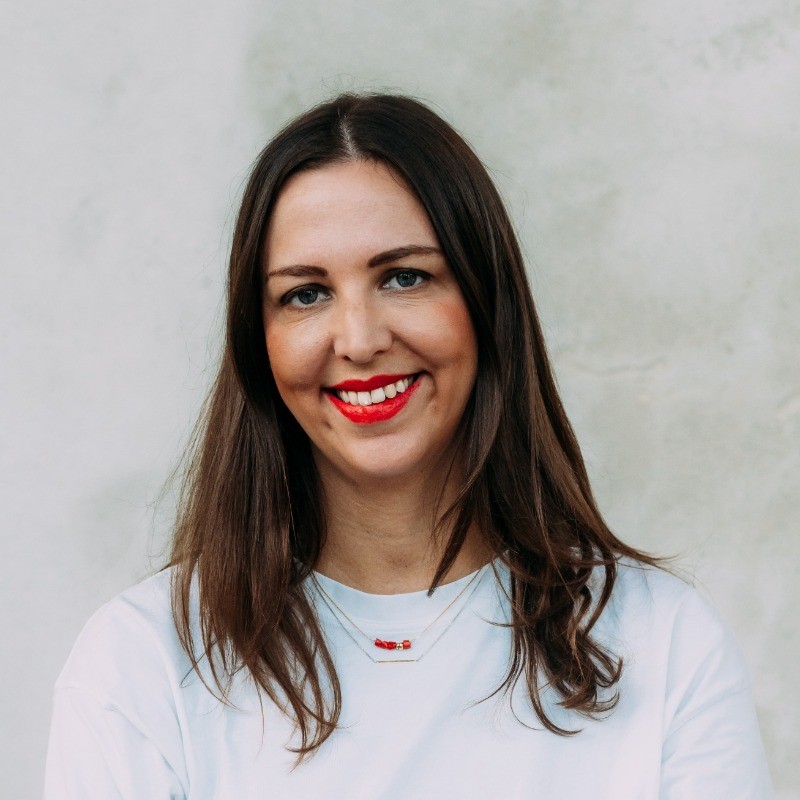
Marie Martens
Based in Ghent, Marie co-founded Tally with Filip Minev to build a simpler, more flexible alternative to existing form tools. Tally lets anyone create forms quickly without design or coding skills, with a generous free tier and a clean product experience.
Tally reached $4M ARR bootstrapped, making it one of the most notable capital-efficient SaaS success stories in the Belgian ecosystem. Her partner Filip Minev previously co-founded Delta, a crypto portfolio tracker that was acquired by eToro.Insights & takeaways
Marie Martens's public voice splits cleanly into two registers: the reflective founder explaining Tally's strategy in long-form interviews, and the warm, community-focused presence on LinkedIn celebrating the people who use the product. Both point to the same underlying conviction, stated most directly in Dutch: "Wij waren er gewoon van overtuigd dat dat gratis gegeven eigenlijk het meest krachtige was van ons volledig verhaal" 14. Giving away nearly everything was never a marketing gimmick for her but the entire growth engine. She puts the logic plainly: "Hoe meer we gratis geven, hoe meer mensen het product gaan gebruiken, hoe sneller we gaan groeien" 14. This is not incidental generosity, it's a deliberate rejection of sales as a growth lever, because, as she admits, "wij zijn allebei heel slechte verkopers" 14.
That aversion to selling shaped Tally's product philosophy from day one. Rather than compete head-on with Typeform's paywalled submission limits or Google Forms' rigid customization, Martens describes building "a simpler and more affordable alternative," deliberately not competing directly with established players but carving out space for solopreneurs and indie hackers 11. She's explicit that Tally broke conventional bootstrapping wisdom by entering a crowded market with a premium product and Western hires, betting instead on product-led growth through viral sharing 12. Forms, in her framing, are inherently shareable objects, every form is built to be sent to someone else, which made the product self-propagating in a way sales never could be 14. The Notion inspiration recurs across sources: admiration for how Notion built "an engaging product around a passionate community" directly informed Tally's interface and community-first instincts 13.
Operationally, her thinking is rule-based and almost ascetic in its simplicity. Every new feature gets tested against three questions, can it stay simple, can it be free, will it grow Tally, and only ships behind a paywall when it carries real marginal cost like email notifications at scale 14. Friction removal is treated as a first principle: "Alle frictie dat je kan wegnemen, neem je weg" 14, which is why Tally requires no account, email, or credit card until you actually save or share a form. This same instinct extended to the business itself: last year she and her co-founder eliminated revenue targets entirely, trusting that quality drives revenue rather than the reverse. "We hebben vorig jaar beslist om geen revenue targets meer te hebben. Dus eigenlijk kijken wij niet meer naar de omzet" 14. She's candid that this freedom is only available to them because they answer to no board or investors.
Her view of AI tooling has evolved from something to fear into a structural advantage. Rather than cannibalizing Tally, vibe-coding platforms like Lovable have driven more usage, because builders plug Tally in instead of engineering their own form backends 14. Internally, she describes a workforce transformation already underway: "Ik denk de engineers die coderen bijna niet meer hè. Dus dat is allemaal cloud code" 14, with marketing processes similarly codified into AI skills, and no plans to grow beyond the current ten-person team as a result. She's matter-of-fact about the scale this enables: "Het is crazy wat je kan doen met één of twee personen" 14, and projects that continuing on the same trajectory could take the team from ten people to €10M ARR by the end of next year 14.
Beneath the tactics sits a more sober, almost corrective view of what bootstrapping actually is. She pushes back hard on the romantic notion of entrepreneurship as freedom: "Ik denk niet dat je moet ondernemen om vrijheid te zoeken. Uiteindelijk word je slaaf van uw eigen bedrijf, denk ik" 14. It demands a financial buffer, unscalable early grind (two years of manual support, a hand-maintained feedback database), and total commitment, not a calmer alternative to funded startups. Her advice to others compresses to something almost anti-strategic: "Doe vooral wat je graag doet en probeer het simpel te houden. Niet teveel overdenken en gewoon doen" 14. And she's clear that the work never truly ends, "Software is nooit af" 14, which tracks with her insistence on shipping features "totally unprepared" during live office hours rather than waiting for polish .
The LinkedIn presence shows this philosophy extended into how she treats community as the actual product moat. Meetups, in-person meetings with long-time users, and public thank-yous to the "2,000,000 of you, 10 of us" aren't just goodwill gestures, they reinforce the same free-first, community-driven flywheel described in the interviews. Meeting a user who signed up as "user #688" before launch and still builds with the product years later crystallizes why the free-give-away strategy worked: it created genuine loyalty, not just usage. Her own summary of that feeling, "IRL > URL" , captures a recurring theme across her posts: that the relationships behind the product matter as much as the mechanics of growth she lays out so precisely elsewhere.
The consistent takeaway across both registers is that Martens treats simplicity, generosity, and independence as inseparable strategic choices rather than founder platitudes. Every operational decision, no revenue targets, no paywall unless there's real cost, no hiring plans, no account required to start, traces back to the same conviction that removing friction and giving value away is what actually compounds. It is a deliberately unglamorous, rule-driven approach to building a company, articulated by someone who is explicit that this path is harder, not easier, than the alternative, and who nonetheless finds meaning in seeing "our Tally brand come to life" through the community she's built alongside it.
- Tally deliberately chose forms because they are inherently viral — every form is made to be shared — allowing the product to sell itself since neither founder liked cold sales.
- The core growth strategy was radical: the more value given away free, the faster growth compounds; ~2% of nearly 2M free users convert to paid, powered by the 'powered by Tally' badge flywheel.
- For the first three years Tally shipped almost only free features; every new feature is tested against three questions: can we keep it simple, can we offer it free, and will it grow Tally.
- Features only go behind the paywall when they carry real marginal cost (e.g. email notifications at scale, custom domains); otherwise they ship free, making the free plan far richer than competitors' paid plans.
- Tally removed all friction from trial: initially no homepage (you landed straight in the form builder), and today no account, email or credit card is needed until you save or share a form.
- Building in public with open revenue numbers is only possible because they have no board or investors, and they leaned into it as differentiation: 'everything we can do differently, we double down on'.
- Tally dropped revenue targets entirely last year; the team's only goal is product quality measured via tracked feedback scores, trusting revenue follows — possible only because they are independent.
- Contrary to fears, AI vibe-coding tools increased form usage: people building apps with Lovable plug Tally in rather than building custom form backends, because it's simple and free.
- Tally's strong visibility in ChatGPT/Claude answers came accidentally from years of helpful Reddit replies (heavily used in LLM citations), massive brand mentions, high domain authority from embedded form links, and an exhaustive help center documenting every question.
- They reached €1M ARR with 2-3 people by keeping the product radically simple (fewer support questions) and documenting every support answer so no question is answered twice — now only 100-150 tickets/week for 2M users.
- Engineers barely write code manually anymore (Claude Code); their job shifted to reviewing, and marketing processes are codified into Claude skills with access to Slack, Notion, Figma and Canva — meaning the 10-person team no longer plans to hire.
- Their fully remote team experiment failed; moving to a shared office in Ghent with local hires materially improved communication and changed the company's trajectory.
- Phase 0→1 was doing unscalable things — manual support for 2 years, a hand-maintained Notion database of user requests with upvotes — and she would do it exactly the same again.
- As co-founder couple with kids, a strict morning/evening shift system for childcare eliminated recurring negotiations and lets each partner protect deep work time.
- Bootstrapping requires a personal financial buffer (she had 10-12 years of savings, Philip an exit); otherwise start as a side project and keep cost of living minimal before jumping.
- Bootstrapping is not the calmer path people assume: no salary, no starting capital, no next funding round to work toward — you must ship and sell extremely fast and give it 100%.
Career
TallyCo-FounderSep 2020 – Present
- HotspotCo-FounderFeb 2020 – Jan 2022
- De Persgroep Publishing#206factoryCommunication Manager B2BJan 2016 – Jun 2016
In The Pocket#66factoryMarketing ManagerJun 2016 – Feb 2020
- De Persgroep Publishing#206factoryProject Manager MarCom B2BSep 2013 – Dec 2015
- D-Side GroupJunior project managerApr 2010 – Sep 2010
- D-Side GroupInternshipFeb 2010 – Apr 2010
- De Persgroep Publishing#206factoryDigital Research ExecutiveDec 2010 – Sep 2013
Ghent University#2schoolMaster, Communication Management2006 - 2010
From public career histories · 10 entries
Media & appearances
4- 14podcastBen's Mentors · 03 Jun 2026
Marie Martens explains how she and partner Philip bootstrapped form builder Tally from zero to €5M ARR and ~2 million users in 6 years with a 10-person team, by giving almost everything away for free and letting product-led growth do the selling.
- 11interviewSyndicate One · 7mo ago · 32:58 · 87 views
Marie Martens discusses her background in B2B marketing at major Belgian media companies before co-founding Tally with her husband five years ago as a bootstrapped company. She explains that Tally offers a simpler and more affordable alternative to existing form builders like Google Forms and Typeform, targeting solopreneurs and indie hackers by focusing on ease of use and affordability rather than competing directly with established players.
- 12interviewRyan Wardell · 10mo ago · 57:42 · 518 views
Marie Martens discusses how Tally, a form and survey builder she created, deliberately broke conventional bootstrapping rules by entering a crowded market, building a premium product, and hiring in Western countries. She explains Tally's differentiation strategy of combining a Notion-inspired interface with unlimited free forms and submissions, relying on product-led growth through viral sharing rather than marketing budgets to compete against free options like Google Forms and expensive alternatives like Typeform.
- 13interviewMatt Byrom · 2y ago · 37:23 · 256 views
Marie Martens discusses how she and her co-founder created Tally, a free form-building tool launched in 2020, after their previous startup failed during COVID. She explains that Tally was inspired by frustrations with existing form builders like Typeform (which charges based on submission volume) and Google Forms (which lacks customization), combined with admiration for how Notion built an engaging product around a passionate community.