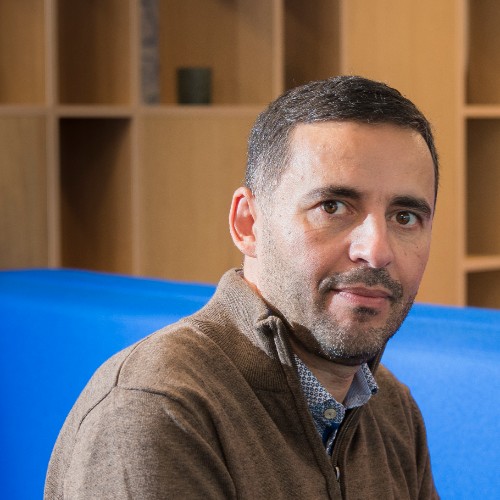
Omar Mohout
Omar Mohout is a professor of Entrepreneurship who combines academic work with hands-on advisory for Belgian tech scaleups. He helps founders navigate funding rounds, acquisition processes, and growth strategy.
He previously chaired the board of BeCentral, the digital campus at Brussels Central Station, and served on the board of Startups.be. He was a fellow at Sirris, where he worked alongside the team that launched Startathlon, one of Belgium's first formal accelerator programmes.
He created the Belgian tech "mafias" concept and visualization, mapping the key companies whose alumni networks went on to seed the next generation of Belgian startups and investors. The work identified Netlog, Porthus, Lernout and Hauspie, and ML6 among the top talent accelerators that built the Belgian tech scene.
He publishes detailed ecosystem analyses through his "Silicon Waffles" newsletter, covering individual cities including Brussels and Ghent with data on headcount growth, investment patterns, founder demographics, and exit histories.
Notable Work
Insights & takeaways
Omar Mohout's central preoccupation is the gap between building and selling, between what he calls value creation and valorisation. European founders, in his telling, pour their energy into the product and starve the commercial engine, which is why "faster-growing US rivals with worse products end up acquiring them" 6. This isn't a minor imbalance he wants corrected at the margins; he treats it as the defining structural weakness of the European tech ecosystem, and his 2026 scale-up survey data confirms the pattern has hardened rather than faded: 64% of Belgian founders now cite market demand and sales execution, not funding or talent, as their number one challenge . His conclusion is blunt: "Building products is no longer the hard part; selling them at scale is" . For companies at scale he puts a number on the imbalance he wants fixed, arguing sales and marketing should run at roughly twice R&D spend, a ratio most Belgian companies never hit 6.
That valorisation gap connects to a second recurring theme: speed and shame as diagnostic tools. Mohout's test for whether you've shipped too late is almost visceral. "Als ge u niet schaamt voor uw eerste versie ga het laat aan de markt. En ik kan u zeggen we schamen ons zo dood dat we het gewoon niet doen" 6, he says, and pairs it with the flatter but equally firm "Don is better than perfect" 6. This isn't advice about sloppiness for its own sake; it sits alongside a clear methodology for product-market fit, which he defines through three concrete proxies rather than vague conviction: roughly 40% retention on an MVP, two to three cost-effective acquisition channels (which he stresses are temporary, not permanent moats), and organisational readiness for the next order of magnitude of customers 6. Underneath all of it is a sequencing rule he insists founders get backwards: "Je moet op het probleem verliefd worden, [niet] op de oplossing. En dan kun je aanpassen richting de behoefte, het probleem" 6 — start from problem-seeks-solution, because solutions are buildable once you've confirmed a real need, but a beloved solution in search of a problem rarely survives contact with the market.
Mohout is also sharply skeptical of the exit-obsessed culture he sees taking root, and he frames it almost as a moral hazard rather than a strategy. "De mooiste bedrijven die worden verkocht staan niet te koop, hè. De beste manier om een lage prijs te hebben is u te koop stellen" 6 — the best companies never advertise themselves as sellable, and putting a for-sale sign up is the surest way to depress your own price. He extends this into a broader worry about Europe's tech champions being absorbed rather than compounding independently, arguing the continent needs more IPOs to keep its winners in-house instead of feeding an exit-as-playbook mentality he considers "almost toxic" 6. This view is consistent with his framing of Europe more broadly: not a laggard but an underleveraged inventor, since it "invented the smartphone chip, the programming language powering AI, the operating system running the majority of the world's servers" — the raw material for staying power exists, the discipline to hold onto it is what's missing.
His data-driven side shows up in how he quantifies just how rare durable scale actually is. "Slechts 5% van de techbedrijven geraken aan 10 miljoen of meer omzet" 6, he says of Belgium's roughly 5,000 digital tech companies, with most others stalling on growth plateaus, getting acquired cheaply in the €3-7M range, or collapsing from founder conflict 6. He layers a power-law view of digital markets on top of this: because winners take most of the market (he cites Google's 95.8% search share in Belgium as the extreme case), founders need to either dominate a category outright or deliberately choose a defensible niche in the long tail rather than drift into an uncompetitive middle 6. This statistical realism also softens his stance on fundraising: he favors bootstrapping until product-market fit is proven and treating capital as a lever for scaling rather than a starting gun, on the logic that money gets cheaper once traction exists 6.
A newer thread in his thinking, visible in his 2026 writing on service firms, is his revision of an old article of faith. For years he says he held the standard VC line himself — "if it's not software, it doesn't scale" — but he now argues AI is breaking that rule by letting professional service firms achieve what he calls superlinear growth, where "output rises faster than input," pointing to a 50-lawyer firm expanding capacity from 500 to 900 cases without proportional headcount growth . This is a genuine evolution rather than a footnote: it reopens venture-style scaling logic to business models he and the industry had long written off, and it fits his overall pattern of testing convictions against fresh evidence rather than repeating them unchanged.
Running through all of this is an ecosystem-builder's instinct for lineage and structure. He maps Belgian tech not by funding rounds but by "density of connectivity," naming cornerstone companies like Showpad, Netlog, Aikido Security, Collibra and Barco as the hubs that seed the next generation of founders, investors and operators . He applies the same structural clarity to defining what a scale-up even is, cutting through age and mythology with three public proxies: 10 or more employees on payroll, institutional venture investment (typically €1M+), and a foreign subsidiary 6. And he's candid that leadership itself must rotate with company phase, insisting founders confront "whether they are the right person to lead the next phase" and normalizing external CEOs as a mark of maturity rather than failure 6. Across surveys, podcasts and ecosystem commentary, the throughline is consistent: Mohout treats growth as an engineering problem with measurable thresholds, not an act of faith, and he keeps sharpening the numbers that prove it.
- European founders over-invest in value creation (product) and under-invest in valorisation (distribution and value capture), so faster-growing US rivals with worse products end up acquiring them.
- Product-market fit has three conditions: minimum ~40% retention on an MVP, two to three cost-effective acquisition channels (channels are temporary), and knowing what the organisation needs for the next order of magnitude in customers.
- For tech companies at scale, sales & marketing should cost roughly twice R&D — every €1 of development should be matched by €2 of valorisation spend — which most Belgian companies fail to do.
- Start from 'problem seeks solution', not 'solution seeks problem': fall in love with the problem, because solutions can always be built once a real market need is found.
- A scale-up can be identified by three public proxies: 10+ employees on payroll, venture capital investment (typically €1M+ from an institutional investor), and opening a foreign subsidiary — age is irrelevant.
- Only 5% of Belgium's ~5,000 digital tech companies reach €10M revenue; most stall on growth plateaus, get acquired cheaply at €3-7M revenue, or fail from founder conflict.
- Digital markets follow a power law where the winner takes most (Google has 95.8% search share in Belgium), so you must either dominate a category or deliberately take a defensible niche in the long tail.
- Second-time founders pay far more attention to legal, tax and outsourcing than first-time founders because they've learned it saves time and pays for itself.
- Founders should ask the uncomfortable question whether they are the right person to lead the next phase — bringing in an external CEO is no longer perceived as weakness, and in a mature ecosystem every role (CFO, marketers) rotates per growth phase.
- The exit-as-playbook mentality driven by outliers is almost toxic; the best companies that get sold were never for sale, and Europe needs more IPOs to keep its tech champions from being absorbed by US buyers.
- The smartest companies bootstrap until product-market fit and only raise capital when it's a lever for scaling, because money is much cheaper once you have traction.
Career History
- Professor of Entrepreneurship (current)
Former Chairman of BeCentral board
Former Board Member at Startups.be
Fellow at Sirris
Media & appearances
1 6podcastWaarom de Meeste Start-Ups Falen en hoe jij Kan Groeien!Ben's Mentors · 29 Oct 2025
Deloitte's Omar Mohout and Anaïs De Boulle explain why European startups fail at valorisation, give three rules for product-market fit (40% retention, 2-3 cost-effective channels, readiness for next magnitude), and reveal that only 5% of Belgian tech companies reach €10M revenue.