
Overview
Founded by three industry enthusiasts from manufacturing optimization projects, Coretecs is a team of experts in EI engineering, industrial automation, IIoT, AI, machine learning, and low-code applications. They help manufacturing companies modernize through digital transformation while respecting their legacy, handling implementation and focusing on training and communication.
Key people



In the news
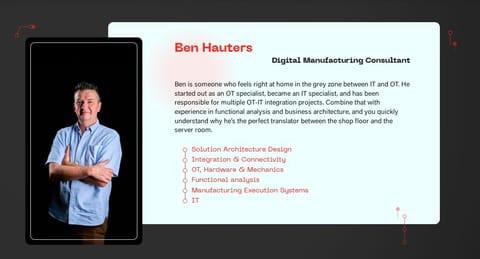
- Some engineers specialise in the shop floor. Others specialise in the server room. And then you've got people like Ben, who prefer to live right in the middle. Meet Ben Hauters, Digital Manufacturing Consultant and our newest colleague! Ben describes himself as someone who “knows a bit about a lot of things.” If you ask us, that’s quite humble when you consider everything he’s done in IT, OT and in between. After starting his career in PLC maintenance, he transitioned to a traditional IT role, but also oversaw multiple OT-IT
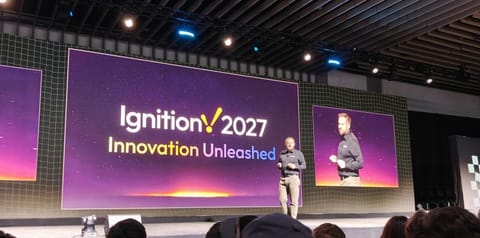
- It's been about a month since #ICCUnleashed in Sacramento. For us, that means it's the perfect time to share our key takeaways. Why wait a month instead of just sharing our thoughts the morning after, like most people did? Simple: we were inspired, and we wanted to do our homework first before the public beta of Ignition 2027 drops. Speaking of which: starting with 𝗜𝗴𝗻𝗶𝘁𝗶𝗼𝗻 2027, Inductive Automation is switching to an annual release schedule. No need to panic if you don’t want to upgrade every 12 months: version 8.3 comes
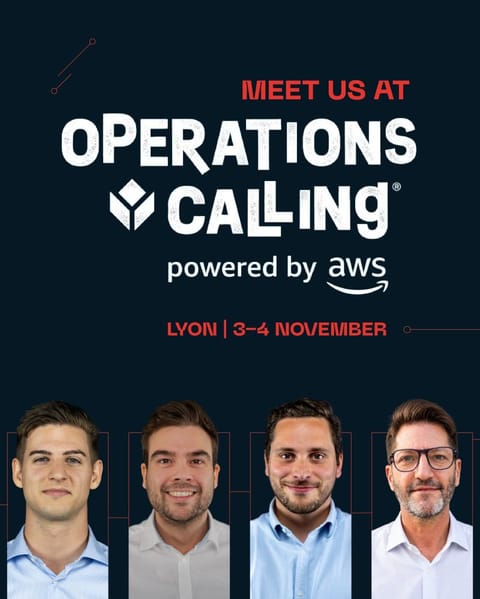
- A frontline app is only as good as the data it runs on and the systems it talks to. That's why composable MES isn't just about building apps. It's about connecting what happens on the shop floor to machines, historians, ERP and the rest of your IT/OT architecture. On 3–4 November, Mathias Knop, Adrien Bousez, Brecht Van Boven and pierre malochet are heading to Lyon for 𝗢𝗽𝗲𝗿𝗮𝘁𝗶𝗼𝗻𝘀 𝗖𝗮𝗹𝗹𝗶𝗻𝗴 𝗘𝘂𝗿𝗼𝗽𝗲: two days of customer stories, hands-on workshops and conversations about the future of frontline operations.
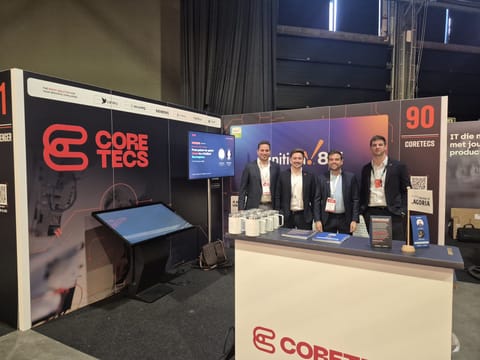
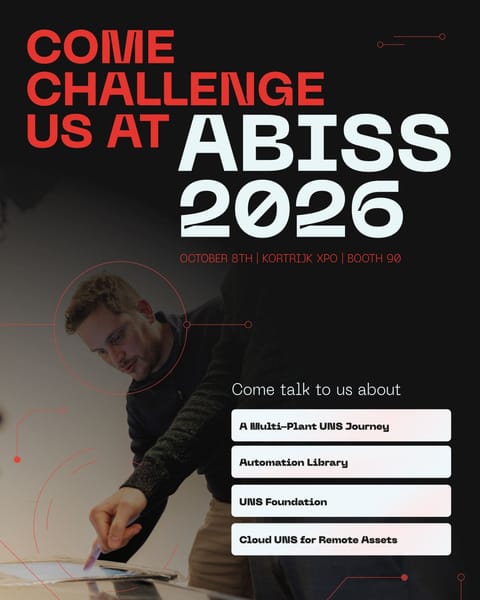
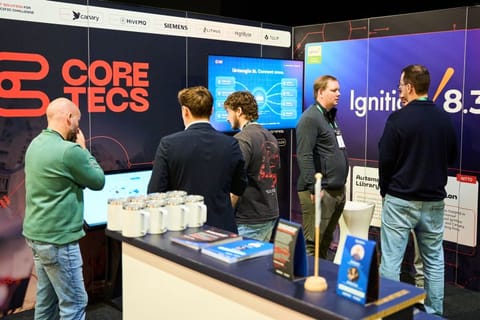
- Last week we went to ABIIS to share real stories from real implementations. What we didn't plan for was how contagious that sharing would become. Clients who came by to say hello ended up in conversations with other teams, comparing notes on Unified Namespace architectures and how they're tackling IT-OT integration. What we saw happening at our booth felt like more than a client base. It felt like the start of a real community. And those conversations are the real value: sharing what works, what doesn’t and what you’ve learned, so
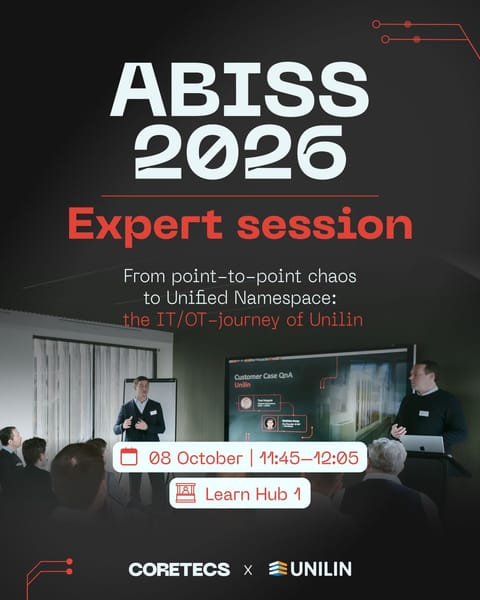
- We’re live at #ABISS today! Let’s talk about what it really takes to scale IT/OT across your organisation. From connecting machines and making industrial data available, to building architectures that can be standardised and rolled out across multiple production sites. And if you want to see what that looks like in practice, join our session with Unilin: From point-to-point chaos to Unified Namespace: The IT/OT-Journey of Unilin 🕦 11:45–12:05 📍 Learn Hub We’ll share how Unilin went from its first UNS pilots to a standardised
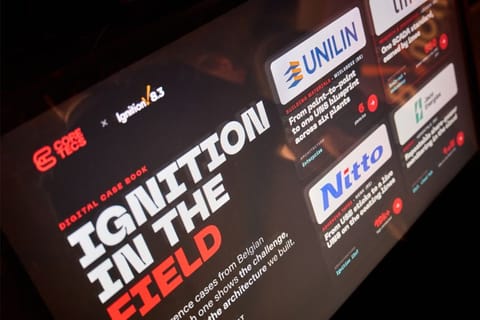
- How do you move from point-to-point complexity to an IT/OT architecture that can scale across a multi-site organisation? That's the journey Unilin has been working on together with us. With 𝟯𝟱 𝗽𝗿𝗼𝗱𝘂𝗰𝘁𝗶𝗼𝗻 𝘀𝗶𝘁𝗲𝘀 𝘄𝗼𝗿𝗹𝗱𝘄𝗶𝗱𝗲, Unilin had an IT/OT landscape that had grown organically over time. Point-to-point integrations, significant differences between plants and no shared reference architecture meant that the existing approach was reaching its limits. So rather than simply adding another technology to the stack,
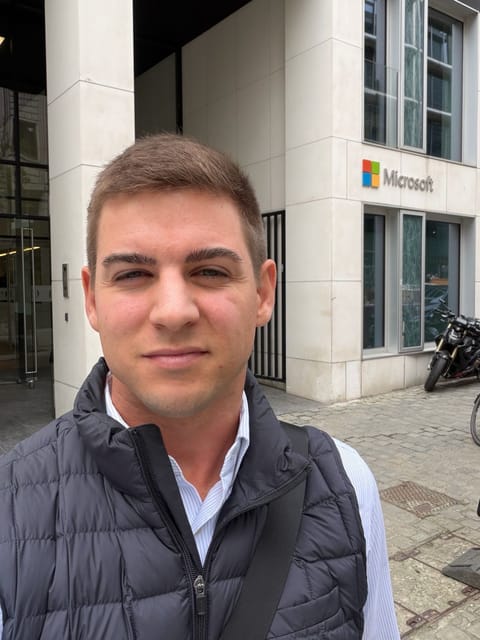
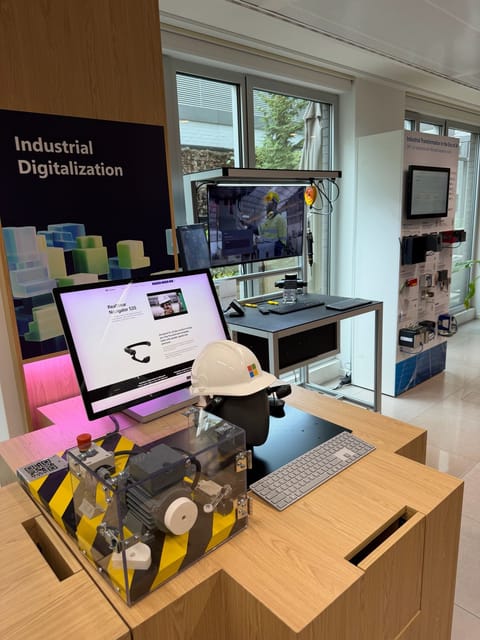
- Second Monday at Microsoft. Last time I came to listen. This time they handed me the clicker. Today I presented at the Microsoft Manufacturing Frontier Council in Brussels. A closed room of senior manufacturing leaders, and one question underneath every conversation: how do you get from AI ambition to AI that actually runs in your plant? Microsoft showed a solid piece of the answer. Their agentic framework looked good: practical, grounded in real operational scenarios, and clearly built with the plant floor in mind rather
- 𝘞𝘩𝘪𝘤𝘩 𝘱𝘭𝘢𝘵𝘧𝘰𝘳𝘮 𝘴𝘩𝘰𝘶𝘭𝘥 𝘸𝘦 𝘪𝘮𝘱𝘭𝘦𝘮𝘦𝘯𝘵?” isn't a good base to start an industry 4.0 project. Start with: "What are we trying to solve?" Because there's no standard blueprint for Industry 4.0 → One manufacturer is reaching the limits of a point-to-point IT/OT landscape across dozens of production sites. → Another is facing inconsistent operations and vendor lock-in. → Another has valuable production data trapped in isolated PLCs, relying on manual exports for quality control → And sometimes, the factory

Related profiles
Something wrong or missing? Send an update. Fixed within 24 hours.