
Overview
Mathias Knop is a co-founder of Coretecs, a company he started in June 2022, and is based in Asse. Since April 2021 he has also been the owner of DX Consulting. His stated areas of expertise are IT/OT architecture, industrial digital transformation, smart manufacturing, solution architecture and the Industrial Internet of Things.
He worked at Yokogawa across two periods, first as an application engineer from July 2017 to August 2020 and as international lead business analyst from January 2019 to August 2020, then as a solution architect from April 2021 to May 2022. Between those spells, from August 2020 to April 2021, he was a business manager at ALTEN BELGIUM.
Knop studied at the Vrije Universiteit Brussel, where he completed a Bachelor of Science in applied engineering, electronics-ICT, from 2014 to 2017, followed by a Master of Science in applied engineering, electronics-ICT: networks, in 2017 and 2018.
Career history

Insights & ideas
The through-line
Across these posts, Mathias Knop keeps returning to one idea: raw, disconnected data is worthless until it is structured, contextualized, and put in the hands of people who actually understand a shop floor. He describes years of "connecting A to B, then to C. Always point-to-point" [6] before arriving at the Unified Namespace approach, and he frames Litmus, MQTT, and edge platforms as tools to fix that fragmentation rather than as ends in themselves [3][6][11]. Over the period covered, this preoccupation with structured data has widened into a broader stance on trust and adoption: he draws an explicit line from letting a car drive itself to letting a model run routine decisions in a factory, arguing that hesitation about automation is a psychological hurdle more than a technical one [10]. The through-line moves from "how do we architect the data" to "why won't people trust the systems we've already built."
On Unified Namespace and data architecture
Knop treats Unified Namespace as the most important and most misunderstood architecture pattern in European manufacturing right now: "Unified Namespace. Easily the most discussed topic in digital manufacturing in Europe right now" [6]. He is candid that the promise outpaces the standard: "the UNS reference architecture never included standards. You are entirely dependent on your integrator" [6]. His goal is data that is "contextualised and ready to consume, not the raw tag dumps nobody can interpret" [6], and he ties this directly to business outcomes: "Getting edge data structured and contextualized at the source is where so man[y projects succeed or fail]" [3]. His explainer work on MQTT reinforces this, breaking down how the protocol's broker and Quality of Service levels are what actually make a unified namespace function in practice [11].
On partnerships
Knop is explicit that he values proof over paperwork in how Coretecs works with vendors. Announcing the Litmus partnership, he wrote: "Some partnerships get signed. The good ones get earned first" [3], noting the companies had been "building up hands-on experience with the platform, sharpening our joint approach, and proving out the architecture well before any paperwork" [3]. He states his model directly: "Not two companies agreeing to 'explore synergies,' but two teams who already know how to deliver together, stepping into a project with confidence" [3]. The same logic shows up in his account of a Canary Labs visit, where he credits the relationship itself, not just the product: "The Canary Labs historian is great, but your approach is the real secret ingredient if you ask me" [5], and he underlines the value of face time: "it stresses the importance of meeting up in-person, spending time together, and sharing stories and experience" [5].
On trust in automation
Reflecting on supervised self-driving, Knop maps his own experience onto the resistance he hears in manufacturing. He notes his own surprise: "What surprised me most wasn't the technology. It was how fast my instinct to control everything started to feel outdated" [10]. He then lists the objections he hears from customers almost verbatim to the ones about self-driving cars: "What if the model gets it wrong?" "What about keeping a human in control?" "We'll wait until the AI is more mature" [10], concluding "The parallel is almost too perfect" [10]. He is careful to note the guardrail still matters, pointing to the word "supervised" and the idea that "the human is still responsible" [10].
On Belgian industry and growth
Knop frames Coretecs' growth as inseparable from finding people, not just closing deals: "Growing a company means one thing above all: finding the right people" [1]. He connects this to a regional strategy, expanding office presence "to being closer to our customers and reducing unnecessary travel time for our people" [7]. His pride in the broader ecosystem is explicit: "We have a complete ecosystem here" [2], and he pushes back on a narrow view of the Belgian economy: "This is not a country that only does services. We build things, and we build them well" [2].
Takeaways
- Unified Namespace only works if buyers understand it has no built-in standard and success depends heavily on the integrator's architecture choices [6].
- MQTT's value in a UNS comes from the broker and its Quality of Service levels, which determine whether message delivery is best-effort or guaranteed for critical operations [11].
- Knop prioritizes vendor relationships with prior hands-on, proven track records over newly signed partnership agreements, as seen in the Litmus rollout [3].
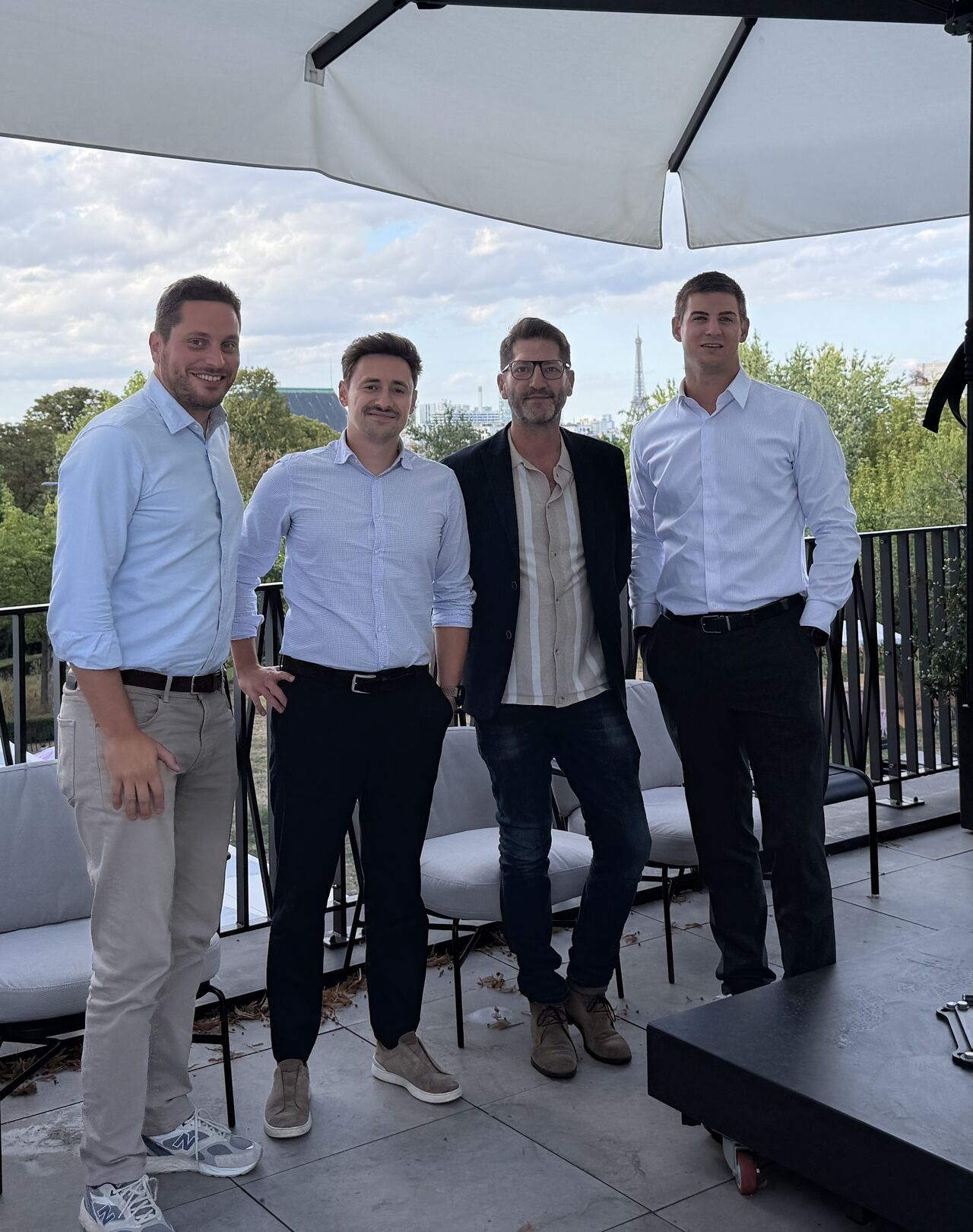
- In-person time with partners (e.g., the Canary Labs visit and roundtable) is treated as a deliberate relationship-building tactic, not just a nicety [5].
- He argues that resistance to AI/automation in manufacturing mirrors public hesitation about supervised self-driving cars, and that "supervised" systems keeping humans responsible is the practical bridge to adoption [10].
- Coretecs' growth strategy pairs hiring across specific technical roles (MES, industrial software, digital OT) with expanding regional offices to stay close to customers [1][7].
Media & appearances
- CoretecsYouTubeMQTT, the silent power behind Unified NamespaceMathias Knop discusses how MQTT is a publish-subscribe messaging protocol that enables the unified namespace by allowing devices and applications to communicate efficiently through a broker that routes messages to subscribed clients. He explains MQTT's three Quality of Service levels that determine message delivery guarantees, ranging from at-most-once delivery to exactly-once delivery for critical operations, and describes additional broker features like the retain flag.
In the news
- Extremely proud to be able to support Soudal in their digital transformation journey with our team of experts and digital manufacturing solutions. Thanks for putting your trust in Coretecs! Huls Marco, Tim Klaassen, Marc Schepers Brecht Van Boven, Leonard Van Vlierberghe, Mateo Duren Kyle Kensinger, Kenneth Wyant
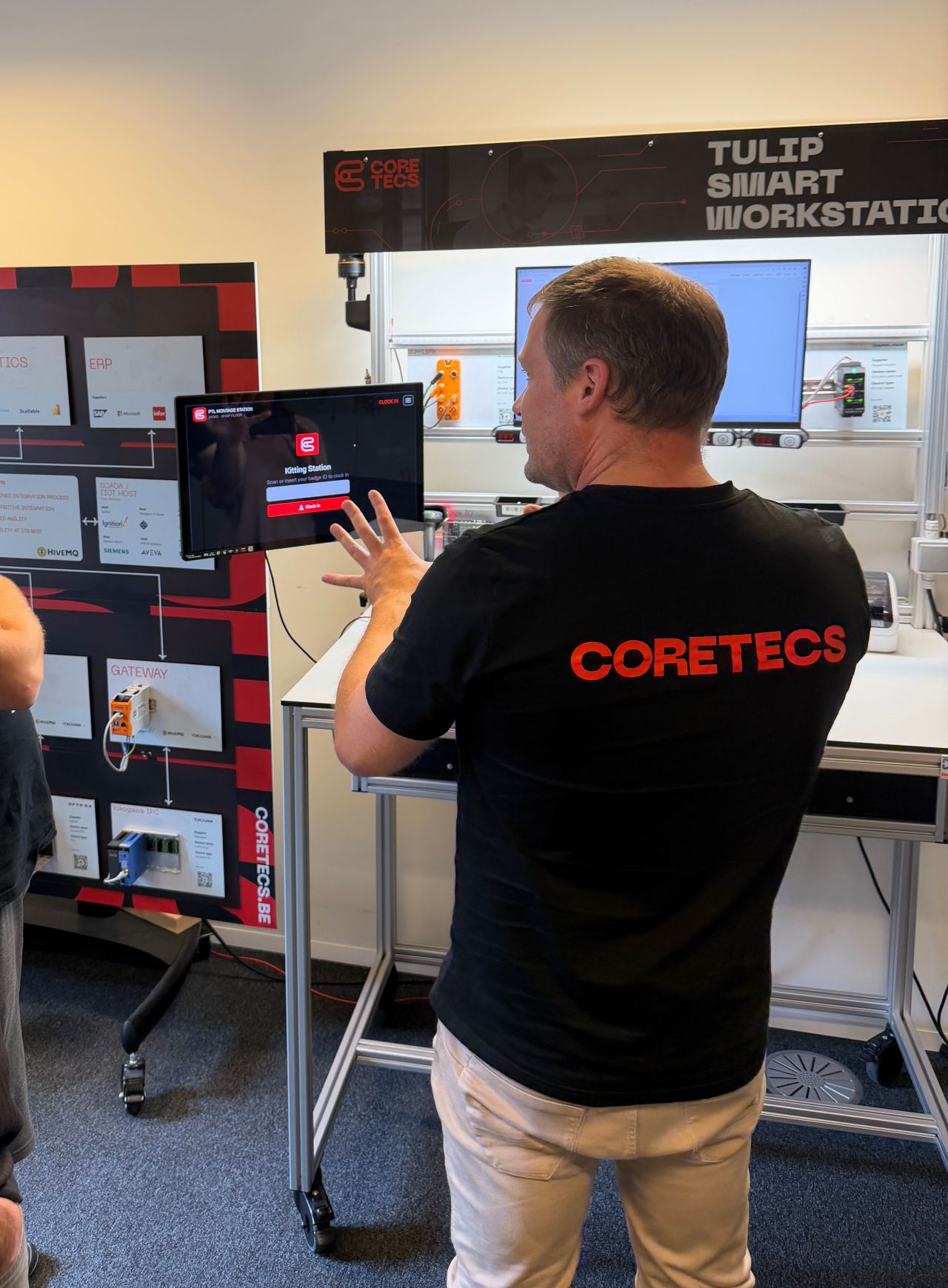
- Kitting at one station. Assembly at another. A verification step in between. That is still how a lot of shopfloors work, and it is where a surprising amount of time quietly disappears. Last week Steven Cox, our #Tulip app building expert, was in his element demonstrating a new pick to light solution on our Tulip Smart Workstation. The operator gets guided to the right bin, the right part, the right quantity. No searching. And no separate verification step downstream, because the pick is confirmed the moment it happens. Combine
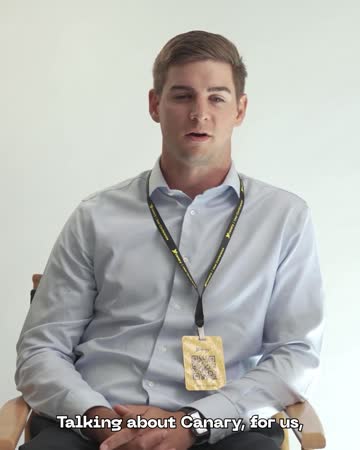
- There’s a lot to consider when choosing technology for your industrial data architecture. Performance, scalability, security, integrations… But one criterion is easily underestimated: “𝘏𝘰𝘸 𝘮𝘶𝘤𝘩 𝘦𝘧𝘧𝘰𝘳𝘵 𝘥𝘰𝘦𝘴 𝘪𝘵 𝘵𝘢𝘬𝘦 𝘵𝘰 𝘮𝘢𝘬𝘦 𝘵𝘩𝘦 𝘵𝘦𝘤𝘩𝘯𝘰𝘭𝘰𝘨𝘺 𝘴𝘪𝘮𝘱𝘭𝘺 𝘥𝘰 𝘸𝘩𝘢𝘵 𝘪𝘵’𝘴 𝘴𝘶𝘱𝘱𝘰𝘴𝘦𝘥 𝘵𝘰 𝘥𝘰?" Because every hour spent configuring, maintaining or working around a tool is an hour not spent creating value with the data. At last year’s Canary User Conference, Canary asked Mathias Knop why
- pierre is the kind of person you call crazy, and mean it as the highest compliment. We spent a full day together last week. Somewhere in the first hour, he stopped talking about himself and started solving a problem that was not his yet. He had made it his own before anything was signed. The experience is there, three decades of it. Car design, PLM inside Swiss watchmaking, then four Tulip rollouts in four very different industries. He has hit the walls the platform has, and he knows which ones you design around rather than argue
- Summer reset. Taken literally. Hair shaved short. Which, I can confirm, is remarkably convenient at the pool. Two weeks away with my family and the dog. Proper hiking. Naps that were never planned. And the dog easily out-stepping the rest of us combined. We also spent a day on the Mont Ventoux, cheering on my brothers in law. I am not a cyclist at all. But watching that many people grind their way to the top does something to you. Something quietly got added to the bucket list. And somewhere in between, daily golf practice turned

- Growing a company means one thing above all: finding the right people. Coretecs is scaling up, and we are looking for three people to join our team in Belgium. The first is a low-code MES engineer who wants to build composable MES solutions with Tulip. Frontline operations, shopfloor apps, real impact on how operators work every day. If you like solving problems close to the people who actually make things, this one is for you: 👉 https://lnkd.in/eT2RM4pz The second is an industrial software engineer with a background in .NET or
- Happy Belgian National Day! Today is a good day to say what doesn't get said enough: Belgian industry is a serious force, and it's built on something hard to replicate. We have a complete ecosystem here. Strong academics working hand in hand with private industry. World-class port infrastructure and connectivity that make efficient import and export possible. A highly educated labor pool. Companies that are deeply local while being fully global, anchored in Flanders yet feeding subsystems to the biggest players on the planet. Think
- Some partnerships get signed. The good ones get earned first. Yesterday we made it official with Litmus. But the truth is we've been working closely together for a long time, building up hands-on experience with the platform, sharpening our joint approach, and proving out the architecture well before any paperwork. That groundwork is exactly why we can move fast now. Together with a customer, we're kicking off a global rollout of Litmus Edge across several sites in Europe, starting with an Energy Management use case. This
Related profiles


This page shows public professional information only, each fact cited. Is this you? send a correction, or ask for removal within 24 hours, no questions asked.