
Overview
Founded in 2015 and headquartered in Mont-Saint-Guibert (Wallonia), Digiteal is a National Bank of Belgium-certified payment institution operating across the full SEPA zone. The platform provides e-invoice presentment, electronic payment processing, and open banking integration for businesses.
The company raised EUR 6M total across several rounds, including a EUR 950K European Horizon 2020 grant in 2017 and a EUR 832K capital increase combined with a EUR 200K subordinated loan. Its technology enables structured digital invoices delivered directly to banking interfaces, where recipients can approve payment without manual data re-entry.
Digiteal was acquired by Nordic Aera Payment and Identification, a consortium backed by Norwegian retailers Coop Norge and NorgesGruppen alongside Belgian retailer Colruyt Group and insurer Credendo. This gives Digiteal pan-European distribution across Belgian and Scandinavian retail ecosystems.
Funding history
- 2017: EUR 950K Horizon 2020 EU grant
- Capital increase: EUR 832K + EUR 200K subordinated loan
- Total raised: EUR 6M
Key people
In the news
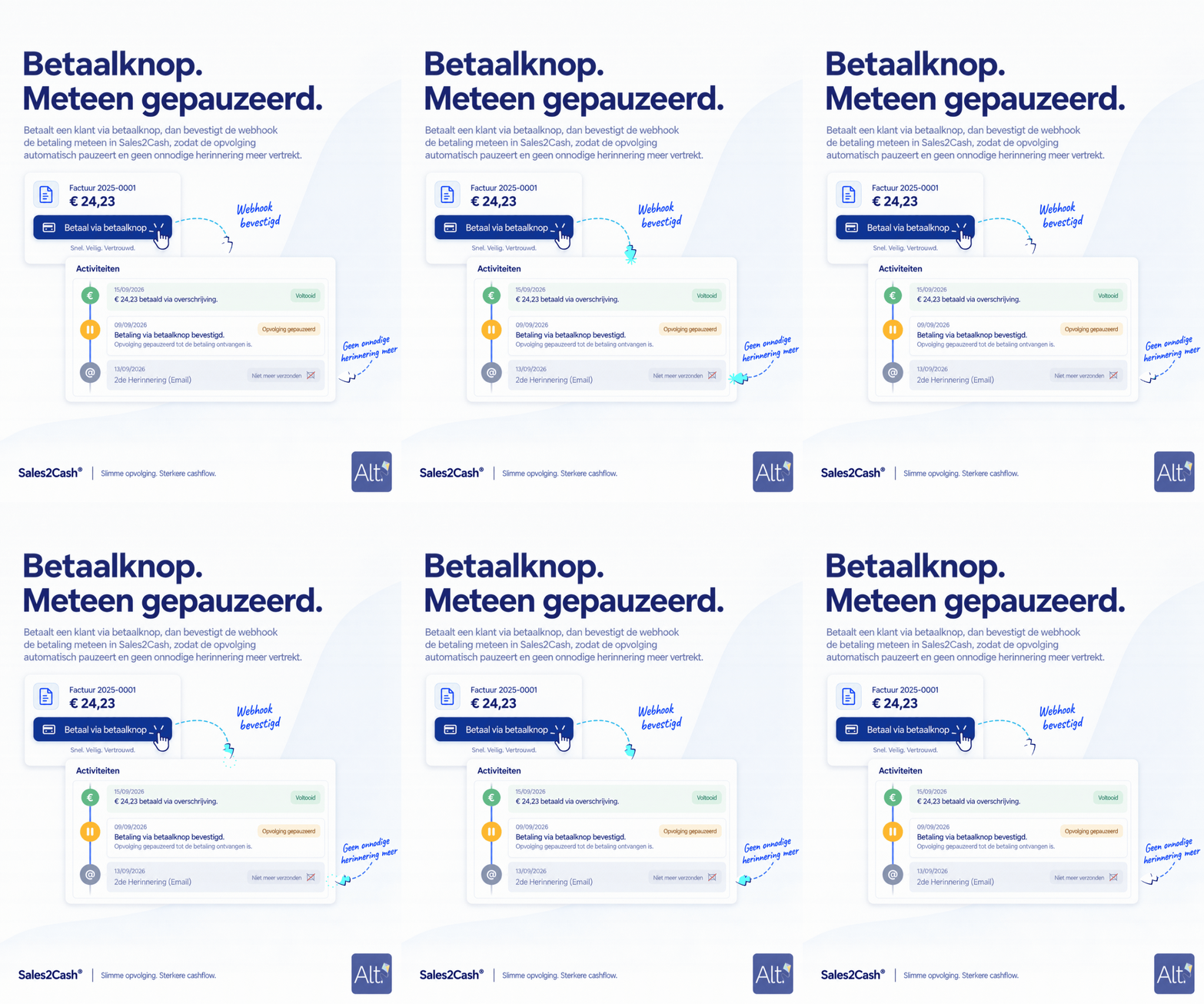
- Een betaling ontvangen is één ding. Er daarna voor zorgen dat je klant niet alsnog een extra herinnering krijgt, is iets anders. Wanneer een debiteur betaalt via de Digiteal - betaalknop, wordt die betaling meteen verwerkt in Sales2Cash®. Het dossier wordt vervolgens automatisch gepauzeerd, zodat er geen onnodige opvolging meer vertrekt, ook als de bank wat meer tijd nodig heeft. Dat bespaart tijd intern, voorkomt verwarring bij je klant en houdt je opvolging correct en klantvriendelijk. Zo maak je van factuuropvolging geen losse
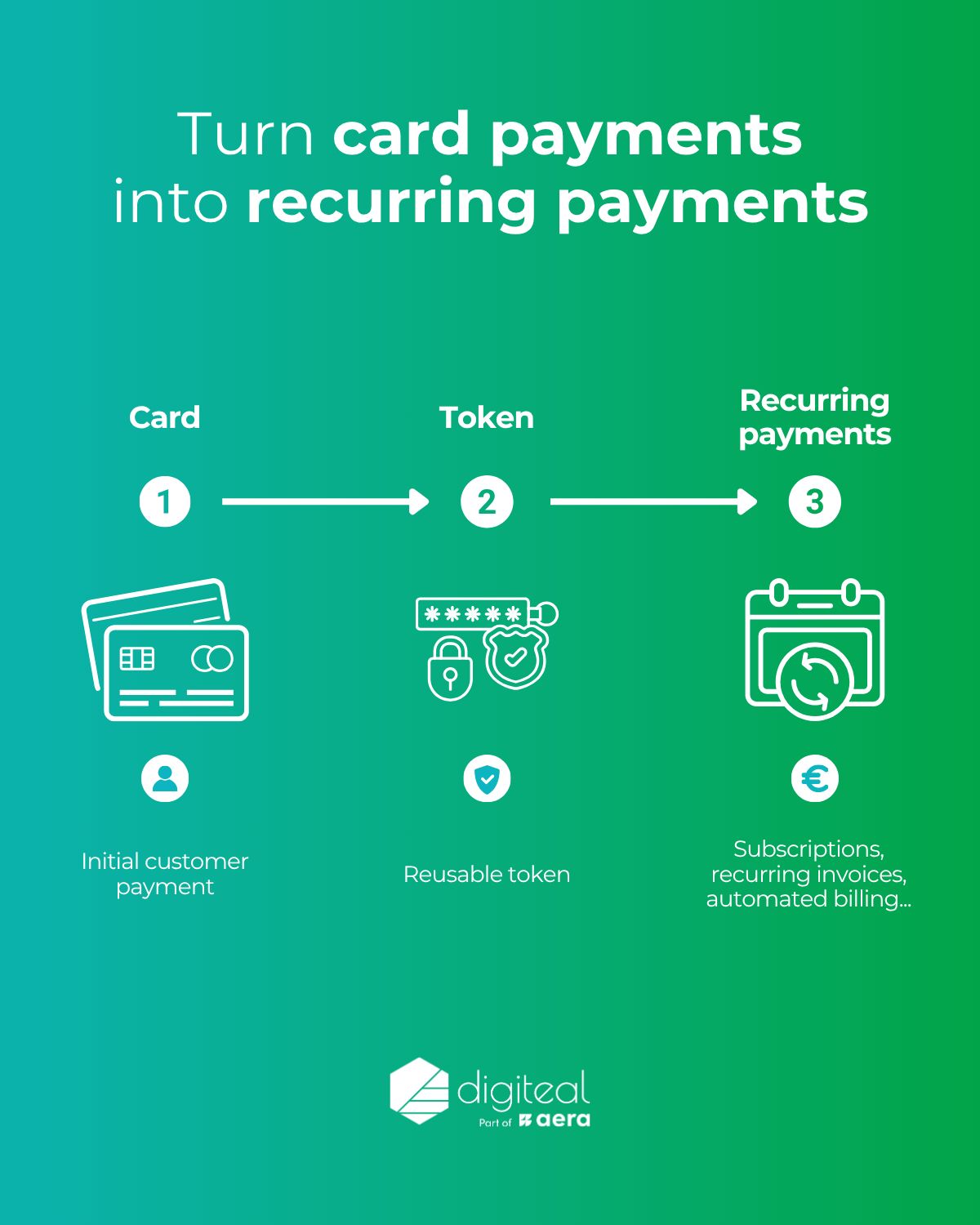
- How do you reduce friction on recurring payments? 🧐 By not asking the customer to re-enter their card or re-authenticate on their bank's side (once they have agreed to it, of course). That sounds simple from the user's point of view. Behind the scenes, though, you need the right payment setup to make it work in a secured way. At Digiteal, recurring card payments rely on two key building blocks: 1️⃣ Card tokenization During the initial customer-initiated payment, the customer gives their consent for future use of the card, and the
- Back to school. And back to payments. And back to 'who forgot to pay?' 😅 Registrations, canteen, school activities, fundraising... the new school year also means A LOT of payments to manage. The good news? They don't all have to become admin work. With Digiteal, schools and education software providers can simplify things with: ✅ Automatic payment reconciliation ✅ QR codes and payment links ✅ Wallets for recurring small payments like canteen or other services ✅ Automatic split payments between entities ✅ Refunds and partial
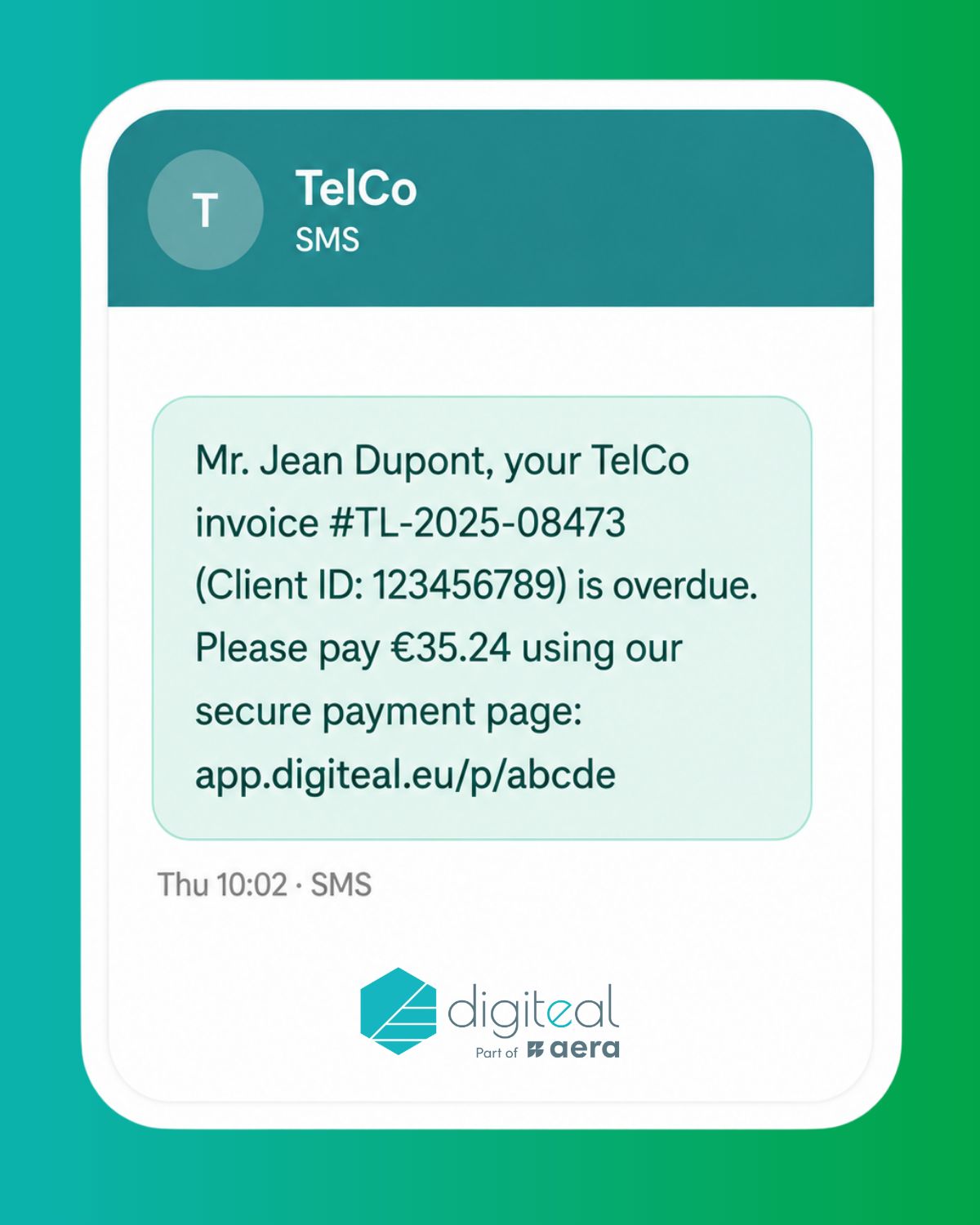
- An invoice sent by email goes unpaid. What's your next move? Most teams just wait or send another email. And another. Here is a simple fix: change the channel, not the message. SMS reminders get read (and acted on) far faster than another email lost in an inbox. 📲 But there's a catch: payment links are long, full of parameters and turn into a broken mess once squeezed into a text message. That's exactly what our shortLink API solves. One call, and a full Digiteal payment link becomes a clean, short URL built for SMS and any
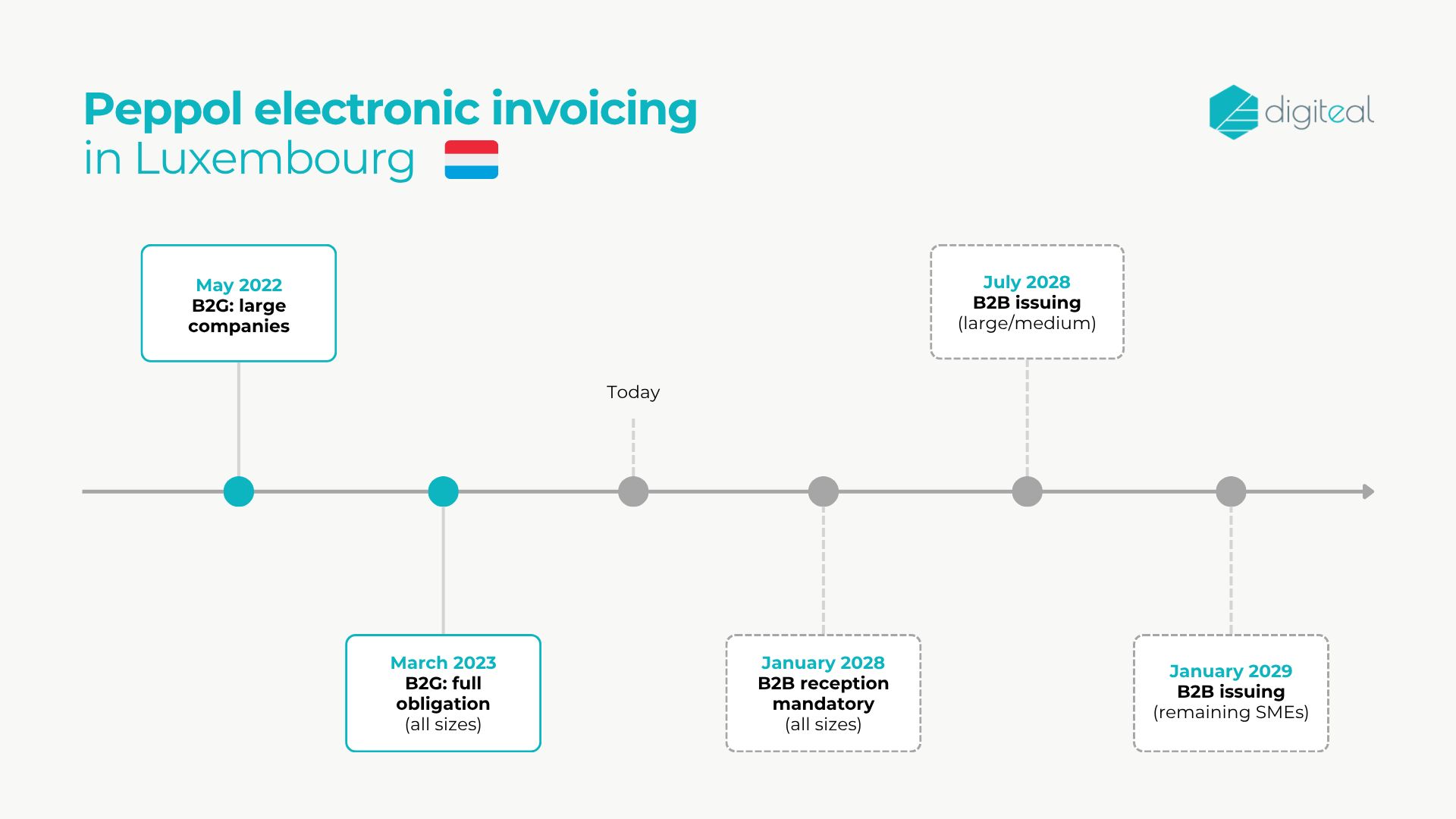
- Luxembourg made its B2B e-invoicing timeline official. On 17 July 2026, the government approved a draft law extending mandatory e-invoicing beyond B2G, straight into domestic B2B. Here's what's coming: 📥 Jan 2028: every company must be able to receive e-invoices; 📤 Jul 2028: large & medium companies must issue them; 📤 Jan 2029: all remaining companies (including small & micro) must issue them too. The good news: it's built on Peppol, the same network already used for B2G since 2023. Same rails, same logic, just a wider
- Most people think "Peppol" and immediately think e-invoicing. Fair enough: that's the mandatory piece, and it's what got the network built. But the Peppol network was designed to carry an entire business document flow, not just the invoice at the end of it. Here is what else moves through Peppol today: ➡️ Invoice Response & Message Level Response (MLR): structured feedback confirming an invoice was received and accepted (or rejected, with a reason), replacing the endless "did you get my invoice?" email chains. ➡️ Orders & Order
- All QR codes are not created equal. Especially when it comes to payments! The standard EPC QR code (the one defined by the European Payments Council) is a solid open standard. But used on its own, it has real limitations that matter once you are running a business on top of it: 👉 Not every banking app supports it. A static EPC QR code doesn't work universally across EU banks (some of your customers simply won't be able to scan and pay) 👉 No visibility on your end. A standard EPC QR code doesn't create a payment session in
- Sending an e-invoice through Peppol is only half the story. What happens next? Once a document leaves your system on the Peppol network, you need to know what happened to it. Did it arrive? Was it valid? Did the recipient accept it, or flag a problem? That's exactly what webhooks are for. Instead of polling an API and hoping for the best, your system gets notified automatically, in real time, at every step: ➡️ Transport ACK: confirmation that the receiving Access Point actually received your document ➡️ MLR (Message Level

Something wrong or missing? Send an update. Fixed within 24 hours.