
Overview
EBRAINS is Europe's digital infrastructure for brain research. It provides tools and data that bring together neuroscience, computing and AI, and access is open and free. The infrastructure was originally built by the EU-funded Human Brain Project, which launched in 2013 and ran until 2023 with a total budget of €1 billion. EBRAINS AISBL, an international non-profit association headquartered in Brussels, was founded in 2019. The research infrastructure was formally launched in 2020 and was selected for the ESFRI Roadmap of European Research Infrastructures in 2021. The association has 9 full members and 37 associate members, including Forschungszentrum Jülich, the Commissariat à l'énergie atomique, Consiglio Nazionale delle Ricerche, KTH Royal Institute of Technology and the University of Oslo. One associate member is based in Belgium. Katrin Amunts and Philippe Vernier are Joint CEOs. Viktor Jirsa is Chief Science Officer, Yannis Ioannidis is Chief Technology Officer and Jan Bjaalie is Chief Infrastructure Officer. The Governing Board is chaired by André Syrota. Services include brain atlases for human, macaque, marmoset, rat and mouse, medical analytics, modelling and simulation tools, data and knowledge management, the Collaboratory platform and access to neuromorphic and high-performance computing. In 2025 EBRAINS had around 15,000 registered users from 95 countries, 11 National Nodes and 45 institutional partners across 15 European countries. Since 2024 the infrastructure is developed under the EBRAINS 2.0 project, which runs to the end of 2026 with an EU contribution of €37,995,202.50 under Horizon Europe, coordinated from Brussels with 59 partner institutions from 16 countries. The project has produced over one hundred publications and more than 120 new datasets.
Funding history
- 2013 to 2023 Human Brain Project: €1 billion total budget, half from the European Commission
- 2024 to 2026 EBRAINS 2.0: €37,995,202.50 EU contribution under Horizon Europe (HORIZON-INFRA-2022-SERV-B-01), 53 participants
Stated facts & numbers
- Founded: 2019 (AISBL); infrastructure launched 2020
- Headquarters: Brussels
- Legal form: International non-profit association (AISBL)
- Joint CEOs: Katrin Amunts and Philippe Vernier
- Members: 9 full members, 37 associate members
- Brussels office staff: 11
- Registered users: Around 15,000 from 95 countries (2025)
- ESFRI Roadmap: 2021
- Origin: Human Brain Project (2013 to 2023)
- Current funding: EBRAINS 2.0, €37,995,202.50 EU contribution, 2024 to 2026
Key people
In the news
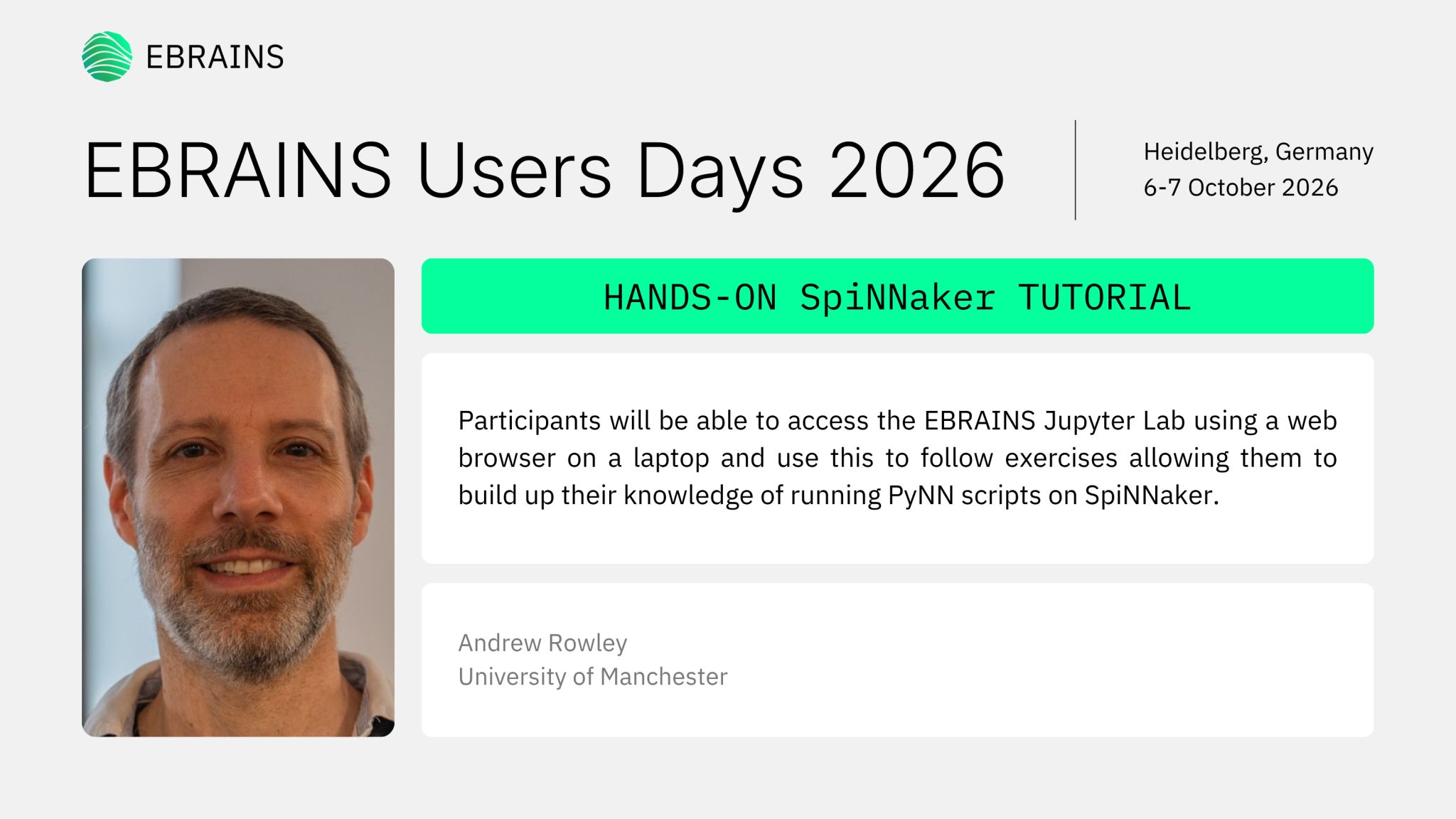
- How could brain-inspired computing open new possibilities for your research? Meet the expert at the EBRAINS Users Days 2026, taking place in Heidelberg on 6–7 October. 🔹 Andrew Rowley will guide participants through SpiNNaker, the digital real-time neuromorphic computing system available through EBRAINS. During this hands-on tutorial, participants will learn how to access the platform using the EBRAINS JupyterLab environment and run PyNN scripts. Want to learn more, gain practical experience and exchange ideas with experts
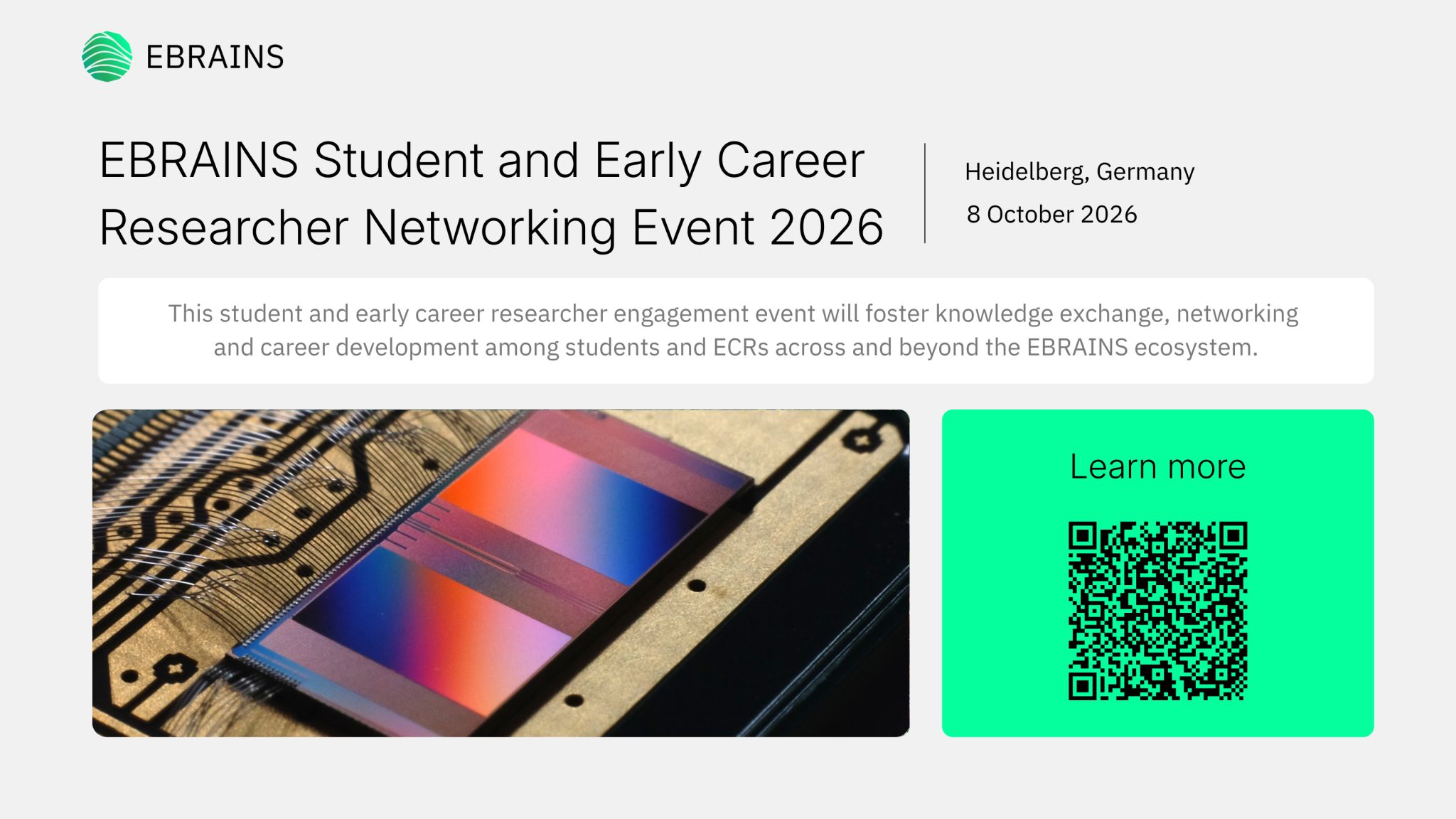
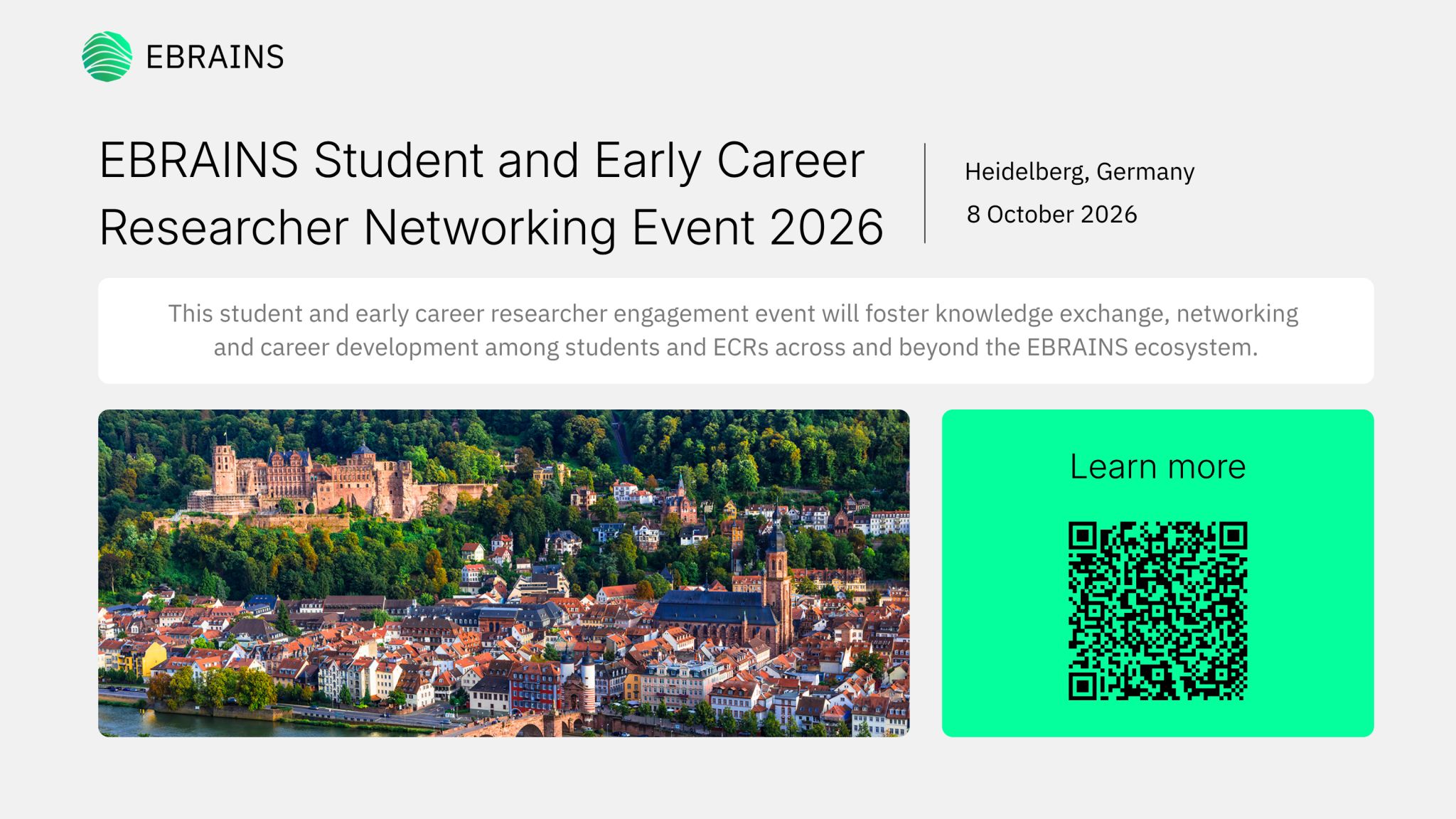
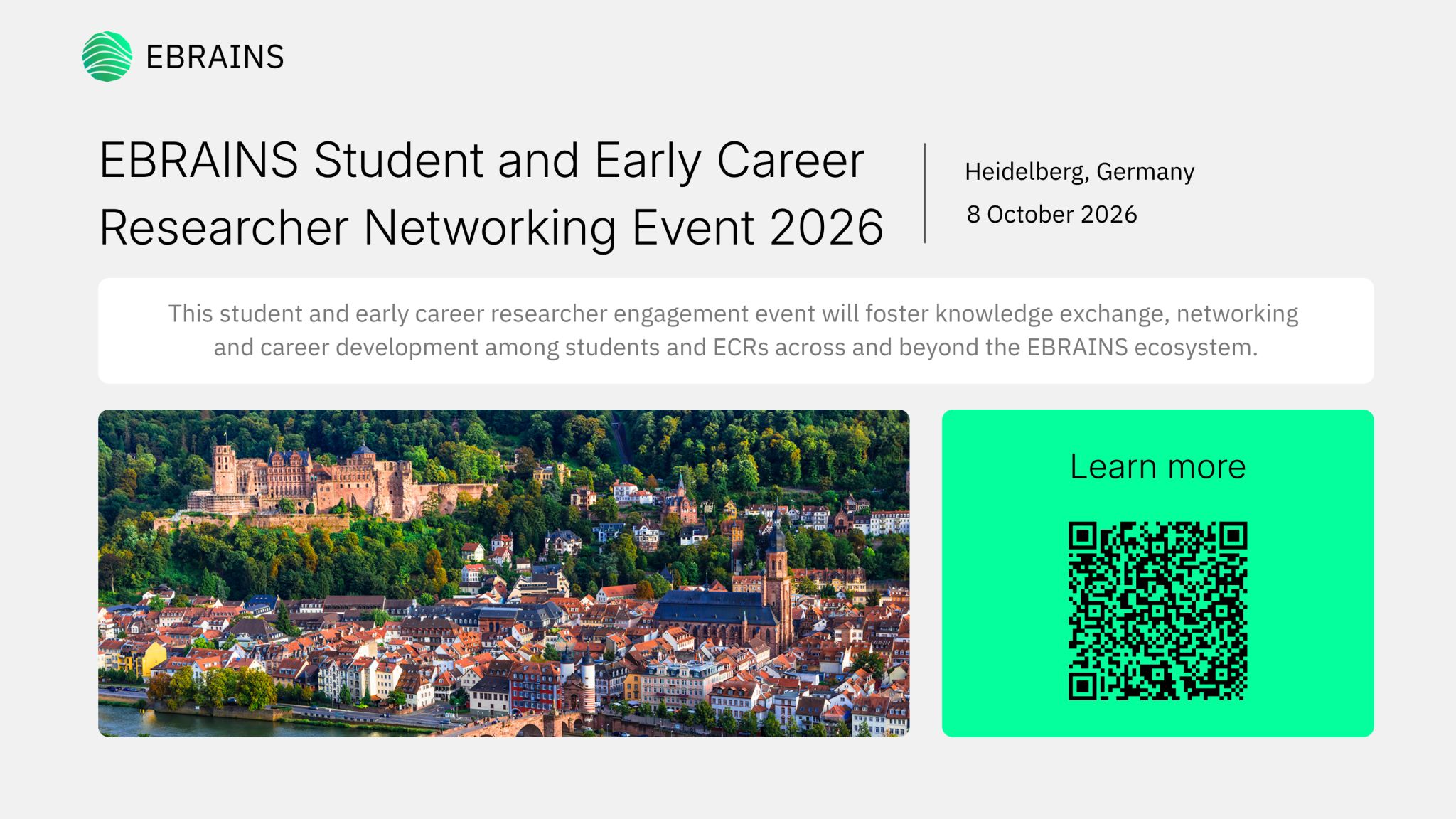
- Ever wondered what the infrastructure of a neuromorphic computing system looks like? 💻 Join a tour of the BrainScaleS neuromorphic computing infrastructure at the upcoming EBRAINS Student and ECR Networking Event on 8 October find out! Based at the EINC in Heidelberg, BrainScaleS researchers will deliver tours to a limited number of participants – register now to secure your spot! Register here before 25 September: https://lnkd.in/edmkZaC3
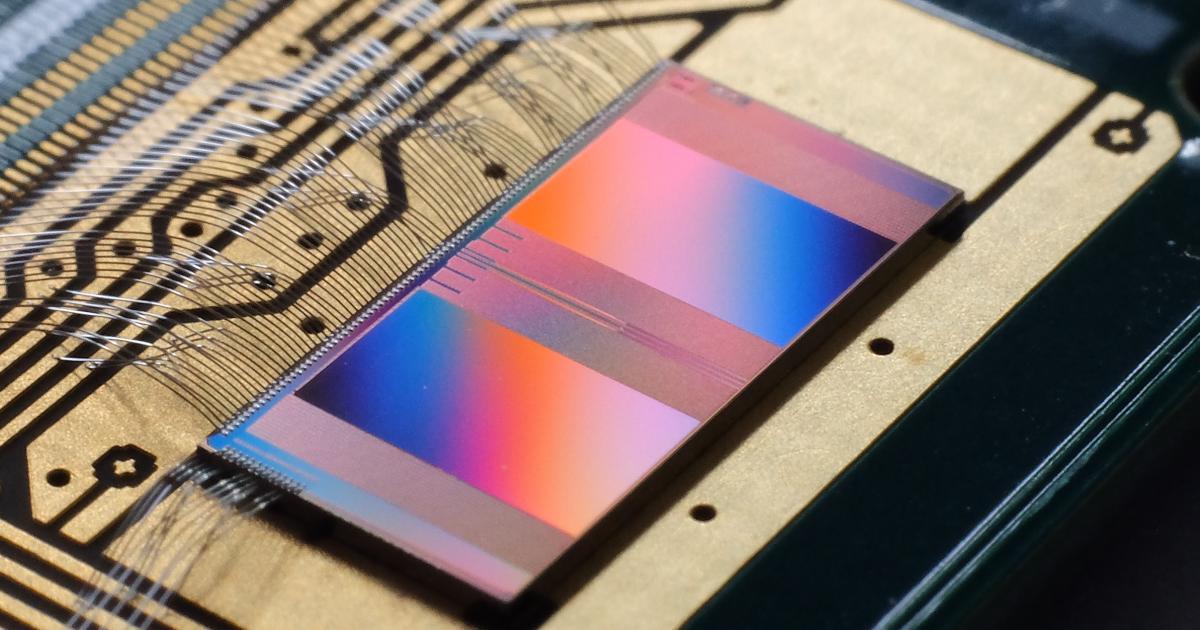
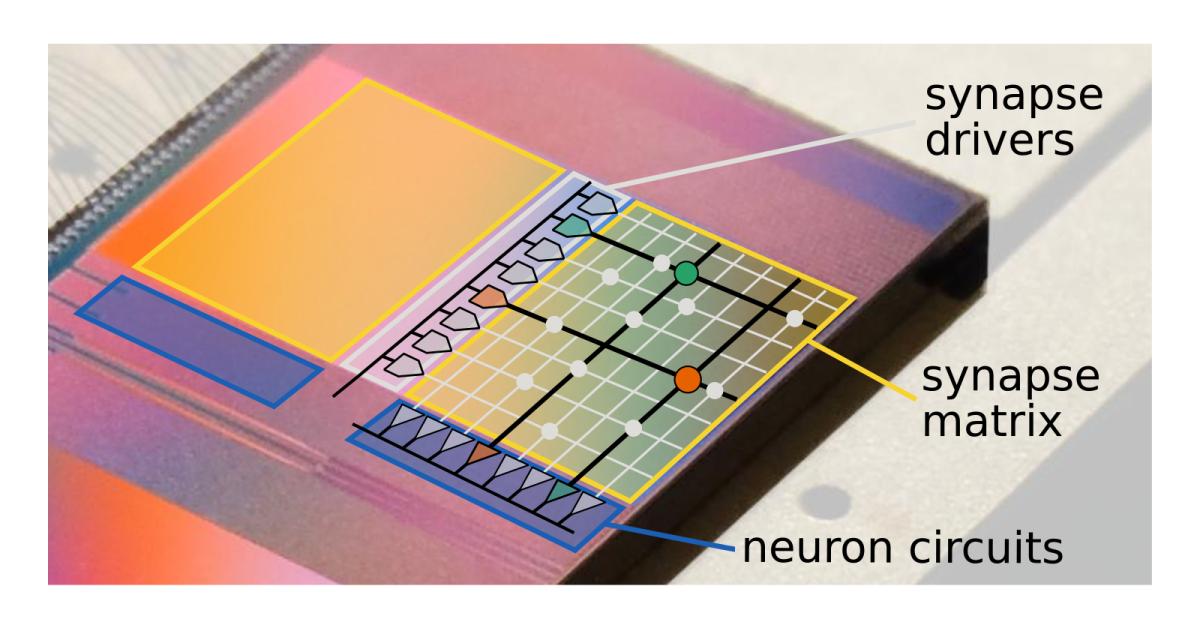
- Programming analogue neuromorphic hardware can be challenging because the behaviour of its artificial neurons depends on many physical parameters. Researchers from the EBRAINS community have demonstrated a new approach to estimate these parameters automatically on BrainScaleS-2. Read more: https://lnkd.in/eeG3xGJH
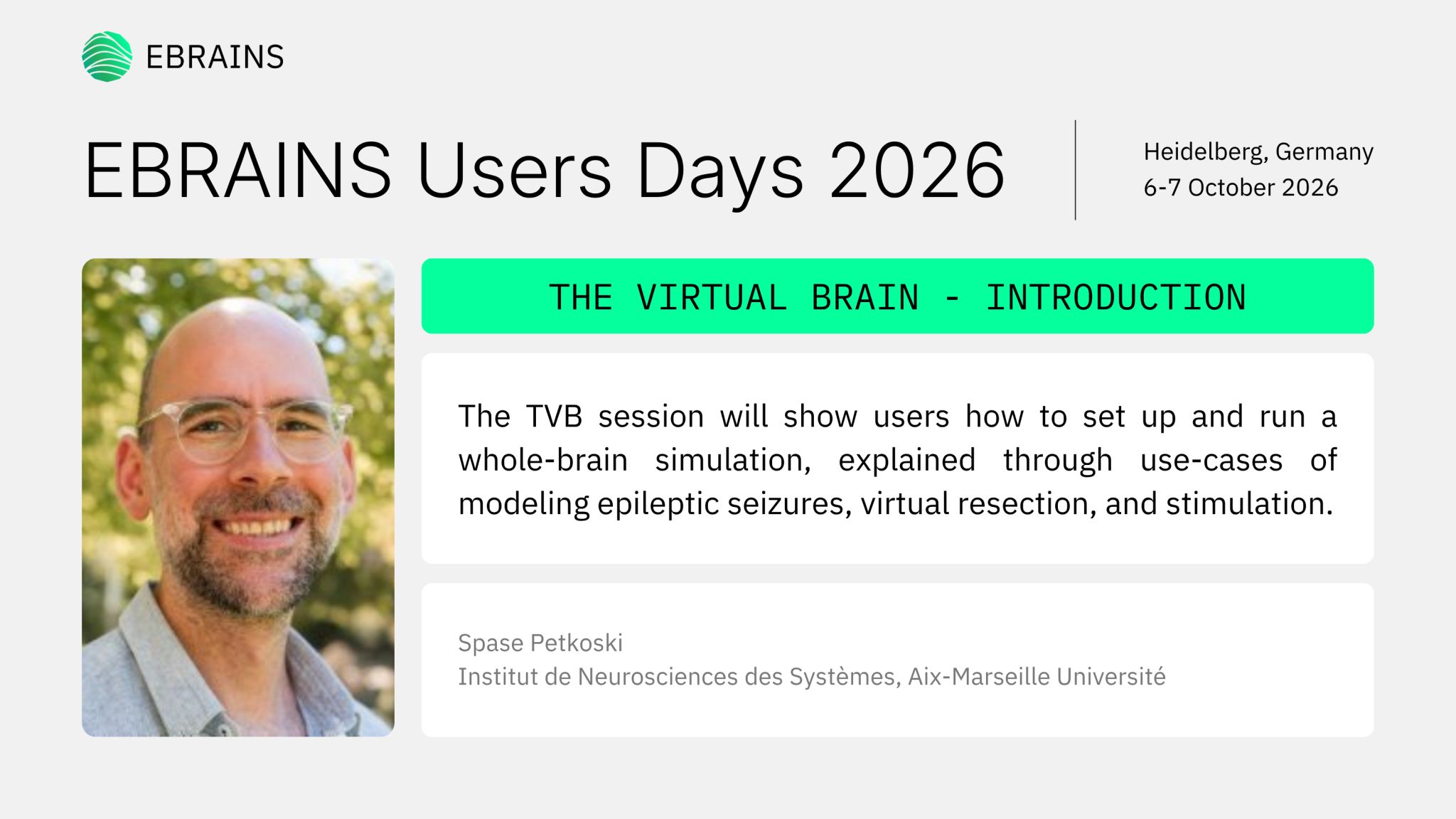
- Explore powerful EBRAINS technologies at the 𝐄𝐁𝐑𝐀𝐈𝐍𝐒 𝐔𝐬𝐞𝐫𝐬 𝐃𝐚𝐲𝐬 𝟐𝟎𝟐𝟔 and deepen your knowledge of whole-brain modelling, the EBRAINS multilevel brain atlas, neuromorphic computing and much more. On 7 October in Heidelberg, Spase Petkoski will introduce The Virtual Brain (#TVB) through a hands-on tutorial covering its core building blocks. Participants will learn how to set up and run whole-brain simulations through practical research use cases. Join him and other EBRAINS experts to gain practical
- Join the Career-Focused AMA (Ask Me Anything) Session 💬 at the upcoming EBRAINS Student and Early Career Researcher Networking Event on 8 October! Wondering how to best prepare for your chosen career path? Unsure what path you want to take or how to decide which goals to pursue? The Career-Focused AMA will give participants the opportunity to ask questions and hear advice from speakers at different points in their research career. Do you have specific questions or topics you would like to discuss during the AMA? Let us know in the
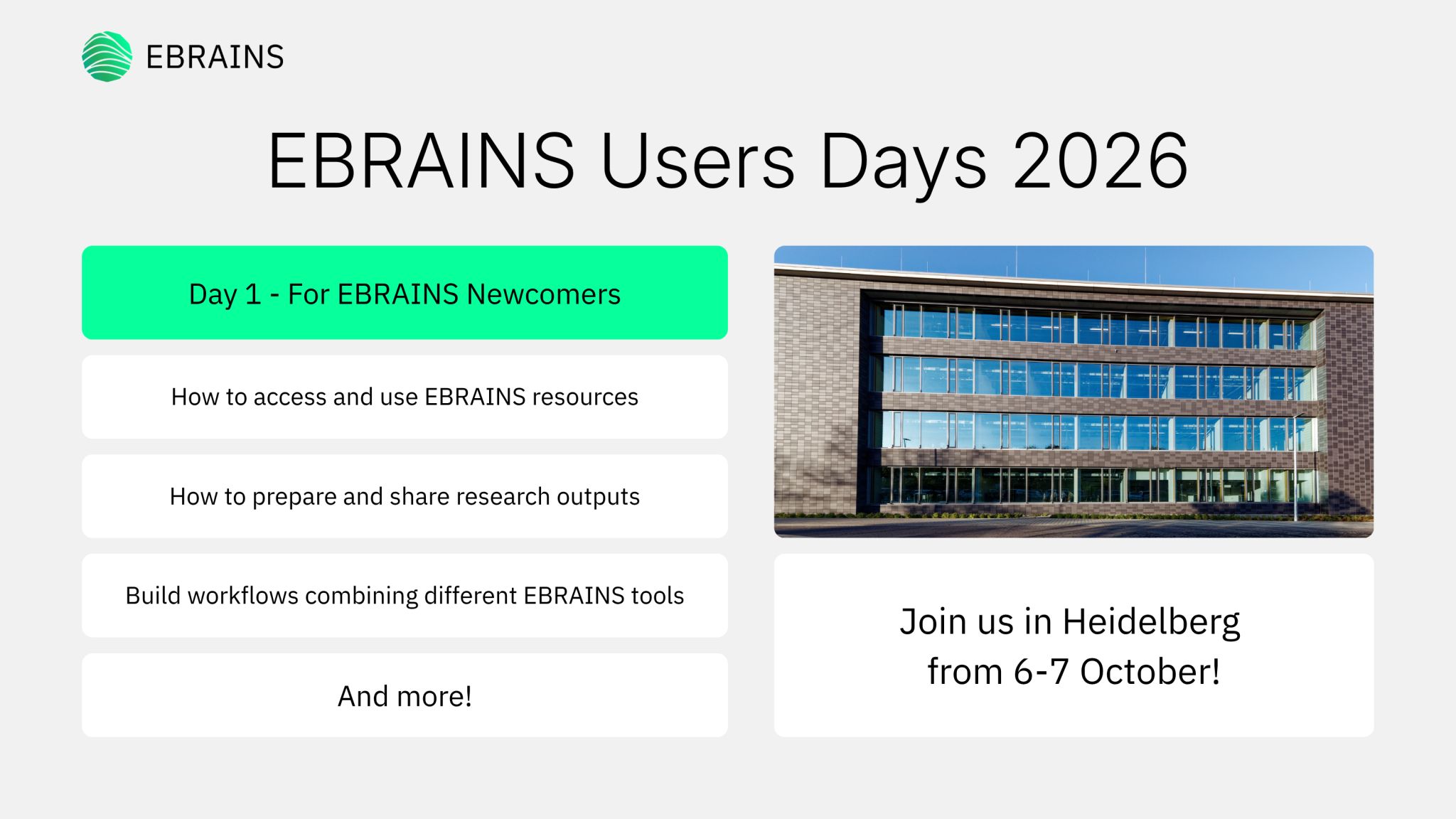
- Curious about EBRAINS but unsure where to begin, or looking for a clearer overview of what the infrastructure can offer? Join us on 6 October in #Heidelberg for the first day of the 𝐄𝐁𝐑𝐀𝐈𝐍𝐒 𝐔𝐬𝐞𝐫𝐬 𝐃𝐚𝐲𝐬 𝟐𝟎𝟐𝟔. Designed for newcomers and users wishing to strengthen their understanding of EBRAINS, #Day1 will introduce you to: • The EBRAINS Research Infrastructure and its core tools and services • How to access and use EBRAINS resources • How to prepare and share research outputs • Advanced computing resources
- Researchers have developed a learning mechanism that uses the natural variability of neural activity — often dismissed as random “noise” — to understand how synapses buried deep inside brain networks — or brain-inspired devices — can adapt to improve the learning capabilities of the networks as a whole. Read more: https://lnkd.in/d7g37XHq
- Participate in the upcoming EBRAINS Student and Early Career Researcher Networking Event with a Lightning Talk! ⚡️ The Lightning Talks are a rapid-fire round of 5-minute research presentations given by attendees, designed to support knowledge exchange and networking among attendees. It’s a great opportunity to practice presenting your research and get feedback on your work. Certificates will be provided for participants who present talks. Interested in presenting a Lightning Talk on your research? Let us know in the registration

Something wrong or missing? Send an update. Fixed within 24 hours.