
Overview
Katrin Amunts is Joint CEO of EBRAINS, a role she has held since 2023. She is based in Jülich.
Amunts has been a director at Forschungszentrum Jülich since October 1999. Since 2013 she has directed the Cécile & Oskar-Vogt Institute of Brain Research, and in January of that year she also took up a professorship at Heinrich-Heine-Universität Düsseldorf. She has been a Hector Fellow at the Hector Fellow Academy since January 2022.
At the Human Brain Project, she was scientific research director from July 2016 to August 2023, and then director general from September 2023 until March 2024.
Career history

In the news
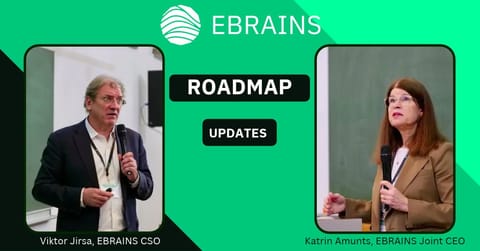
- 𝐒𝐡𝐚𝐩𝐢𝐧𝐠 𝐭𝐡𝐞 𝐧𝐞𝐱𝐭 𝐝𝐞𝐜𝐚𝐝𝐞 𝐨𝐟 𝐧𝐞𝐮𝐫𝐨𝐬𝐜𝐢𝐞𝐧𝐜𝐞 𝐢𝐧 𝐄𝐮𝐫𝐨𝐩𝐞 – 𝐭𝐨𝐠𝐞𝐭𝐡𝐞𝐫! Following the strong engagement of the neuroscience community at the EBRAINS Roadmap Symposium earlier this year in Munich, work is progressing towards a shared vision for the future of brain research in Europe. Under the leadership of Prof. Katrin Amunts, EBRAINS Joint CEO, and Prof. Viktor Jirsa, EBRAINS Chief Scientific Officer, the initiative is now entering its next phase. 🔬 A 𝐝𝐞𝐝𝐢𝐜𝐚𝐭𝐞𝐝 𝐰𝐫𝐢𝐭𝐢𝐧𝐠
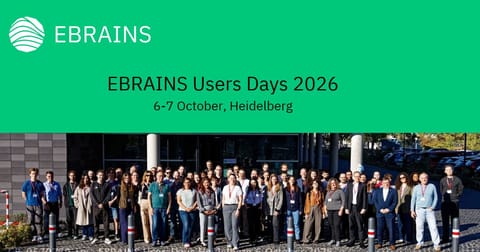
- Curious to know what the EBRAINS community discussed at the 𝐄𝐁𝐑𝐀𝐈𝐍𝐒 𝐔𝐬𝐞𝐫𝐬 𝐃𝐚𝐲𝐬 𝟐𝟎𝟐𝟔? On 6–7 October, researchers, developers and infrastructure experts gathered in Heidelberg to explore how EBRAINS tools and services can support neuroscience research, share experiences and discuss the future of European digital #neuroscience. 🔬 From brain data and modelling to simulation, high-performance computing and medical research platforms, the event offered an opportunity to #discover the latest developments, #share
- Yesterday, EBRAINS Joint CEO Katrin Amunts congratulated Karl Deisseroth, Peter Hegemann and Georg Nagel, on being awarded the 2026 Nobel Prize in Physiology or Medicine for their groundbreaking discoveries concerning light-gated ion channels and optogenetics. She highlighted: "Optogenetics has transformed #neuroscience by giving us an extraordinary way to control and study the activity of nerve cells with #light. It is a beautiful example of how a fundamental discovery can open entirely new avenues for understanding the #brain. I
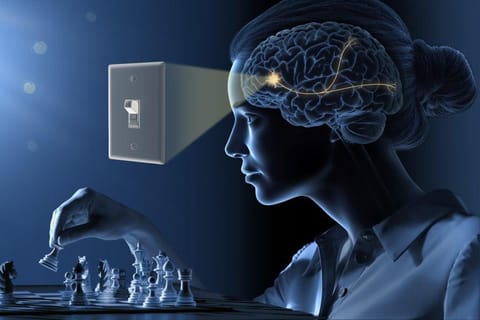
- How can we unlock the secrets of mixed brain states? A computer model developed with support from EBRAINS 2.0, Virtual Brain Twin, and the Human Brain Project is providing valuable insight into how the human brain works. As described in the study published in the journal ‘Proceedings of the National Academy of Sciences’, the model shows that regional differences in the brain’s receptors help shape neural activity across the whole brain. The study suggests that the brain’s natural diversity helps different brain regions synchronise
This page shows public professional information only, each fact cited. Is this you? send a correction, or ask for removal within 24 hours, no questions asked.