
Overview
NERAI fuses millions of global event signals with AI-driven analysis to deliver decision-grade risk intelligence quantified, forecast, and explained in plain language. The platform monitors 60+ priority economies across 40+ CAMEO risk dimensions with a 12-month forward forecast horizon and daily index updates.
Key people
In the news
- Over the past few weeks, we’ve been pushing NERAI further in one direction that I think matters a lot: turning external risk into an actual decision. A lot of intelligence products are still very good at telling you that something is getting worse. A corridor is disrupted. A port is congested. A sanctions environment is tightening. A geopolitical indicator is deteriorating. That information is useful — but for operators, procurement teams, logistics teams, insurers, compliance teams and finance leaders, it is still only the
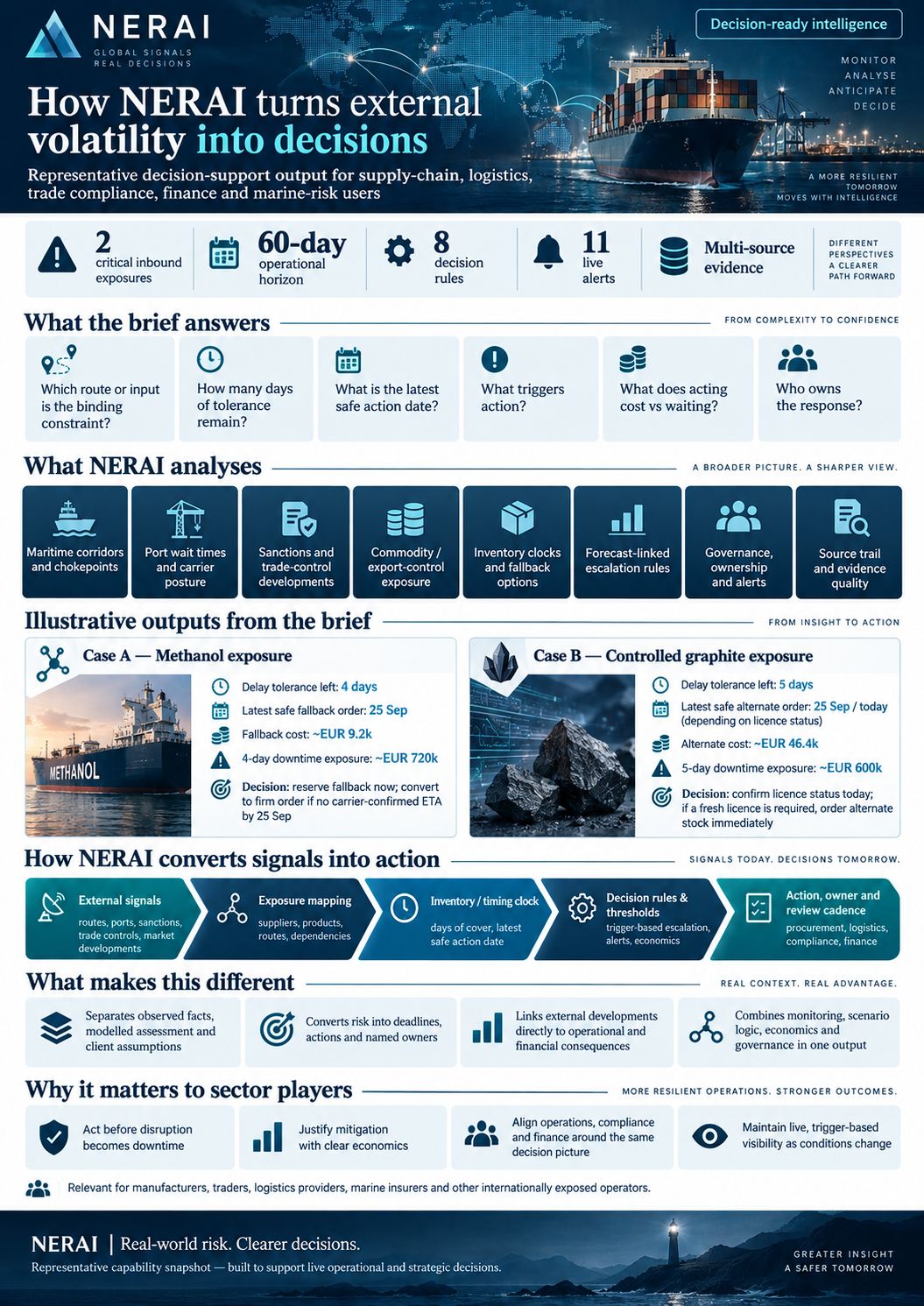
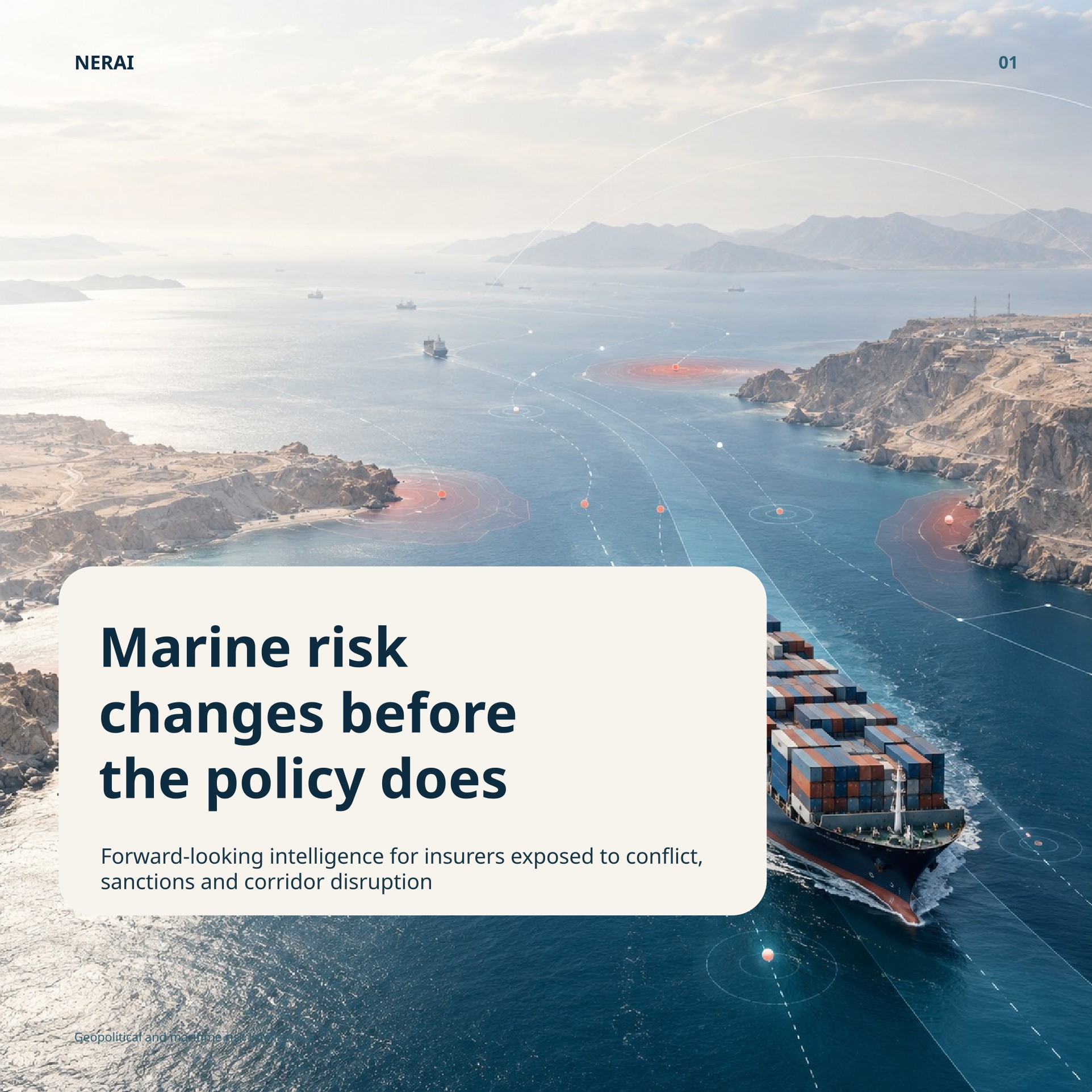
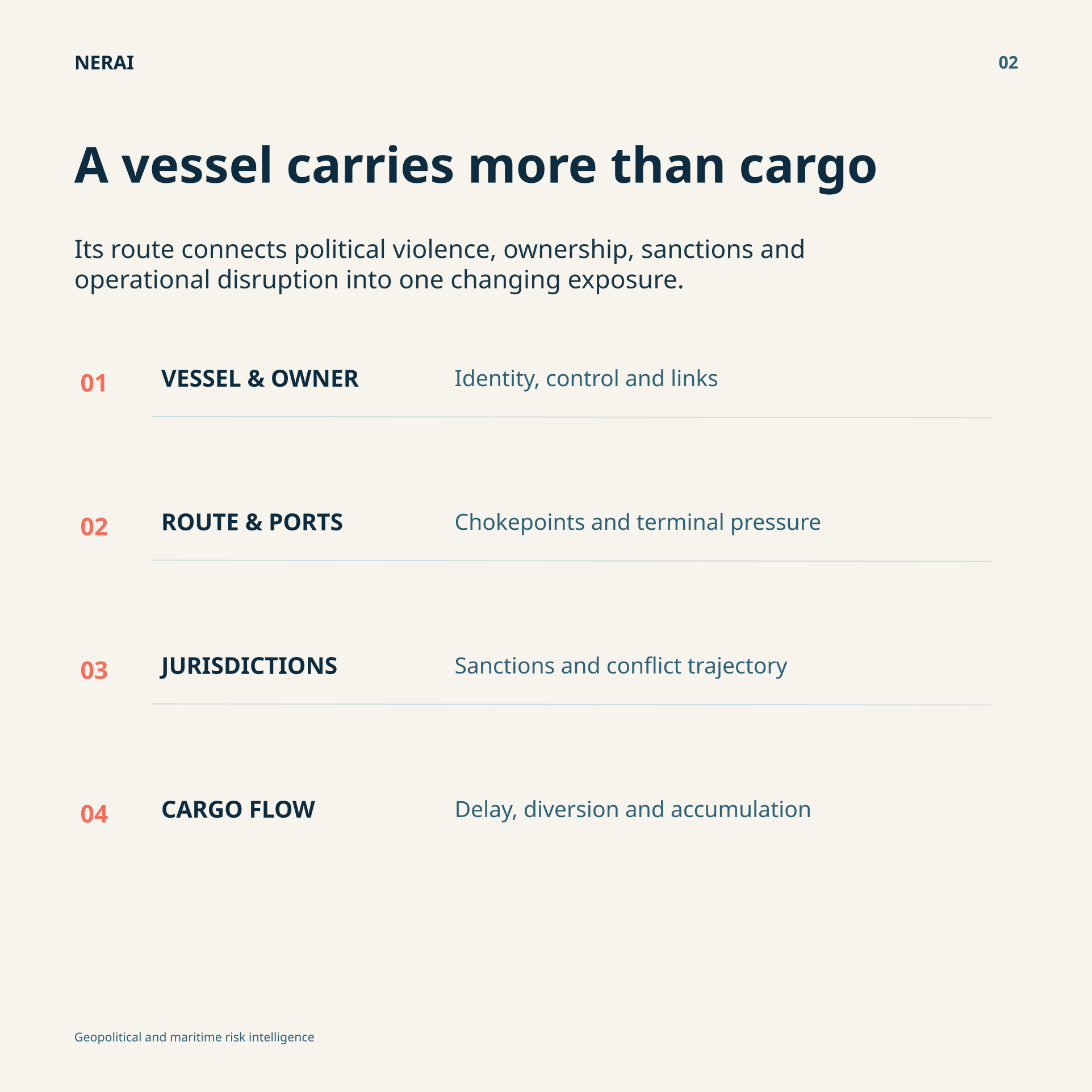
- A vessel may pass every screening check today and still enter a very different risk environment tomorrow. For marine insurers, the harder questions sit beyond the current vessel status: How could conflict or sanctions alter its route? Where might port congestion, chokepoint disruption or rerouting concentrate insured value? Which ownership, jurisdiction or trading links could create future exposure? How could these risks evolve over the next 3, 6 or 12 months? NERAI connects geopolitical developments with vessels, ports, corridors
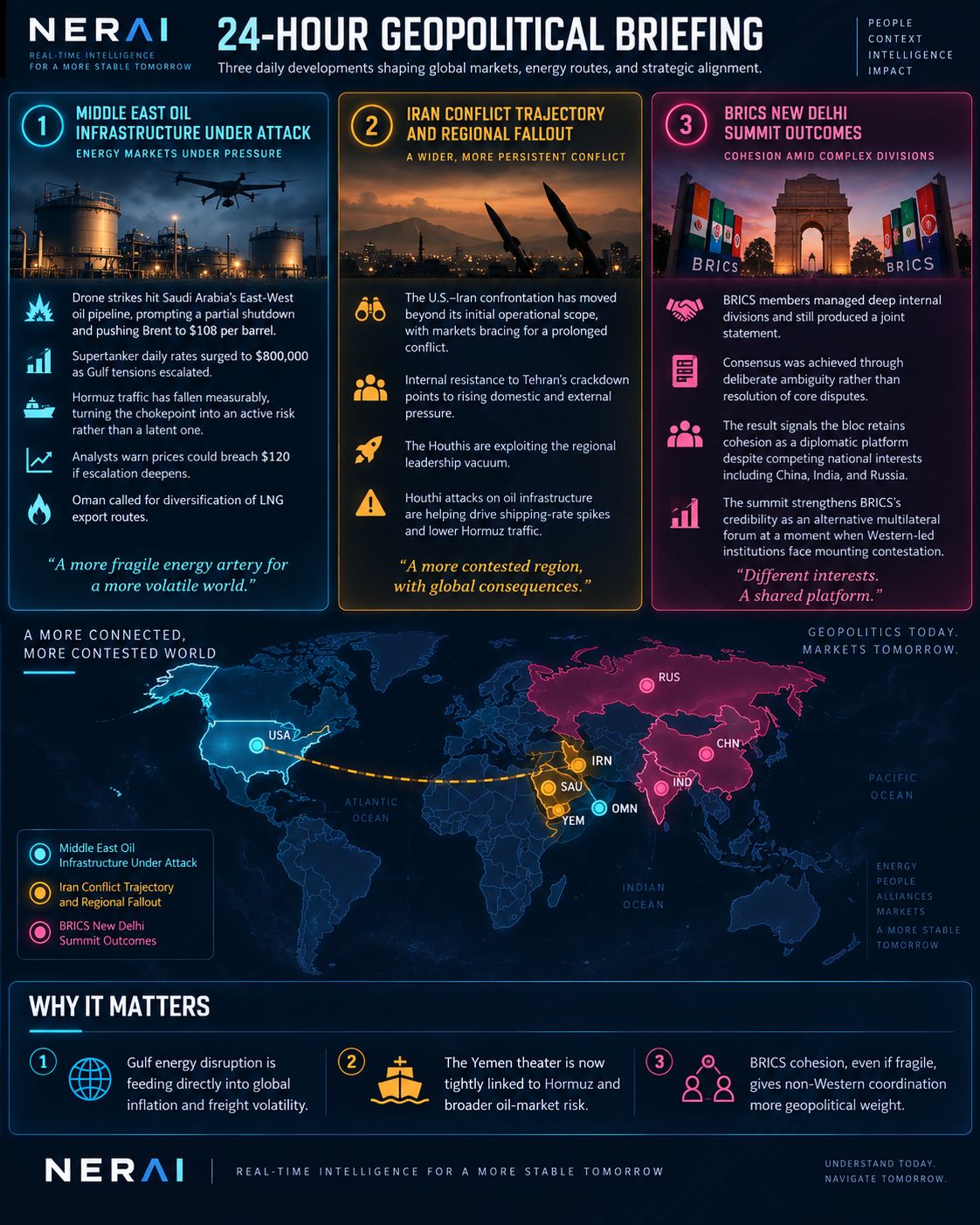
- NERAI 24-Hour Geopolitical Briefing Three developments stand out in today’s global risk picture: 1. Middle East oil infrastructure under attack Pressure on Saudi Arabia’s East-West oil pipeline, rising tanker costs and weakening Hormuz traffic are reinforcing the view that Gulf energy disruption is no longer a temporary market shock. 2. Iran conflict trajectory widening The U.S.–Iran confrontation is moving beyond its initial operational scope. At the same time, domestic pressure inside Iran and Houthi activity in Yemen are
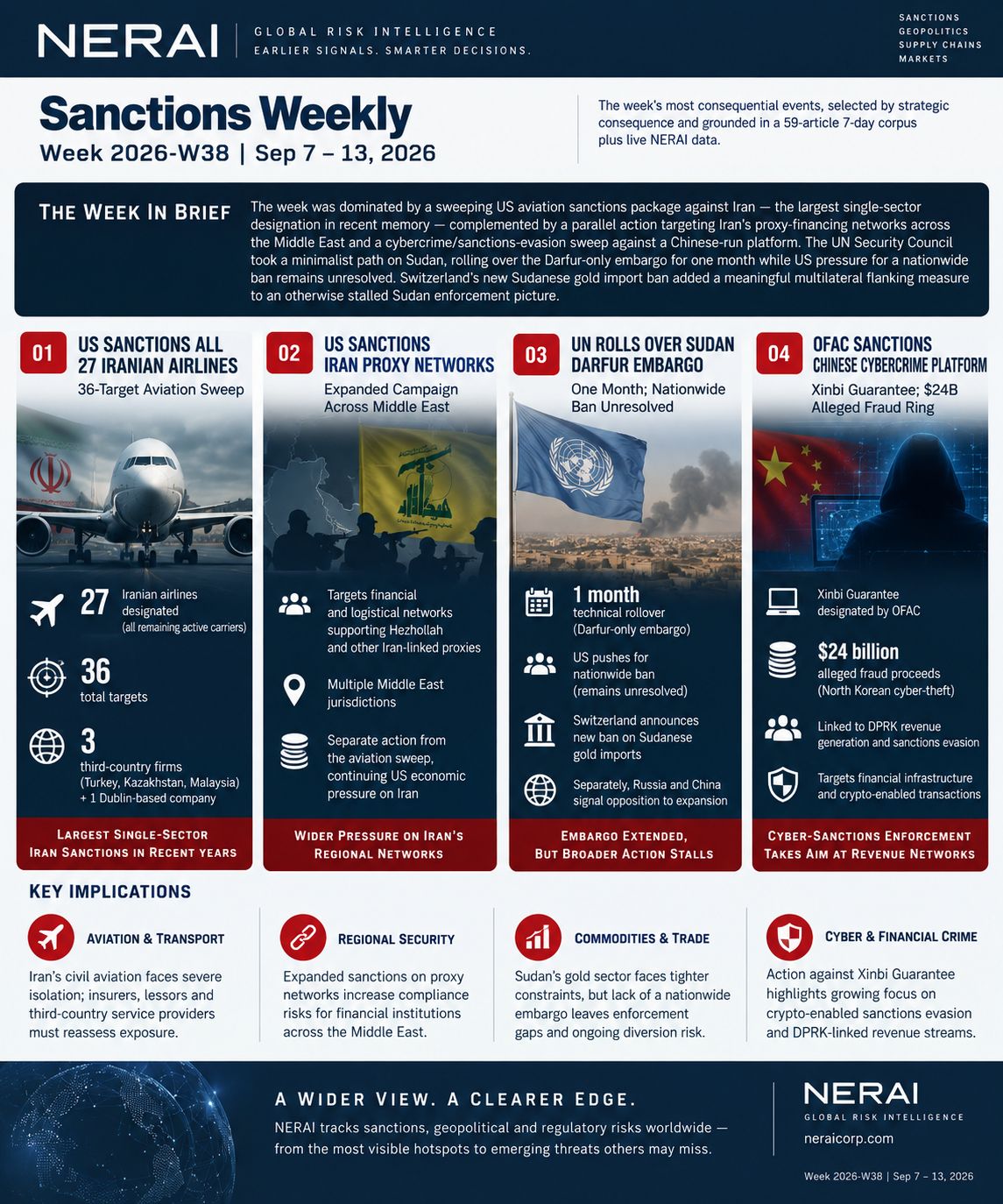
- This week’s sanctions landscape was defined by a widening pressure campaign against Iran, alongside important developments in Sudan and cyber-enabled financial crime. The most consequential developments included: - a sweeping U.S. aviation sanctions package targeting 27 Iranian airlines and 36 entities - a separate U.S. action against Iran-linked proxy financing and logistics networks - a one-month rollover of the UN Darfur arms embargo, while a broader Sudan-wide ban remains unresolved - OFAC action against Xinbi Guarantee,
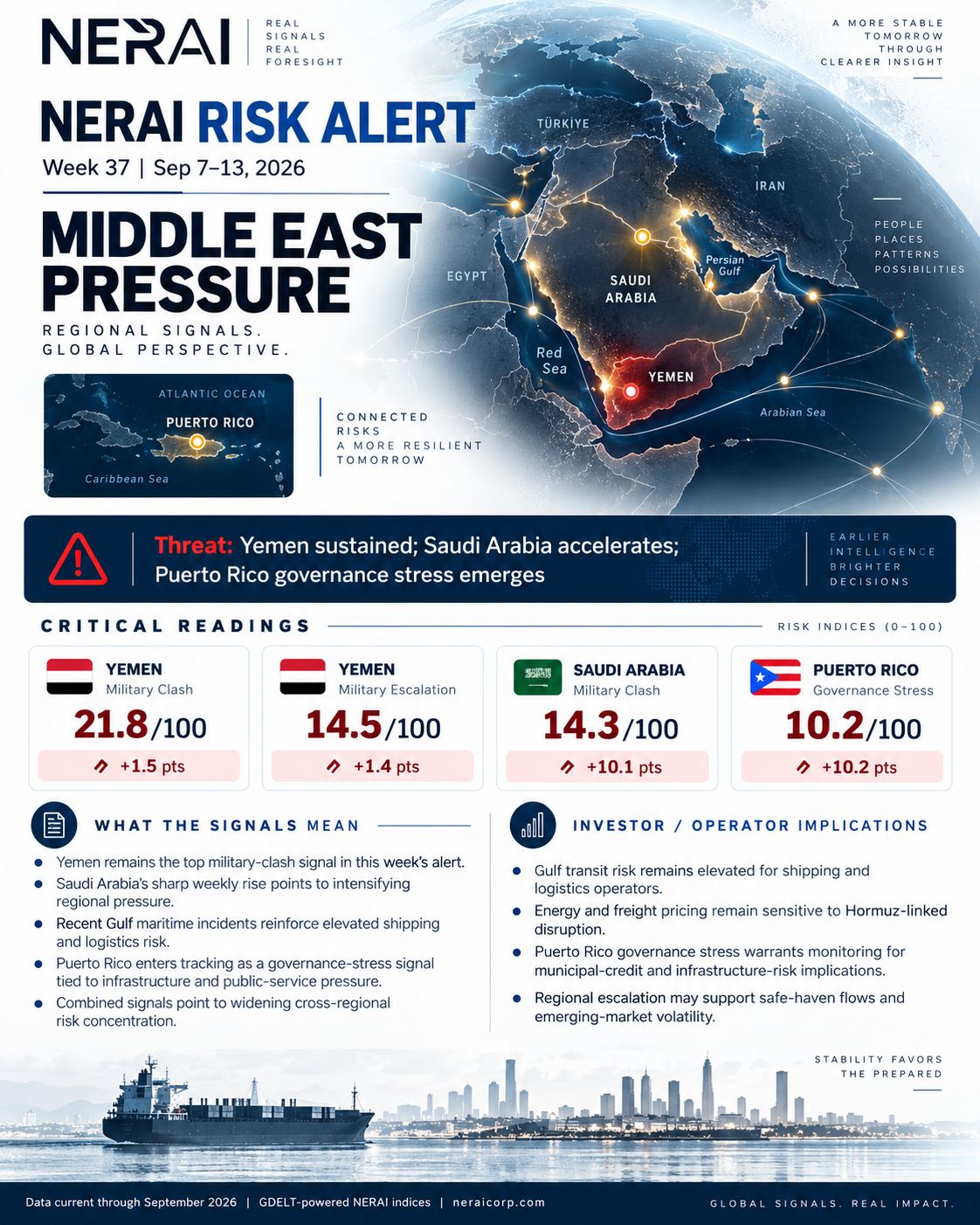
- This week’s signals point to a widening concentration of risk across multiple regions. Yemen remains the strongest military-clash signal, while Saudi Arabia recorded the sharpest weekly acceleration, reflecting intensifying regional pressure. At the same time, Puerto Rico entered NERAI tracking as a governance-stress signal, linked to infrastructure and public-service pressure rather than conventional security instability. The key readings: Yemen — Military Clash: 21.8/100 Yemen — Military Escalation: 14.5/100 Saudi Arabia —
- This week’s NERAI Maritime Weekly highlights a widening convergence of pressure across the Gulf, Red Sea and Eastern Mediterranean. Three signals stand out: Strait of Hormuz physical oil flow: -96.4% vs baseline Bab el-Mandeb / Red Sea flow: -41.7% vs baseline Eastern Mediterranean 8-week disruption probability: 82% The important point is not any one number in isolation. The strategic concern is that multiple corridors are now being stressed at the same time. Saudi Arabia’s principal Hormuz bypass has been disrupted. Houthi
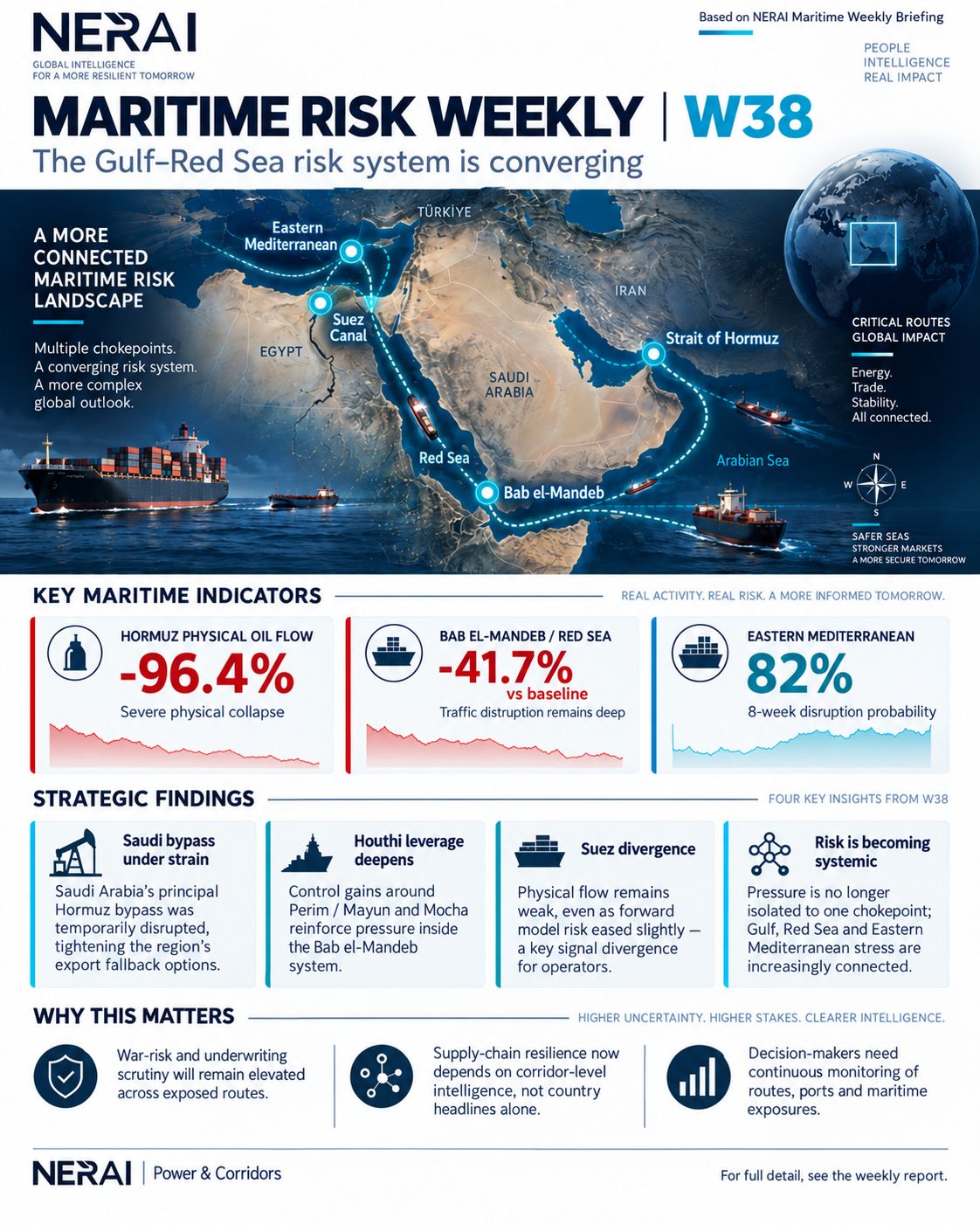
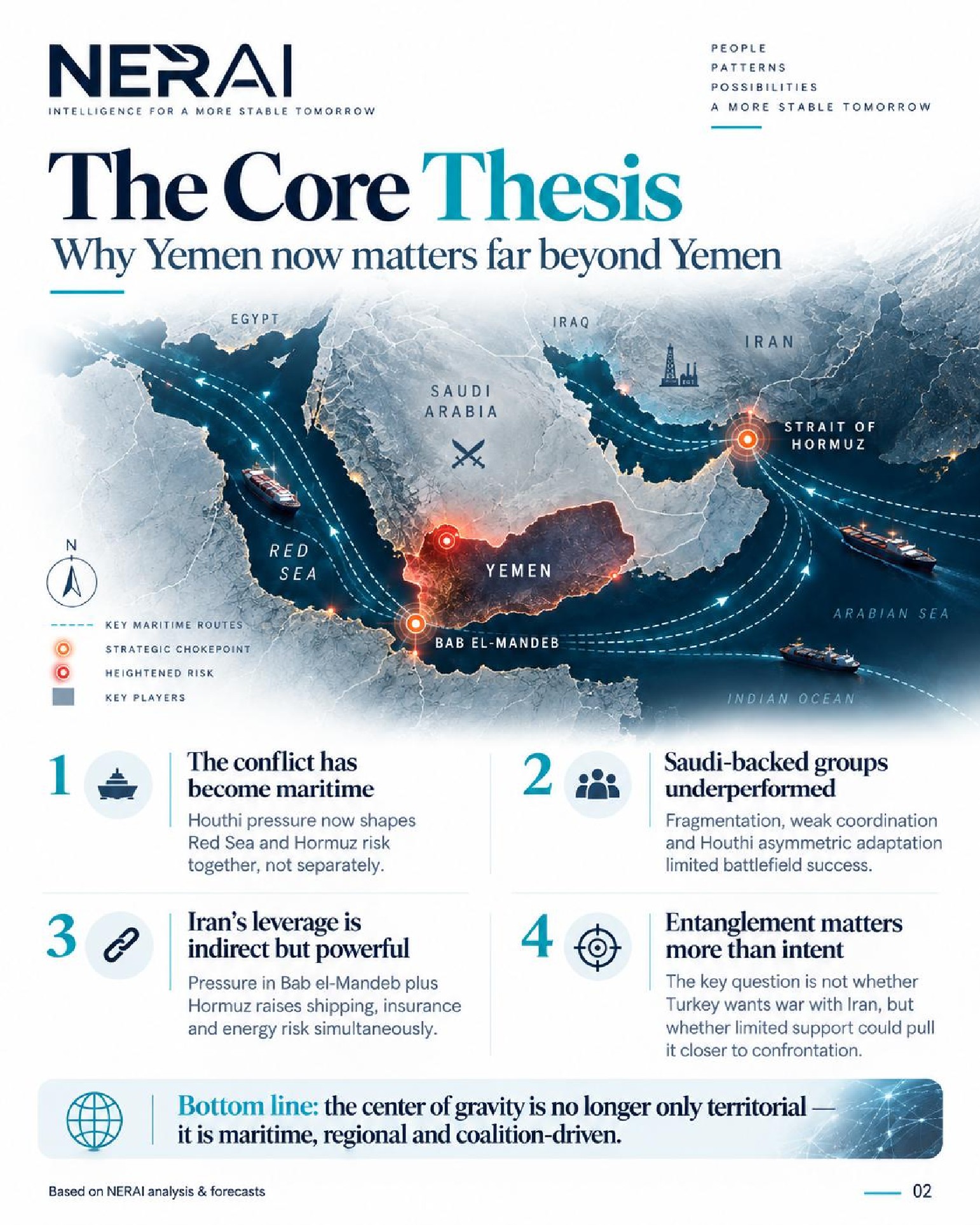
- Recent Houthi gains have increased pressure around Bab el-Mandeb, while the continuing disruption around Hormuz has created a two-chokepoint problem stretching across the Gulf and the Red Sea. For Saudi Arabia, this is not simply a Yemen issue anymore. It is a strategic problem involving energy infrastructure, maritime access, deterrence and the credibility of its regional security partnerships. The Makkah Joint Defence Agreement also changes the equation. Türkiye and Pakistan are no longer just external observers. The
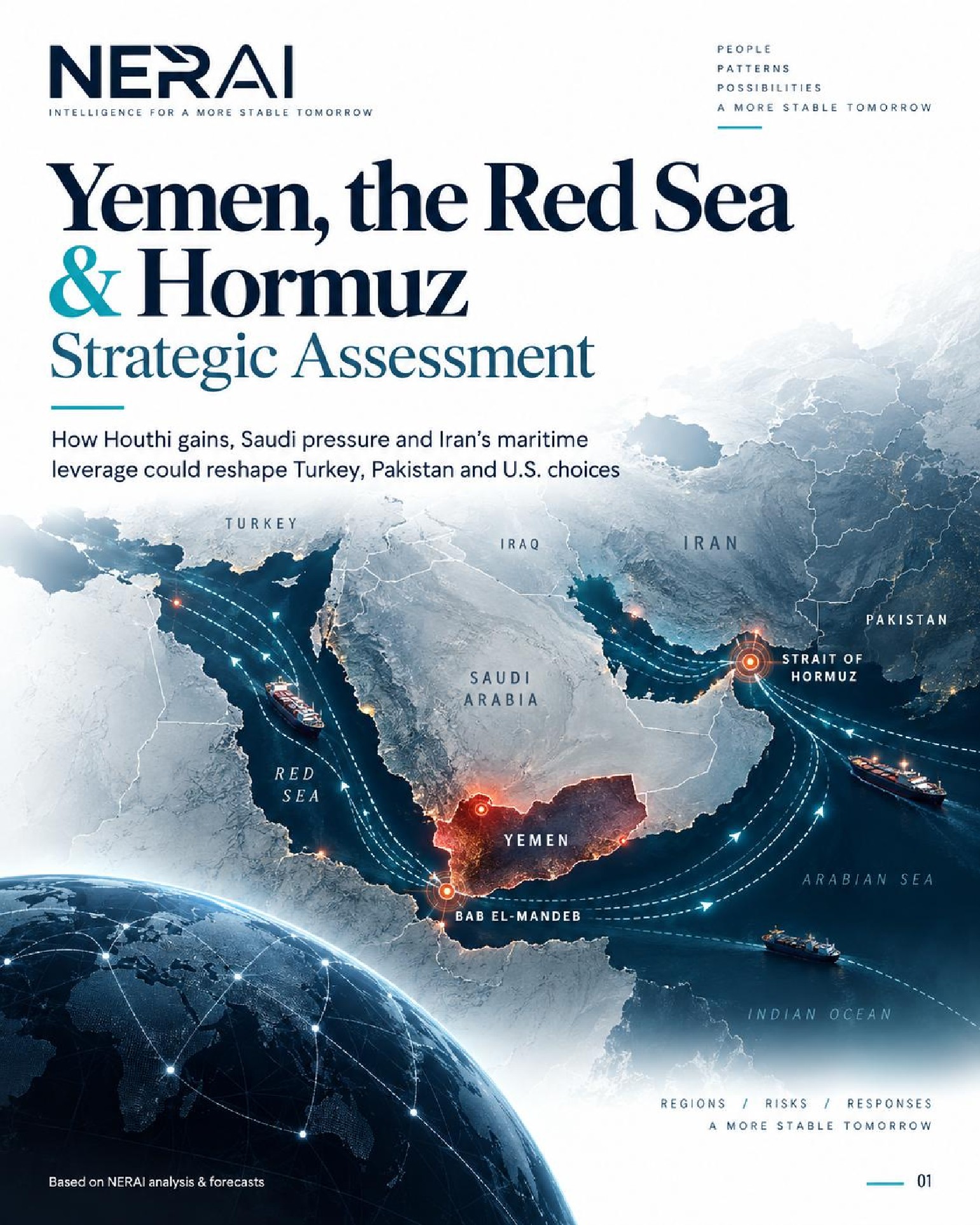
- New on NERAI Foresight Desk / Power & Corridors Yemen is increasingly becoming a maritime, alliance and escalation problem with consequences far beyond the Red Sea. Our latest strategic assessment examines how recent Houthi gains, pressure on Saudi Arabia, Iran’s growing leverage across Bab el-Mandeb and the Strait of Hormuz, and the new Makkah Joint Defence Agreement could reshape the regional balance. The report focuses on a central question: Could Saudi Arabia’s strategic setback in Yemen draw Türkiye and Pakistan into

Something wrong or missing? Send an update. Fixed within 24 hours.