Overview
Founded in 2024 and spun out of VITO, Pleevi develops AI-driven optimization software for workplace electric vehicle charging infrastructure. The company raised EUR 1M in seed funding to bring its platform to market.
As a VITO spinoff, Pleevi benefits from the research center's expertise in energy systems and sustainability. The workplace charging segment is growing rapidly as EV adoption accelerates and companies manage fleet electrification alongside grid constraints.
Key people

In the news
- Please welcome Elias Mehssatou, our new Head of Growth! ⚡ Engineering rigor, an MBA lens on scaling, and a natural at turning conversations into partnerships. Built for growth. Elias will lead Pleevi's development across Belgium and Europe: more partners and more sites where we optimize EV charging, PV, batteries and the full energy picture. Want to be one of them? Get in touch with him. Welcome, Elias!

- We are heading to Sustainable Solutions Kortrijk! ⚡ On 23 & 24 September you will find Pleevi at booth C21 at Kortrijk Xpo, with live demos of our new Energy Management System: one optimization for EV charging, solar PV, battery storage, building loads and grid flexibility, cutting energy costs by up to 30%. Also on the program, a seminar by our co-founder Wout Lagae 📈 More from your assets without extra grid capacity: AI-driven optimization 🗓 23 September, 12:15 to 12:40 We would love to see you there. Your free ticket is on us:

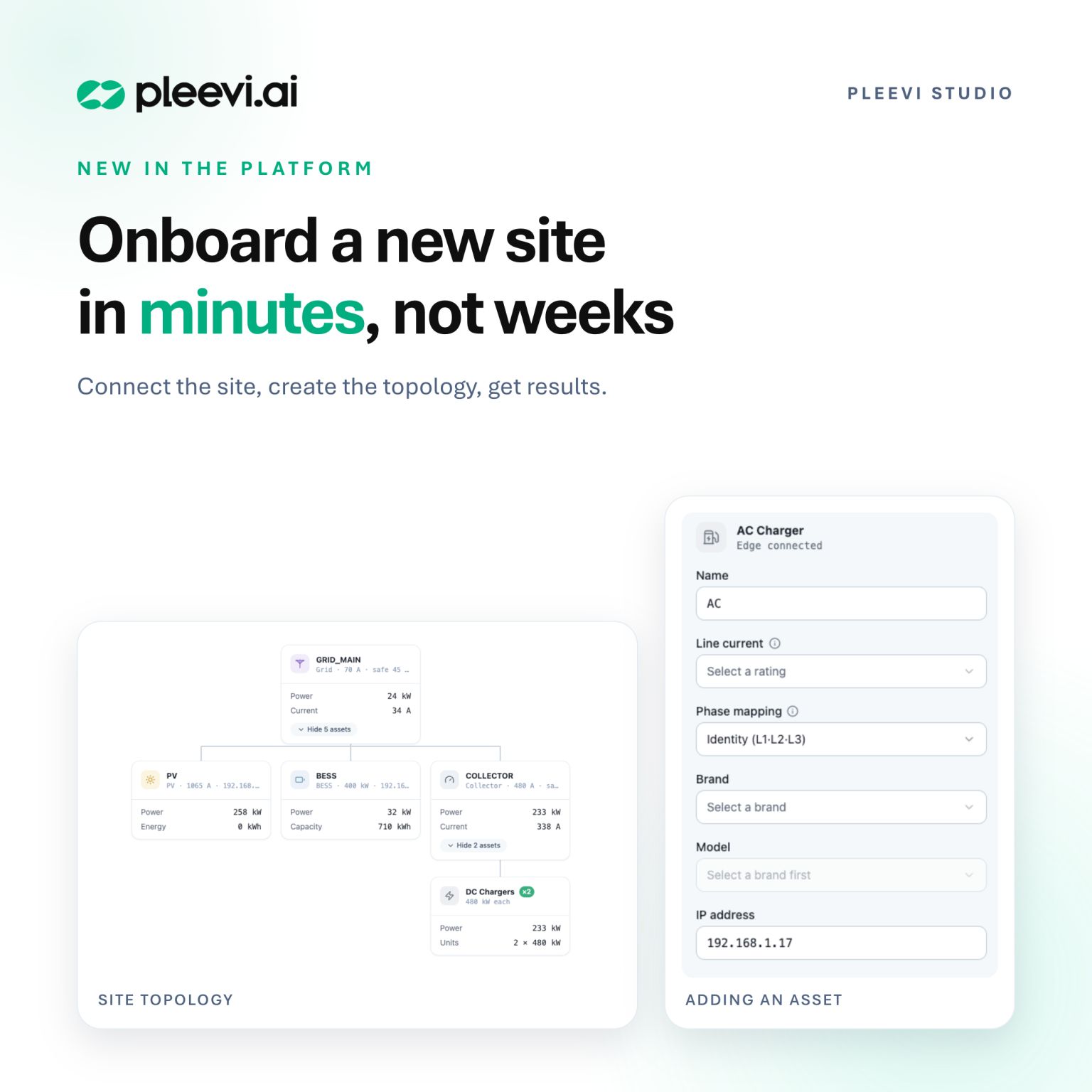
- Onboarding a charging site into an EMS used to be the slow part: spreadsheets of charger IDs, unclear wiring, weeks of back and forth. Not anymore. In Pleevi Studio you connect the site, build the topology step by step (grid connection, meters, PV, battery, chargers) and set capacity limits at every level. The Pleevi EMS respects all of them from day one. Adding a charger or a battery later? You do it yourself, in minutes.
- Ever spotted the little leaf in the Pleevi Driver app? 🍃 The Driver App is what drivers use at Pleevi-optimized charging sites: set your charging target and departure time, and Pleevi handles the rest. Your car is full when you leave. The leaf is your eco score. It shows how much flexibility you give the optimiser. More room to shift your session means more excess solar and cheaper prices in your battery. Same full charge by departure. 🍃 High eco score = cheapest, greenest power available.

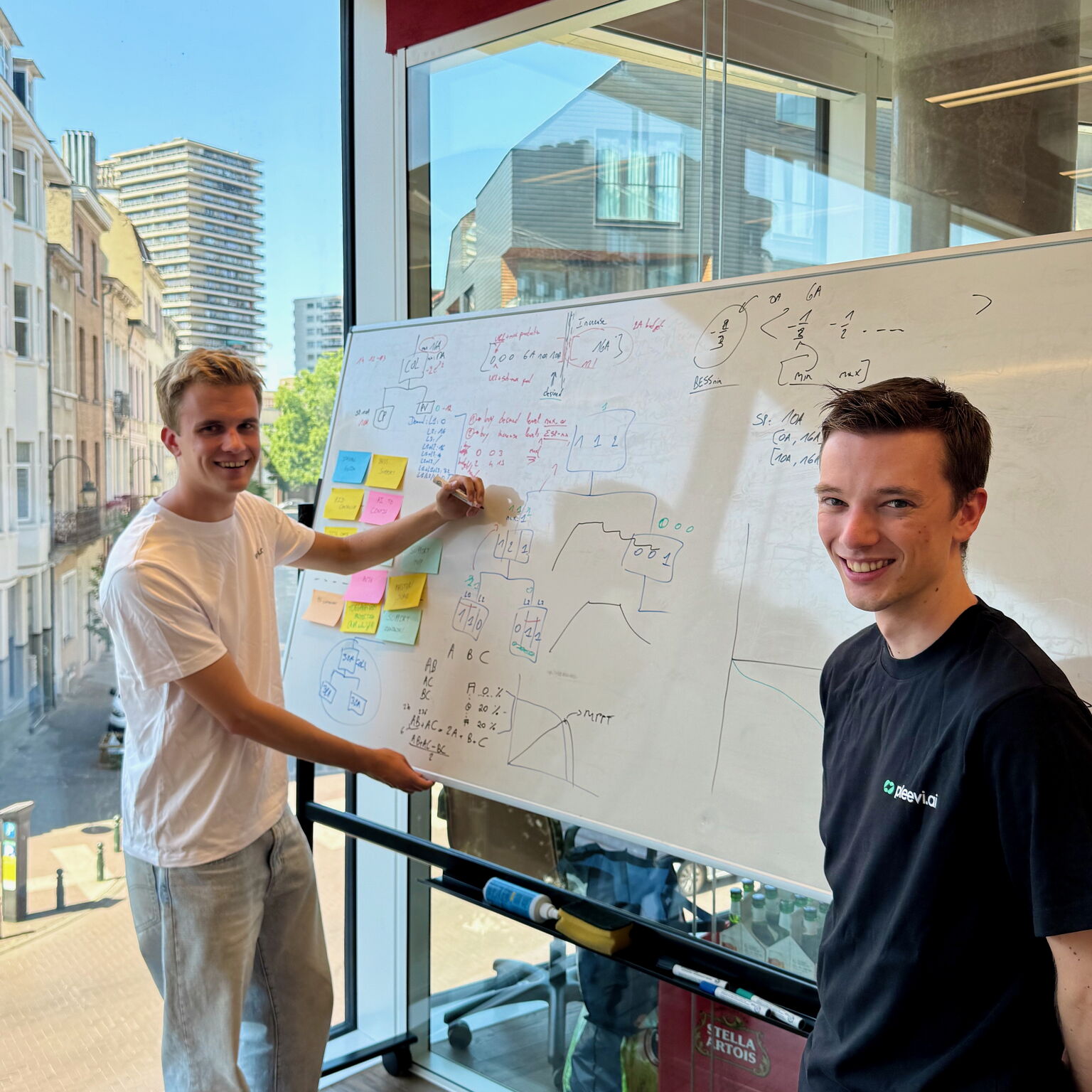
- Meet our two summer engineering interns, Willem and Robin ! 🤗 They've joined the team for the summer and wasted no time diving in. We're already running out of whiteboard space 💪 Welcome aboard! 💚
- Day 5, the finale. All week Jens tested charging strategies for 14 trucks on a constrained DC hub, and every common approach left at least one truck short. Load balancing, flat 100 kW, flat 400 kW, even with safety margins, none got the job done cleanly. The difference? Pleevi EMS plans on the real SoC curve, so every truck charges in time, at the lowest feasible peak and the lowest energy bill. On this site that means all trucks charged plus 6% savings. On sites with more flexibility, over 30%.
- Day 4 of Jens on DC hub charging. Today: adding safety margins to the 400 kW strategy. Requiring trucks to be ready 2 hours early sounds like the fix, but that margin costs you. Less flexibility, corrections landing in expensive slots, and some trucks still left short. Reserve extra power too and you can guarantee a full charge, but energy and peak costs climb. One day left in the series. Curious what actually works for your fleet?
- Day 3 of Jens on DC hub charging. Today: the flat 400 kW strategy. On paper it looks fast, 90 minutes per truck. In reality it needs over 2 hours, so most trucks leave without a full charge. The depot energy looks cheap, but public fast charging to make up the gap wipes out the savings. The worst strategy so far.
Backers
QBIC
Belgian inter-university deep-tech fund backed by UGent, VUB, UAntwerp, UHasselt, ULiege, VITO, imec, and partner hospitals.
Related profiles
Something wrong or missing? Send an update. Fixed within 24 hours.